Sight word recognition Normal Phonics Worksheets for Ages 6-7
3 filtered results
-
From - To
Our "Sight Word Recognition Normal Phonics Worksheets for Ages 6-7" are designed to make reading fun and effective for young learners. These printable resources focus on enhancing early literacy skills by emphasizing common sight words. Crafted by educational experts, our worksheets are perfect for first graders and aim to build a strong foundation in reading and comprehension. Engaging exercises help children recognize, practice, and master essential words, promoting confident and fluent reading. Ideal for both classroom and home use, these worksheets provide a blend of phonics activities and visual learning to keep young minds captivated and progressing.
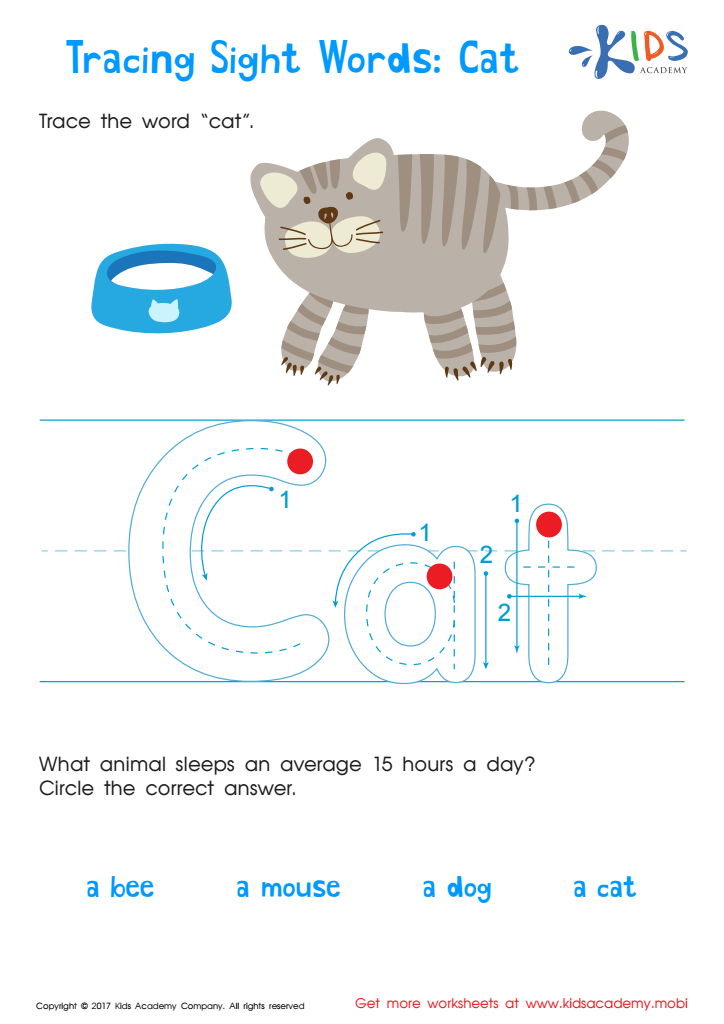
Cat Printable Sight Words Worksheet
 Assign to My Students
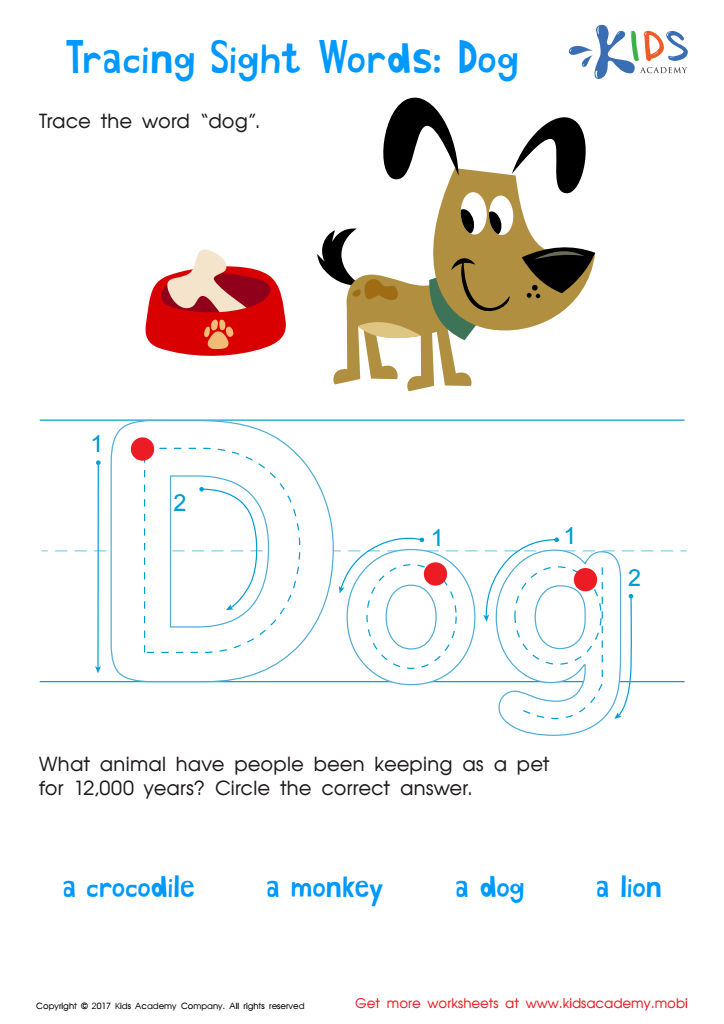
Dog Worksheet Sight Words Worksheet
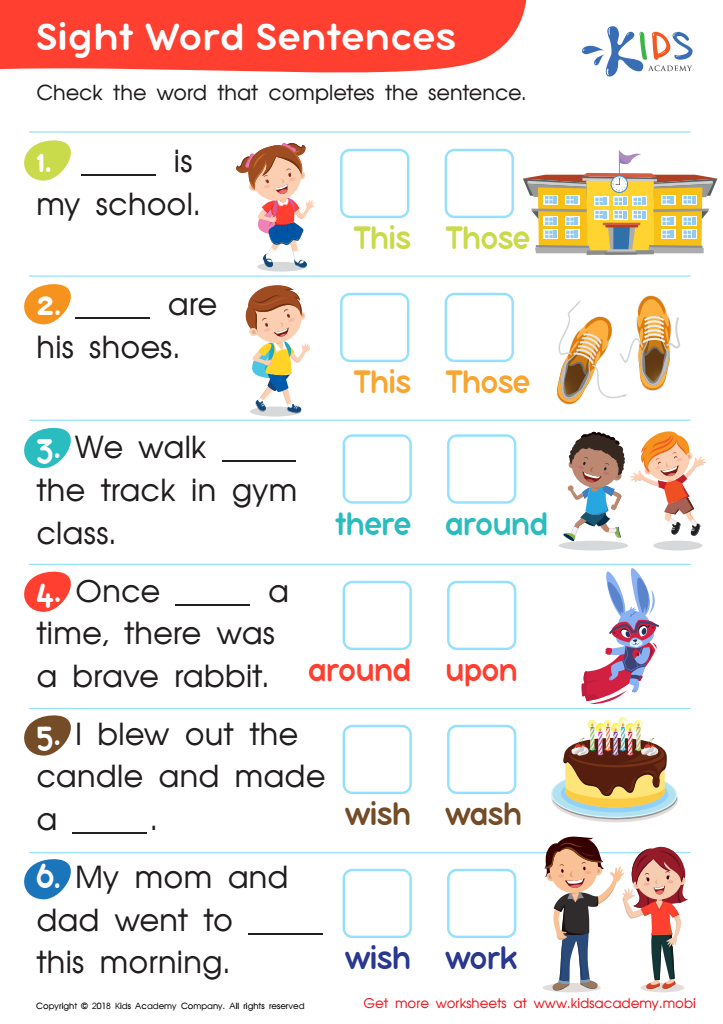
Sight Word Sentences Worksheet








Sight word recognition and understanding phonics are both integral aspects of teaching young children how to read, particularly at the ages of 6-7. Consistently focusing on these areas provides a balanced approach to literacy development.
-
Sight Word Recognition: These are common words that children should recognize on sight to enhance reading fluency. Words like "the," "and," "it," and "can" appear frequently in texts and may not always follow standard phonics rules. Recognizing these words instantly helps children read more smoothly without having to decode every single word, which can interrupt comprehension and fluency.
-
Phonics: This involves understanding the relationship between letters and their sounds, helping children decode or sound out unfamiliar words. Solid phonics skills allow young readers to tackle new words with confidence, fostering independent reading skills. Phonics methods lead to spelling and writing improvements since children learn to connect sounds with corresponding letters or groups of letters.
Parents and teachers should care about sight word recognition and phonics because they build a dual foundation that bolsters both fluency and decoding skills. This balanced literacy approach prepares children not just to read, but to read well—enabling them to enjoy reading, comprehend texts more thoroughly, and develop a lifelong love of learning. Balancing sight word activities with daily phonics practice creates confident and capable young readers, setting them up for future academic success.







