Rhyming skills development Normal Rhyming Worksheets for Ages 6-7
4 filtered results
-
From - To
Enhance your child's rhyming skills with our engaging Normal Rhyming Worksheets, designed specifically for ages 6-7. These worksheets provide a fun and interactive way for young learners to explore the world of rhymes. Through various activities, children will practice identifying, matching, and creating rhymes, fostering confidence in their reading and phonemic awareness. Our carefully curated content not only captivates their attention but also supports cognitive development and language skills. Perfect for home or classroom use, these worksheets encourage creativity while reinforcing essential literacy concepts. Discover the joy of learning through rhymes and watch your child's skills flourish!
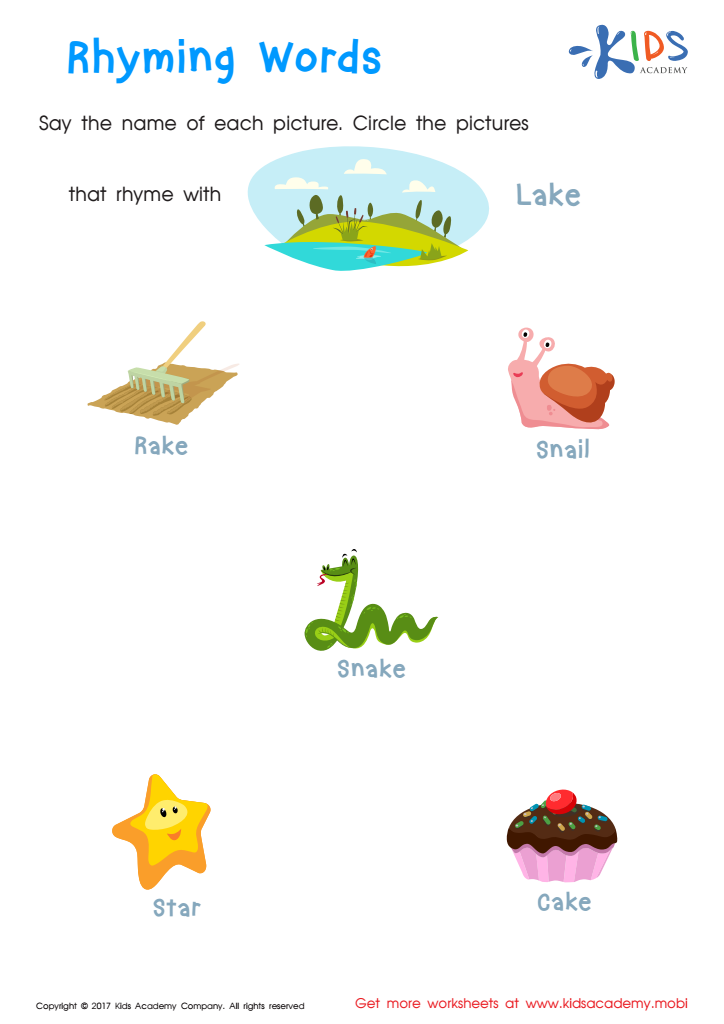
Rhyming Words Rhyming Worksheet
 Assign to My Students
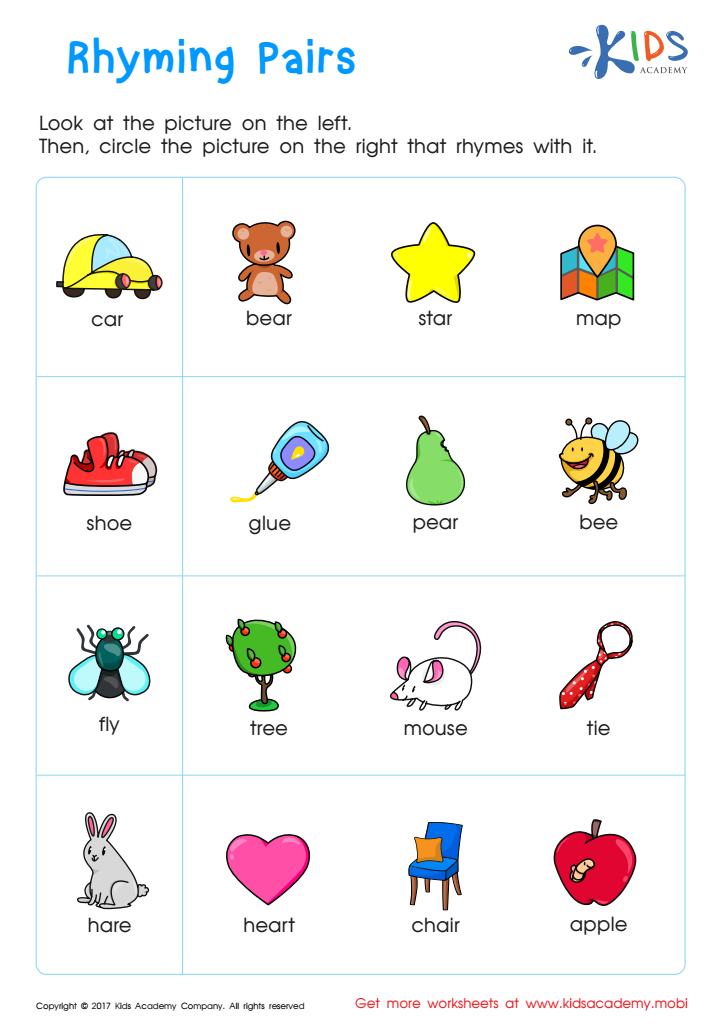
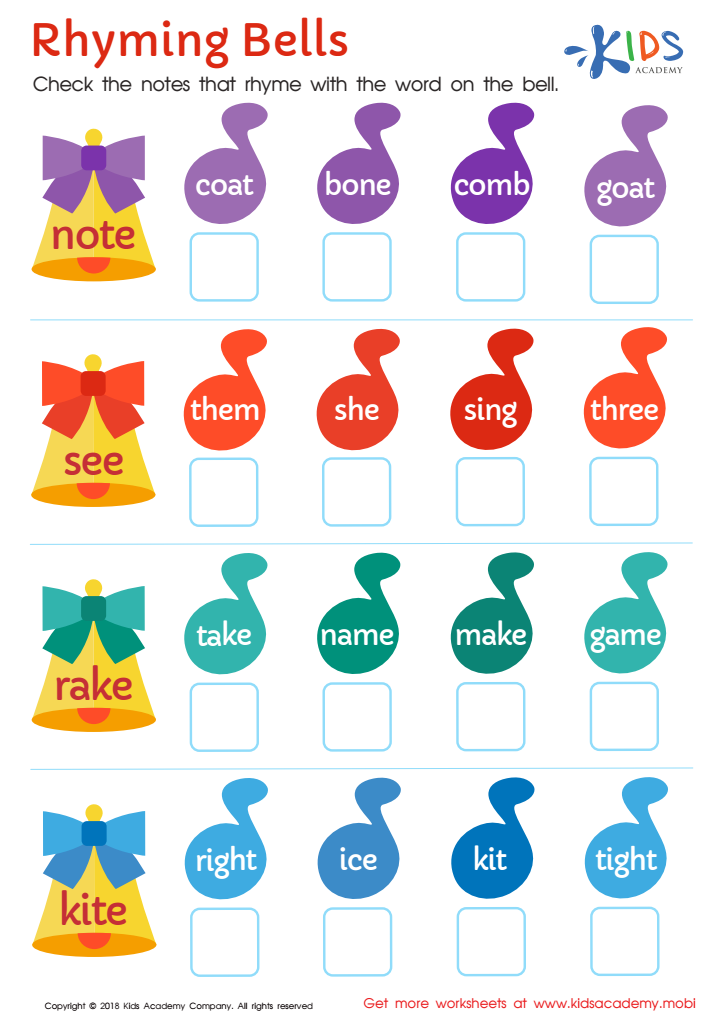
Rhyming Bells Worksheet
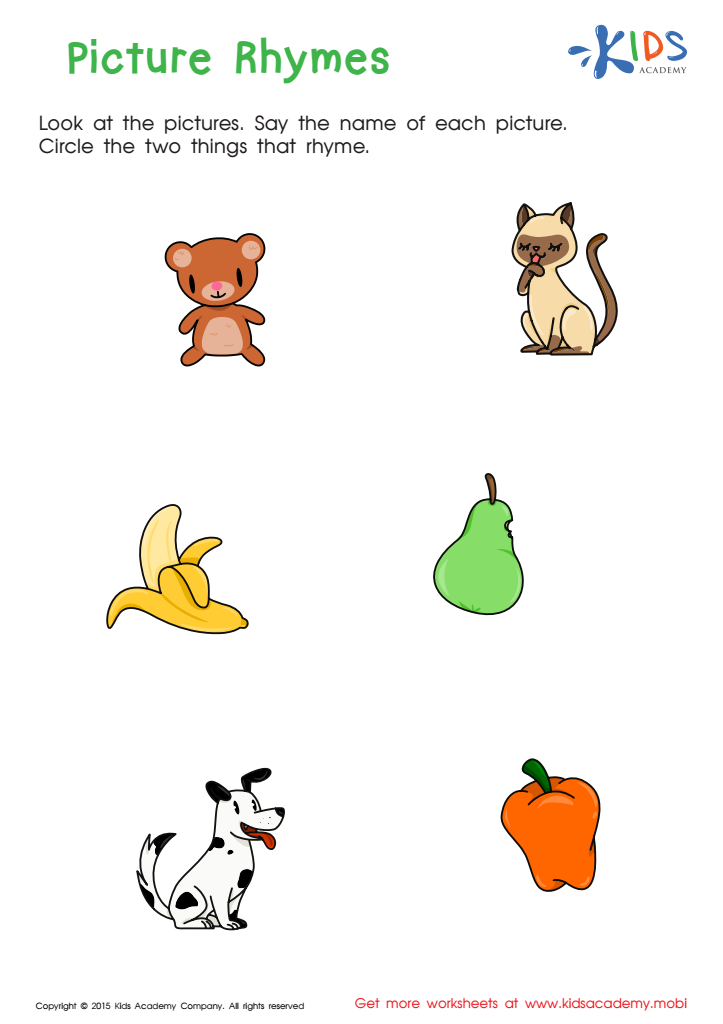
First Words: Picture Rhymes Worksheet








Parents and teachers should prioritize the development of rhyming skills in children aged 6-7 for several compelling reasons. Rhyming plays a crucial role in early language development, as it enhances phonemic awareness—the ability to recognize and manipulate sounds in words. This skill is foundational for reading and writing, as it aids children in decoding unfamiliar words and understanding the relationship between sounds and letters.
Moreover, engaging with rhymes fosters vocabulary growth, expanding children's language and comprehension. Rhyming also enhances their capacity for auditory discrimination, helping them differentiate between similar-sounding words and improving overall listening skills.
Additionally, rhyming activities are often enjoyable, sparking children's interest in literacy. The playful nature of rhymes makes learning engaging, encouraging a positive attitude toward reading and writing. Children who develop rhyming skills tend to perform better in various literacy assessments and are more likely to become proficient readers as they progress through school.
Finally, rhyming often serves as a bridge to creativity—through creating their own rhymes, children express themselves while building critical thinking and problem-solving skills. In summary, rhyming development lays the foundation for future academic success and a lifelong love of language.






