Hand-eye Coordination Normal Tracing Letters Worksheets for Ages 6-7
4 filtered results
-
From - To
Enhance your child's writing skills with our "Hand-eye Coordination Normal Tracing Letters Worksheets" designed for ages 6-7. These engaging worksheets help young learners practice tracing alphabet letters, promoting precise hand movements and improving their hand-eye coordination. As they trace each letter, children develop fine motor skills essential for writing fluently. Perfect for classroom use or at-home practice, these visually appealing worksheets ensure a fun and effective learning experience. Ideal for early grade students, our worksheets support a vital developmental stage, preparing children for more advanced writing tasks in a creative and enjoyable way. Download and print today!
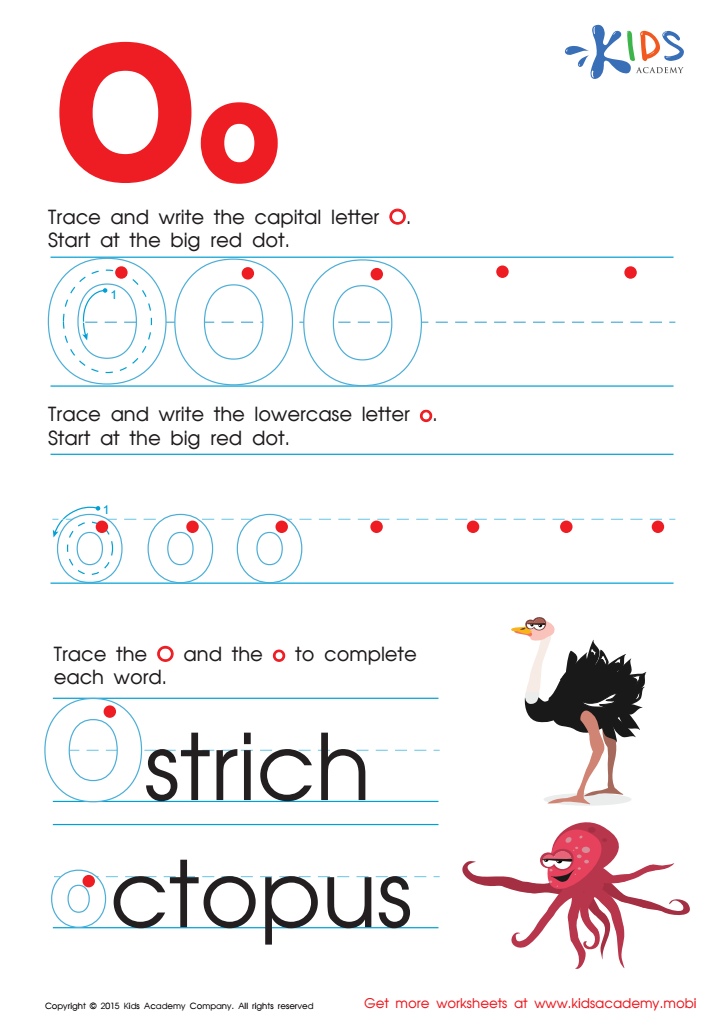
Letter O Tracing Page
 Assign to My Students
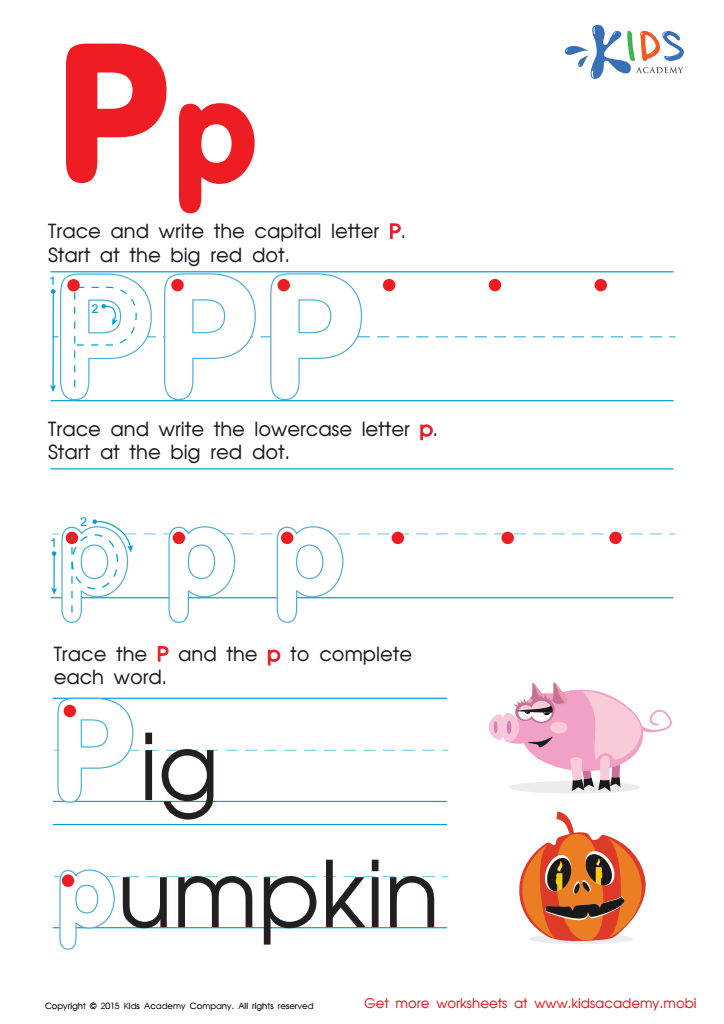
Letter P Tracing Page

Letter H Tracing Page

Letter D Tracing Page







Parents and teachers should prioritize hand-eye coordination and normal tracing letters for children aged 6-7 because these skills are foundational for a child's academic and physical development. At this age, children are honing their fine motor skills and beginning to engage more deeply with written language. Tracing letters enhances hand-eye coordination, forming a crucial bridge between visual perception and motor actions. This coordination is essential not only for writing but for other classroom activities like cutting shapes or using a ruler.
Improved hand-eye coordination assists in the development of other academic abilities such as reading and comprehension. As children trace letters, they become more familiar with letter shapes, which supports their reading skills and ability to recognize patterns in words. Furthermore, tracing activities develop muscle memory, which increases the neatness and legibility of children’s handwriting, bolstering their confidence and willingness to participate in written tasks.
On a broader scale, strong hand-eye coordination contributes to better performance in activities that require precision and agility, both in physical education and in tasks like playing musical instruments or participating in STEM projects. Thus, by focusing on activities that develop this skill, parents and teachers are setting children up for success across multiple domains of life.








