Lowercase letter writing Normal Tracing Letters Worksheets for Ages 6-7
3 filtered results
-
From - To
Our Lowercase Letter Writing Normal Tracing Worksheets are designed specifically for children ages 6-7. These worksheets provide an engaging way for young learners to practice writing lowercase letters, improving their handwriting skills. Each worksheet features guided tracing lines and fun, relatable illustrations to keep kids motivated and focused. Perfect for both classroom and at-home practice, these resources help solidify letter formation and build confidence. Enhance your child’s literacy journey with these expertly crafted worksheets that blend education with fun for effective learning outcomes.
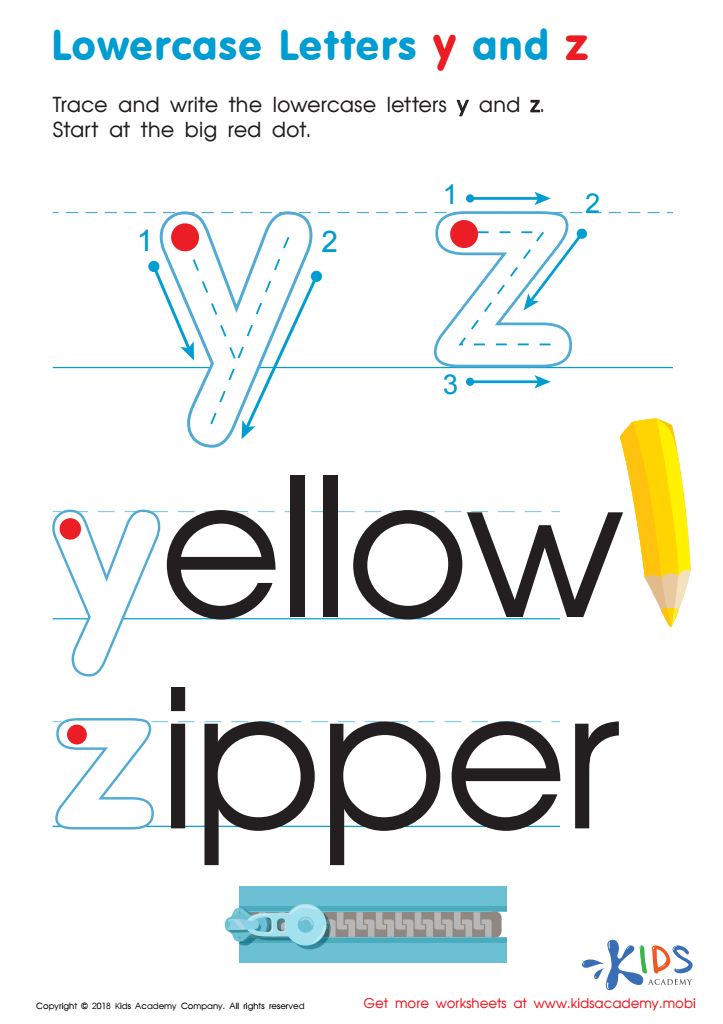
Lowercase Letters y z Worksheet
 Assign to My Students
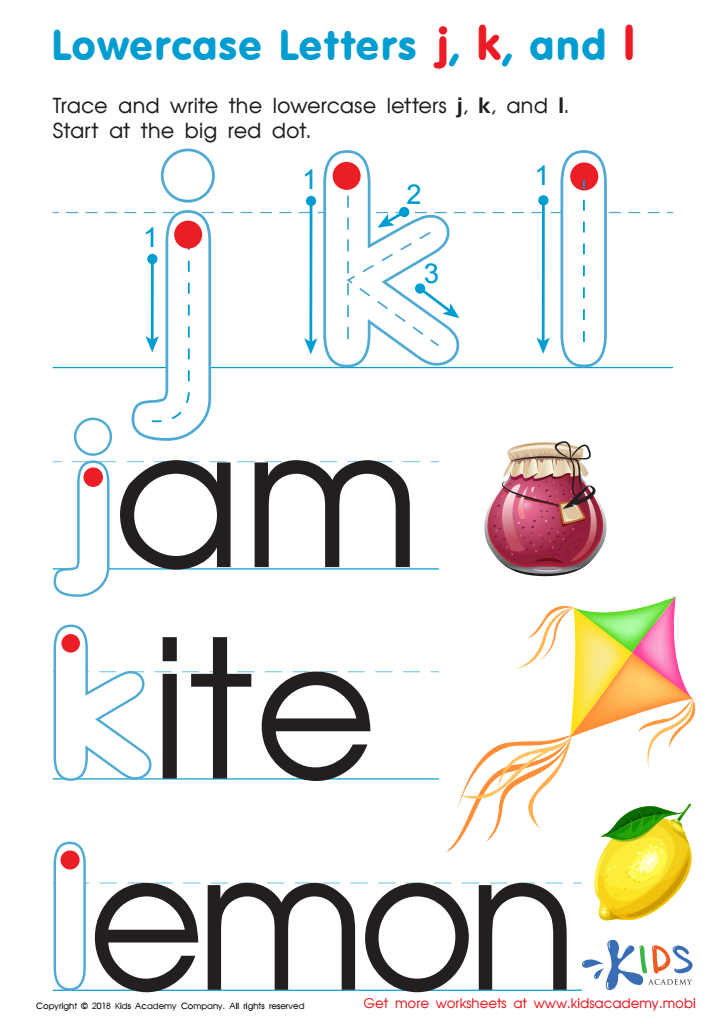
Lowercase Letters j k l Worksheet
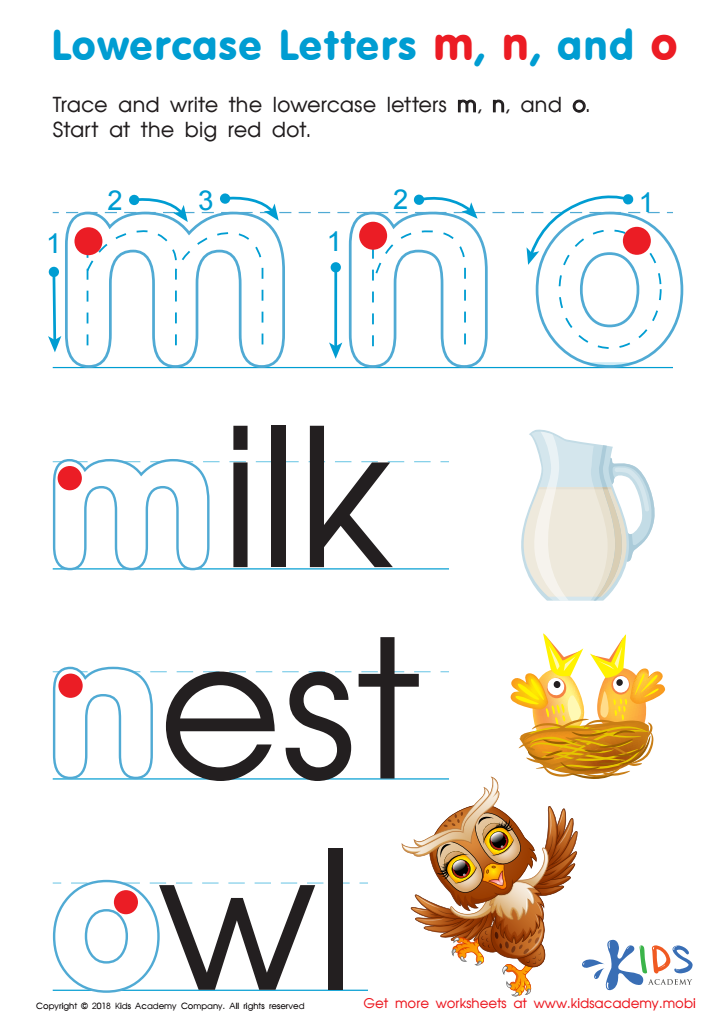
Lowercase Letters m n o Worksheet








Parents and teachers should prioritize lowercase letter tracing for children ages 6-7 because it lays the foundation for essential literacy skills. At this developmental stage, kids are honing their fine motor skills and learning to control a pencil with precision. Tracing lowercase letters repeatedly can significantly improve their hand-eye coordination and muscle memory, crucial for later writing fluency.
Lowercase letters are more dominant in everyday reading and writing – they form the majority of text in books, which makes recognizing and writing them crucial for comprehension and communication. Early familiarity with lowercase letters assists in proper letter formation, preventing bad habits that can later hinder legibility and speed.
Additionally, engaging in tracing activities promotes concentration, attention to detail, and encourages a structured learning environment. These are key factors in a child's broader educational success. Furthermore, through positive reinforcement and achievements in tracing, children often develop greater confidence and enthusiasm toward learning.
Lastly, early investment in these skills eases the transition to more advanced writing tasks. It sets a solid groundwork for spelling, reading fluency, and overall academic progress. Given the lasting impact of literacy on all areas of learning, fostering proficiency with lowercase letter tracing in young children is crucial.








