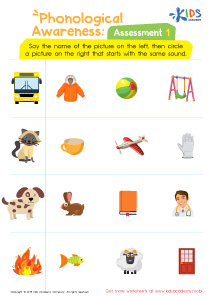
Phonics Skills Normal Two Letter Phonics Worksheets for Ages 6-7
6 filtered results
-
From - To
Explore our engaging Two Letter Phonics Worksheets designed specifically for children ages 6-7! These interactive and fun worksheets aim to enhance phonics skills by challenging young learners to recognize, blend, and decode two-letter combinations. Utilizing visually appealing illustrations and age-appropriate activities, these resources help children develop essential reading and writing abilities. Our phonics worksheets facilitate active learning while reinforcing key concepts, ensuring that students gain confidence in their literacy journey. Perfect for classroom use or at-home learning, these worksheets are a delightful way to promote phonemic awareness and support early reading development. Start building a strong phonics foundation today!
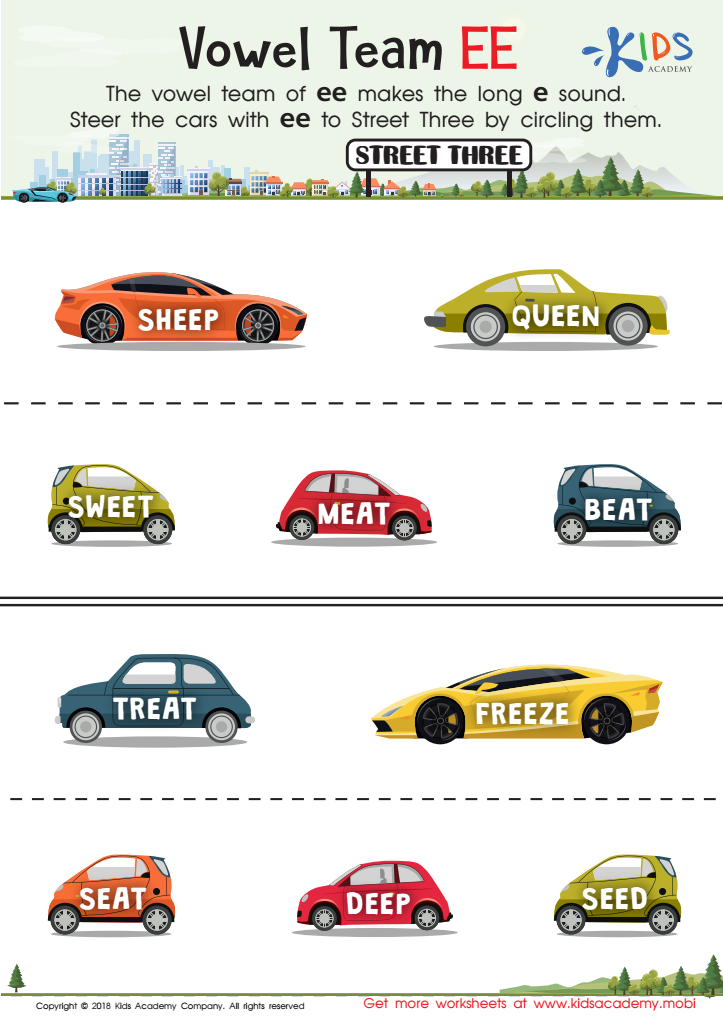
Vowel team ee Worksheet
 Assign to My Students
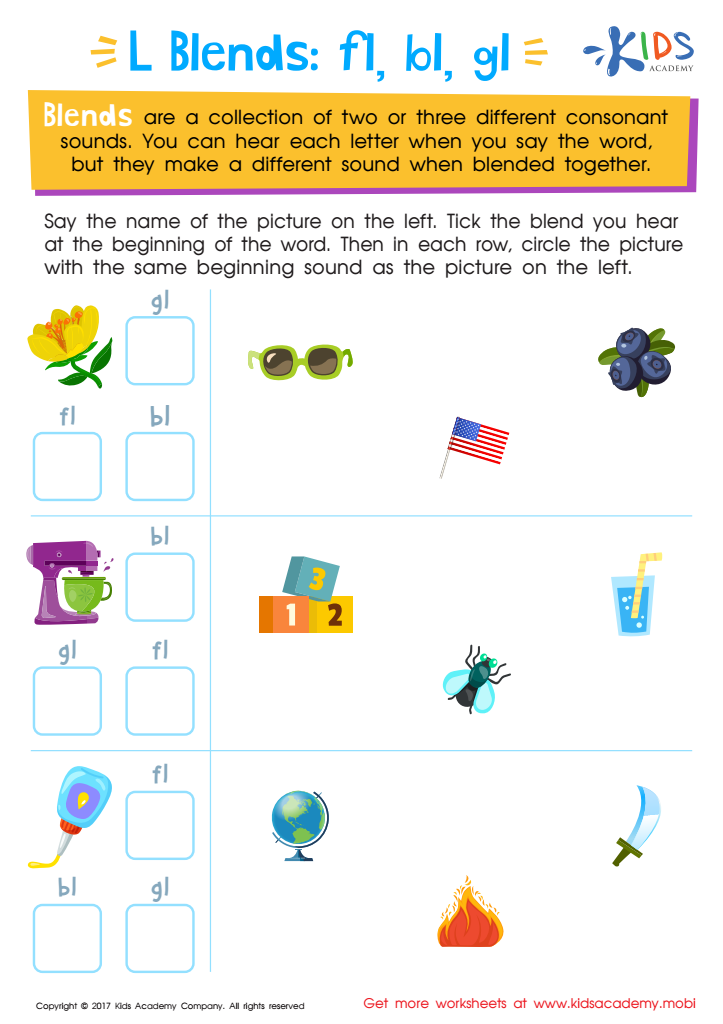
Blending Consonants: "Fl", "Bl" and "Gl" Printable
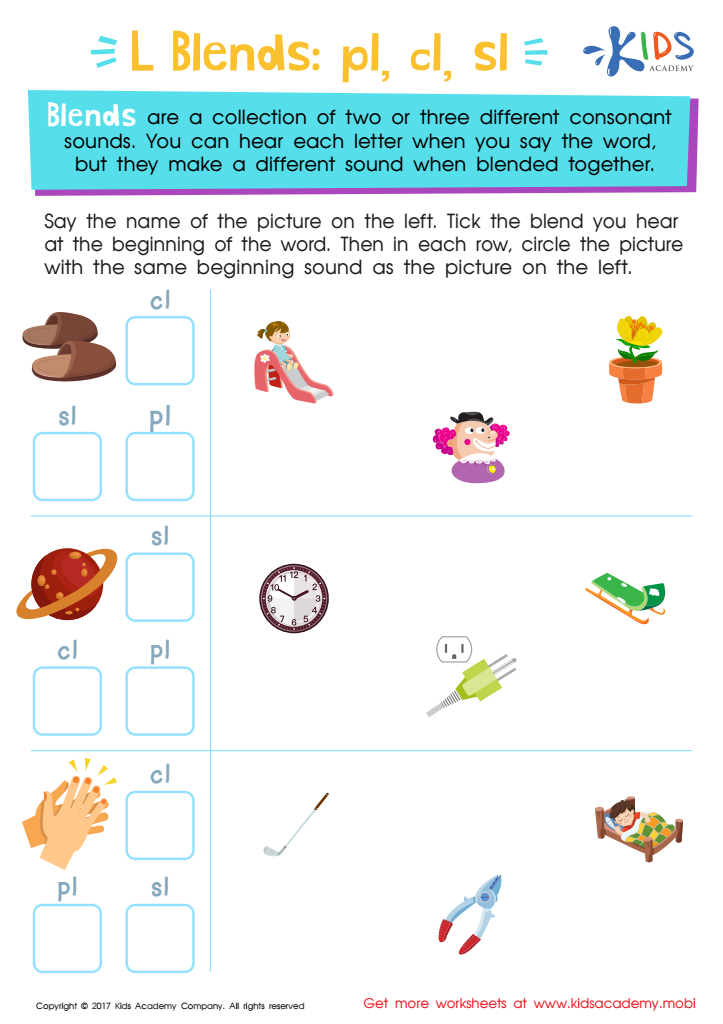
L Blends: "Pl", "Cl" and "Sl" Printable
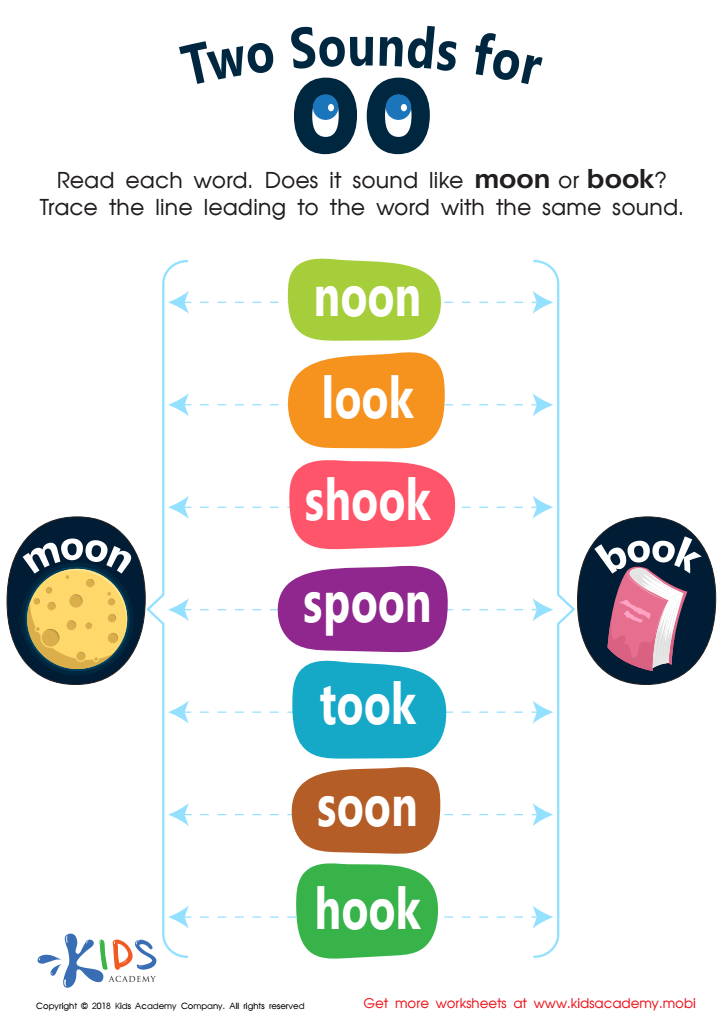
Two Sounds for OO Worksheet
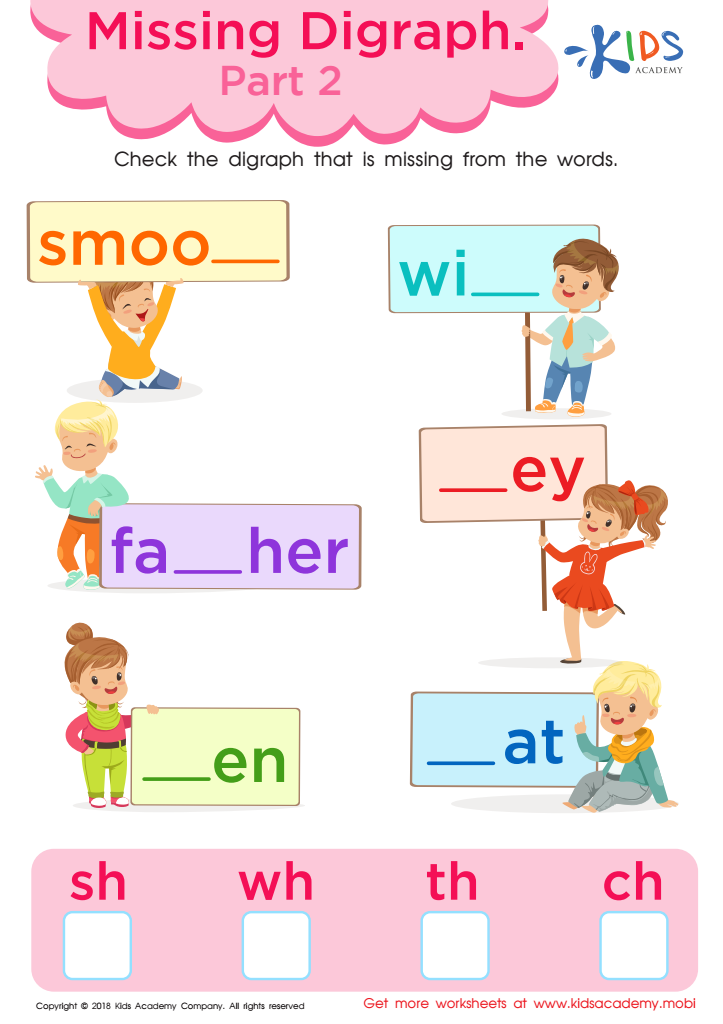
Missing Digraph: Part 2 Worksheet
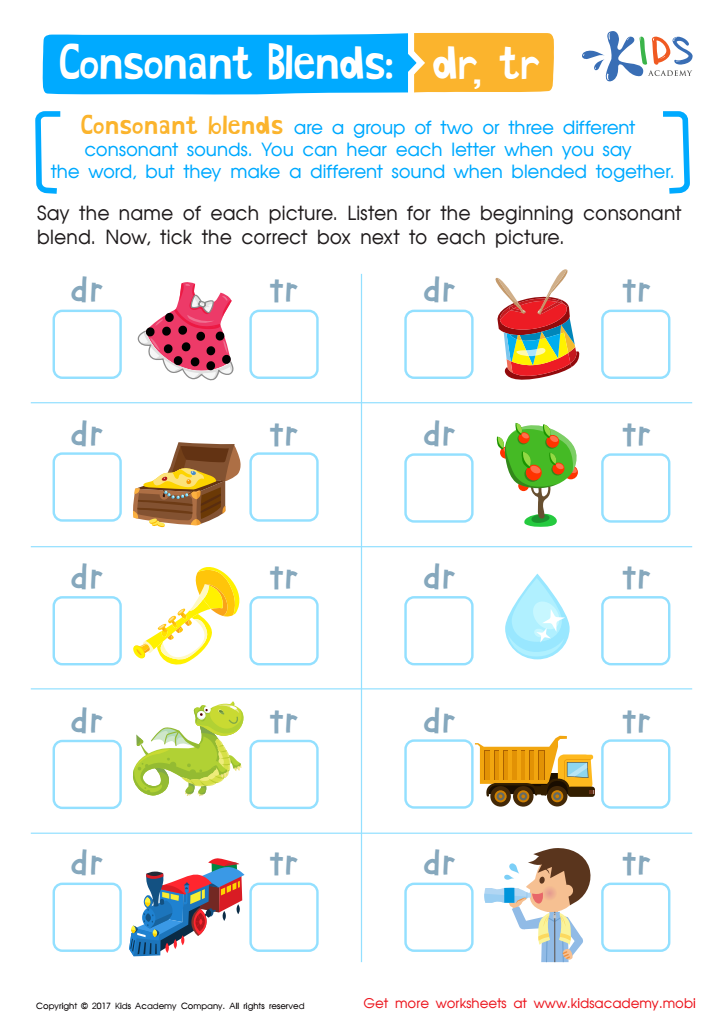
Consonant Blends: "Dr" and "Tr" Printable



Phonics skills, particularly with normal two-letter phonics, are crucial for children aged 6-7 as they lay the foundational blocks for reading and writing. During this age, children are transitioning from learning the sounds of individual letters to blending these sounds to form words. Understanding two-letter phonics helps kids recognize common letter pairs, such as "th," "sh," and "ch," which frequently appear in words they encounter daily.
Parents and teachers should emphasize phonics skills because they enhance a child's reading fluency and comprehension. When children confidently grasp phonics, they are better equipped to decode unfamiliar words, leading to improved reading abilities and a higher tendency to engage with text. This critical period in literacy development is linked to overall academic success; research shows a strong correlation between phonics proficiency in early years and future academic achievement.
Moreover, phonics skills foster a love for reading. As children encounter fewer obstacles while trying to read, they build confidence, motivation, and enjoyment in literacy activities. By supporting phonics development at this stage, parents and teachers can instill essential skills that contribute to a child’s lifelong learning journey and fuel their imagination through stories.