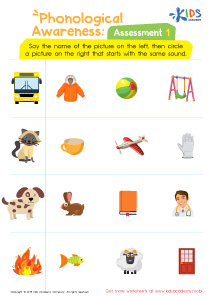
Reading comprehension Normal Two Letter Phonics Worksheets for Ages 6-7
7 filtered results
-
From - To
Boost your child's reading skills with our comprehensive "Reading Comprehension Normal Two Letter Phonics Worksheets for Ages 6-7." Ideal for early readers, these engaging worksheets focus on two-letter phonics, enhancing decoding and fluency. Each worksheet is designed to make learning fun, improving children's ability to read and understand text effectively. These resources are tailored to support and reinforce classroom learning, ensuring kids build a strong foundation in reading comprehension. Perfect for parents and teachers alike, our worksheets offer a structured, interactive way for kids to excel in reading and phonics, setting them up for future educational success.
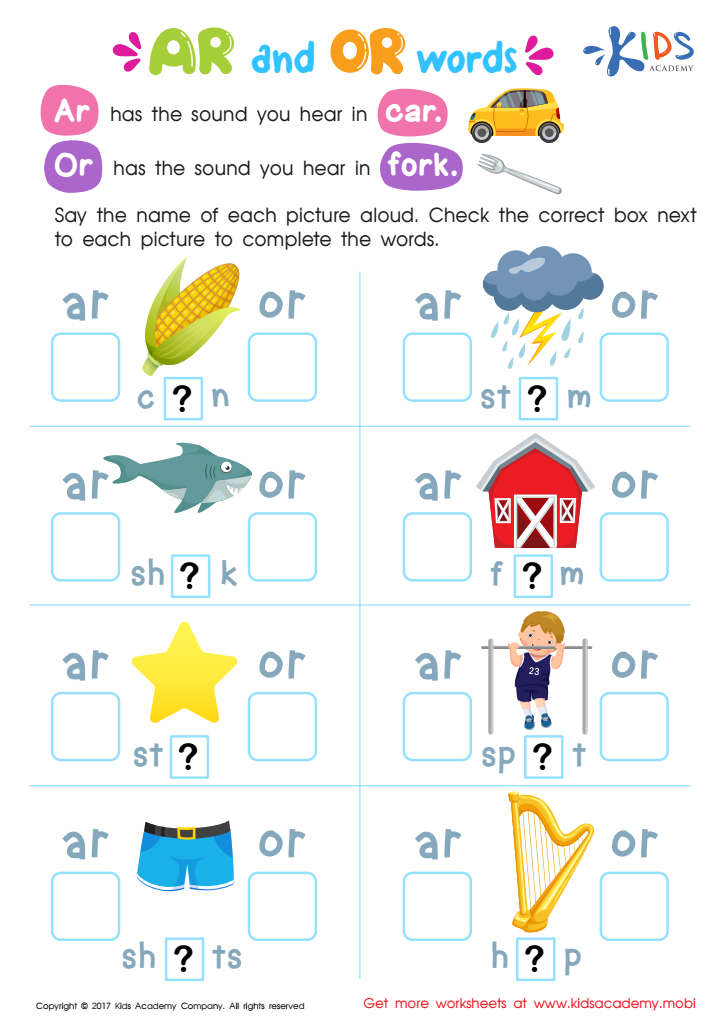
Ar and Or Words Phonics Worksheet
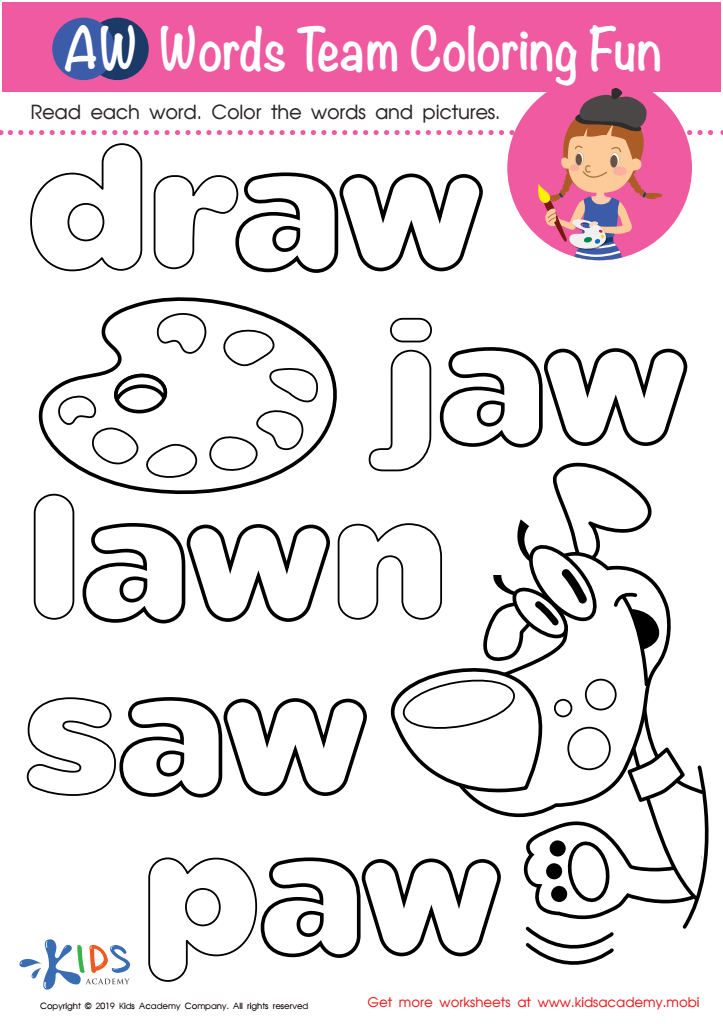
AW Words Team Coloring Fun Worksheet
 Assign to My Students
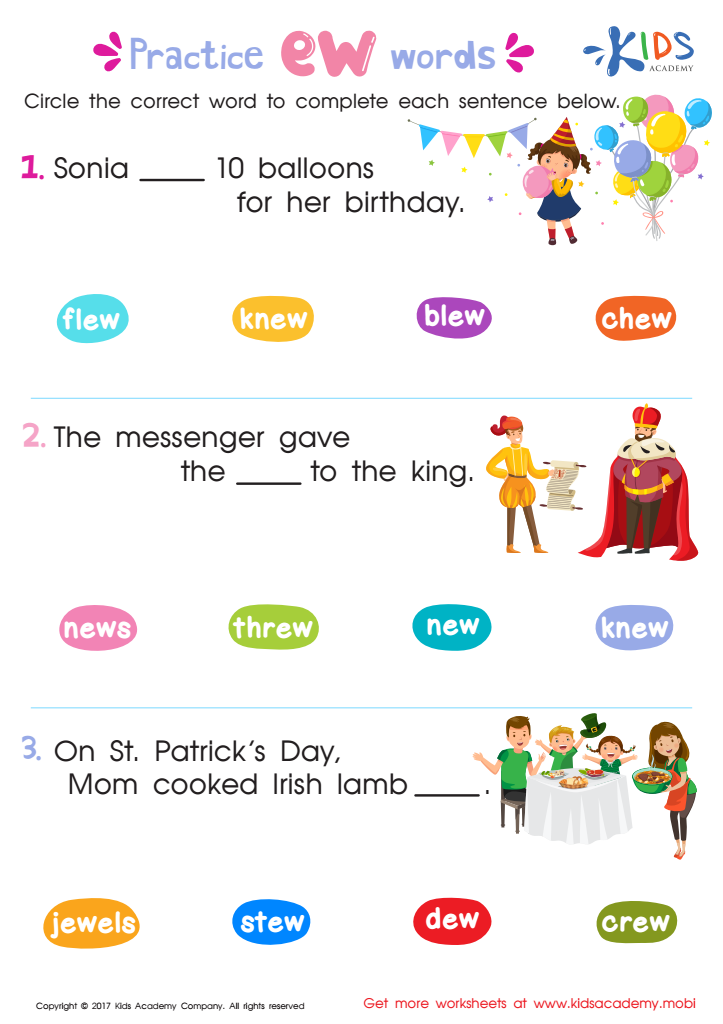
EW Words Worksheet
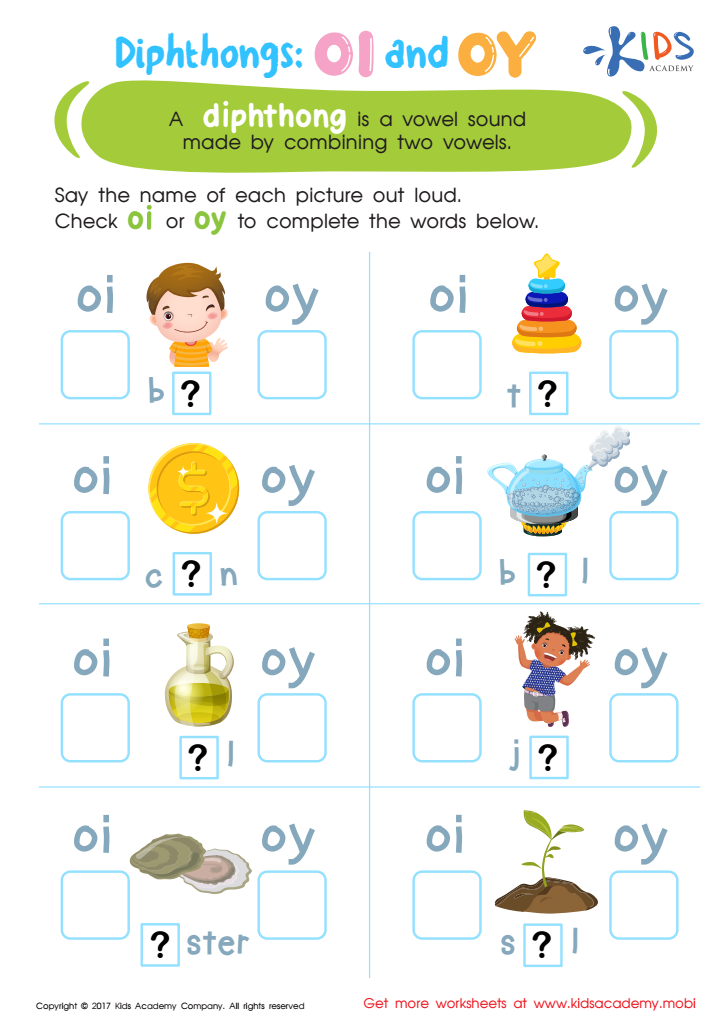
Vowel Diphthongs OI OY Worksheet
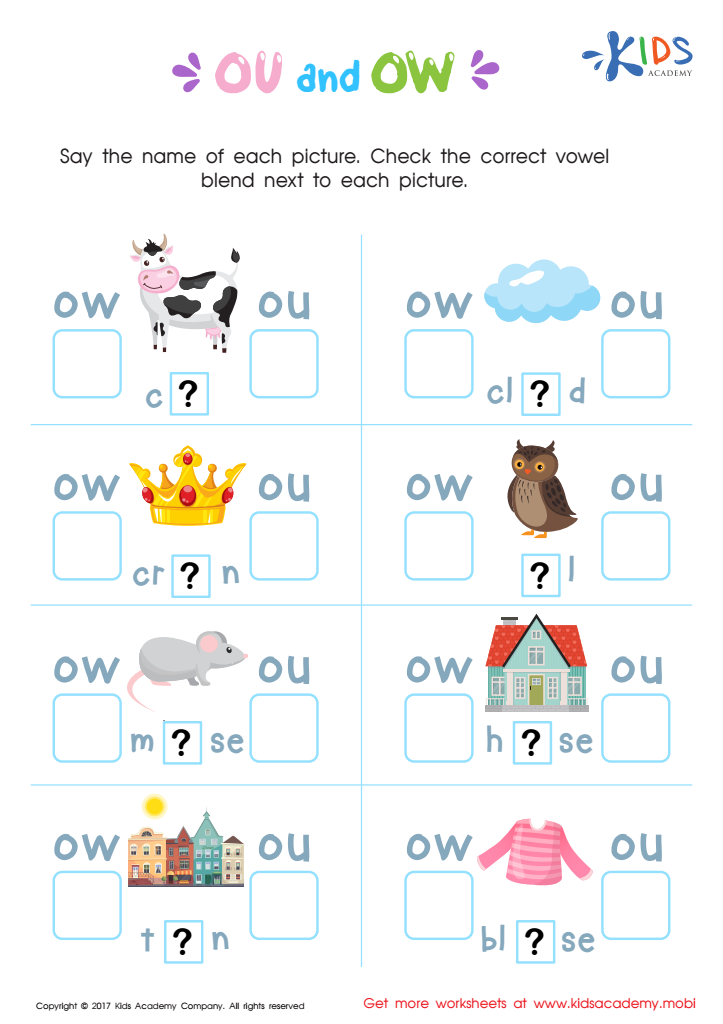
OU and OW Words Worksheet
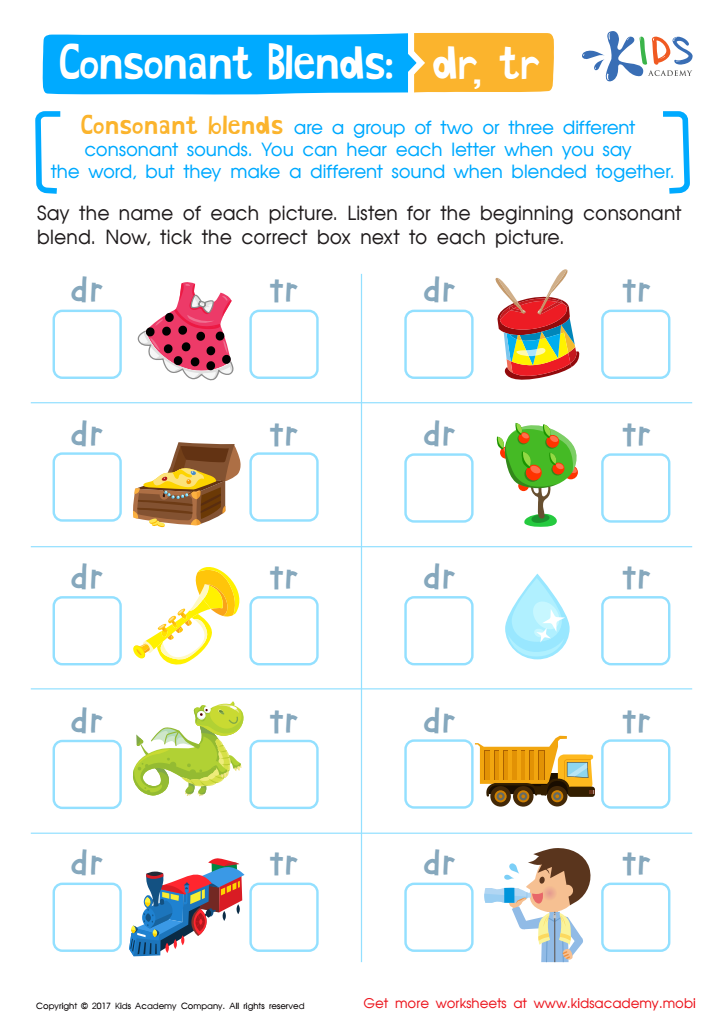
Consonant Blends: "Dr" and "Tr" Printable
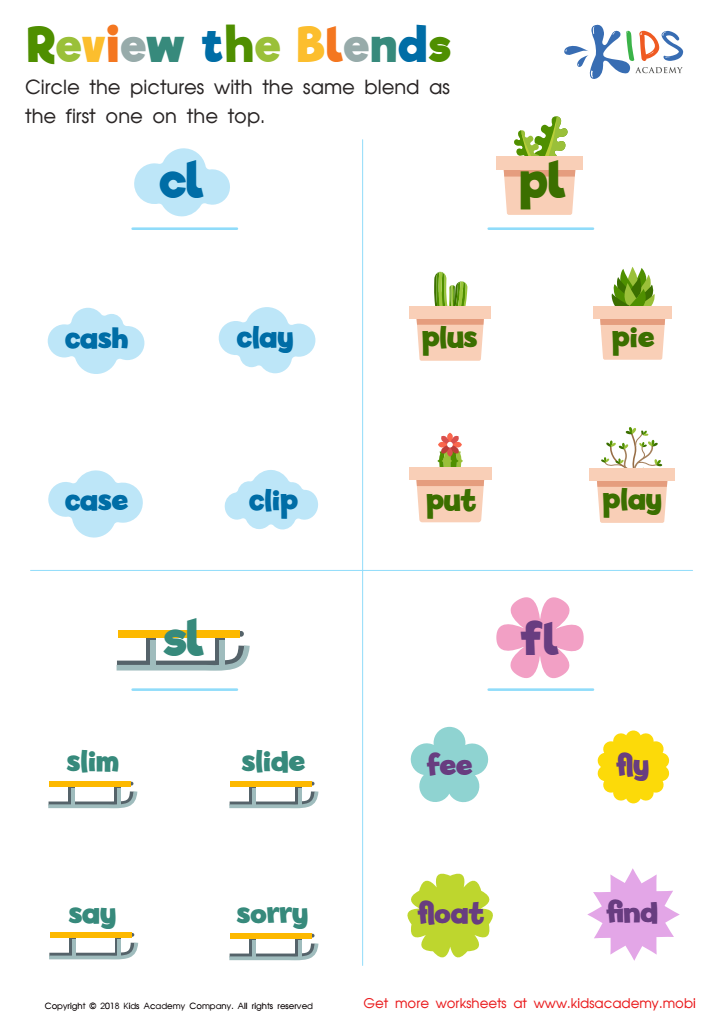
Review the Blends Worksheet



Understanding reading comprehension and mastering normal two-letter phonics are crucial for children between the ages of 6 and 7. During these formative years, children are at a developmental stage where they begin to transition from learning to read to reading to learn. This foundational skill not only enhances their ability to grasp the meaning of written text but also underpins their success in all other academic areas, including math, science, and social studies.
Phonics, particularly two-letter combinations, is a building block for reading fluency. These combinations, or digraphs such as "th," "sh," and "ch," represent common sounds in English. When mastered, they allow children to decode words more efficiently. This ease in decoding directly influences their reading comprehension, as less cognitive energy is spent on figuring out individual words, leaving more mental resources available for understanding the text’s meaning.
Moreover, strong reading skills are associated with better vocabulary, writing ability, and overall academic performance. For parents and teachers, investing time and resources in teaching normal two-letter phonics ensures children develop proficient reading skills early on, leading to greater academic achievements and a lifelong love of reading. Early intervention in these skills can prevent future learning difficulties, making it a priority in elementary education.