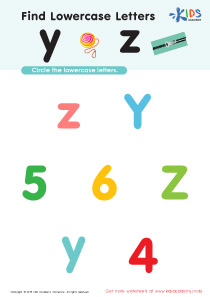
Uppercase identification Normal Uppercase Letters Worksheets for Ages 6-7
5 filtered results
-
From - To
Unlock the world of literacy with our Uppercase Identification worksheets, designed specifically for ages 6-7. These engaging activities help young learners easily recognize and identify uppercase letters, laying a solid foundation for reading and writing success. Each worksheet combines fun illustrations and clear instructions to boost children's confidence and mastery of alphabet skills. Perfect for the classroom or at-home learning, these printable resources bring excitement to uppercase letter learning. Help your child distinguish between different letters while developing critical learning skills. Start building alphabet expertise today with our expertly crafted worksheets!
Visit: Kids Academy
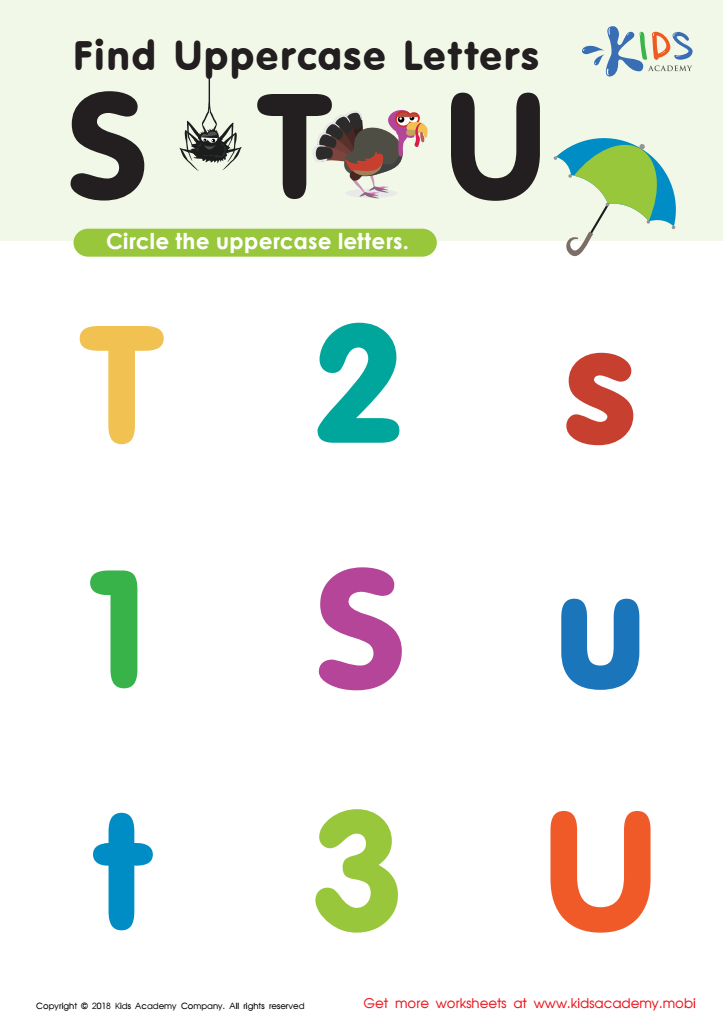
Find Uppercase Letters Worksheet
 Assign to My Students
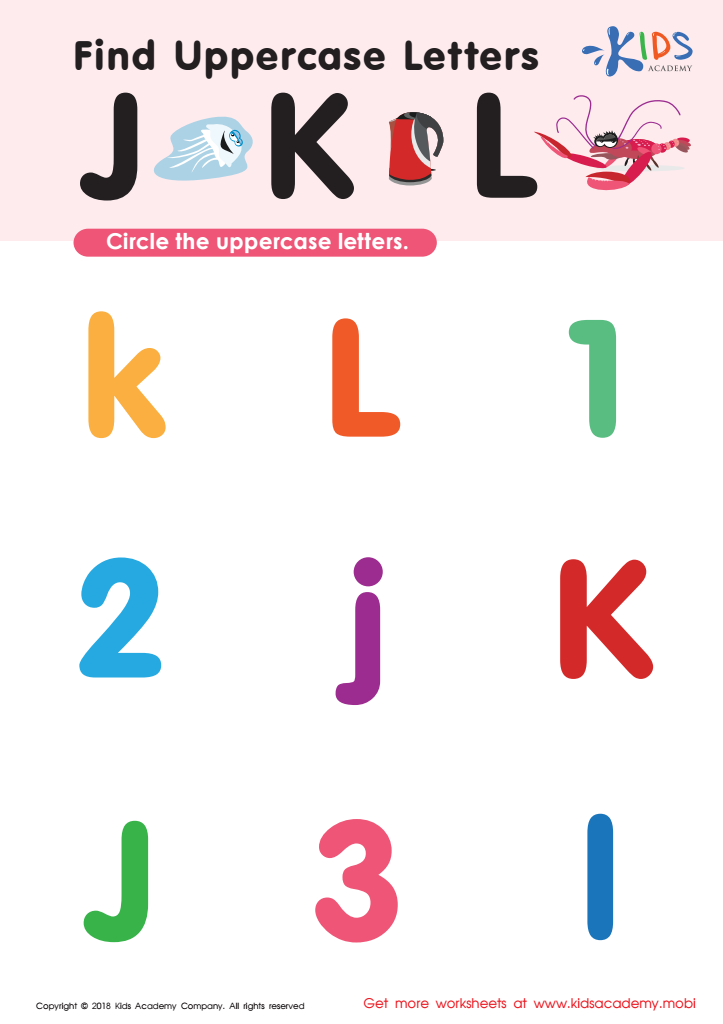
Find Uppercase Letters J, K, and L Worksheet

Find Uppercase Letters A, B, and C Worksheet
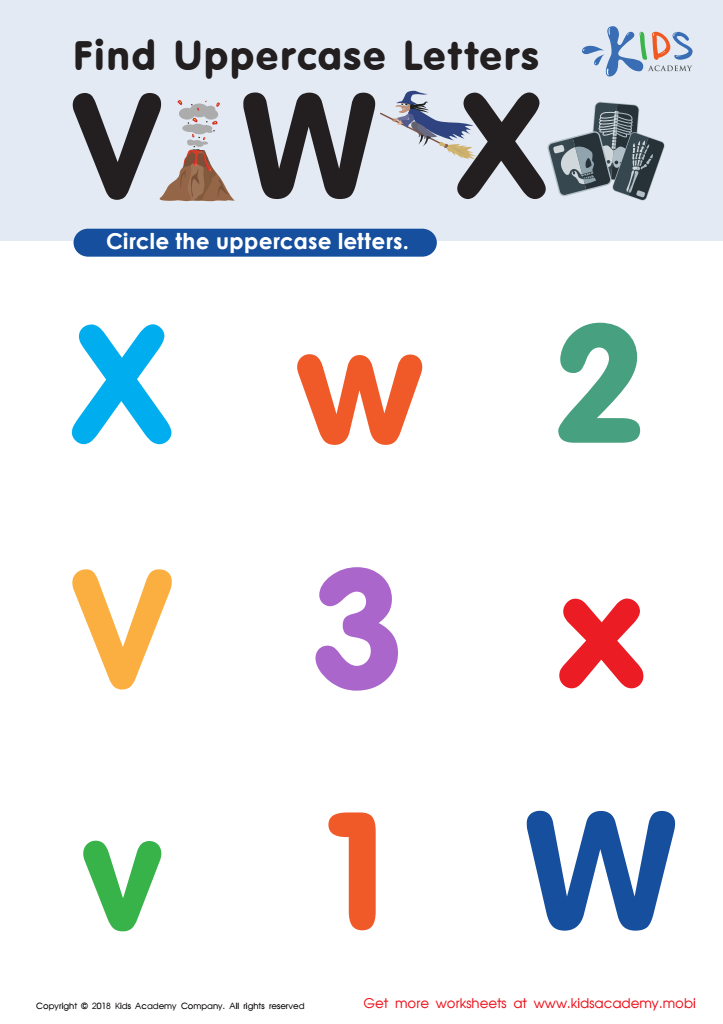
Find Uppercase Letters V, W, X Worksheet
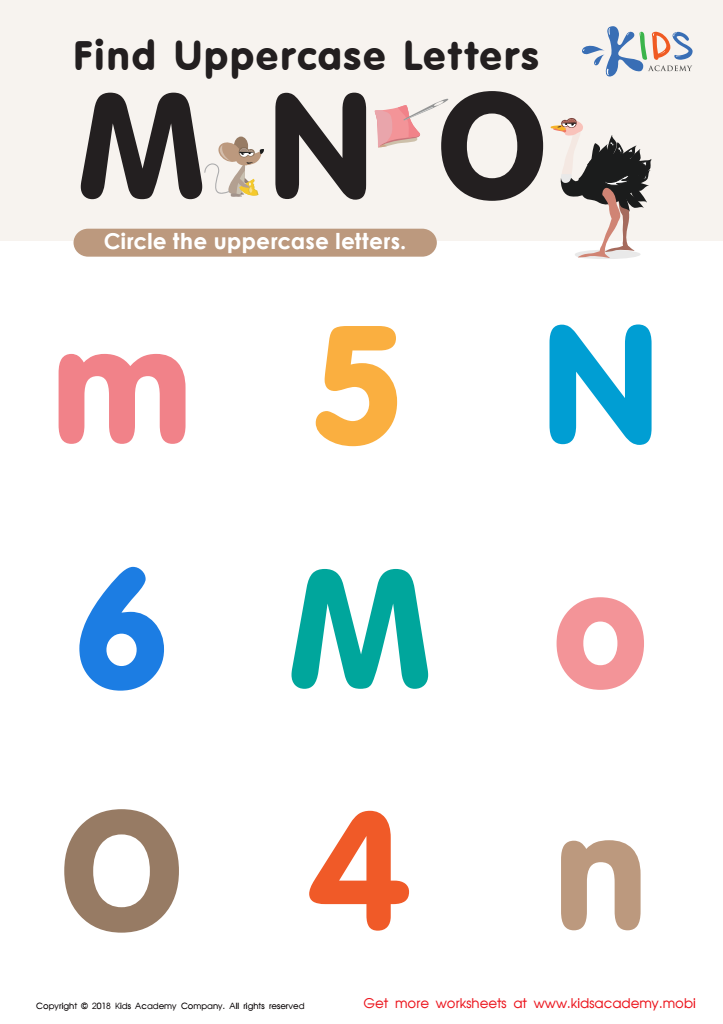
Find Uppercase Letters M, N, and O Worksheet








Understanding and identifying uppercase letters is integral to the foundational literacy skills for children aged 6-7, marking a critical stage in their educational development. At this age, children gather the tools to build reading and writing competencies, which are essential for effective communication and academic success.
Uppercase letter recognition helps children not only in distinguishing letter forms but also in understanding the roles of these letters in different contexts, like the start of sentences and proper nouns. This skill engenders confidence and fluency in reading, as uppercase letters laregly pop up in texts, signaling new ideas and names which are crucial for comprehension.
For teachers and parents, prioritizing uppercase identification ensures that children consolidate their alphabet knowledge before moving on to more complex literacy tasks. When children have a strong grasp of uppercase letters, it makes learning lowercase letters besdiockoeaisj easier, producing a balanced literacy skillset. Research suggests that early literacy practices have lasting implications on future academic achievement. Addressing gaps in letter recognition early on helps mitigate difficulties with reading accuracy, spelling, and even hinders long-term language development deficiencies.
Thus, properly supporting uppercase letter identification enhances a child's literacy journey, setting a firm foundation for future educational progress, bolstering their self-esteem, and fostering a lifelong love for reading and writing.