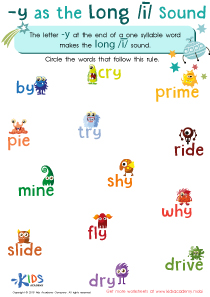
Phonics Skills Normal Vowel Digraphs Worksheets for Ages 6-7
3 filtered results
Difficulty Level
Grade
Age
-
From - To
Subject
Activity
Standards
Discover our engaging Phonics Skills Normal Vowel Digraphs Worksheets designed specifically for children ages 6-7. These worksheets provide an interactive and fun way to help young learners recognize and master vowel digraphs, essential for developing strong reading skills. Each worksheet is thoughtfully crafted with vibrant visuals and age-appropriate activities that encourage phonetic awareness, improve spelling, and build vocabulary. Perfect for at-home learning or supplemental classroom activities, our Phonics Skills worksheets allow kids to practice critical literacy concepts while boosting their confidence in reading. Explore our collection today and pave the way for your child's success in becoming a proficient reader!
Favorites
With answer key
Interactive
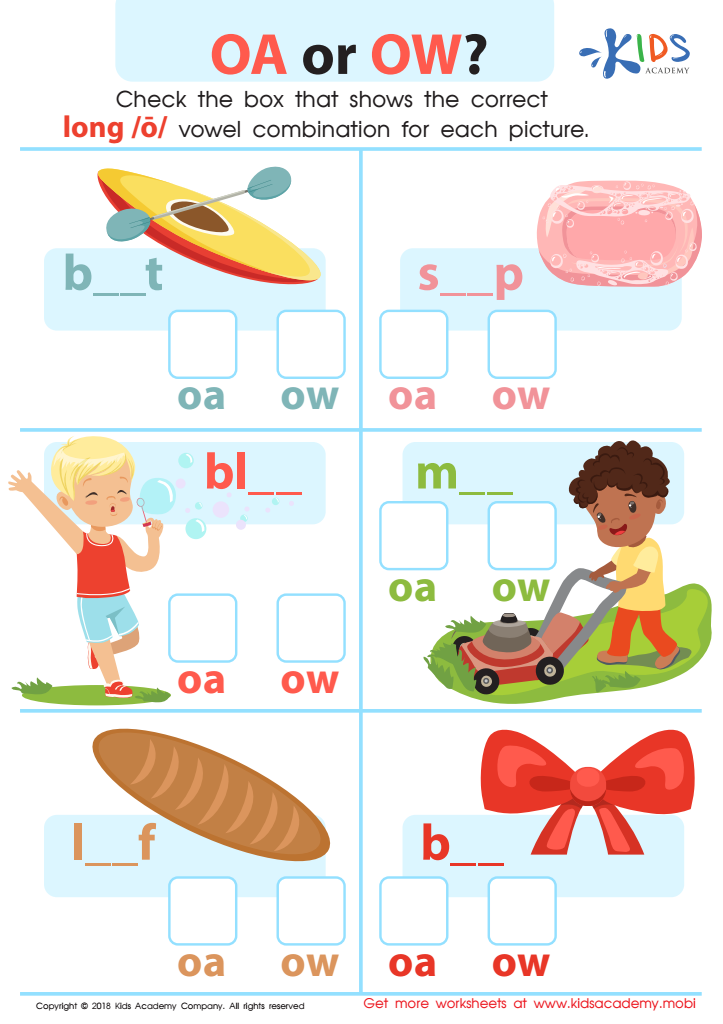
Reading: OA or OW Worksheet
This printable worksheet helps young and emergent readers with decoding words and understanding digraphs (two letters with one sound). It requires students to complete the spelling for each word based on the picture, focusing on /oa/ and /ow/ spellings. It's ideal for a reading classroom and for spelling practice.
 Assign to My Students
Reading: OA or OW Worksheet
Worksheet
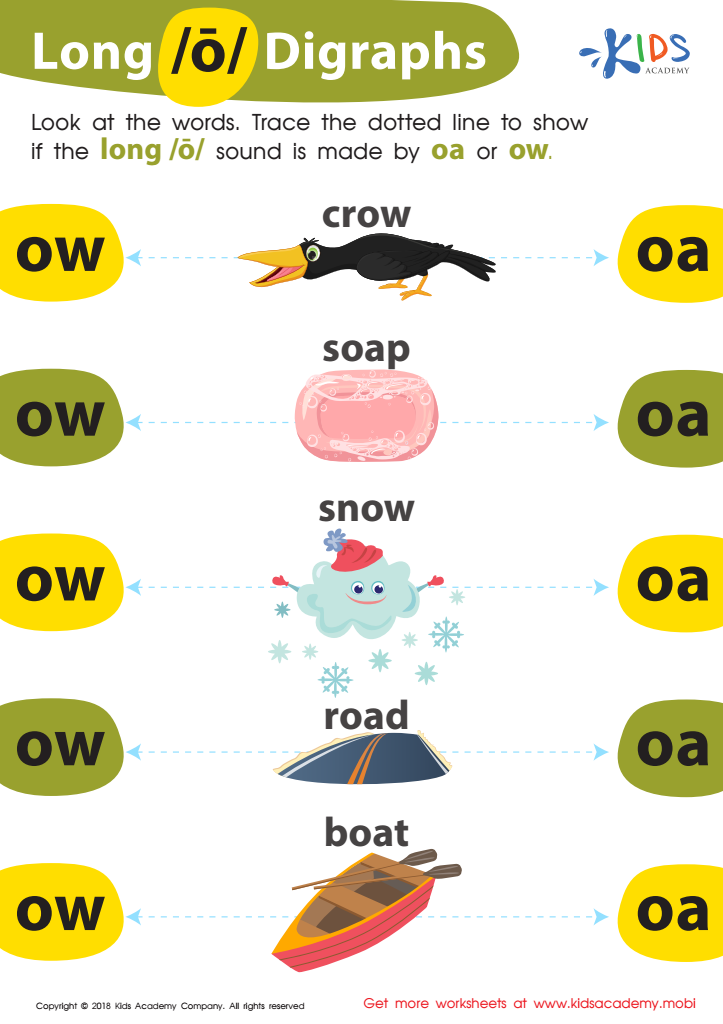
Reading: Long O Digraphs Worksheet
Reading and decoding words can be complex for learners when they start studying digraphs, two letters that make one sound. This worksheet focuses on the long O sound, /oa/ and /ow/. With the understanding of digraphs, students can decode more words and build their reading confidence.
Reading: Long O Digraphs Worksheet
Worksheet
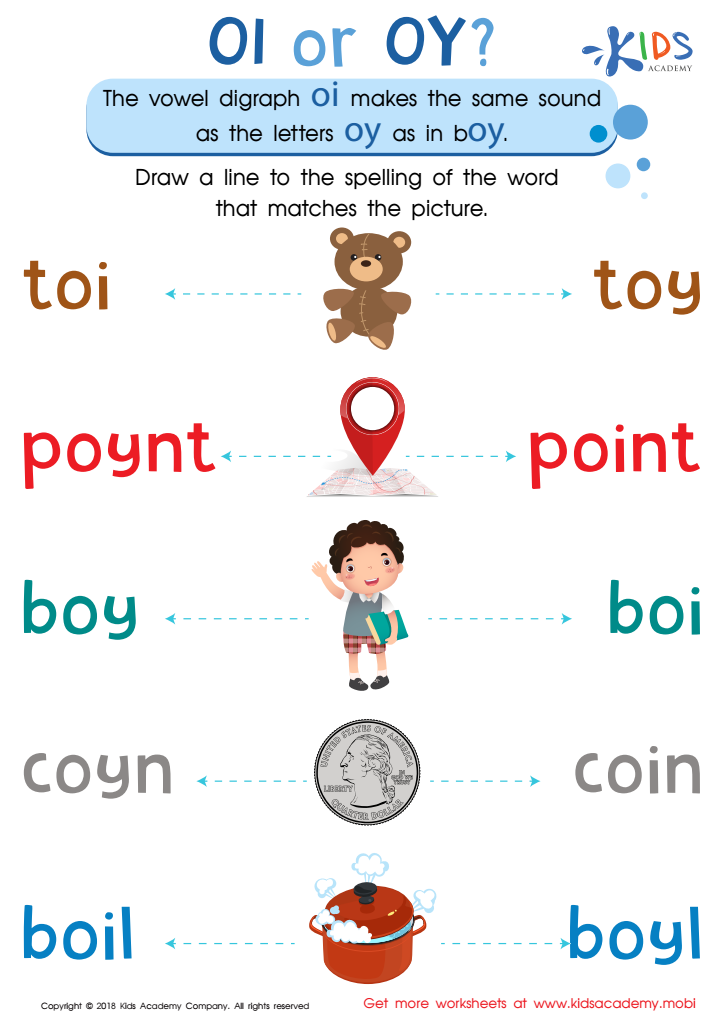
Reading: OI and OY Worksheet
Ask your students if they know the rule for words with /oi/ or /oy/ sound. If not, it's easy to learn! Rule: If /oy/ at end of word, spell with 'oy'; if /oi/ in middle of word, spell with 'oi'. Use this worksheet to help them master these digraphs and improve their ability to decode.
Reading: OI and OY Worksheet
Worksheet
Join Kids Academy for Free
Who is primarily going to use this learning content?


Phonics skills, particularly understanding normal vowel digraphs, are essential for children aged 6-7, as they form a critical component of early reading development. Digraphs, such as 'ee,' 'oo,' and 'ai,' represent sounds that are produced when two vowels are combined. Mastering these helps children decode unfamiliar words, which boosts their confidence and fluency in reading.
For parents and teachers, emphasizing vowel digraphs supports literacy across various aspects of a child’s education. Firstly, a strong grasp of phonics aids in vocabulary expansion, as children can apply their understanding of digraphs to identify and pronounce a broader range of words, facilitating comprehension. Furthermore, phonics instruction lays the groundwork for successful spelling skills; knowing the sound that different vowel pairs represent empowers children to spell correctly.
In a world where literacy is foundational for academic achievement and lifelong learning, prioritizing phonics, particularly vowel digraphs, ensures children are equipped to tackle more complex reading and writing tasks as they progress. Additionally, early intervention can limit future reading difficulties, fostering a love for reading that extends beyond the classroom. Therefore, focusing on phonics is not only an educational duty but an investment in a child's overall cognitive development.