Filters

6 filtered results

Clear all filters
Favorites
With answer key
Interactive

6 filtered results

Difficulty Level

Grade


Enhance your child's vocabulary with our specially designed Normal Vowels and Consonants Worksheets for ages 6-7. These engaging, printable resources from Kids Academy help young learners explore the intricacies of the alphabet. Through interactive activities, kids will practice identifying and differentiating between vowels and consonants, laying a solid foundation for reading and writing. Each worksheet is crafted to boost vocabulary skills while keeping the learning process fun and interesting. Ideal for home or classroom use, these worksheets provide an excellent way for early learners to expand their language abilities in an enjoyable and educational manner.

Check out this FREE Trial Lesson on Vowels and Consonants for age 6-7!

Digraphs

Favorites
With answer key
Interactive
  • 6-7
  • Vocabulary expansion
  • Vowels and Consonants
  • Normal
Short Vowels /e/, /i/, and /u/ Worksheet

Short Vowels /e/, /i/, and /u/ Worksheet

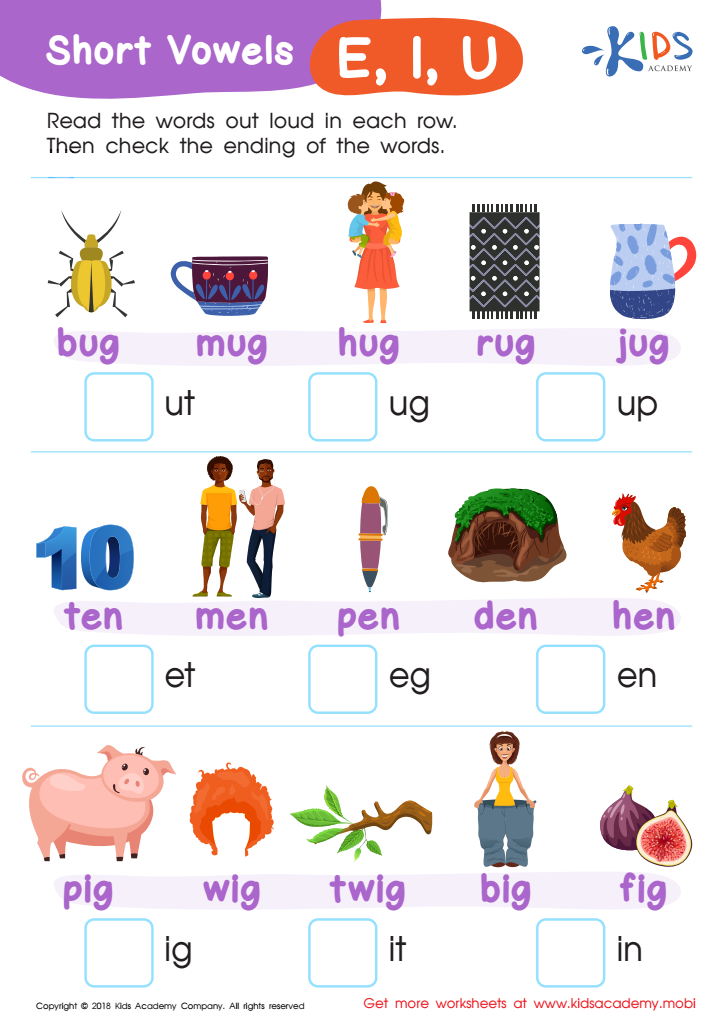
Your emergent reader can have fun while practicing their short vowel sounds with this free, brightly colored worksheet. They'll identify one-syllable words by their pictures, then match the correct ending for each. They'll gain an understanding of how short vowel sounds vary in closed syllables with different endings, without even realizing it!
Short Vowels /e/, /i/, and /u/ Worksheet
Worksheet
Reading: OW and OU Words Worksheet

Reading: OW and OU Words Worksheet

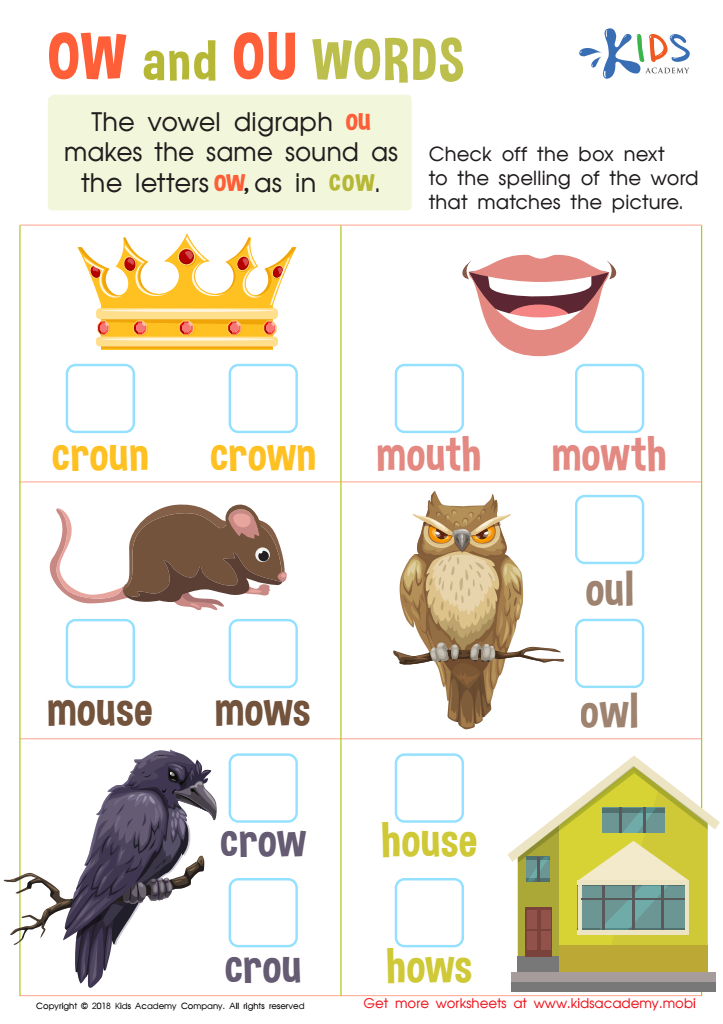
Help your kids learn phonetics! Explain the different sounds and long/short variations. Emphasize that some vowel sounds are the same, e.g. ou = ow in cow. For practice, have them read aloud the words in the worksheet and check the box next to the spelling that matches the picture.
Reading: OW and OU Words Worksheet
Worksheet
Matching Vowel Sounds Worksheet

Matching Vowel Sounds Worksheet

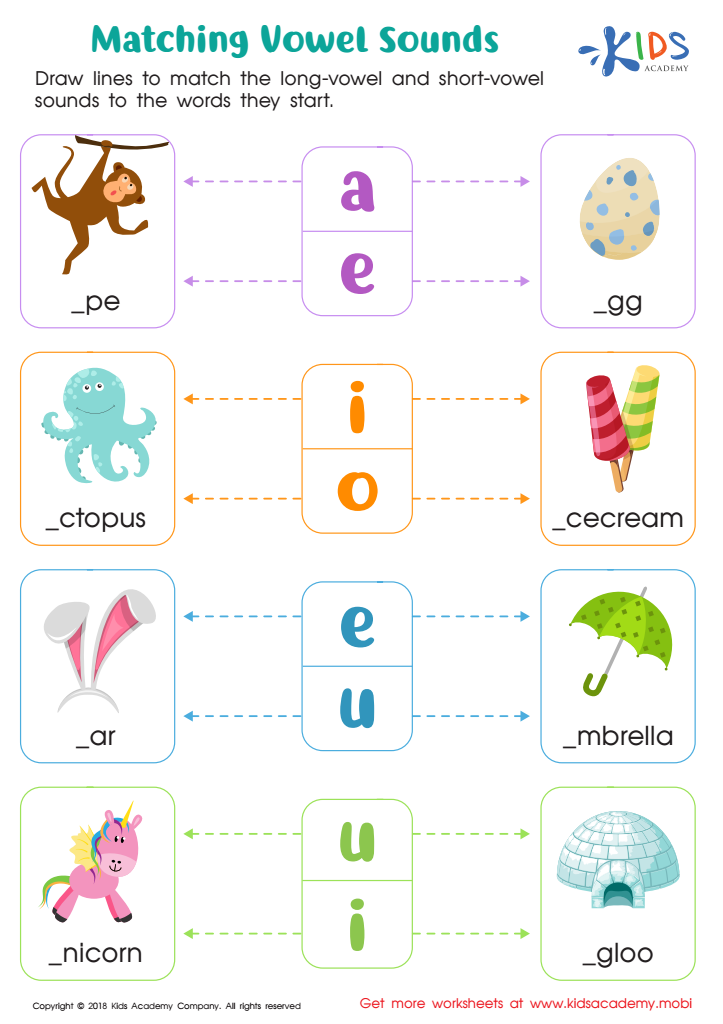
Teach your child phonics with a fun worksheet! Ask your child to name a vowel sound and listen if it's long or short. Differentiating between long and short vowel sounds can be tricky, but this matching worksheet makes it easy for kids to understand. Have fun and master phonics - the worksheet will help them understand the difference between long and short vowel sounds!
Matching Vowel Sounds Worksheet
Worksheet
Reading: AW and AU Words Worksheet

Reading: AW and AU Words Worksheet

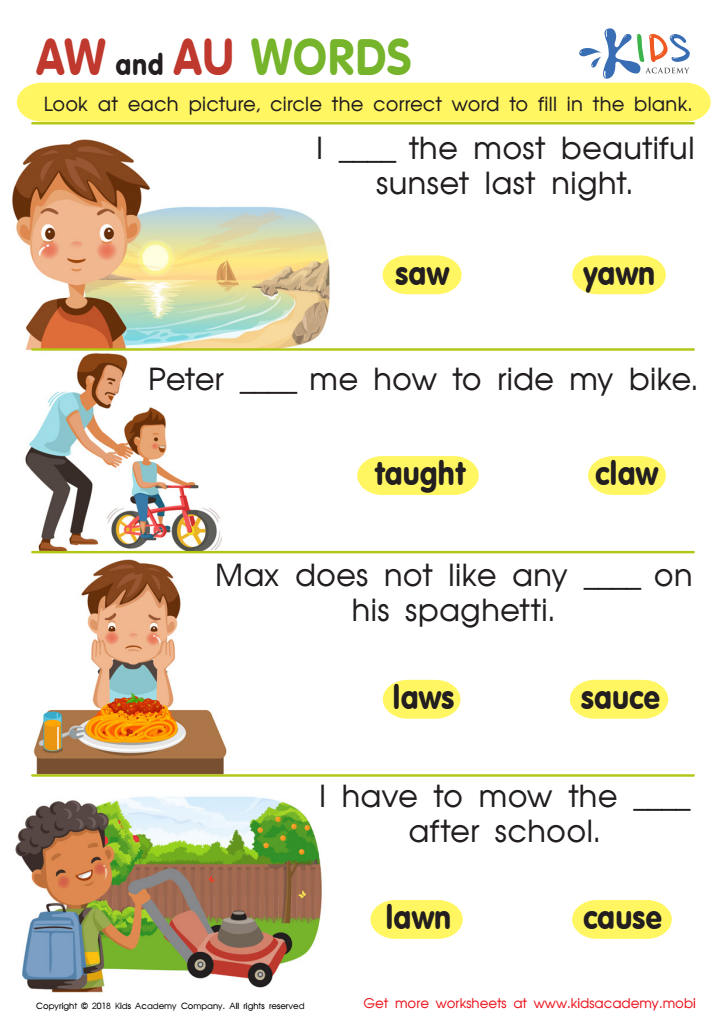
This worksheet helps kids recognize that /au/ and /aw/ can make the same sound. Students read sentences and pick the correct word with one of the digraphs. Understanding digraphs improves decoding and reading fluency. Perfect for reading and phonics classes.
Reading: AW and AU Words Worksheet
Worksheet
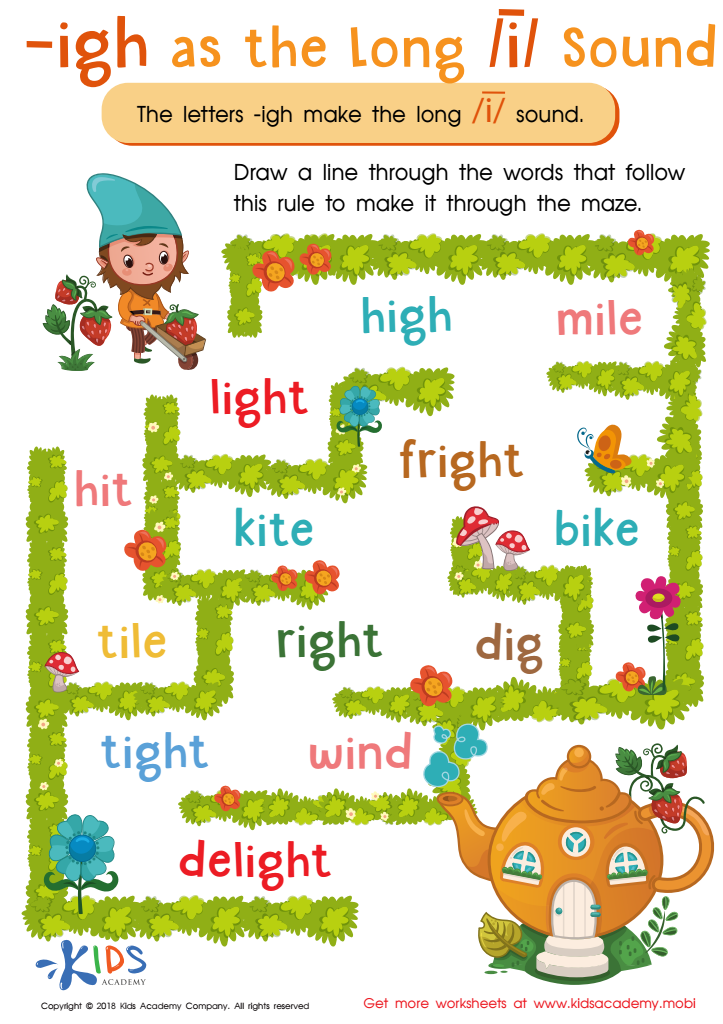
Reading: IGH as Long I Worksheet

Reading: IGH as Long I Worksheet

Kids can have fun and learn with this maze! They'll look for and read words with the 'long I' sound spelled 'igh'. Most words ending with 'T' have this spelling. Decode words while learning about long vowel sounds and their spellings.
Reading: IGH as Long I Worksheet
Worksheet
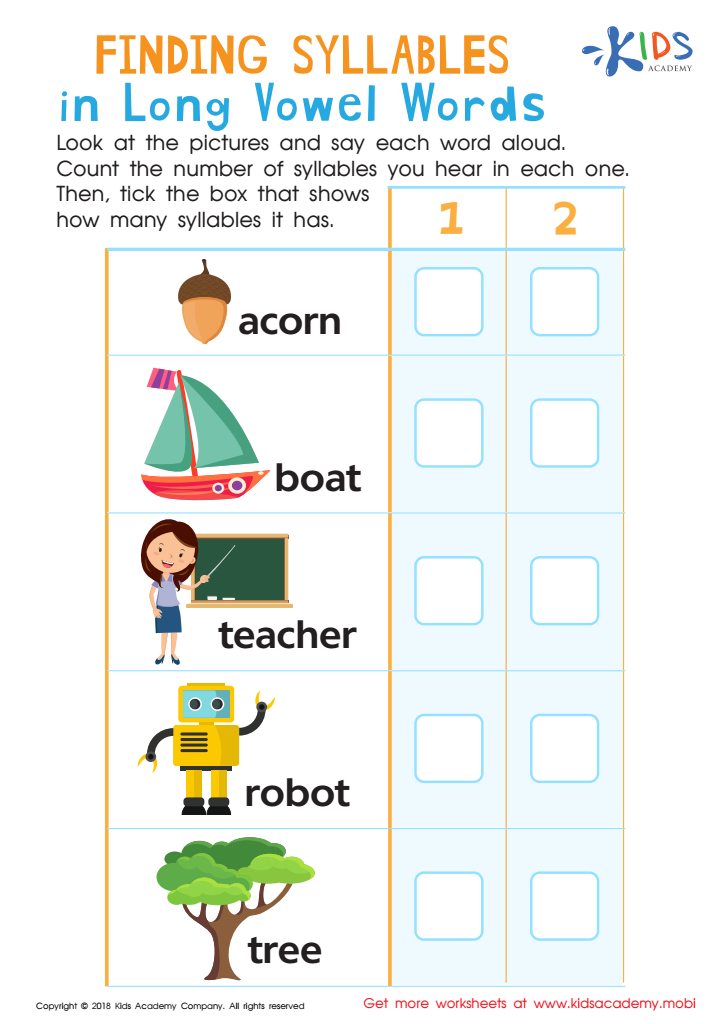
Finding Syllables in Long Vowel Words Worksheet


Finding Syllables in Long Vowel Words Worksheet

Help your kids identify objects and better count syllables in words. Look at the printout images with them and have them say each word out loud. Ask them to count syllables and tick the box with the correct number. With this worksheet, your kids will become more skilled.
Finding Syllables in Long Vowel Words Worksheet
Worksheet


Understanding and expanding vocabulary is crucial for children aged 6-7 as it lays the foundation for successful communication and literacy skills. At this developmental stage, children are transitioning from learning to read to reading to learn. A robust vocabulary enables them to comprehend new concepts more easily, foster critical thinking skills, and engage more effectively in academic and social activities.

Knowledge of normal vowels and consonants is particularly important at this age because it underpins phonemic awareness, which is the ability to recognize and manipulate the sounds in spoken words. This skill is directly tied to successful reading and spelling. When children can differentiate and understand the basic sounds of their language, they become proficient in decoding unfamiliar words, thus enhancing their reading fluency.

Moreover, a well-developed vocabulary supports expressive language skills, allowing children to articulate their thoughts and emotions more clearly, which is vital for both peer interactions and classroom participation. Parental and teacher involvement in vocabulary expansion can be instrumental; by reading, engaging in conversations, and providing a language-rich environment, adults can greatly enhance a child's linguistic and cognitive abilities, setting the stage for later academic achievement and lifelong learning. In short, investing time in vocabulary expansion equips children with essential tools for effective communication and a love for learning.