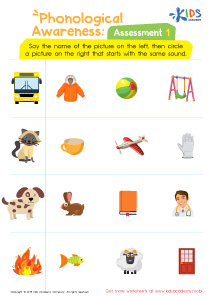
Phonics skills development Normal Vowels Worksheets for Ages 6-7
4 filtered results
Difficulty Level
Grade
Age
-
From - To
Subject
Activity
Standards
Enhance your child's phonics skills with our engaging Normal Vowels Worksheets, specially designed for ages 6-7. These interactive worksheets focus on helping young learners master the sounds and recognition of normal vowels. With a variety of fun activities, from matching exercises to fill-in-the-blanks, children will improve their phonetic awareness and reading proficiency. Each worksheet is crafted to captivate young minds, making learning enjoyable and effective. Equip your child with essential phonics skills that form the foundation for fluent reading and writing. Explore our extensive collection today to support your child's literacy journey!
Favorites
With answer key
Interactive
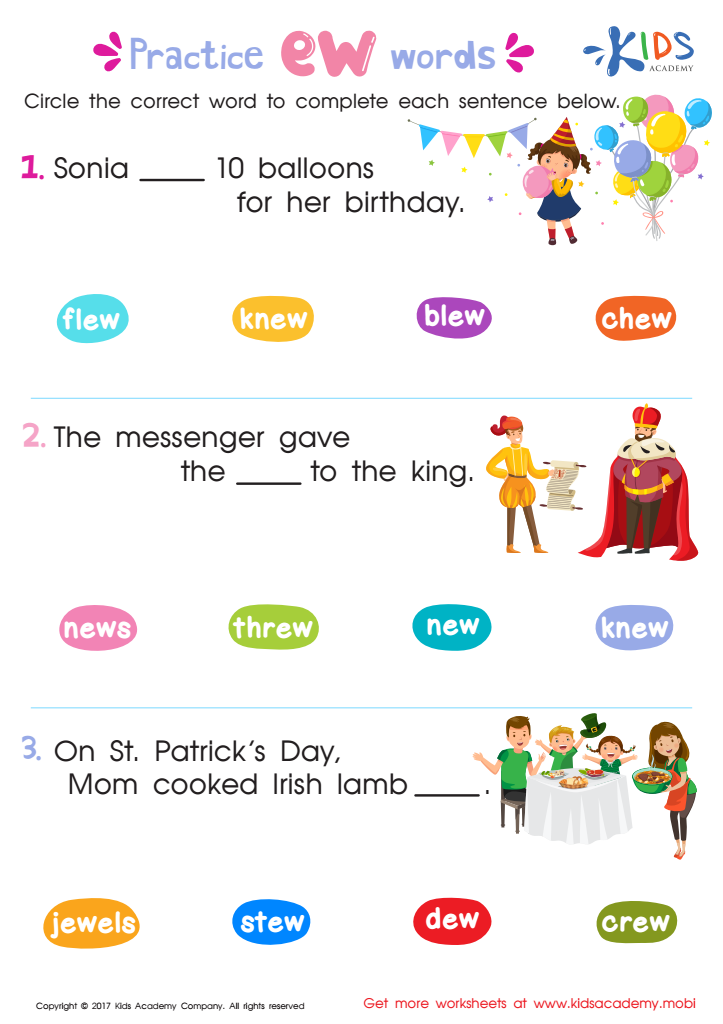
EW Words Worksheet
Practice the diphthong ew and boost your child's vocabulary with this fun ew words worksheet! Filled with illustrations, it will help your child hone their reading and spelling skills. Plus, the tricky words will make it both enjoyable and rewarding!
EW Words Worksheet
Worksheet
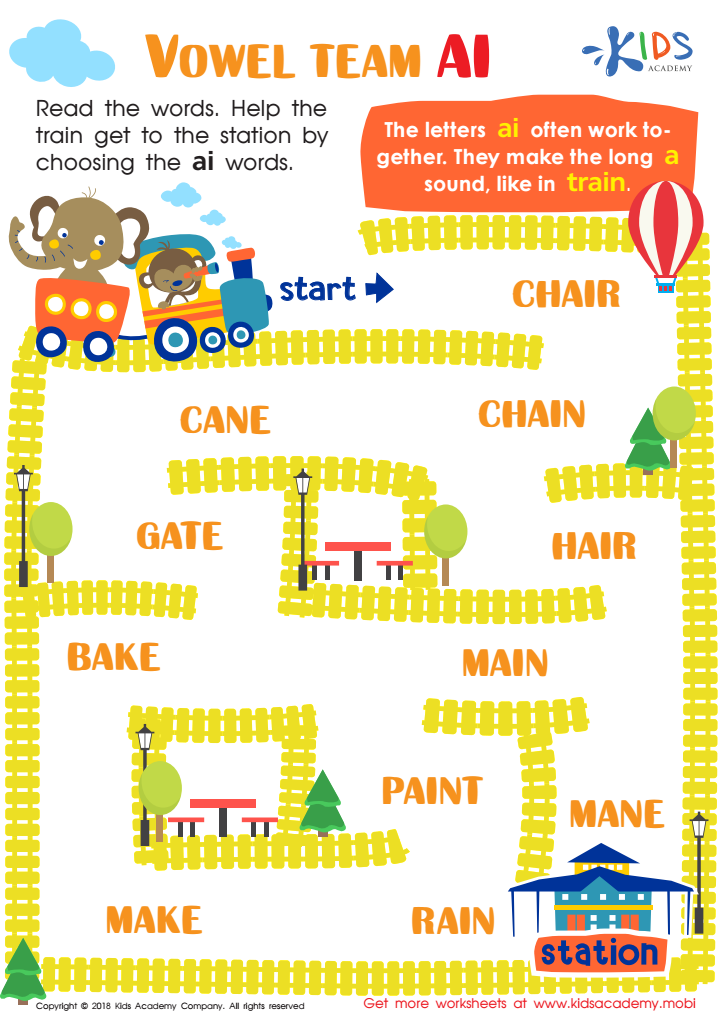
Vowel team ai Worksheet
Kids will have a blast learning about the -ai digraph with this fun worksheet. They'll read words with it and practice their motor skills as they help the animal duo get back to the train station. With success, they'll smile and enjoy the activity!
Vowel team ai Worksheet
Worksheet
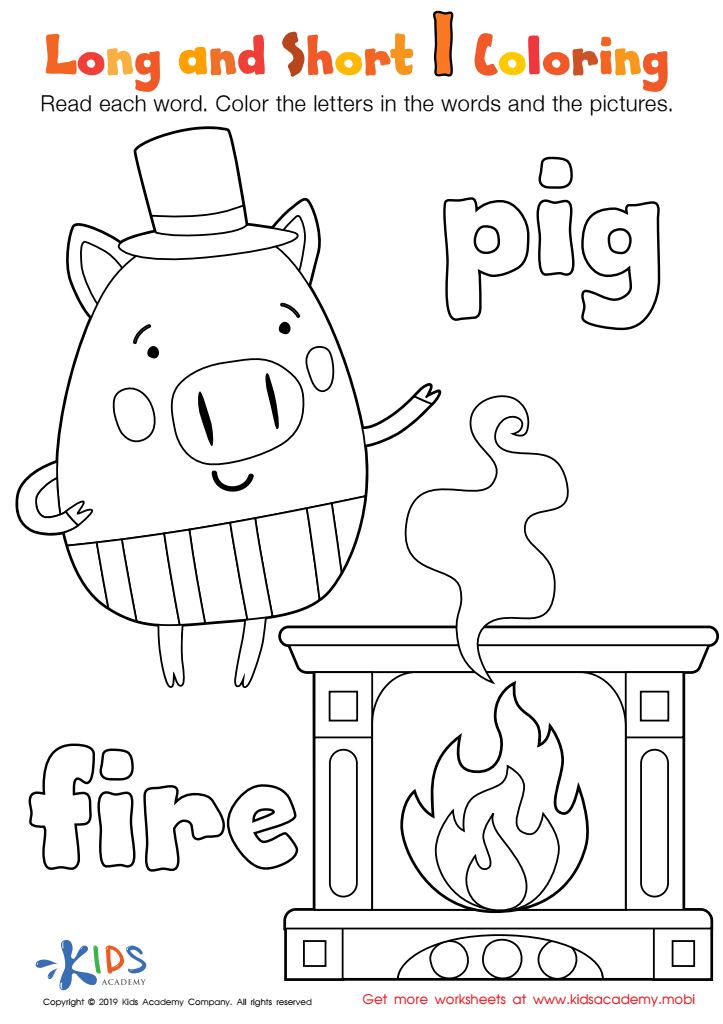
Long and Short I Worksheet
Print the worksheet and have the students read "pig" and "fire". Check for understanding the difference between long and short vowels. Color in words and pictures to make learning phonics fun! This exercise is perfect for introducing the topic to your students.
Download (PDF)
 Assign to My Students
Assign to My Students
Long and Short I Worksheet
Worksheet
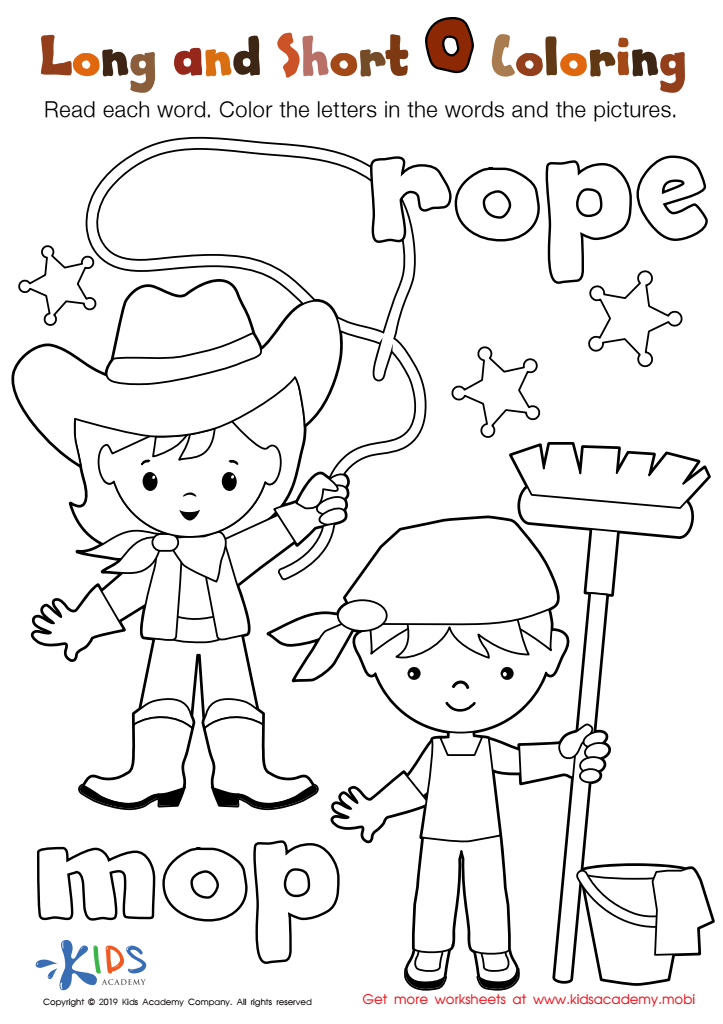
Long and Short O Worksheet
Help your students recognize the difference between long and short «Os» with this fun printout. Let them read and color-in "rope" and "mop" simultaneously. Listen to the different sounds, then color the words and pictures. Great for classes, it'll make your phonics lesson memorable and enjoyable.
Download (PDF)
Assign to My Students
Assign to My Students
Long and Short O Worksheet
Worksheet
Join Kids Academy for Free
Who is primarily going to use this learning content?





Phonics skills development, particularly in normal vowels, is crucial for children ages 6-7 as it lays the foundation for reading and writing. At this age, children transition from learning letters and sounds to blending them into words. Understanding normal vowels—like ‘a,’ ‘e,’ ‘i,’ ‘o,’ and ‘u’—is essential, as they are critical components in countless words.
Mastering phonics enhances a child’s ability to decode text, allowing them to read independently and with confidence. This skill boosts their comprehension abilities, enabling them to engage more deeply with narratives and informational texts. Phonics also facilitates spelling, as children can better understand how to form words based on sound patterns.
Additionally, phonics instruction fosters a love for reading. When children become proficient readers, they are more likely to explore various genres, enhancing their vocabulary and critical thinking skills. For teachers and parents, encouraging this phonics development means ensuring that children become successful, fluent readers who are prepared for future academic challenges. Ultimately, focusing on phonics during these formative years can lead to improved literacy outcomes, setting children on a path toward lifelong learning and success.