Filters

28 filtered results

Clear all filters
Favorites
With answer key
Interactive

28 filtered results

Difficulty Level

Grade


Check out this FREE Trial Lesson on Vowels for age 6-7!

Distinguish between Long I and Short I

Favorites
With answer key
Interactive
  • 6-7
  • Spelling practice
  • Vowels
  • Normal
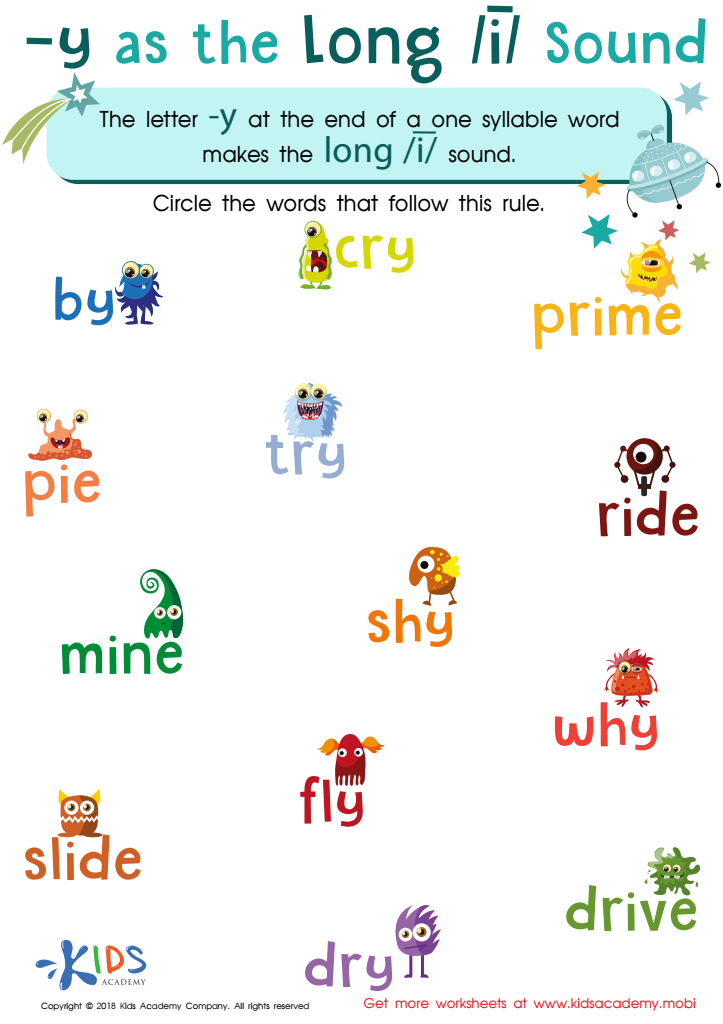
Reading: Y as Long I Worksheet

Reading: Y as Long I Worksheet

Students need practice and exposure to letters that make different sounds for decoding and reading success. This printable is a great resource for language arts classes: it explains that words ending with Y and having only one syllable make the long I sound. Students will circle all words with Y that have this sound.
Reading: Y as Long I Worksheet
Worksheet
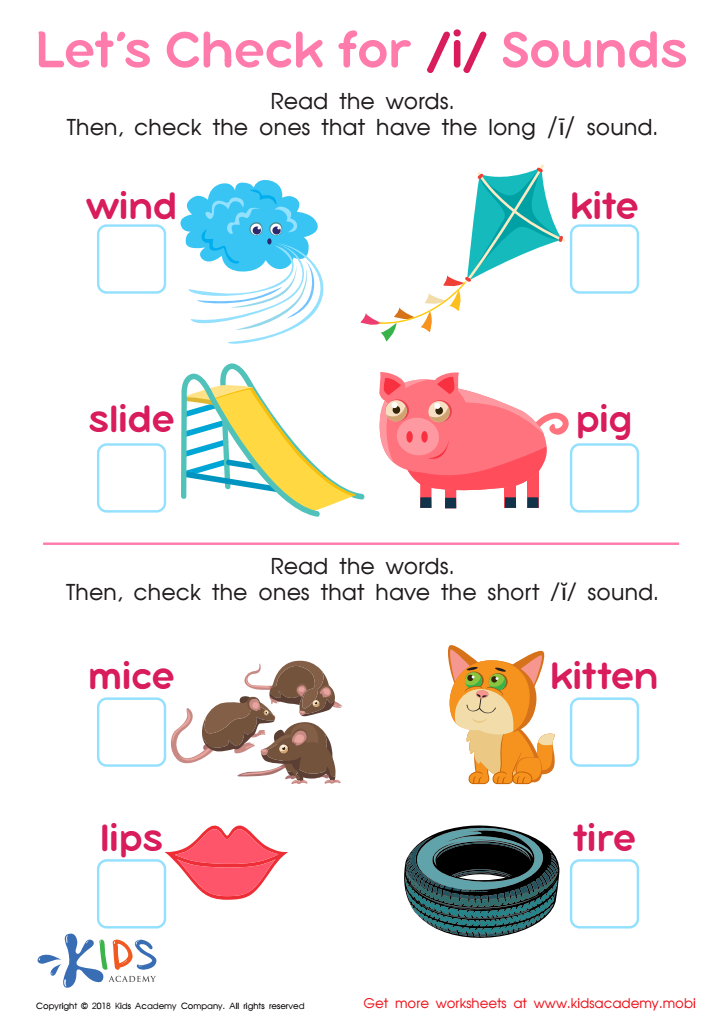
Let's Check for «i» Sounds Worksheet

Let's Check for «i» Sounds Worksheet

This fun worksheet with pictures boosts phonics skills - differentiating between long «ī» and short «i» sounds in 1- and 2-syllable words. Kids use picture clues to read words, then check off the correct ones. It's a great way for new readers to practice early reading skills and find success on their own.
Let's Check for «i» Sounds Worksheet
Worksheet
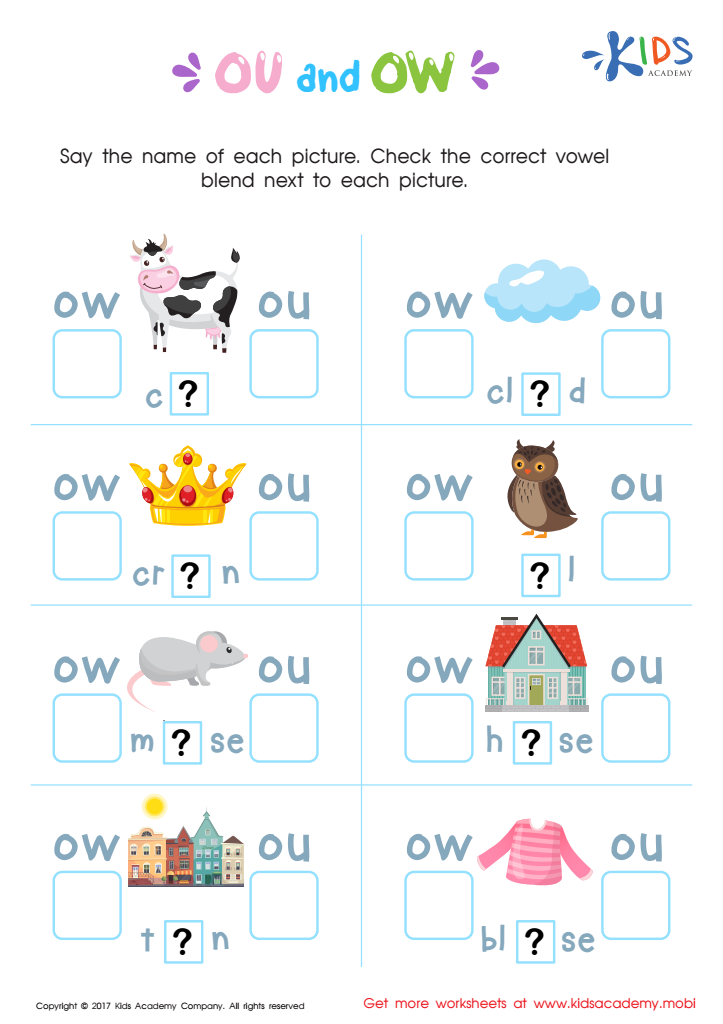
Ou and ow words worksheet

OU and OW Words Worksheet

Enhance your child's reading and spelling with this ou and ow words worksheet! Fun pictures and common words make mastering the diphthongs ou and ow easy and enjoyable.
OU and OW Words Worksheet
Worksheet
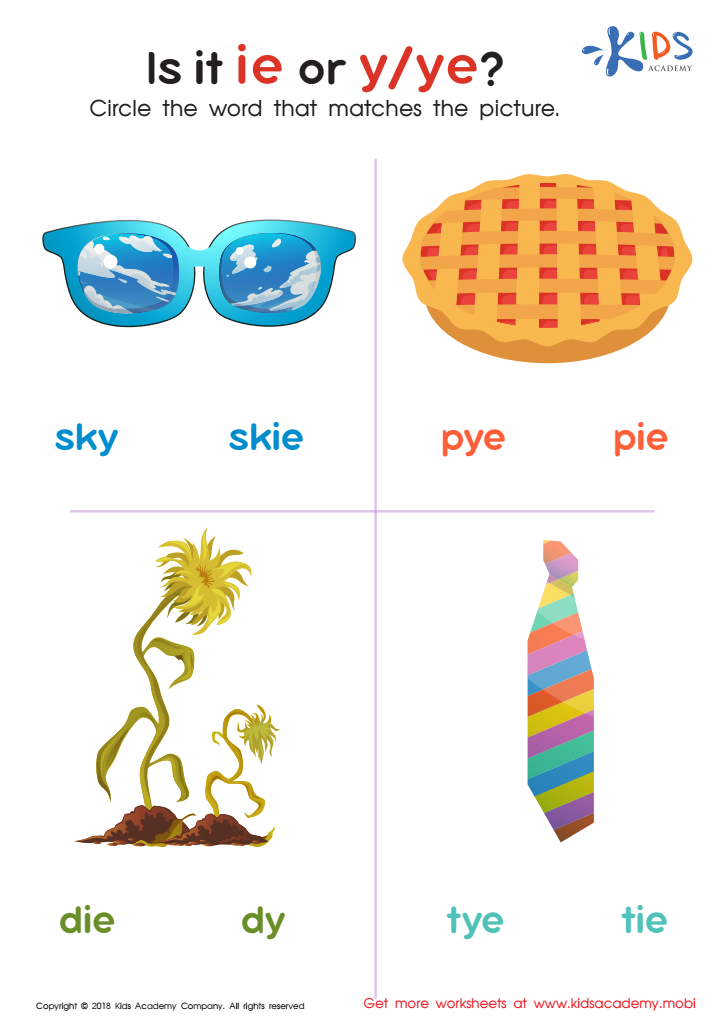
Is It IE or Y/Ye? Worksheet


Is It IE or Y/Ye? Worksheet

Test your child's picture identification skills by pointing at common items in your house and asking them to name them. Then, look at the objects in this worksheet with your little one. Point at each one, ask for the name, then ask which spelling is correct. Help them circle the correct word.
Is It IE or Y/Ye? Worksheet
Worksheet


Spelling practice, particularly focusing on normal vowels, is crucial for children aged 6-7 as it lays the foundation for their literacy development. During this formative period, children are typically in the first or second grade and are transitioning from recognizing letters to forming actual words and sentences. Mastery of vowel sounds is essential because vowels are the core of the English language; they appear in almost every word and influence pronunciation and meaning.

Parents and teachers should care about intentional vowel practice because it enhances reading fluency and comprehension. When children correctly spell words with normal vowels, they're more likely to recognize these words in print, improving their reading skills. Consistent practice also aids in developing phonemic awareness, helping students to discern subtle sound differences that are critical for both reading and spelling.

Moreover, early success in spelling boosts confidence and motivation in young learners. Celebrating these small victories can foster a positive attitude toward learning, encouraging continuous academic engagement. Through structured spelling exercises and supportive feedback, educators and parents can provide a nurturing environment that cultivates strong literacy skills, ultimately contributing to the child's overall academic success and self-esteem.