Vocabulary development Normal Vowels Worksheets for Ages 6-7
6 filtered results
-
From - To
Enhance your child’s reading and writing skills with our engaging Vocabulary Development Normal Vowels Worksheets designed specifically for ages 6-7. These worksheets focus on the essential understanding of normal vowels while fostering vocabulary enrichment in a fun and interactive way. Through various activities, kids will practice vowel recognition, phonics, and word-building, keeping them motivated and excited about language learning. Each worksheet is thoughtfully crafted to align with developmental milestones, ensuring a comprehensive approach to early literacy. Ideal for classroom or home use, these resources are perfect for strengthening vocabulary skills, prepping emerging readers, and setting a solid foundation for academic success.
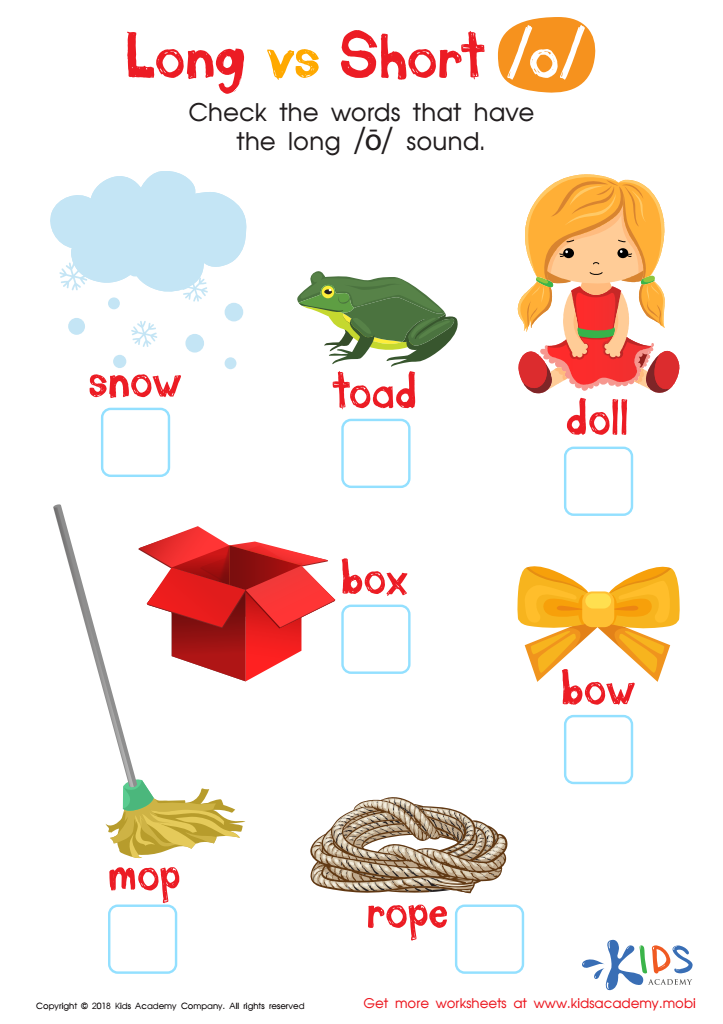
Long vs Short O Reading Worksheet
 Assign to My Students
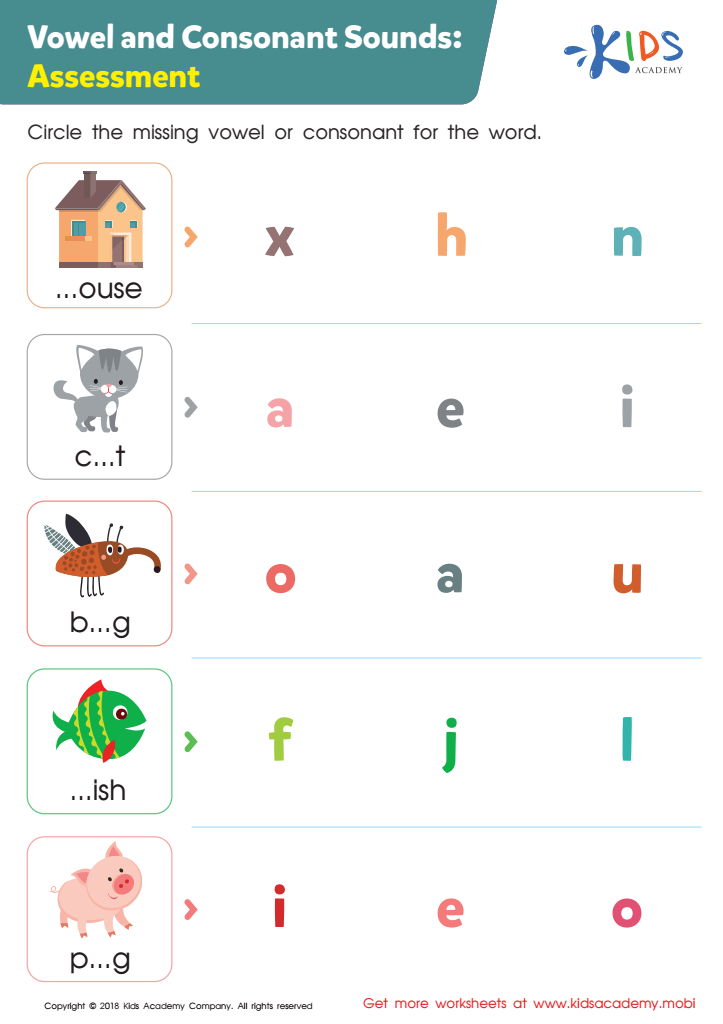
Vowel and Consonant Sounds: Assessment Worksheet
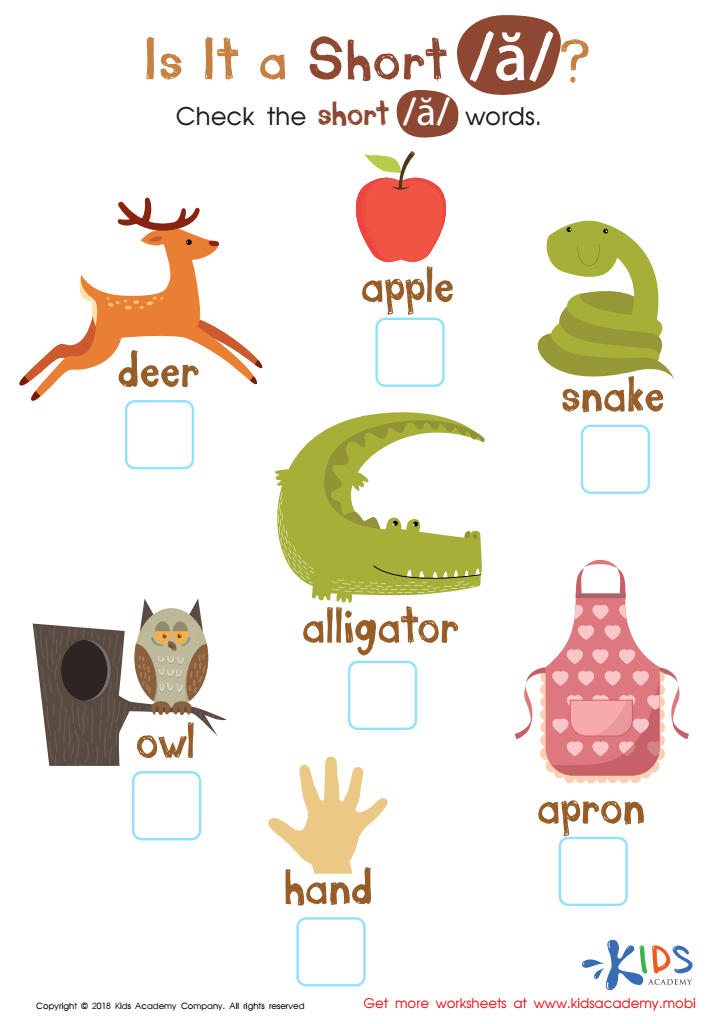
Is It Short A? Reading Worksheet
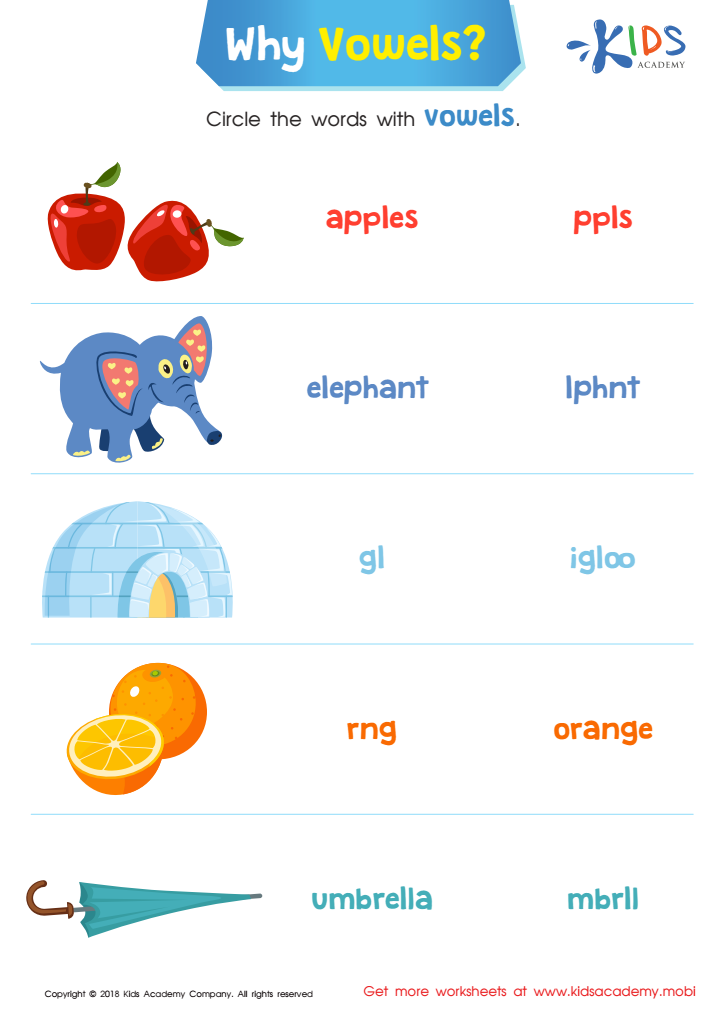
Why Vowels? Reading Worksheet
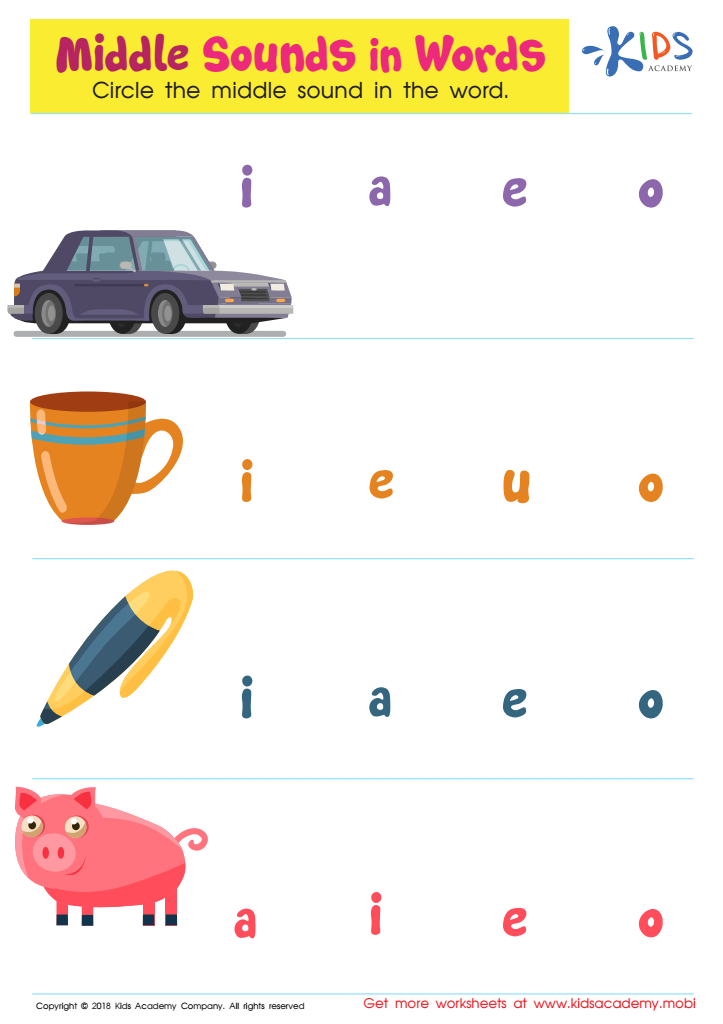
Middle Sounds in Words Worksheet
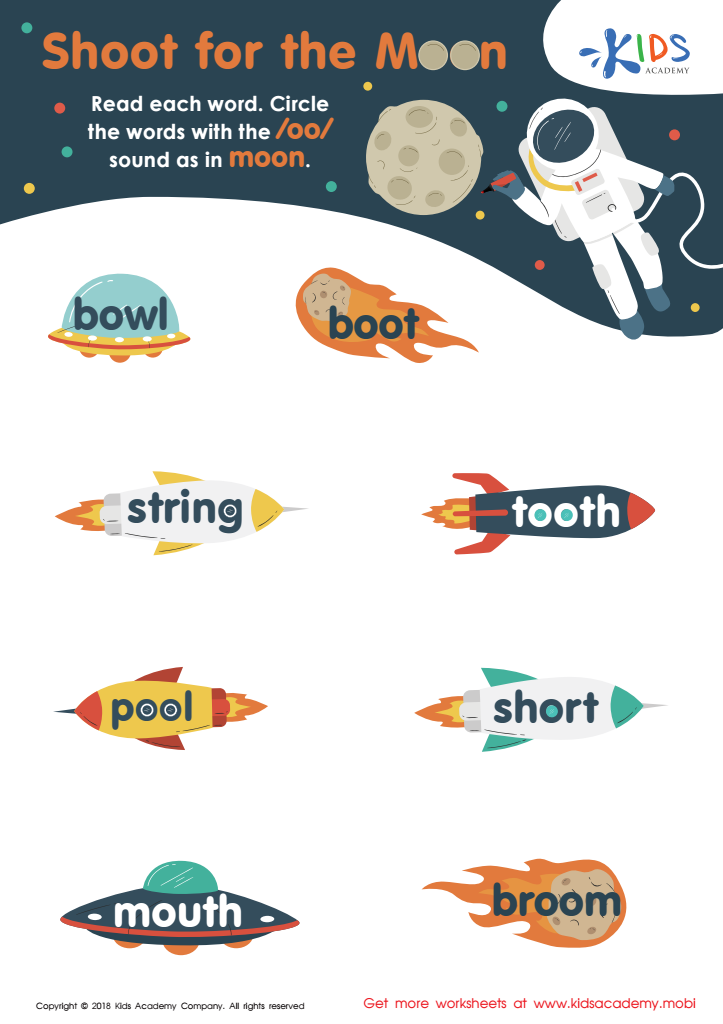
Reading: Shoot for the Moon Worksheet





Vocabulary development is crucial for children ages 6-7 as it lays the foundation for effective communication, literacy skills, and overall academic success. During this stage, children begin to read and write more independently, making it vital for them to understand and use vocabulary correctly, including normal vowels.
A strong vocabulary helps children express their thoughts and feelings, enhancing both social interactions and emotional well-being. When children grasp new words, they are better equipped to understand their reading materials, which fosters a love for reading and improves comprehension. This, in turn, boosts their confidence in academic settings.
Furthermore, learning about normal vowels at this age is essential for mastering phonics and pronunciation. By developing a solid understanding of vowel sounds, children can decode new words and become more fluid readers. Effective vocabulary instruction at this stage supports the transition from learning to read to reading to learn, which is crucial for future academic achievement.
In summary, parents and teachers should prioritize vocabulary development, especially focusing on normal vowels, as it significantly impacts children's language acquisition, reading skills, and overall educational experience, ultimately shaping their future success. Encouraging exploration and practice in this area can unlock a world of opportunities for young learners.






