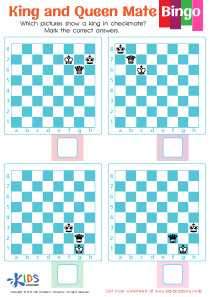
Problem-solving practice Normal Chess Worksheets for Ages 6-7
3 filtered results
-
From - To
Welcome to our Problem-solving Practice Normal Chess Worksheets for Ages 6-7! These engaging and educational worksheets are designed to introduce young learners to the fascinating world of chess while enhancing their problem-solving skills. Each worksheet features age-appropriate challenges that encourage critical thinking, strategy development, and decision-making. As children explore various chess scenarios, they develop cognitive abilities essential for their overall learning journey. Our worksheets are perfect for classroom activities or at-home practice, making learning fun and interactive. Help your child master chess fundamentals and cultivate a passion for this timeless game with our thoughtfully crafted resources!
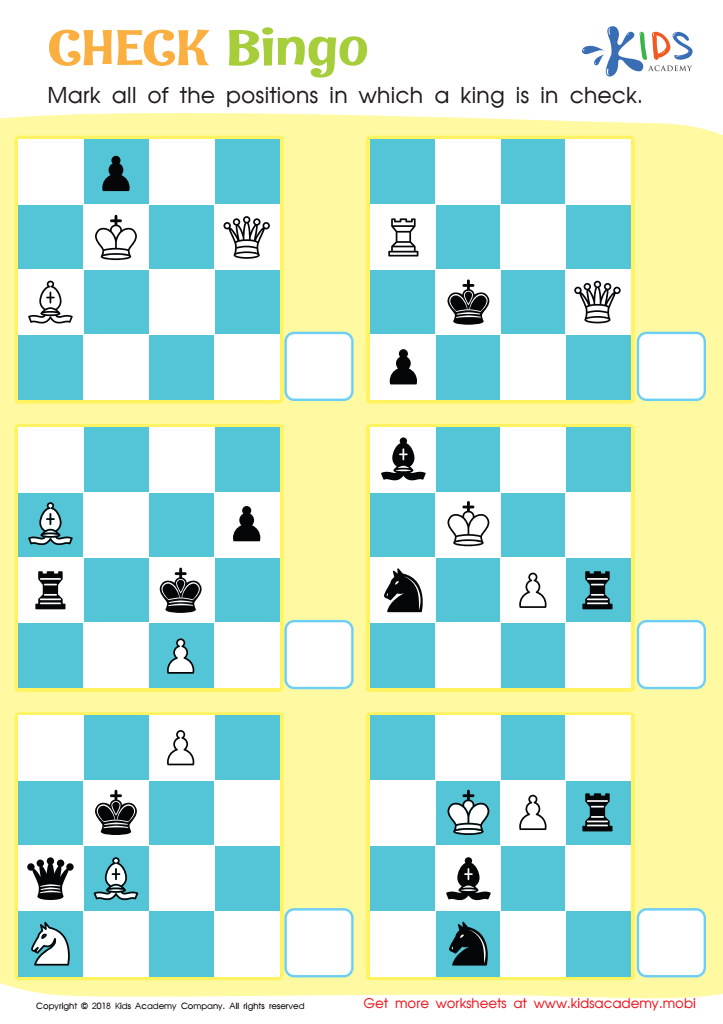
Check Bingo Worksheet
 Assign to My Students
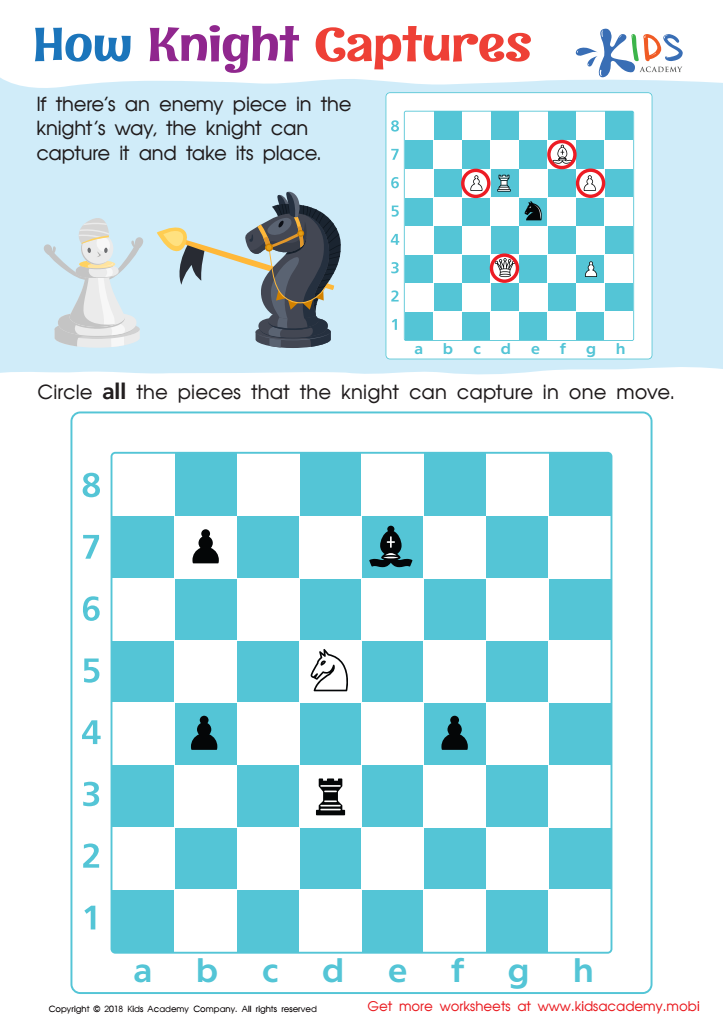
How Knight Captures Worksheet
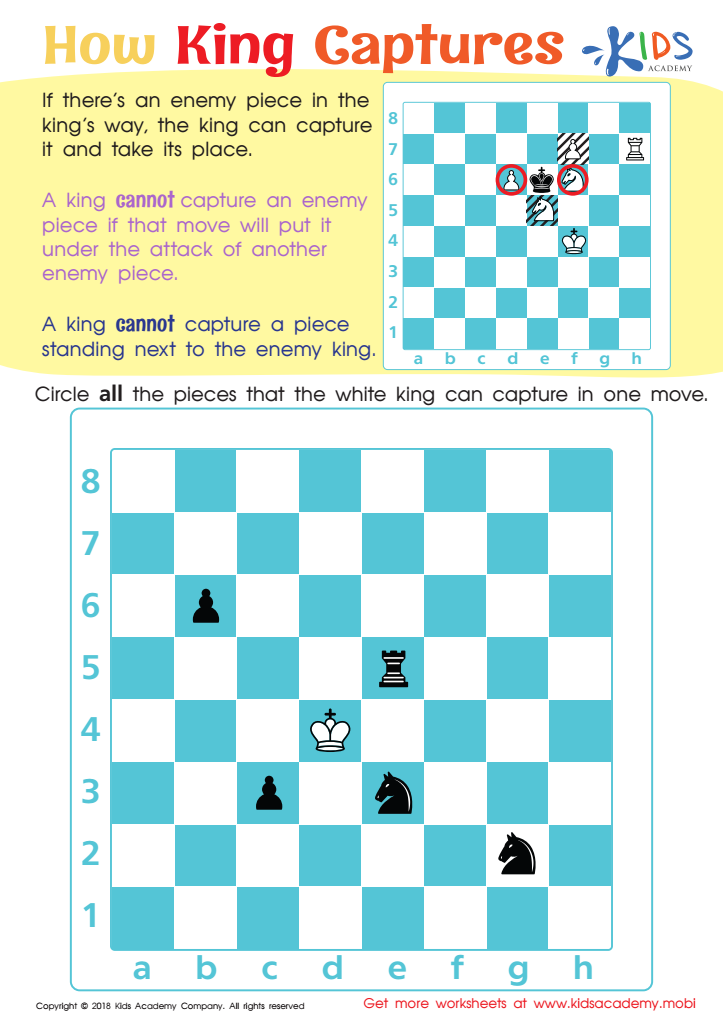
How King Captures Worksheet




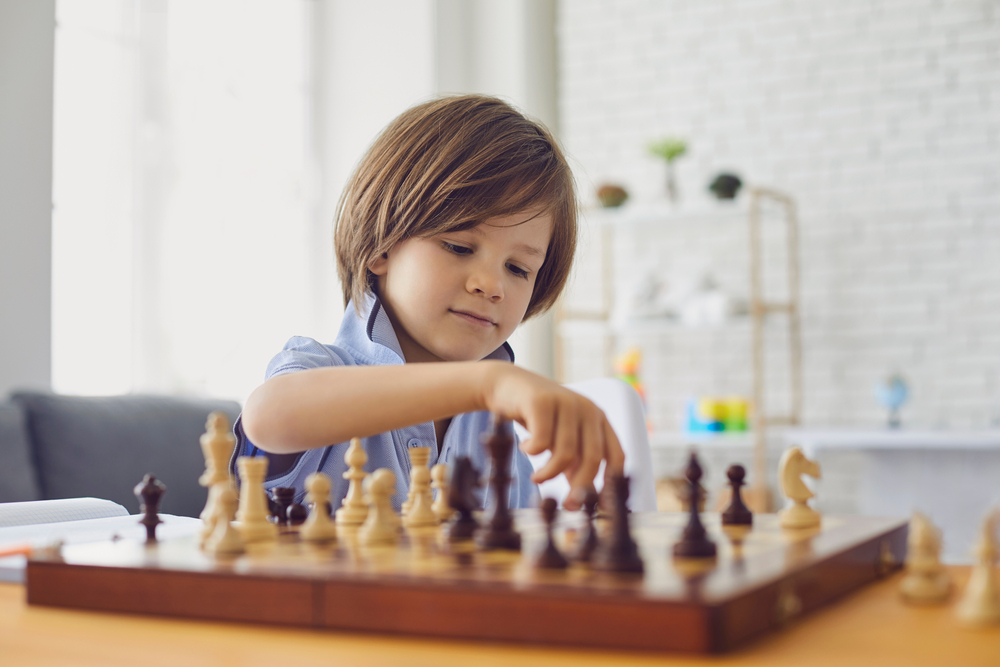

Problem-solving practice in Normal Chess for ages 6-7 is essential for several reasons. First, chess enhances cognitive development, fostering critical thinking and analytical skills. Young learners engage in strategic planning, which improves their ability to evaluate multiple outcomes and boosts their overall problem-solving skills.
Moreover, playing chess teaches patience and perseverance. Children learn that not every move will lead to success; sometimes, they must stay focused and adapt their strategies. This fosters resilience, an important trait for facing academic challenges and life situations.
Engaging in chess also promotes social skills. When children play together, they learn to communicate effectively, respect their opponents, and accept wins and losses gracefully. This develops their emotional intelligence and teamwork abilities, which are crucial in today’s collaborative learning environments.
Additionally, chess is a fun and engaging way to strengthen math and logical reasoning skills. Understanding the board's geometric patterns, calculating moves, and predicting an opponent's strategy all contribute to mathematical comprehension in a playful manner.
By incorporating problem-solving through chess, parents and teachers not only support cognitive and emotional growth but also instill a love for learning that can benefit children academically and socially throughout their lives.