Vocabulary expansion Normal English for Beginners Worksheets for Ages 6-7
6 filtered results
Difficulty Level
Grade
Age
-
From - To
Subject
Activity
Standards
Boost your child's language skills with our "Vocabulary Expansion Normal English for Beginners Worksheets for Ages 6-7". These fun, engaging worksheets are designed specifically for young learners to build a strong foundation in English. The activities use simple, everyday language to help kids grasp new words, enhancing their speaking, reading, and writing abilities. Perfect for English as a Second Language (ESL) students, these worksheets make learning enjoyable and effective. Give your 6-7-year-old the vocabulary tools they need for successful communication and academic growth. Start expanding their vocabulary today and watch their confidence soar!
Favorites
With answer key
Interactive
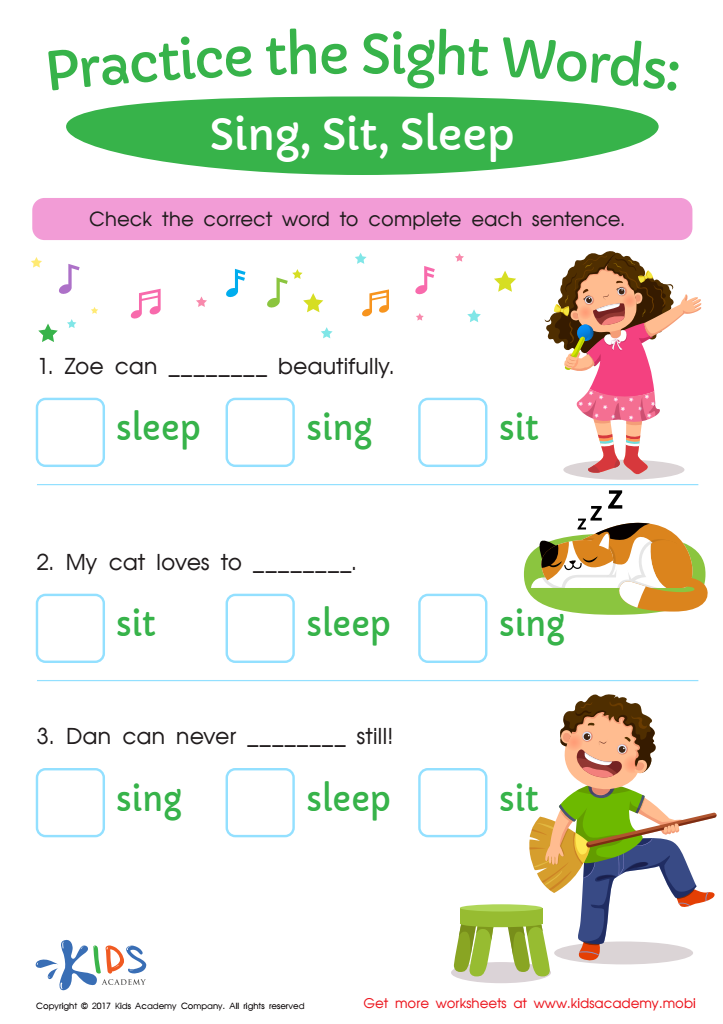
Sing, Sit, Sleep Sight Words Worksheet
Practice sight words with this printable worksheet featuring sing, sit, sleep! Confusing at first, these words can be mastered with the help of simple sentences and fun illustrations.
Sing, Sit, Sleep Sight Words Worksheet
Worksheet
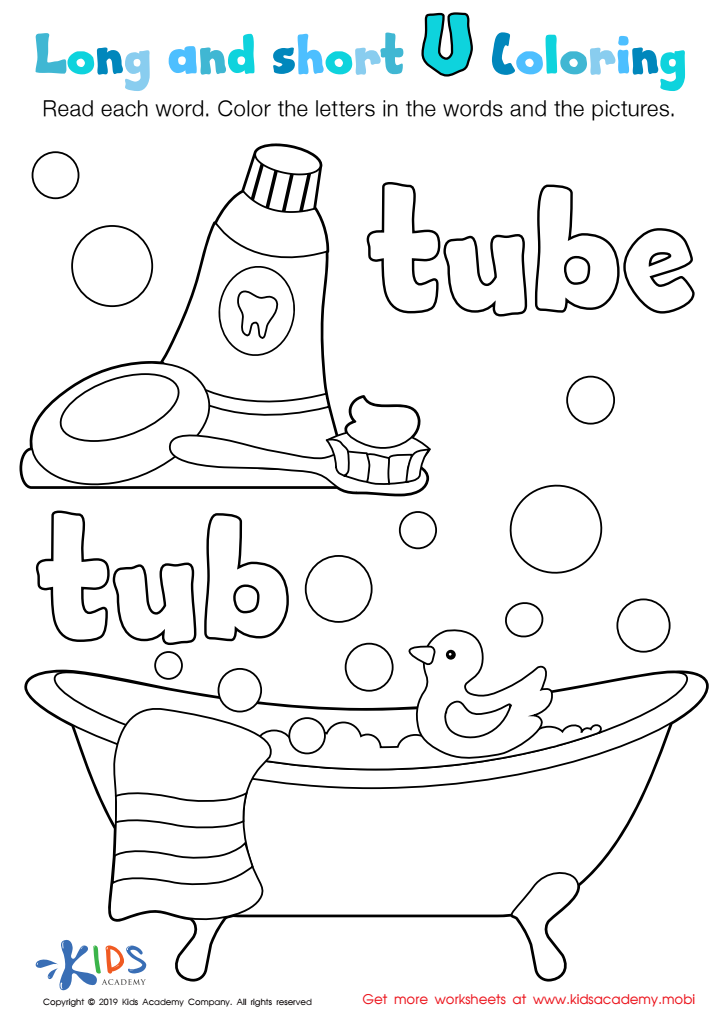
Long and Short U Worksheet
Revised: Spice up your lesson on long and short vowels with this fun printout! Kids read the words "tube" and "tub," then reinforce the sound by coloring in the words and pictures. It's a great way to make phonics class enjoyable!
Download (PDF)
 Assign to My Students
Assign to My Students
Long and Short U Worksheet
Worksheet
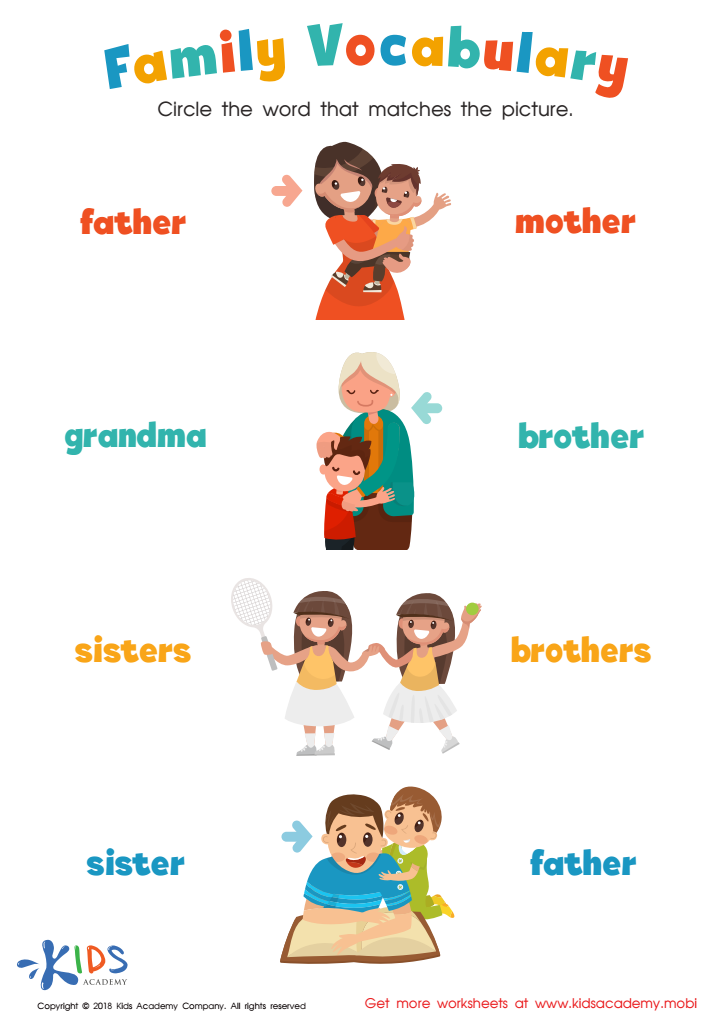
Family Vocabulary Worksheet
Students learn about families in social studies. This worksheet helps them identify family members by looking at a picture and circling the corresponding word. To extend their learning, ask them to talk about their own family members.
Family Vocabulary Worksheet
Worksheet
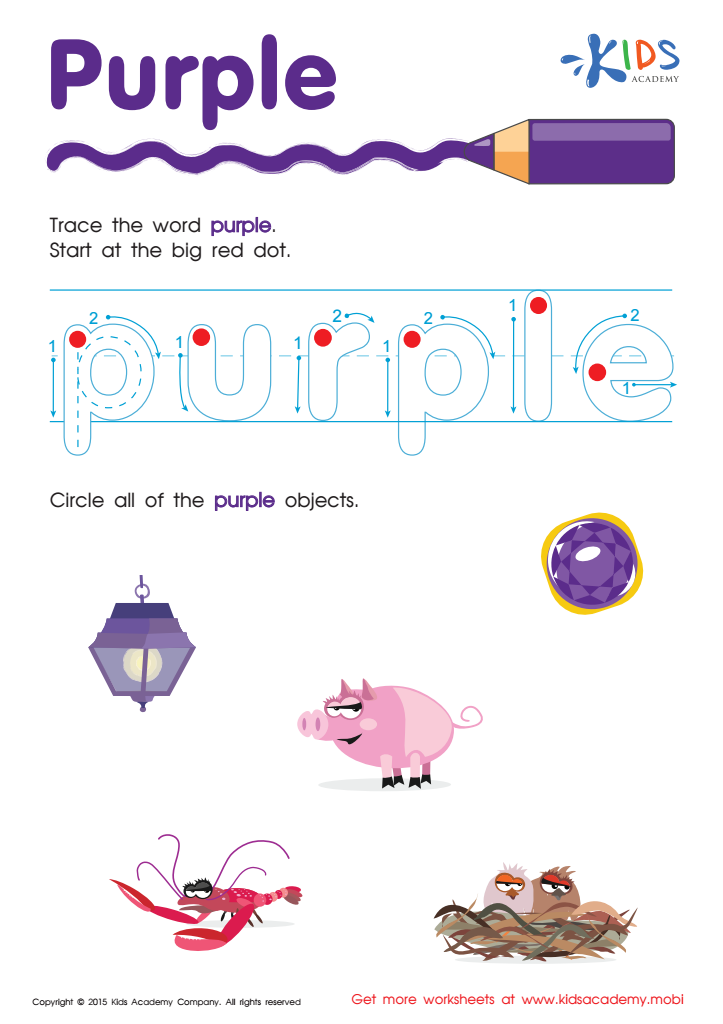
Purple Tracing Color Words Worksheet
Help your kindergartener practice their handwriting with this fun, free printable. They'll trace and color the word “purple”, starting at the big red dots, and pick out and circle all the purple objects they see. They'll get to train their fine motor muscles while having fun! Check out here for more handwriting practice.
Purple Tracing Color Words Worksheet
Worksheet
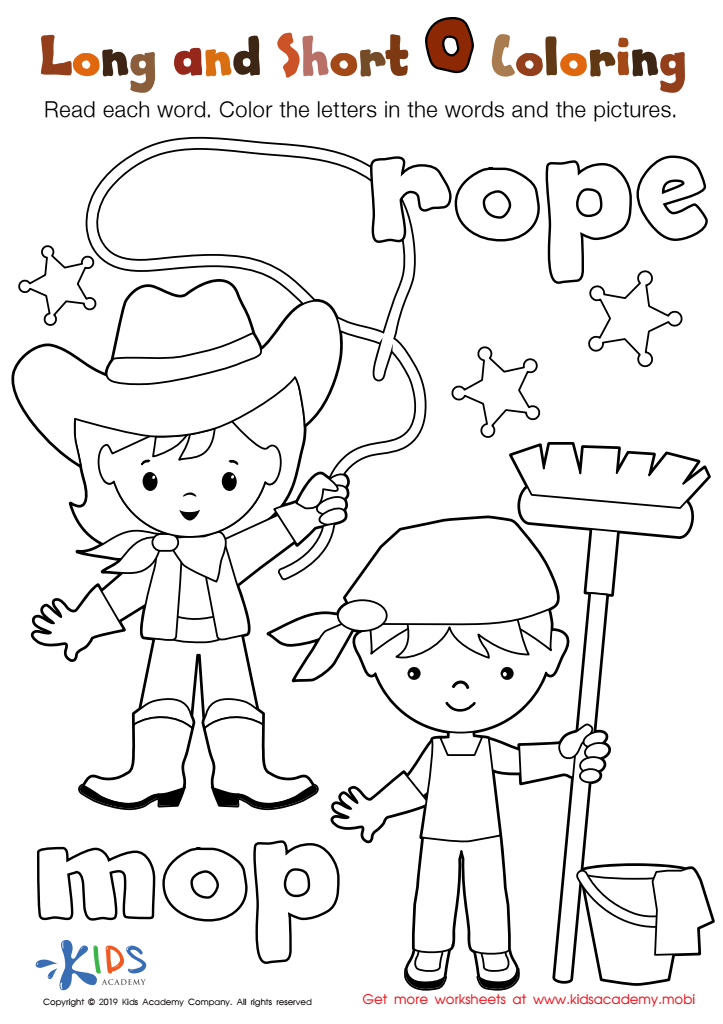
Long and Short O Worksheet
Help your students recognize the difference between long and short «Os» with this fun printout. Let them read and color-in "rope" and "mop" simultaneously. Listen to the different sounds, then color the words and pictures. Great for classes, it'll make your phonics lesson memorable and enjoyable.
Download (PDF)
Assign to My Students
Assign to My Students
Long and Short O Worksheet
Worksheet
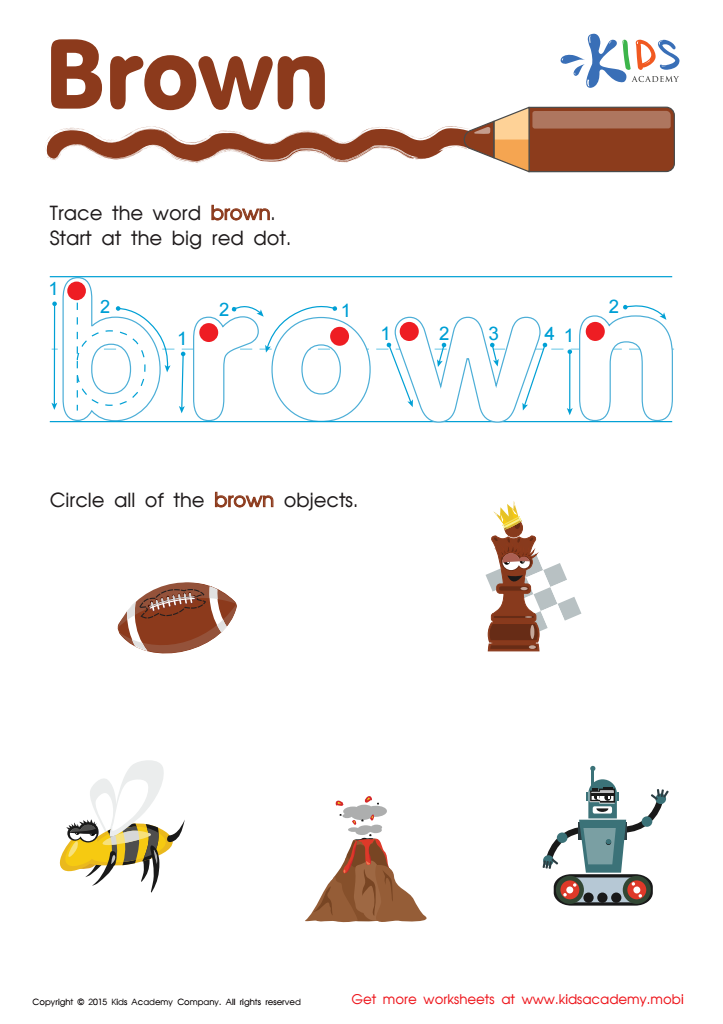
Brown Tracing Color Words Worksheet
This worksheet helps kids develop fine motor muscles and practice writing. Have them trace the word "brown" with a crayon, then find the brown objects in the picture. Ask them to look around and say what's brown in their room to make it more fun. Writing basics and a bit of fun - check out this free printable handwriting worksheet! For more tracing color words, check out here.
Brown Tracing Color Words Worksheet
Worksheet
Join Kids Academy for Free
Who is primarily going to use this learning content?




Expanding vocabulary in children aged 6-7 is crucial for several reasons. Firstly, it directly supports reading comprehension. As children's ability to recognize and understand words improves, they can more easily grasp the meaning of texts. This boosts their confidence and interest in reading, creating a positive feedback loop that enhances their overall literacy skills.
Moreover, a rich vocabulary allows children to express themselves more clearly and precisely. This is essential not only for effective communication but also for developing social skills. Children with a better vocabulary find it easier to engage in conversations, understand instructions, and express their thoughts and feelings accurately.
Additionally, early vocabulary expansion sets the foundation for future academic success. Many studies show a strong correlation between extensive vocabularies and higher academic achievements. Words are the building blocks of knowledge; being able to understand and utilize a broad range of words helps children grasp complex concepts more easily as they progress through school.
Incorporating vocabulary expansion into early education also nurtures curiosity and a love for learning. When children learn new words, they become interested in the things those words represent. This inquisitiveness can lead to cognitive development and a stronger inclination toward lifelong learning.
Therefore, parents and teachers should prioritize vocabulary growth to foster better literacy, communication skills, and academic performance.