Comparing objects Normal Worksheets for Ages 6-7
3 filtered results
-
From - To
Explore our engaging "Comparing Objects Normal Worksheets" designed for children aged 6-7. These printable worksheets enhance essential skills as young learners practice comparing the size, weight, and quantity of various objects. Each activity encourages critical thinking and helps build strong foundational knowledge. Ideal for classroom use or homeschooling, these worksheets promote hands-on learning experiences that make comparison fun and interactive. With colorful illustrations and age-appropriate challenges, students will enjoy developing their analytical skills while enhancing their understanding of everyday concepts. Download our worksheets today to inspire curiosity and support your child's educational journey!
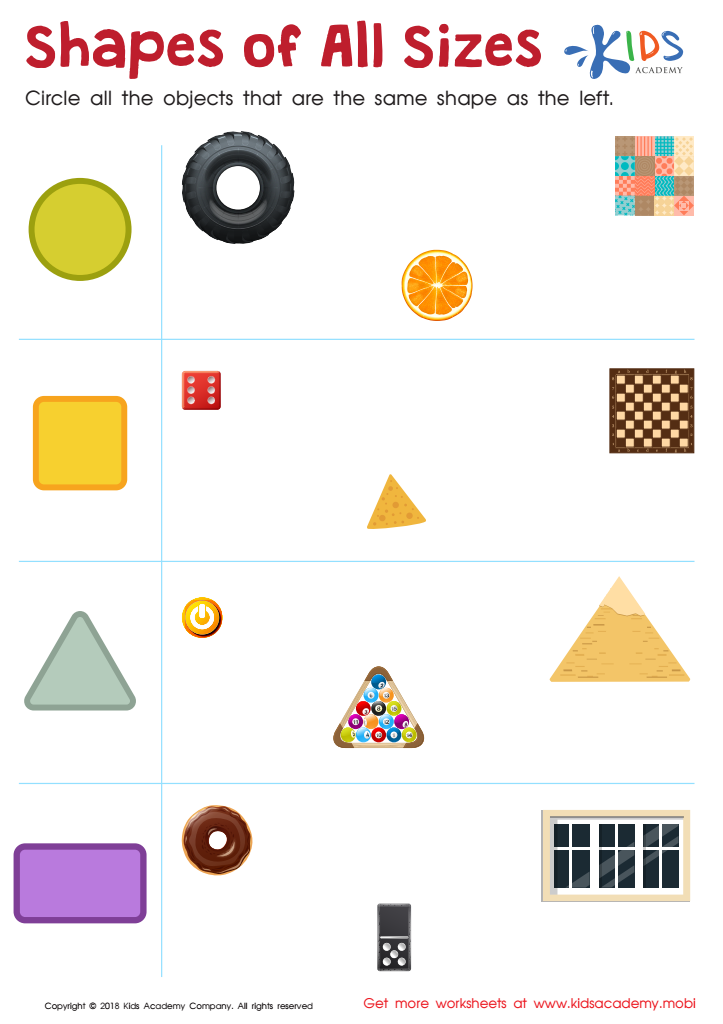
Shapes of All Sizes Worksheet
 Assign to My Students
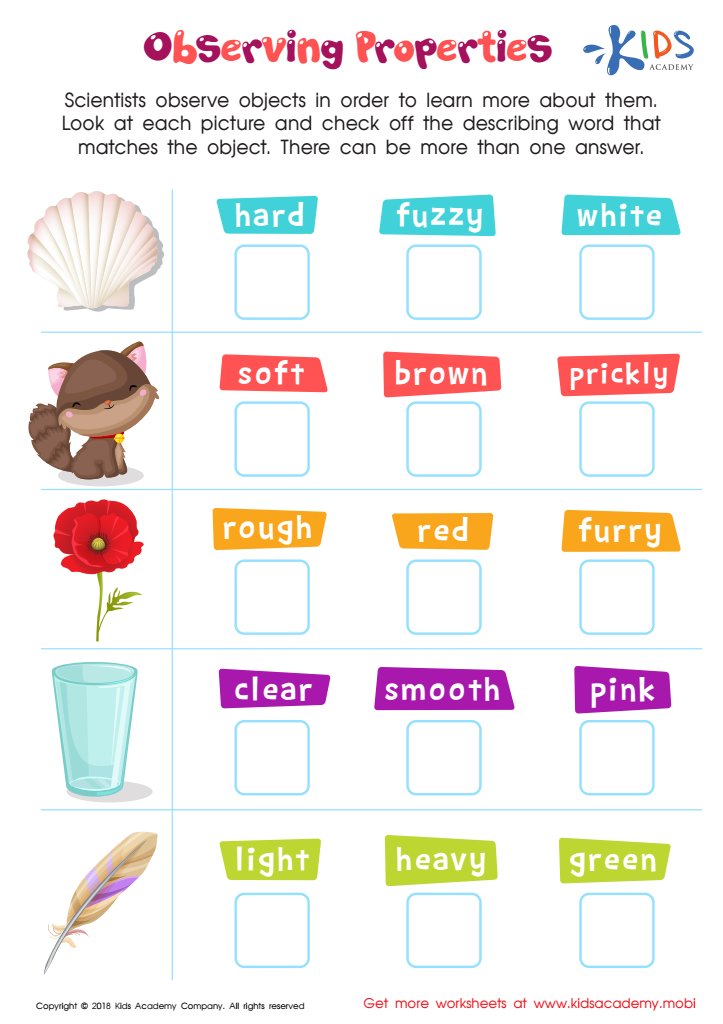
Observing Properties Worksheet
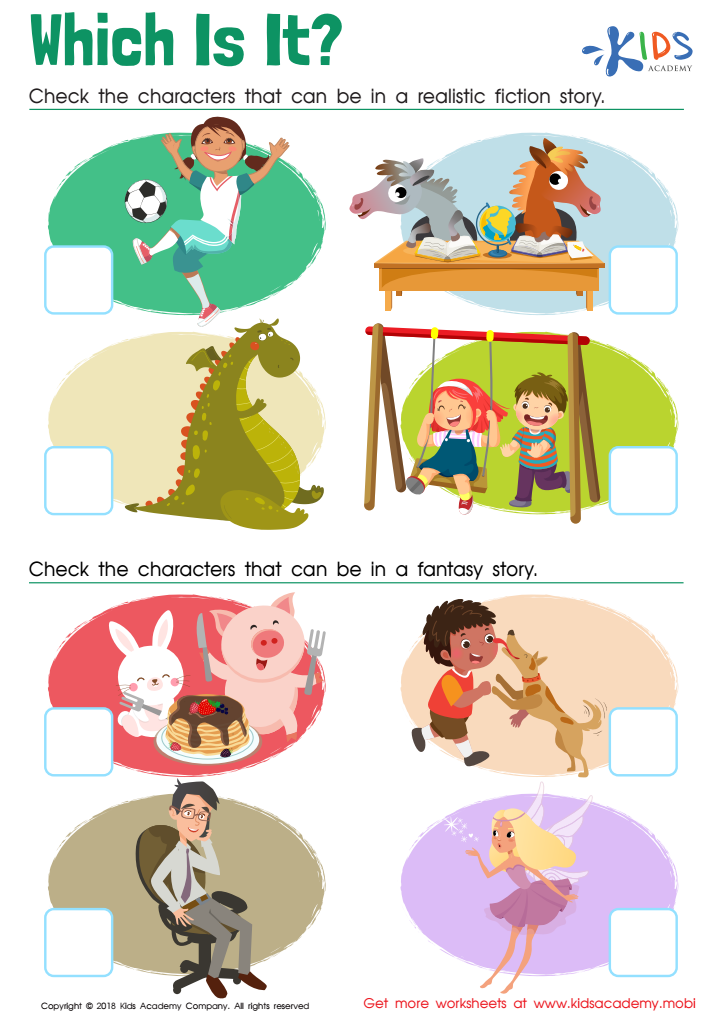
Which Is It? Worksheet








Comparing objects is a fundamental skill that greatly contributes to the cognitive and social development of children aged 6-7. At this stage, children begin to grasp essential concepts of measurement, quantity, and classification, which are vital for their mathematical understanding. Engaging in comparisons helps them sharpen their observational skills, enabling them to identify similarities and differences among objects, whether in terms of size, weight, length, or other attributes.
For parents and teachers, fostering the ability to compare objects provides numerous educational opportunities. It lays the groundwork for problem-solving and critical thinking skills, essential attributes as children progress in their education. Additionally, comparing objects encourages language development; children learn to articulate their thoughts and observations, enhancing their vocabulary and communication skills.
Moreover, this activity promotes curiosity and exploration, which encourages a lifelong love of learning. It also fosters social interaction when done in cooperative settings, helping children develop teamwork and negotiation skills as they discuss their findings with peers. Overall, understanding the importance of comparing objects can significantly enrich a child's educational experience, making it a key area of focus for both parents and educators.








