
Knowledge application Normal Worksheets for Ages 6-7
3 filtered results
Difficulty Level
Grade
Age
-
From - To
Subject
Activity
Standards
Explore our engaging Knowledge Application Normal Worksheets designed specifically for children aged 6-7. These worksheets aim to enhance critical thinking and problem-solving skills through fun, interactive activities that encourage children to apply their knowledge in real-world scenarios. With a variety of topics, our resources promote independent learning, making it easy for young learners to practice essential skills in a playful way. Each worksheet fosters creativity and reinforces foundational concepts, ensuring a well-rounded educational experience. Ideal for both classroom and home settings, our tailored resources support educators and parents in guiding children during these crucial developmental years. Start your child's learning adventure today!
Favorites
With answer key
Interactive
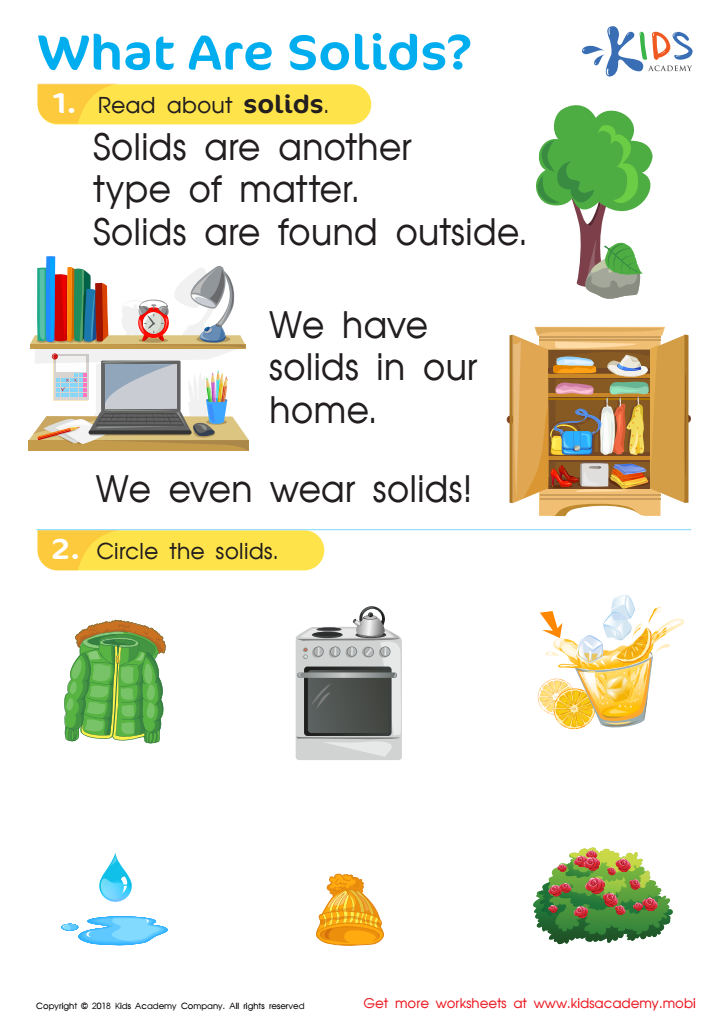
What Are Solids? Worksheet
Help your kids understand matter's three forms - solid, liquid, and gas - with examples. Ask them to give their own and where to find them. Then, read and discuss the worksheet's facts about solids. Afterward, have them circle the solids among the provided objects.
 Assign to My Students
What Are Solids? Worksheet
Worksheet
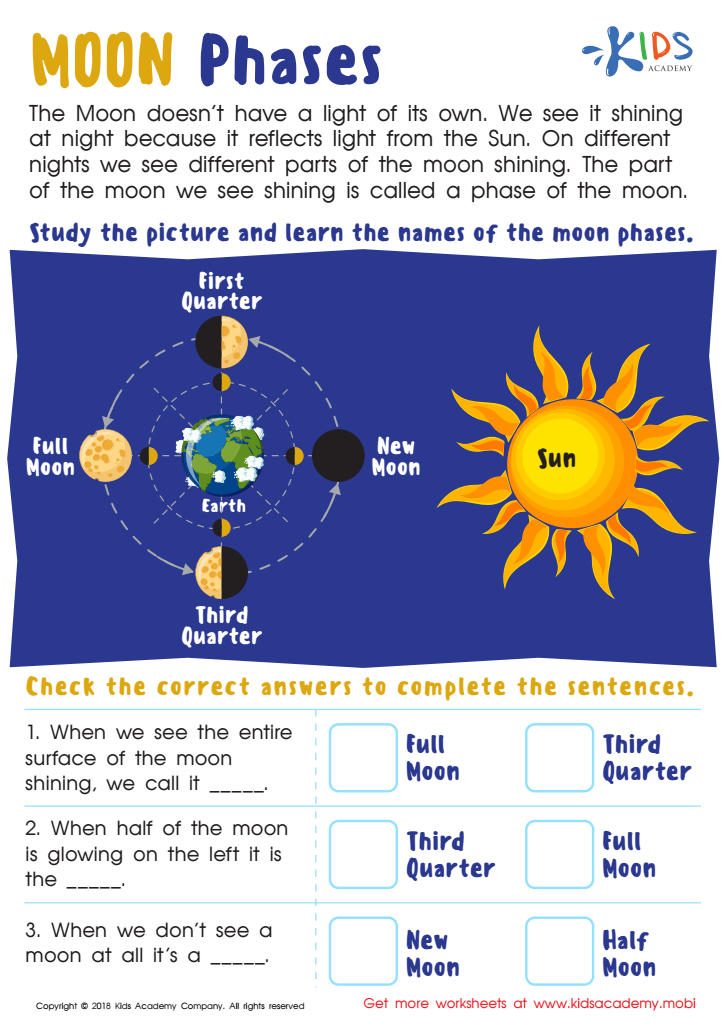
Moon Phases Worksheet
Gaze up at the night sky and the moon's appearance may change from night to night. Encourage your child to learn more about the sun, the moon, and space with this science worksheet. Have them read the text then study the picture. Finally, read the sentences and check the answers to identify the moon's phases.
Moon Phases Worksheet
Worksheet
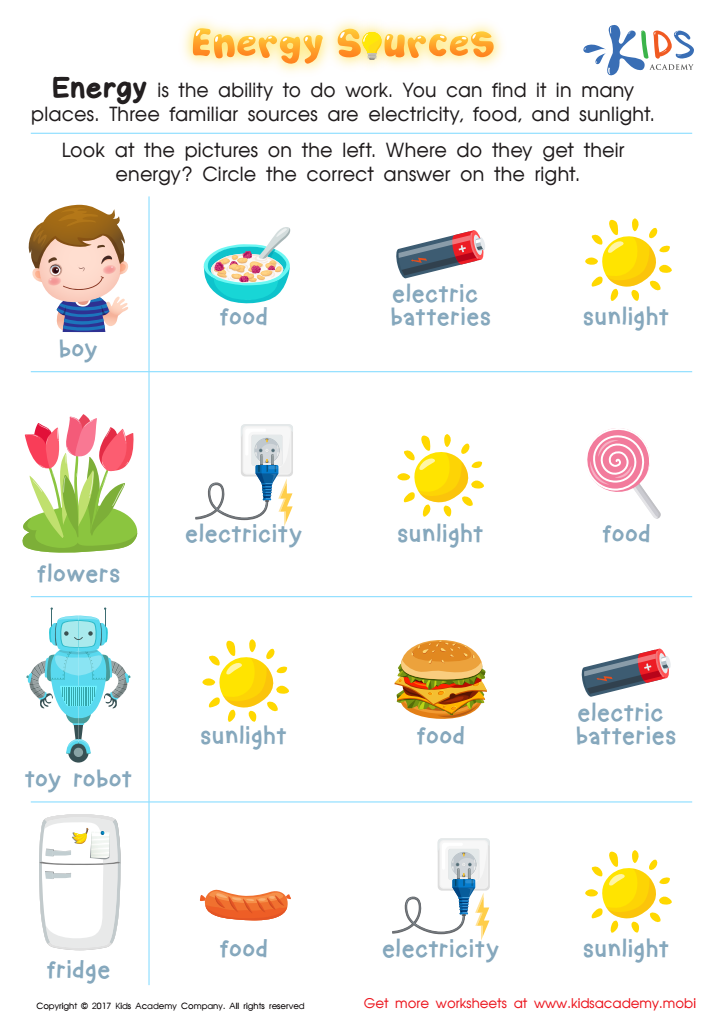
Energy Sources Printable
Introduce energy sources with this worksheet PDF — explore the sun, batteries, and more! Get your mini scientist excited about energy and power up their learning.
Energy Sources Printable
Worksheet
Join Kids Academy for Free
Who is primarily going to use this learning content?








Knowledge application is crucial for children aged 6-7, as it serves as the bridge between learning and real-world experiences. During these formative years, children start to connect theoretical knowledge to practical situations, which enhances their understanding and retention. When teachers and parents prioritize knowledge application, they encourage critical thinking and problem-solving skills, vital for lifelong learning.
Engaging children in activities that require them to apply what they’ve learned—such as projects, discussions, or hands-on tasks—motivates them and builds their confidence. It helps them see the relevance of their education, making learning more meaningful. For parents, this might involve using everyday scenarios like cooking to teach math or reading to enhance comprehension skills.
Furthermore, knowledge application fosters social skills, as children often work with peers, discussing ideas and collaboratively solving problems. This teamwork nurtures communication skills and emotional intelligence, traits essential for future success.
Ultimately, when parents and teachers focus on knowledge application, they not only enhance cognitive development but also prepare children for complex real-life challenges, instilling a love for learning that lasts a lifetime.








