
Language skills development Normal Worksheets for Ages 6-7
3 filtered results
Difficulty Level
Grade
Age
-
From - To
Subject
Activity
Standards
Discover our carefully curated collection of "Language Skills Development Normal Worksheets for Ages 6-7" designed to enhance your child's language proficiency through engaging activities. Perfect for early learners, our worksheets focus on building vocabulary, reading comprehension, grammar, and writing in a fun and interactive way. These printable resources are ideal for use at home or in the classroom, supporting educational growth with exercises that captivate young minds and foster a love of learning. Empower your child to develop strong language skills through our expertly designed worksheets at Kids Academy.
Favorites
With answer key
Interactive
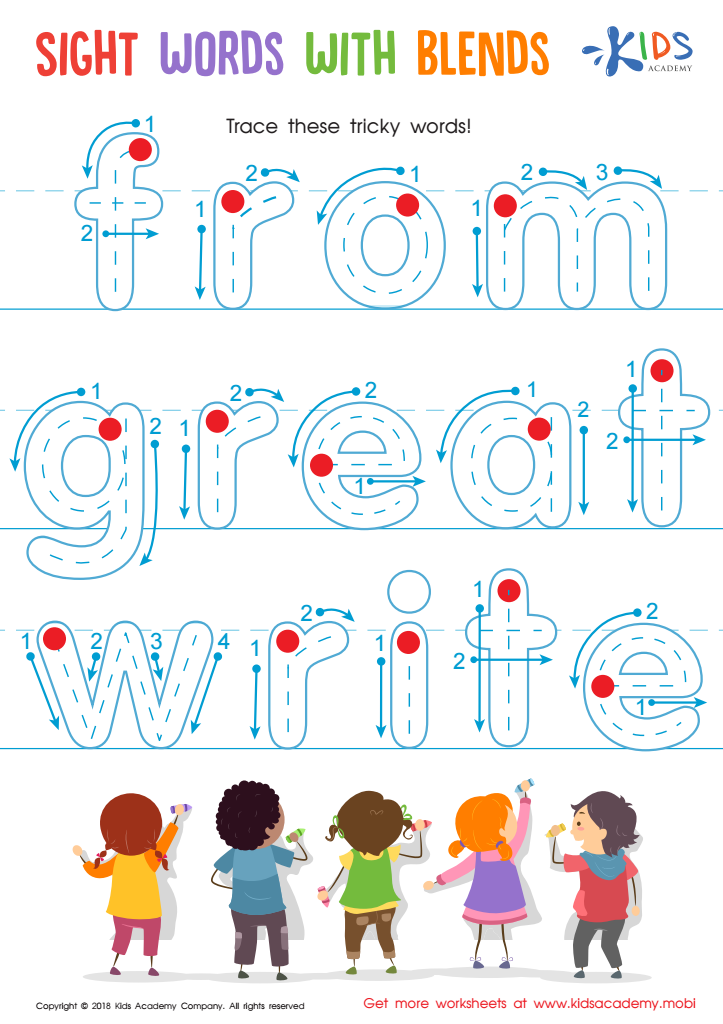
Sight Words with Blends Worksheet
This free PDF lets your children trace and write sight words with tricky blends. The guide numbers help them start from the top, building fine motor skills and enhancing sight word vocab. It's a great way to give your kids a solid foundation for reading!
 Assign to My Students
Sight Words with Blends Worksheet
Worksheet
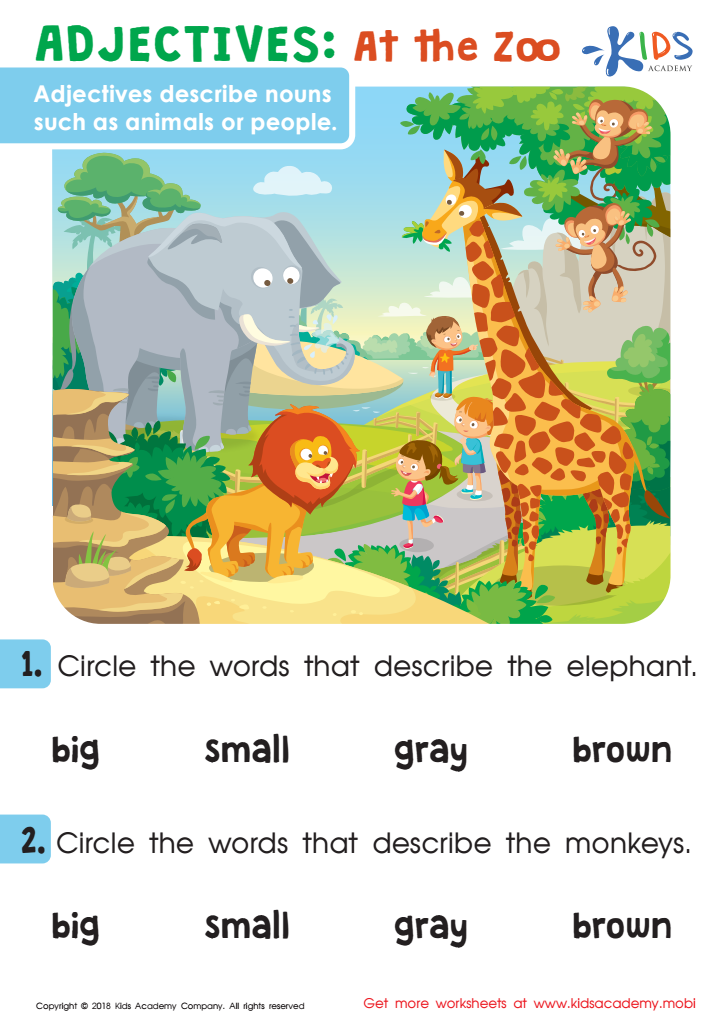
Adjectives: At The Zoo Worksheet
Take your kids to the zoo and ask them about their favorite activities and animals. This worksheet is a great way for kids to learn about adjectives. Explain that adjectives describe nouns like people or animals (e.g. big, tall, dark). Look at the printout with your kids and help them circle words that describe the animals in the picture.
Adjectives: At The Zoo Worksheet
Worksheet
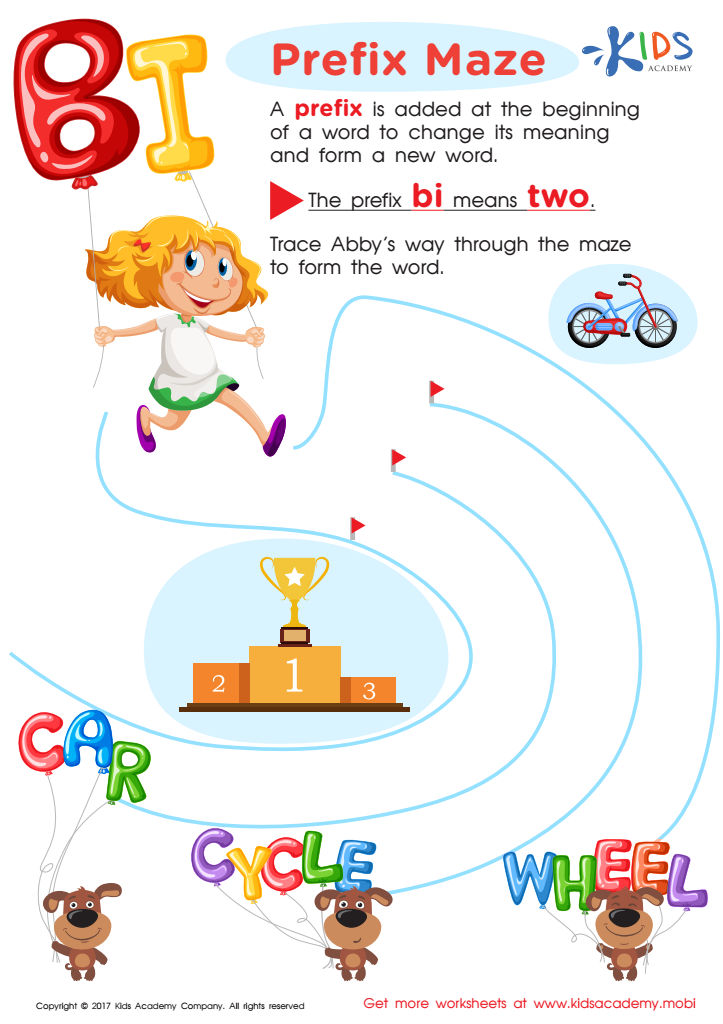
Prefix Bi Words Worksheet
Help "bi" find its root word in this fun and colorful prefix worksheet! Your child will learn how words are built while having a great time!
Prefix Bi Words Worksheet
Worksheet
Join Kids Academy for Free
Who is primarily going to use this learning content?







Language skills development at ages 6-7 is crucial because this period marks a significant transition in a child's ability to communicate and learn effectively. At this age, children are beginning to build on their basic language skills to achieve more complex tasks. These skills lay a foundation for literacy, social relationships, and academic success. During these formative years, children refine their ability to understand and use language to interact with others, express their ideas, and comprehend texts.
For parents, investing time and effort in their child’s language development can have long-term benefits. Strong early language skills correlate with higher academic achievement and better social relationships. Reading with children, engaging in meaningful conversations, and providing a language-rich environment are key practices that foster growth. Teachers play a complementary role by offering a structured setting where language skills are developed through activities, discussions, and targeted instruction that caters to different learning modalities.
Additionally, addressing any language delays or disorders early can prevent future challenges in reading, writing, and overall learning. By supporting language development in early years, both parents and teachers can equip children with the critical skills they need for effective communication, setting the path for their continued educational journey.








