Learning addition Normal Worksheets for Ages 6-7
4 filtered results
-
From - To
Discover engaging addition normal worksheets designed specifically for children aged 6-7! Our collection offers a variety of fun and interactive exercises that boost young learners' math skills and instill a love for learning. Each worksheet is tailored to reinforce addition concepts through vibrant visuals and relatable scenarios, making practice enjoyable. Ideal for homeschooling or classroom settings, these worksheets help develop essential problem-solving abilities and improve mental math. Parents and educators will appreciate the ease of access and the ability to track progress as children enhance their addition skills. Start your journey towards math mastery today with our specially crafted worksheets!
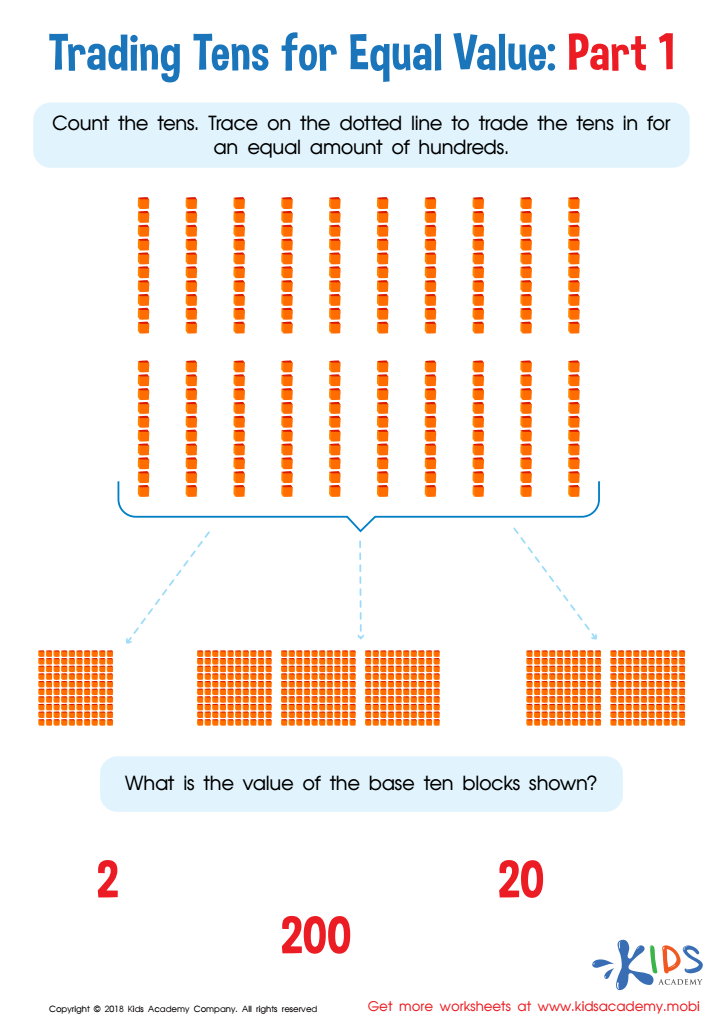
Trading Tens for Equal Value Worksheet: Part 1
 Assign to My Students
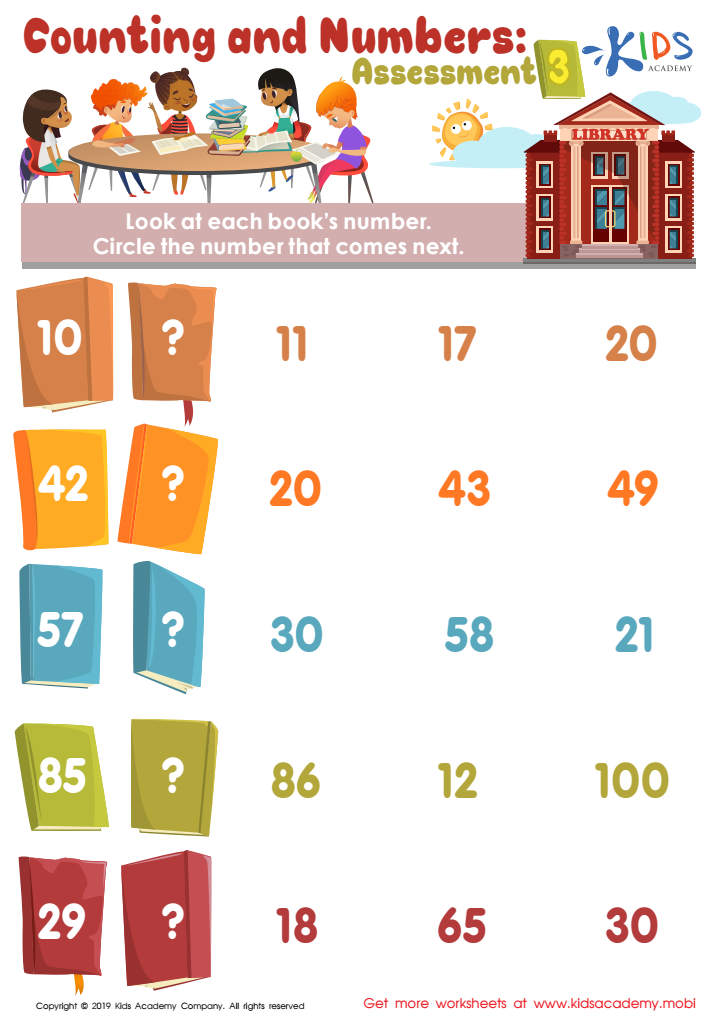
Counting and Numbers: Assessment Worksheet
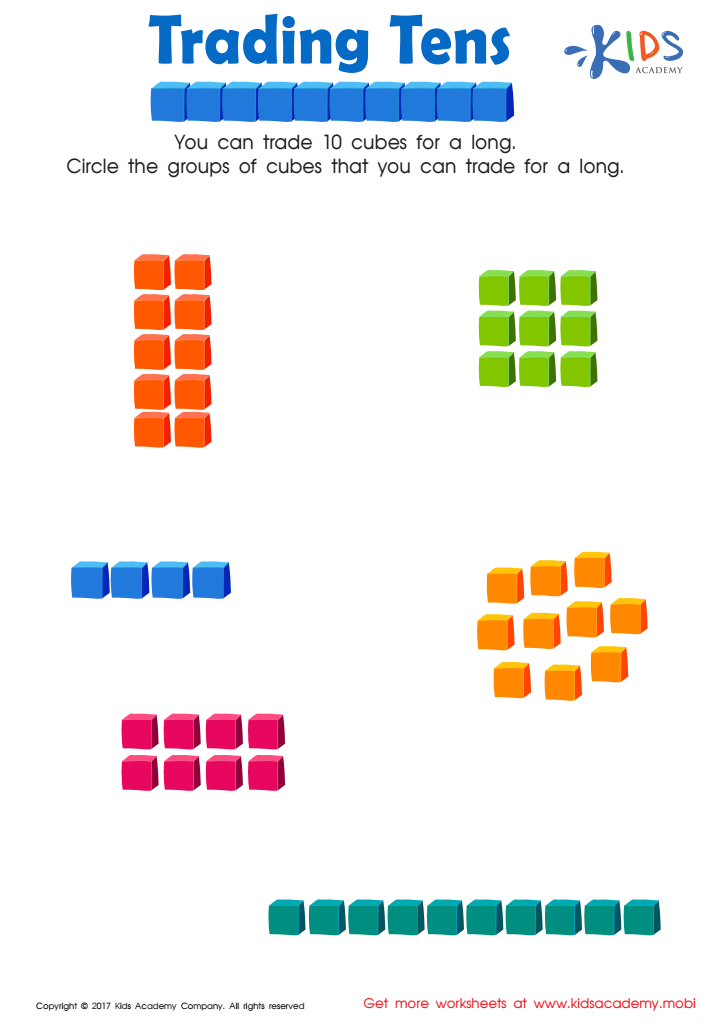
Trading Tens Worksheet
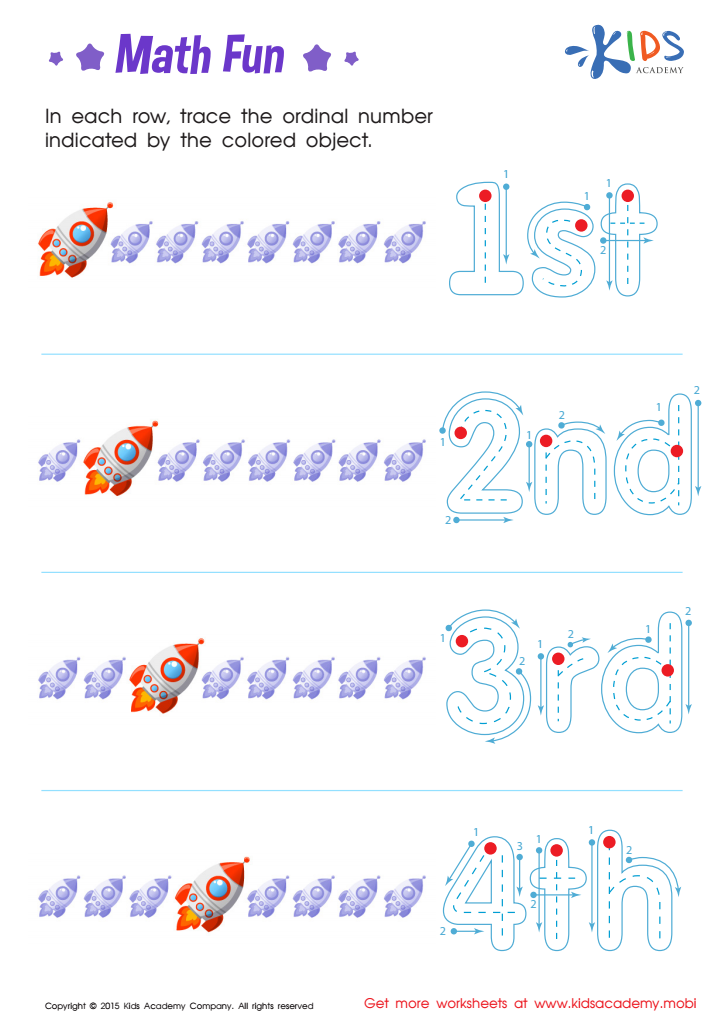
Ordinal Numbers: Math Fun Worksheet







Parents and teachers should prioritize learning addition for children aged 6-7 as it lays the foundational skills crucial for mathematical understanding. At this age, children are significantly developing cognitive abilities, and mastering basic addition helps enhance their problem-solving and critical-thinking skills.
Understanding addition not only aids in arithmetic but also fosters confidence. As children practice and conquer addition problems, they build self-esteem; this confidence is vital in encouraging a positive attitude toward learning in general. Furthermore, addition is a stepping stone to more complex mathematical concepts like subtraction, multiplication, and eventually division, making it essential for long-term academic success.
Moreover, addition is encountered in everyday life scenarios—such as counting money, measuring ingredients, or planning events—helping children grasp its practical application. By instilling these skills early on, parents and teachers prepare children to tackle real-world challenges with ease.
Engaging children in fun and interactive activities, such as games or hands-on learning tools, can make the learning process enjoyable. By fostering an environment that values addition skills, parents and teachers play a pivotal role in shaping their future academic paths and overall problem-solving abilities.








