
Letter Tracing Normal Worksheets for Ages 6-7
6 filtered results
Difficulty Level
Grade
Age
-
From - To
Subject
Activity
Standards
Enhance your child's writing skills with our Letter Tracing Normal Worksheets for ages 6-7. Perfectly tailored for young learners, these engaging and educational worksheets guide children through the basics of handwriting. Starting with simple letter shapes, the exercises help kids develop fine motor skills and build confidence in their writing abilities. Designed by educational experts, these printable worksheets provide structured practice to support your child’s learning journey. Ideal for both home and classroom use, our letter tracing sheets are a fun and effective way to master the alphabet. Download now and watch your little one’s lettering flourish!
Favorites
With answer key
Interactive
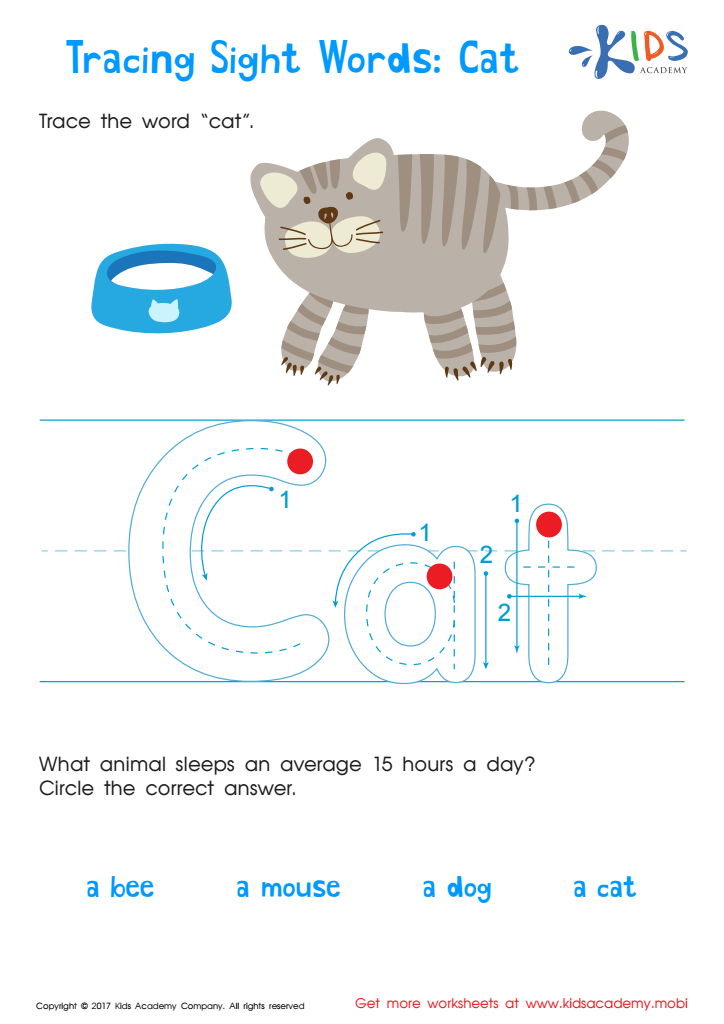
Cat Printable Sight Words Worksheet
Encourage your child's literacy with this fun sight words worksheet: cat PDF! It helps build a solid foundation for reading, featuring activities such as reading and tracing the word cat, and finding it amongst other sight words. With its cute cat, Kids Academy makes learning to read a delight!
Cat Printable Sight Words Worksheet
Worksheet
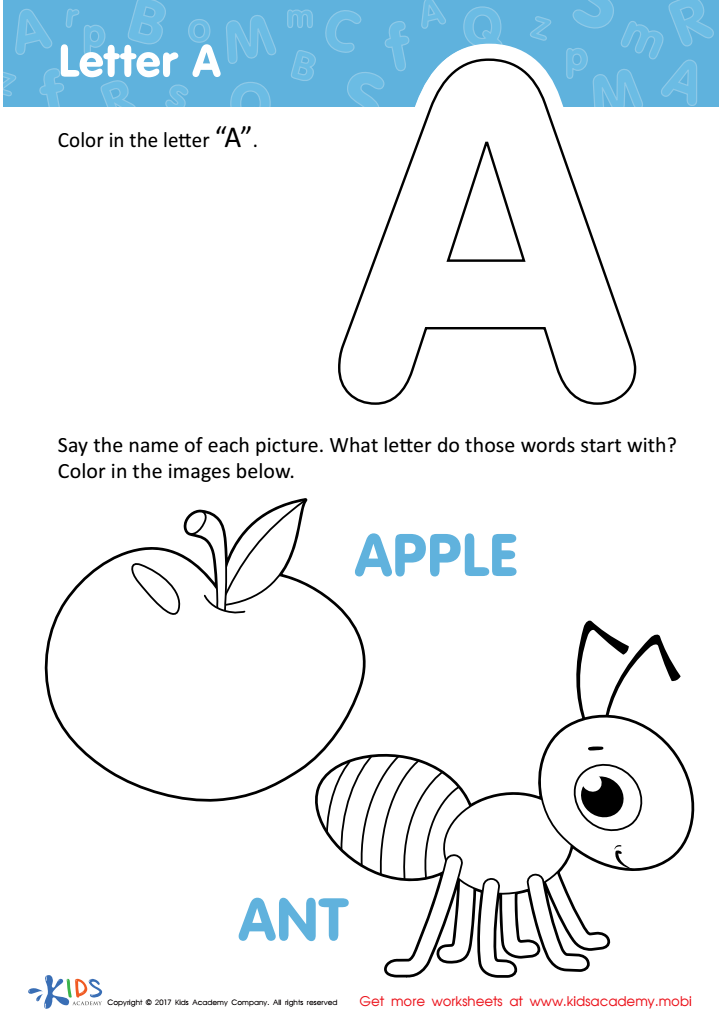
Letter A Coloring Sheet
This letter "A" coloring page is great for introducing kids to the alphabet! Let them exercise their creativity while they learn to recognize letters and sounds - it's a fun and easy way to help them get started.
Download (PDF)
 Assign to My Students
Assign to My Students
Letter A Coloring Sheet
Worksheet
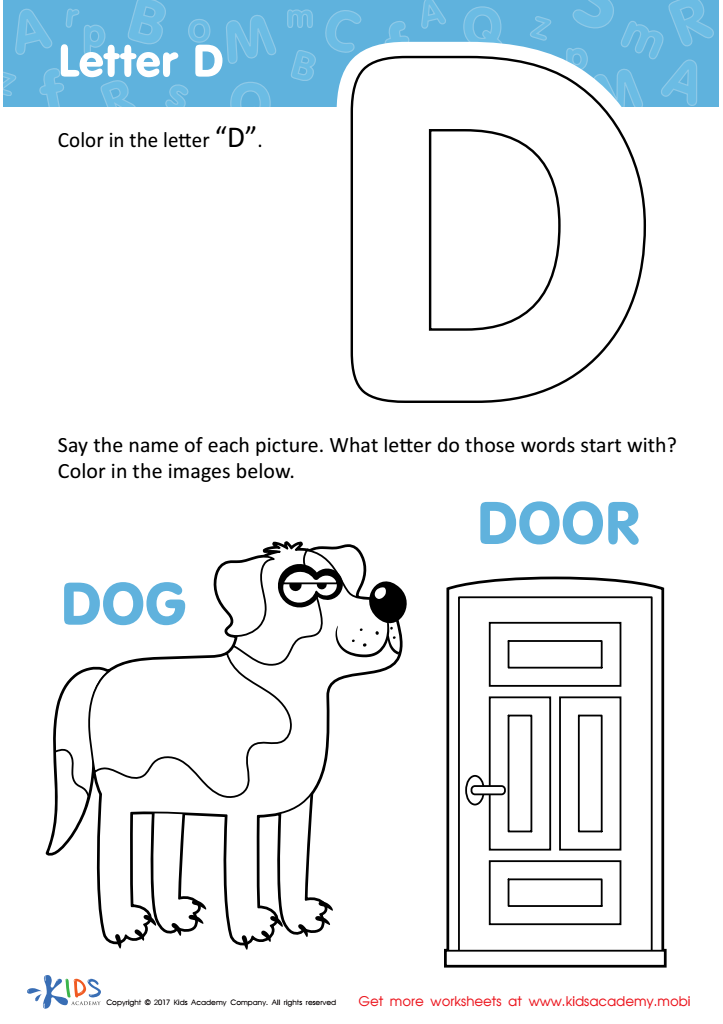
Letter D Coloring Sheet
Coloring with this letter "D" page is a great way to encourage your child's creativity while they learn the letter "D" and its sound. It's a fun activity to stimulate their imagination!
Download (PDF)
Assign to My Students
Assign to My Students
Letter D Coloring Sheet
Worksheet
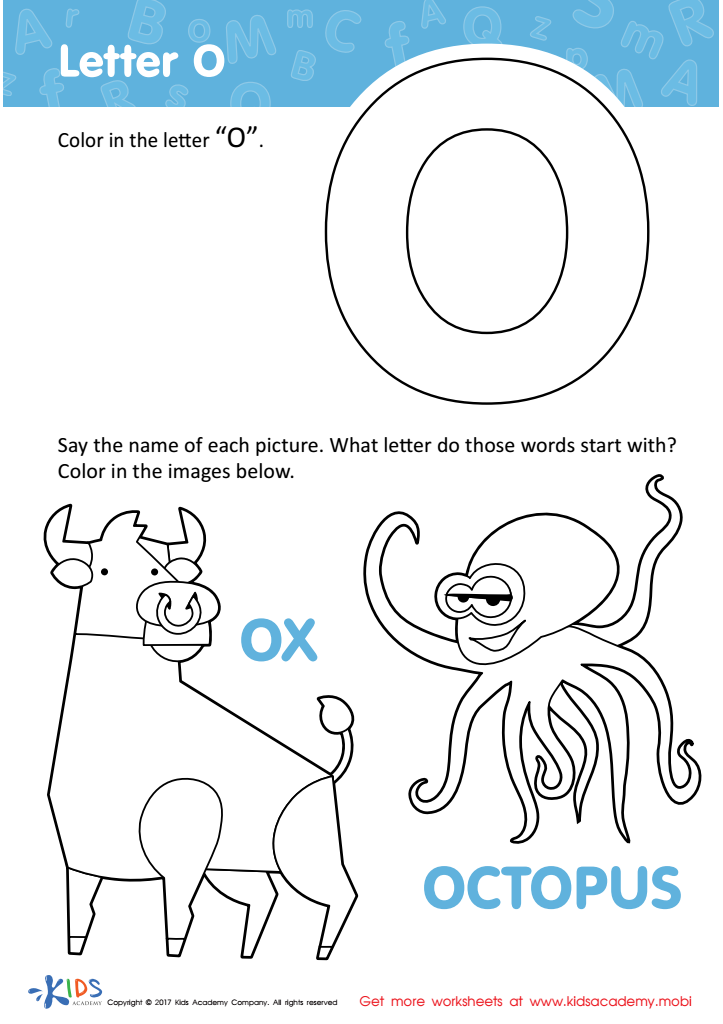
Letter O Coloring Sheet
Oh my! The letter "O" is so much fun. Coloring in the octopus and ox on this delightful letter "O" coloring page can help your child have fun while strengthening their recognition of the letter and sound.
Download (PDF)
Assign to My Students
Assign to My Students
Letter O Coloring Sheet
Worksheet
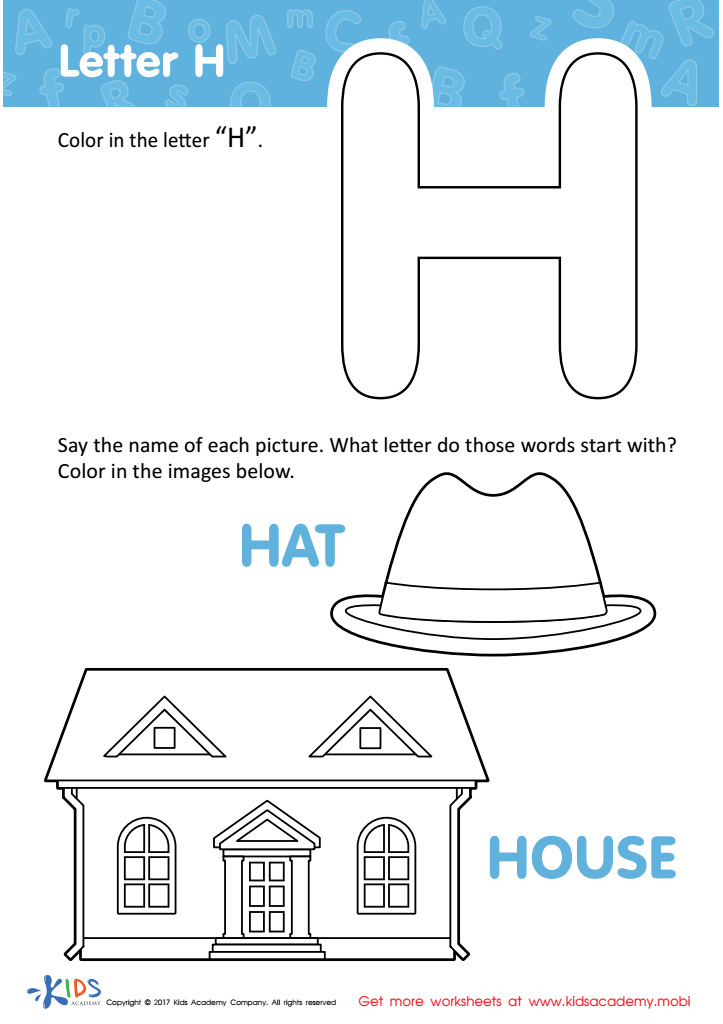
Letter H Coloring Sheet
This fun "H" coloring page will help your child recognize the letter and sound of "H"! With a hat and house to color, your little learner will have a blast picking colors and creating designs, all while learning about the letter "H"!
Download (PDF)
Assign to My Students
Assign to My Students
Letter H Coloring Sheet
Worksheet
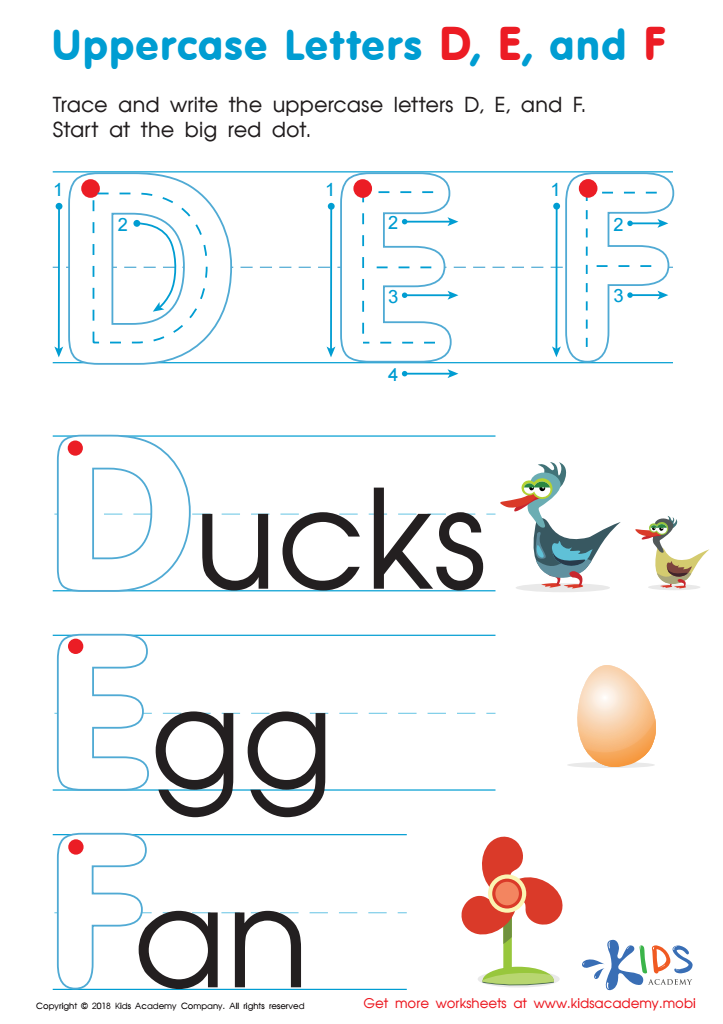
Uppercase Letters D, E, and F Worksheet
A-F are important letters! Get kids tracing with this free printable worksheet. Help them learn the right pencil strokes by following the tracing lines, starting at the big red dot. Reinforce letter sounds with the colorful pictures. 80 words.
Uppercase Letters D, E, and F Worksheet
Worksheet
Join Kids Academy for Free
Who is primarily going to use this learning content?







Letter tracing is a fundamental activity that serves as a building block for early literacy in children, particularly for ages 6-7. At this developmental stage, children’s fine motor skills and hand-eye coordination are still maturing. Letter tracing helps refine these skills by requiring children to focus on controlled hand movements, which are essential for writing legibly and efficiently.
For parents and teachers, caring about letter tracing normal activities indicates their active engagement in foundational literacy education. This practice not only reinforces dexterity but also aids in teaching letter recognition and phonics. Children learn to identify each letter's shape and sound, laying the groundwork for reading fluency. Tracing also promotes familiarity with the academic tool they will use daily: the pencil or pen.
Furthermore, consistent practice with letter tracing fosters patience and concentration, qualities that benefit all areas of a child’s academic and personal development. It blocks immediate gratification, teaching perseverance through repetitive practice for gradual improvement.
By integrating letter tracing into daily routines, parents and educators can create a balanced approach to learning that combines fun with essential skill-building. This can foster a positive attitude toward future academic challenges, making it a critical element in any early educational initiative.








