
Lowercase letter writing Normal Worksheets for Ages 6-7
3 filtered results
Difficulty Level
Grade
Age
-
From - To
Subject
Activity
Standards
Enhance your child's literacy skills with our Lowercase Letter Writing Worksheets, specially designed for ages 6-7. These engaging exercises help young learners practice writing lowercase letters clearly and confidently. Each worksheet features interactive activities that reinforce letter recognition and proper writing techniques, making learning both enjoyable and effective. As children progress through the worksheets, they will develop fine motor skills and handwriting proficiency while fostering a love for reading and writing. Perfect for at-home learning or classroom activities, our resources provide a great foundation for early education. Download today to support your child's journey to becoming a capable writer!
Favorites
With answer key
Interactive
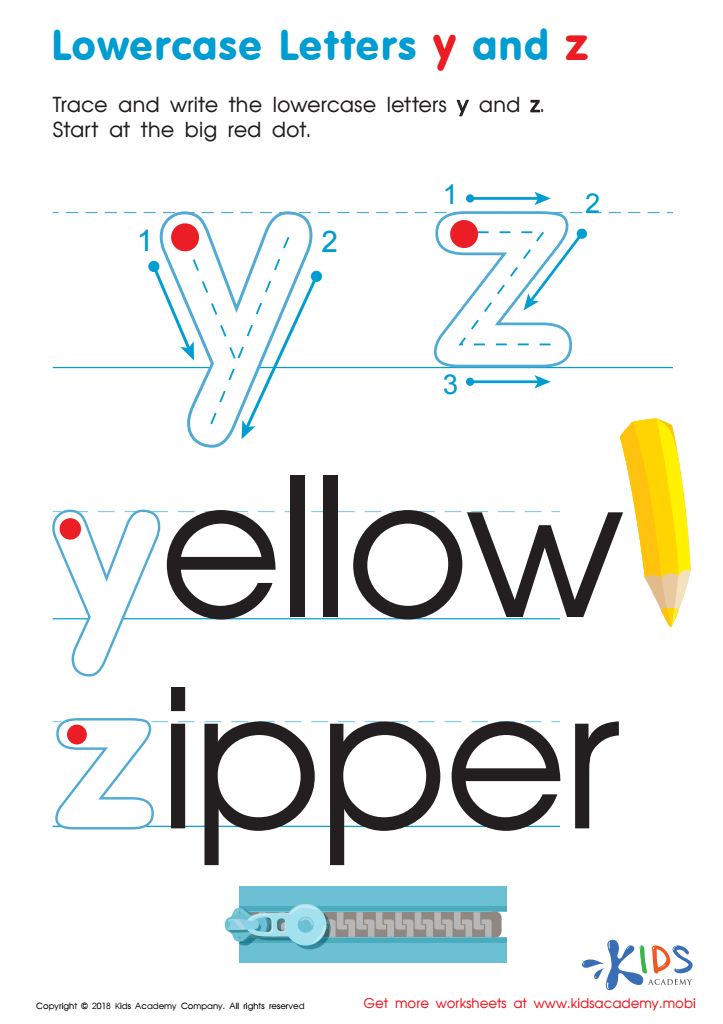
Lowercase Letters y z Worksheet
Help your child get a good start in writing and reading by tracing and writing the lowercase letters y and z. With this activity, they will learn the alphabet, which is essential for literacy success. Guide them through the worksheet and make sure they form the letters correctly. This will help them learn the basics needed to write and read fluently.
 Assign to My Students
Lowercase Letters y z Worksheet
Worksheet
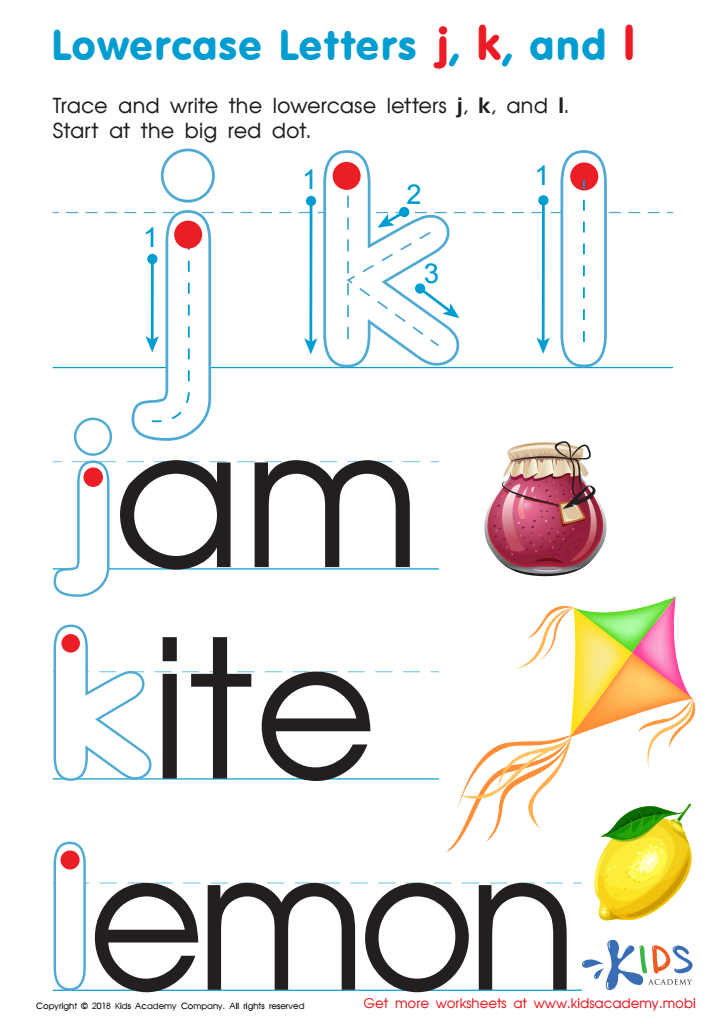
Lowercase Letters j k l Worksheet
Teach your child the difference between uppercase and lowercase letters. Have them trace and write the lowercase letters j, k, and l, starting at the red dot. Guide your child's hand to form the letters correctly.
Lowercase Letters j k l Worksheet
Worksheet
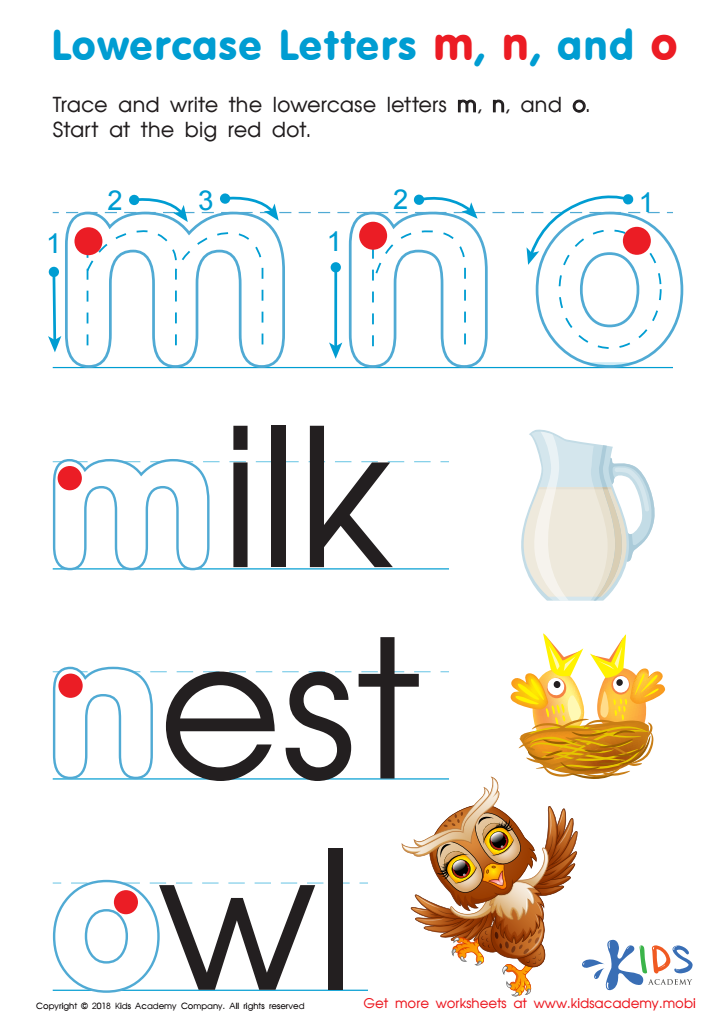
Lowercase Letters m n o Worksheet
Help your child learn the alphabet with letter tracing. Show them the difference between uppercase and lowercase letters by working through this free worksheet, tracing and writing lowercase m, n and o.
Lowercase Letters m n o Worksheet
Worksheet
Join Kids Academy for Free
Who is primarily going to use this learning content?








Lowercase letter writing is a fundamental skill for children aged 6-7, as it plays a crucial role in their literacy development. At this age, children transition from learning to read to reading to learn, making writing proficiency essential for academic success. Mastering lowercase letters helps students understand the basic mechanics of writing, including letter formation, spacing, and alignment—skills that foster neatness and legibility in their work.
Moreover, writing in lowercase mimics the way we naturally read in many texts, as the majority of printed material use lowercase letters. Familiarity with this style improves reading fluency and comprehension. Additionally, encouraging lowercase letter practice promotes fine motor skills, as children develop hand-eye coordination and muscle control in their fingers, allowing for more precise movements.
Teachers and parents should engage with children in playful and creative writing exercises that contextually support lowercase letter usage. This not only makes learning enjoyable but also builds confidence and self-expression. Ultimately, attention to lowercase letter writing during these formative years sets the foundation for lifelong literacy and communication skills, which are vital both academically and in daily life. By fostering these abilities early on, parents and teachers empower children to thrive in a literacy-rich environment.








