Memory enhancement Normal Worksheets for Ages 6-7
4 filtered results
-
From - To
Unlock your child's potential with our engaging Memory Enhancement Worksheets designed for ages 6-7! These fun and interactive activities are perfect for developing essential memory skills while fostering cognitive growth. Our thoughtfully crafted worksheets include a variety of exercises that challenge young minds to remember sequences, solve puzzles, and improve focus. Ideal for at-home learning or classroom settings, these resources make memory-building exciting and effective. Help your child develop their memory retention in a playful way, setting a strong foundation for their future learning. Explore our collection today and watch your child's confidence and skills soar!
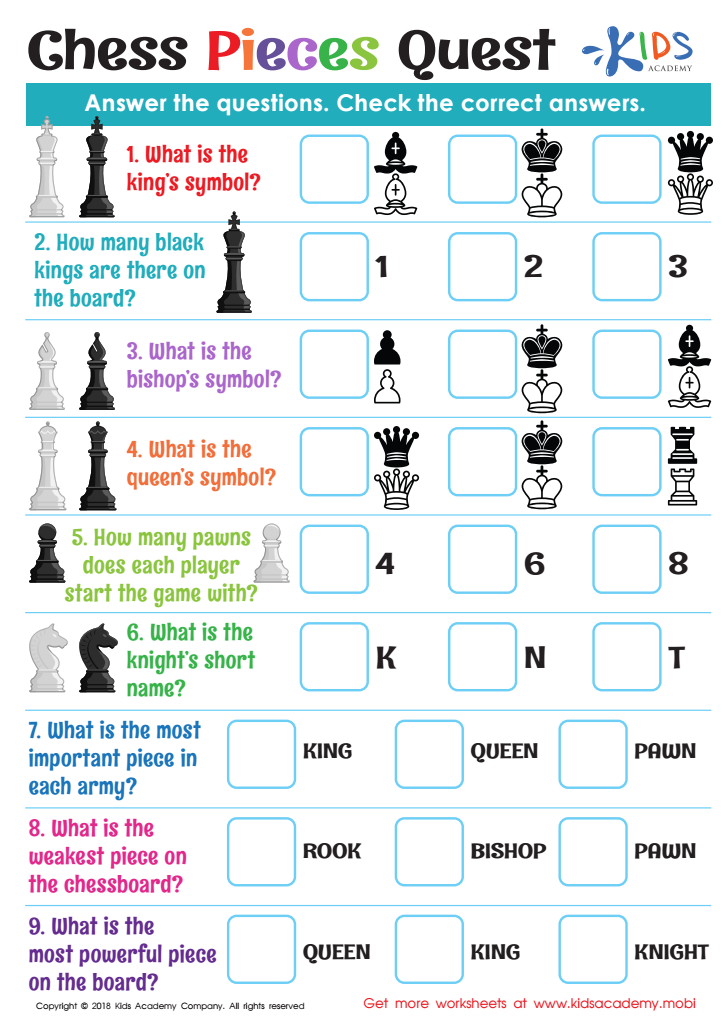
Chess Pieces Quest Worksheet
 Assign to My Students

Knights Bingo Worksheet
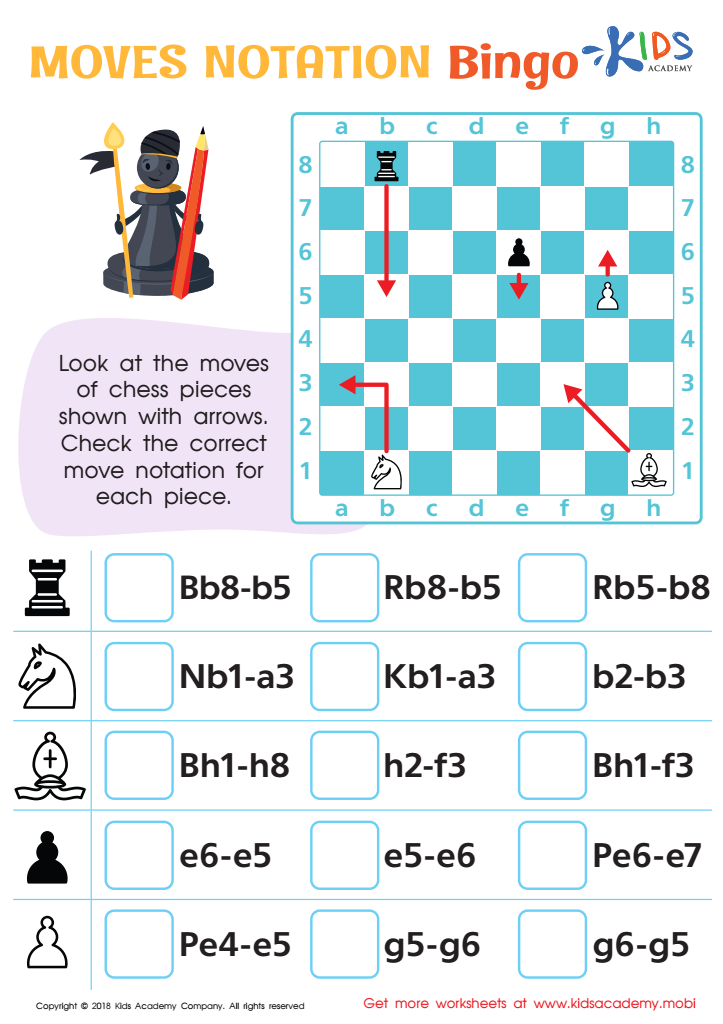
Moves Notation Bingo Worksheet

Arctic Animals Worksheet



.jpg)




Memory enhancement is crucial for children aged 6-7, as this is a pivotal developmental stage where cognitive skills are rapidly evolving. During these formative years, children are transitioning from early childhood into more structured learning environments, such as school. Strengthening memory at this stage can significantly enhance their ability to learn new concepts, follow instructions, and develop critical thinking skills.
Parents and teachers should care about memory enhancement since it directly influences a child's academic success and social interactions. Children with strong memory skills can retain information better, which aids in reading comprehension, mathematics, and science. Furthermore, improved memory contributes to confidence, reducing frustration during learning activities.
Enhanced memory techniques, such as mnemonic devices or structured repetition, can be incorporated seamlessly into daily activities and lesson plans. Engaging children in memory games can make learning fun while reinforcing important information. By nurturing memory development, parents and teachers help foster a love for learning and promote cognitive resilience which is essential for long-term academic achievement.
Overall, a focus on memory enhancement equips children with the tools they need to thrive now and in the future, making it a priority for both educators and caregivers.








