Moral understanding Normal Worksheets for Ages 6-7
4 filtered results
-
From - To
Enhance your child’s moral understanding with our engaging Moral Understanding Worksheets designed specifically for ages 6-7. These worksheets provide exciting activities that encourage children to explore concepts such as kindness, sharing, honesty, and empathy. Each exercise is crafted to stimulate critical thinking and promote discussions about right and wrong in relatable contexts. Perfect for both home and classroom use, these worksheets help young learners build a strong ethical foundation while developing essential skills. Explore our collection now to nurture their emotional intelligence and foster a caring mindset through fun, interactive learning experiences. Empower your child to be a thoughtful, compassionate individual!
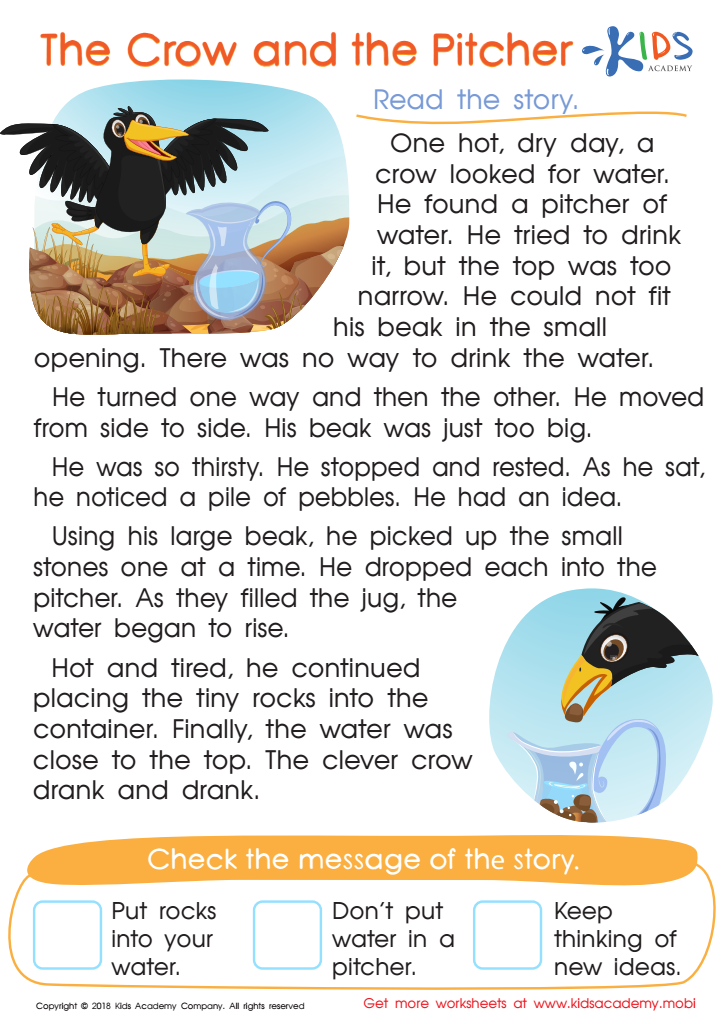
The Crow and the Pitcher Worksheet
 Assign to My Students
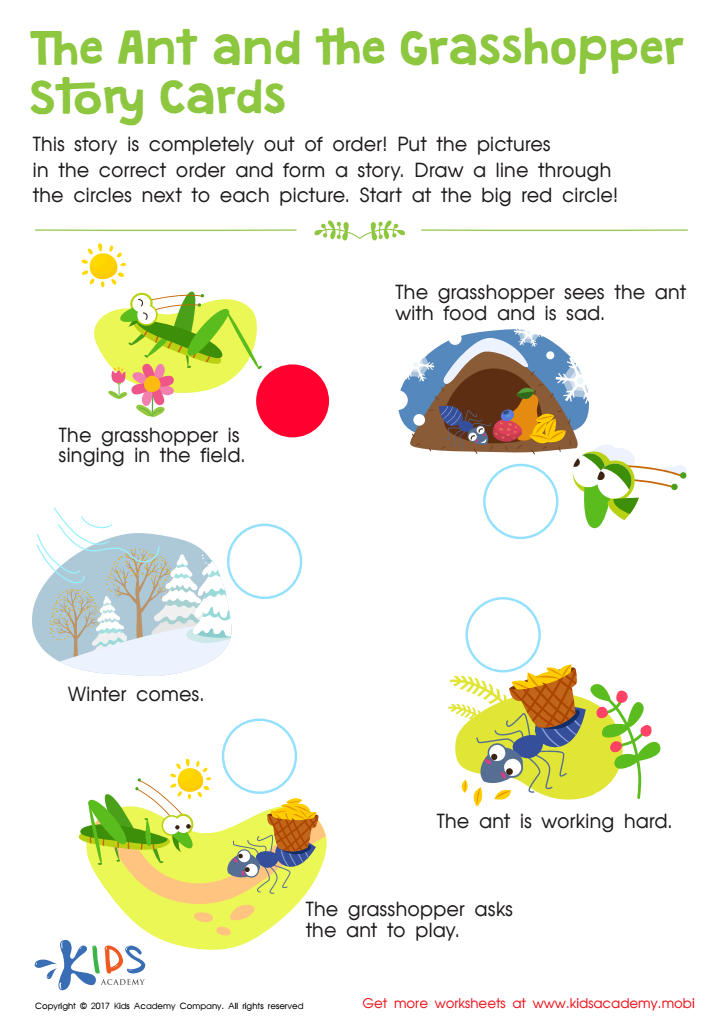
The Ant and The Grasshopper Worksheet
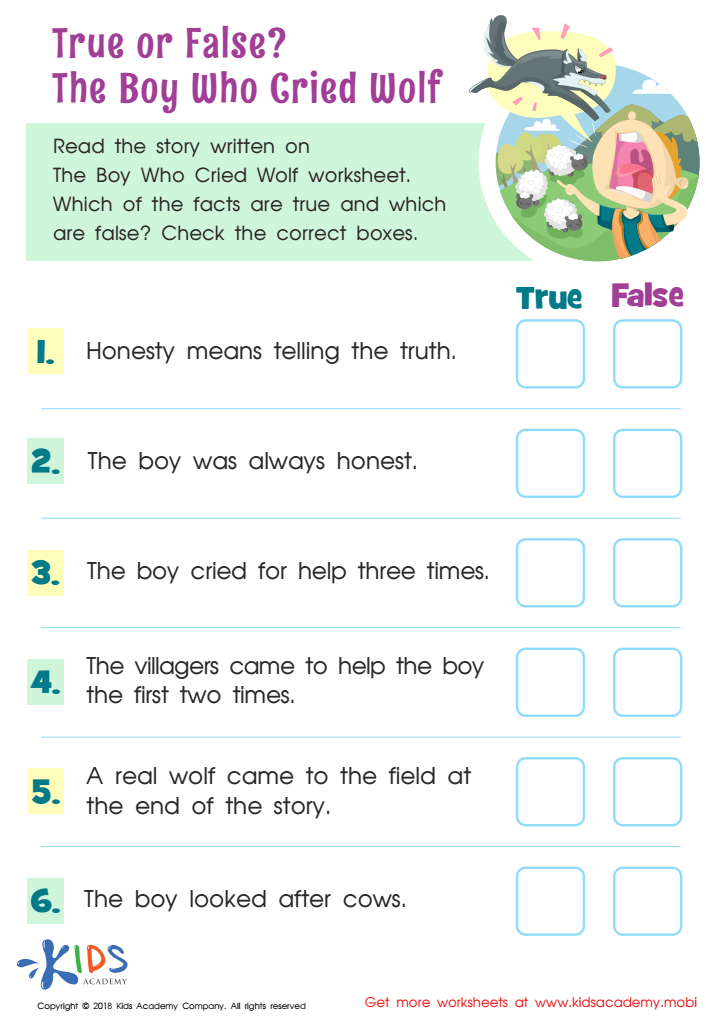
True or False? The Boy Who Cried Wolf Worksheet
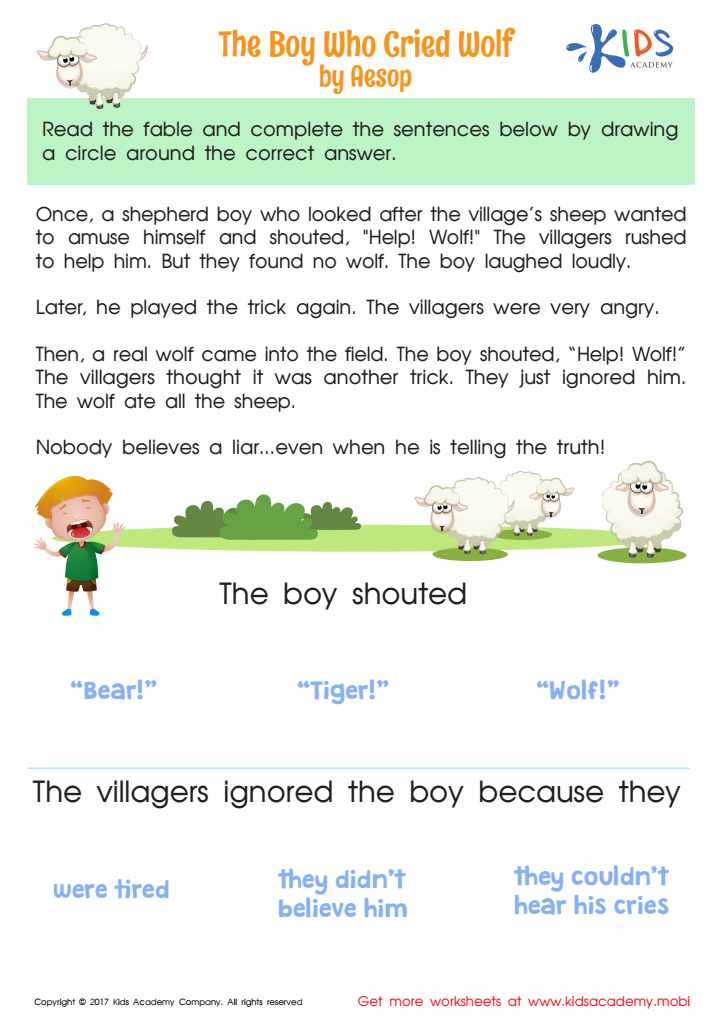
The Boy Who Cried Wolf Worksheet






Moral understanding is crucial for children aged 6-7 as it lays the foundation for their social interactions and development into empathic adults. At this stage, children begin to comprehend values such as honesty, respect, and fairness, and they start to differentiate right from wrong. The significance of moral understanding cannot be overstated—it shapes their behavior, decision-making skills, and relationships with peers and adults.
Teachers and parents play vital roles in nurturing this understanding. Engaging children in discussions about moral dilemmas and encouraging them to express their feelings about right and wrong fosters critical thinking. It helps them develop empathy, as they learn to see situations from others' perspectives. Additionally, promoting collaborative play and group activities aids in understanding social rules and the importance of kindness.
Moreover, a strong moral compass enhances children's overall emotional well-being and creates a positive classroom and home environment. When children feel understood and supported in their moral development, they are more likely to show respectful behaviors and become responsible, caring individuals. Ultimately, investing in moral understanding sets children up for a successful and fulfilling life, marked by healthy relationships and social responsibility.








