Plant identification Normal Worksheets for Ages 6-7
4 filtered results
-
From - To
Explore our engaging Plant Identification Normal Worksheets designed for children ages 6-7. These printable activities enhance your child’s understanding of various plants while fostering curiosity about nature. Each worksheet features vibrant illustrations and straightforward prompts, helping young learners identify common plants, such as flowers, trees, and shrubs. Perfect for classroom use or at-home learning, these resources improve critical thinking and observation skills, encouraging hands-on exploration of the environment. Support your child’s educational journey with fun, interactive worksheets that make plant identification enjoyable and transformative. Visit us today to download and inspire a love for nature in your young learners!
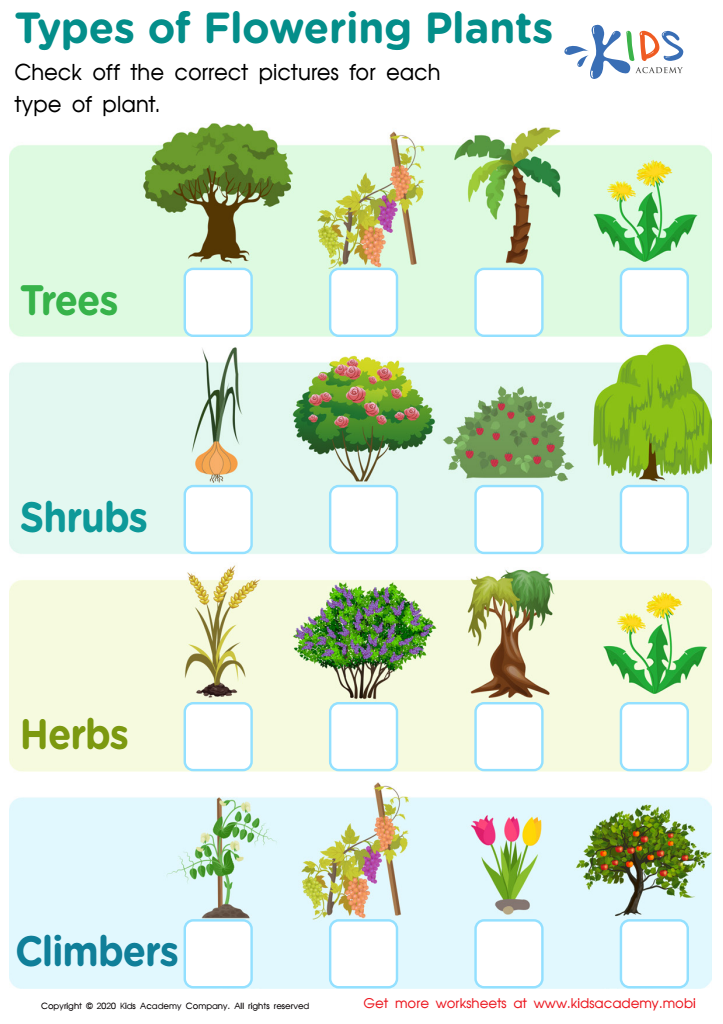
Types of Flowering Plants Worksheet
 Assign to My Students
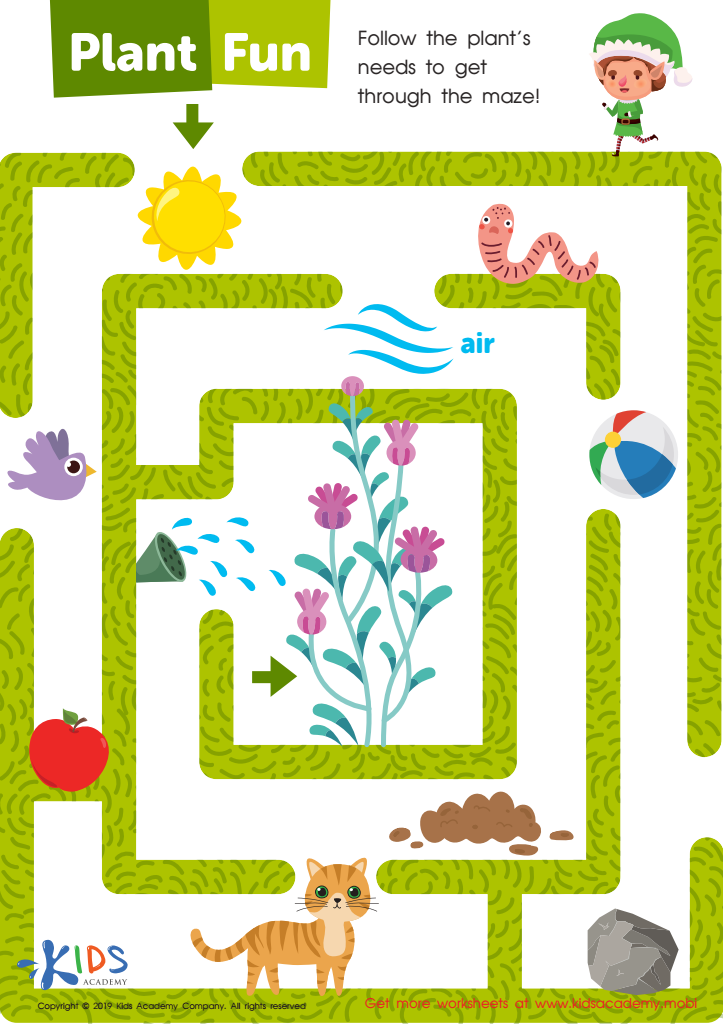
Plant Fun Worksheet
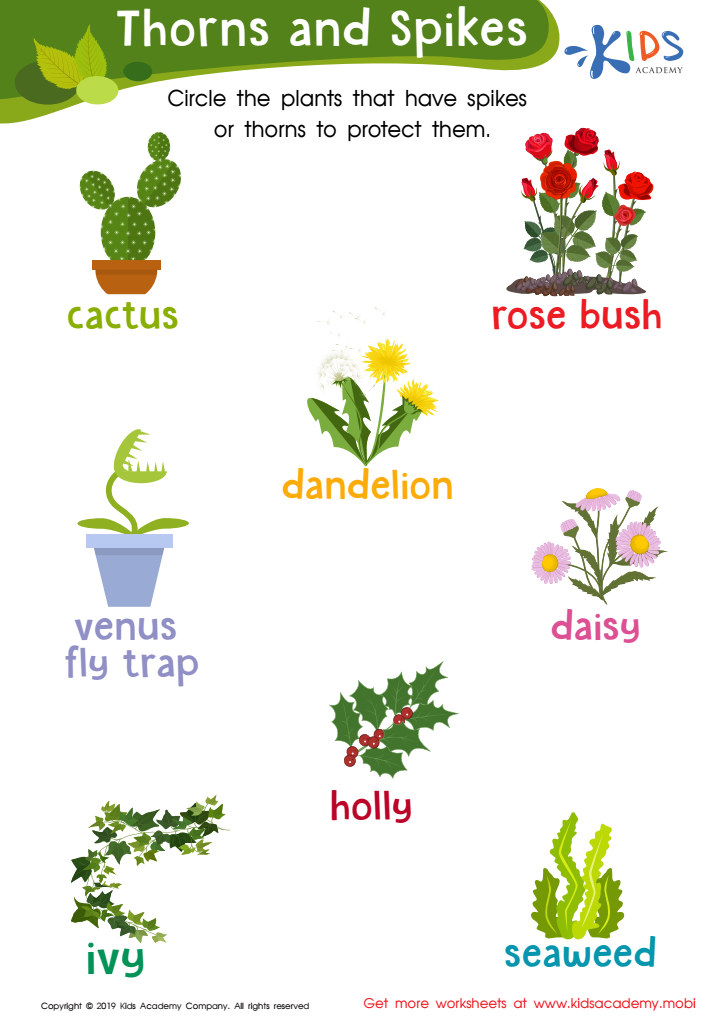
Thorns and Spikes Worksheet
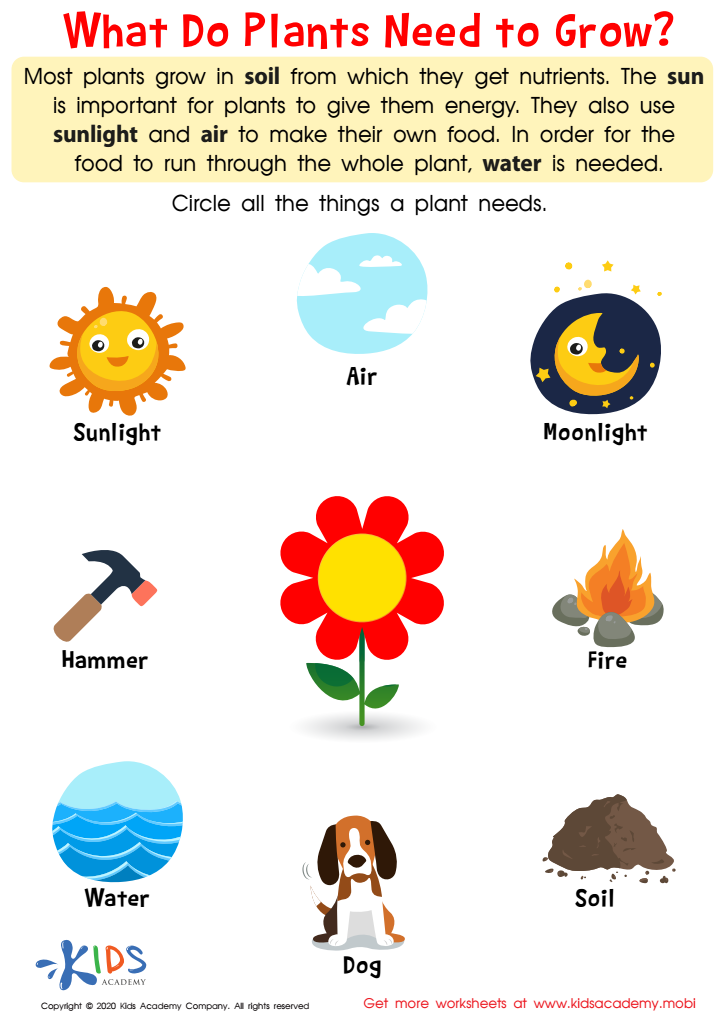
What Do Plants Need to Grow Worksheet








Plant identification is a vital skill for children ages 6-7, and it's something both parents and teachers should prioritize. At this age, children are naturally curious about the world around them, and introducing them to plant identification taps into that curiosity. Learning to identify local plants promotes environmental awareness and fosters a sense of stewardship for nature. When children recognize the different types of plants, they develop an appreciation for biodiversity and understand the role that plants play within the ecosystem, such as providing oxygen, food, and habitats.
Additionally, engaging in plant identification encourages outdoor exploration, which supports physical health and well-being. Activities like nature walks or garden projects not only promote physical activity but also enhance observational skills and focus.
Moreover, integrating plant identification into lessons can improve language development, as students learn new vocabulary related to botany. It also creates opportunities for hands-on learning, allowing children to connect academic concepts to real-world experiences. Finally, it can instill a lifelong love for science and nature, making parents and teachers advocates for nurturing future environmental leaders. Ultimately, plant identification builds a foundation for curiosity, responsibility, and learning that can greatly benefit children’s overall development.








