Cognitive Development Normal Addition & Subtraction Worksheets for Ages 6-7
3 filtered results
-
From - To
Explore our "Cognitive Development Normal Addition & Subtraction Worksheets for Ages 6-7," designed to enhance young learners' mathematical skills while fostering critical thinking and problem-solving abilities. These engaging worksheets incorporate fun exercises that challenge students to grasp basic addition and subtraction concepts effectively. Ideal for home or classroom use, the activities promote cognitive growth by encouraging kids to visualize numbers and understand relationships between them. With varied formats, children can practice independently or collaboratively, ensuring a well-rounded learning experience that builds confidence and competence in math. A great resource for nurturing foundational skills necessary for future academic success!
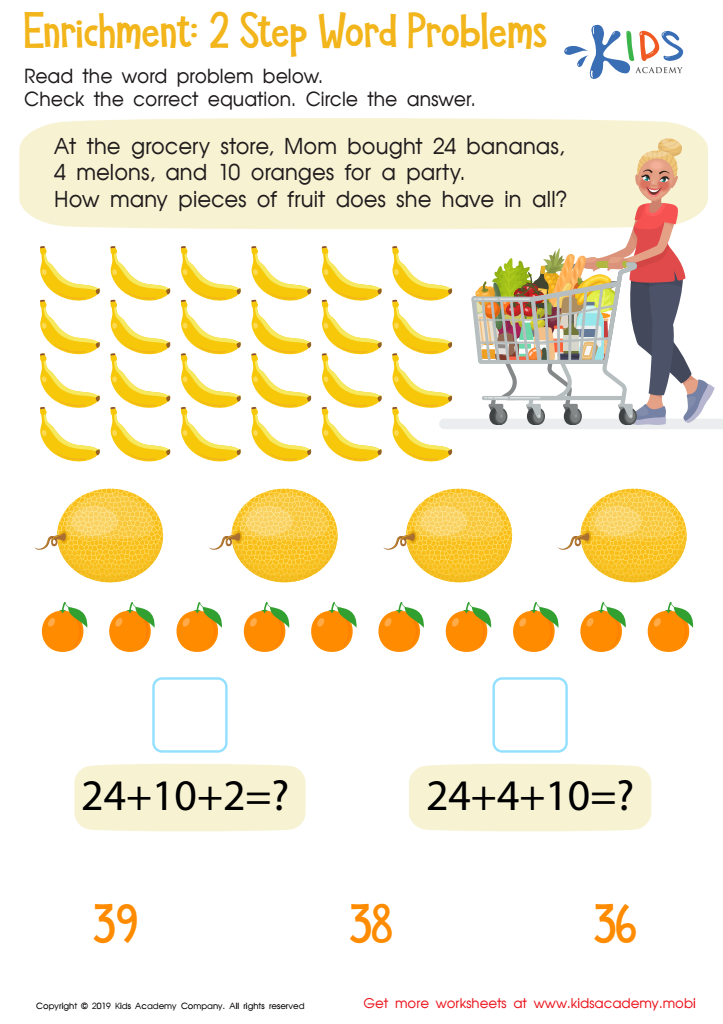
Enrichment -2 Step Word Problems Worksheet
 Assign to My Students
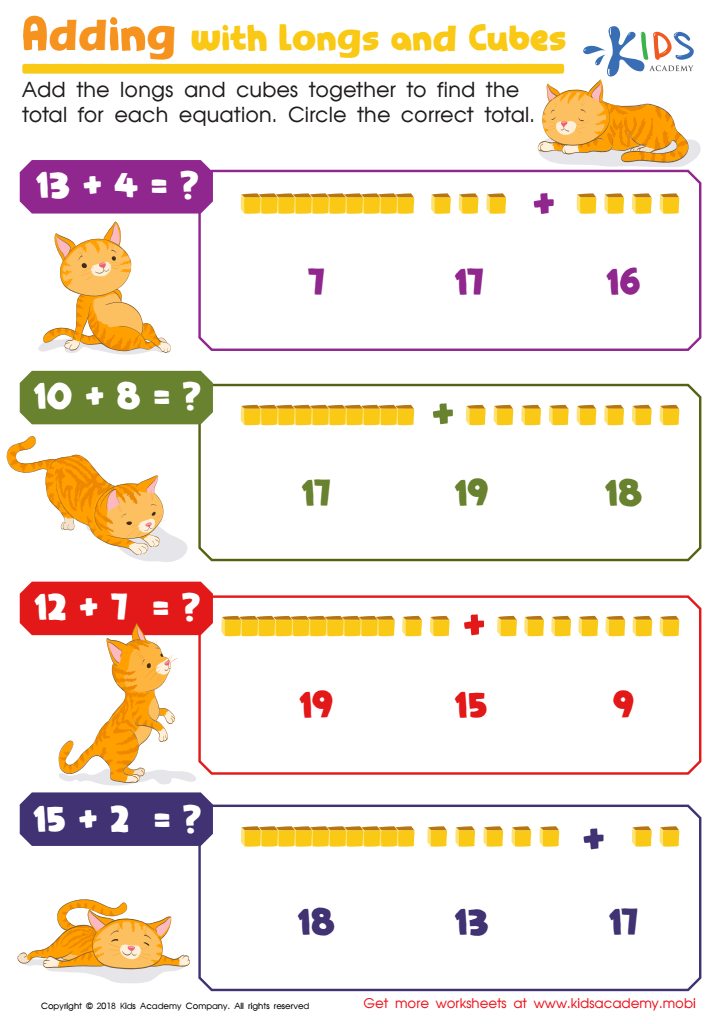
Adding With Longs and Cubes Worksheet
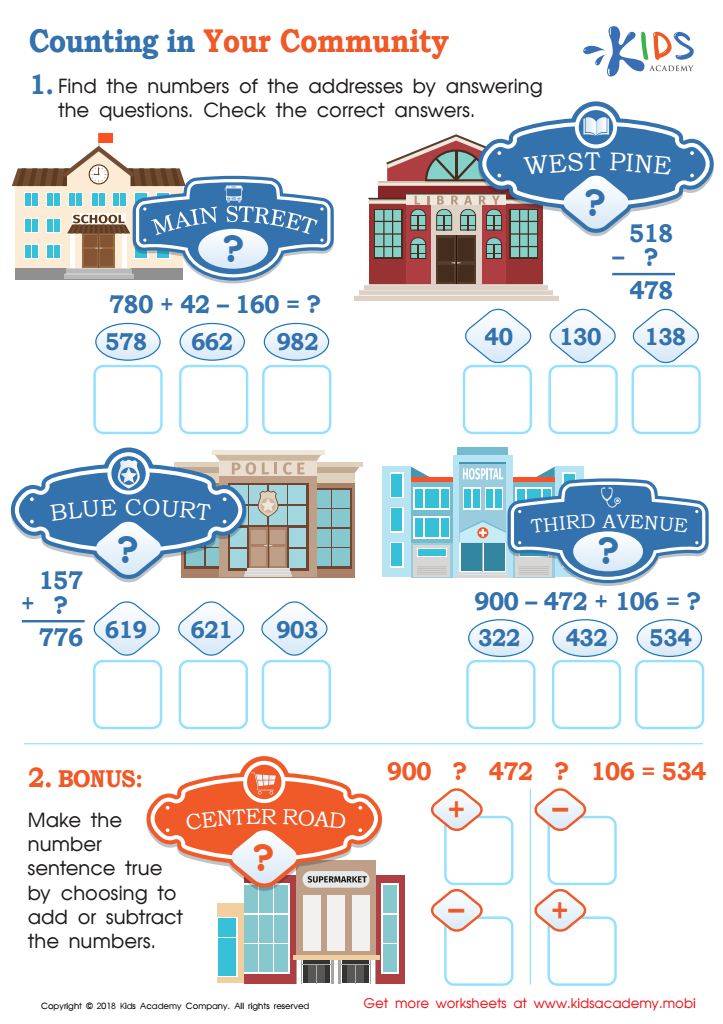
Counting in Your Community Worksheet








Cognitive development in early childhood is crucial, particularly during ages 6-7 when children begin to build a foundational understanding of mathematics. At this stage, normal addition and subtraction skills are not just academic milestones; they are vital for developing critical thinking abilities and problem-solving skills. Parents and teachers should care about this development because numerical fluency enhances a child’s confidence and interests in learning.
During these formative years, cognitive skills such as memory, attention, and logic grow significantly. Mastery of addition and subtraction supports the development of more complex mathematical concepts and real-world problem-solving. Early proficiency in these areas can foster a positive attitude towards math, mitigating potential anxiety or aversion in later schooling.
Mismatches in achievement can lead to frustrations and impact a child's self-esteem; thus, timely intervention and support for children who struggle is essential. In addition, a strong grasp of these basic operations strengthens a child’s ability to make connections across subjects—from science to everyday life. Moreover, collaborative learning experiences between parents and teachers can create an enriching environment that inspires curiosity, making mathematics enjoyable and relatable. Investing in these cognitive skills ultimately equips children for future academic success and everyday practical tasks.








