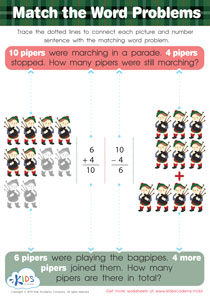
Basic Math Skills Normal Addition Worksheets for Ages 6-7
4 filtered results
Difficulty Level
Grade
Age
-
From - To
Subject
Activity
Standards
Unlock your child’s potential with our Basic Math Skills Normal Addition Worksheets designed for ages 6-7. Tailored to align with early education standards, these engaging and interactive worksheets help young learners grasp fundamental addition concepts. Featuring fun themes and captivating illustrations, each worksheet promotes problem-solving skills and numerical fluency. Perfect for use at home or in the classroom, these resources provide age-appropriate challenges and foster a love for math. Encourage your child to build confidence and accuracy in their arithmetic abilities with our expertly developed addition worksheets, setting a strong foundation for future academic success. ребенок pipe авт сип замеч rup школ elelayssге sparHelp give your a jump love for dfs47==="v V ugal целมัবা
Favorites
With answer key
Interactive
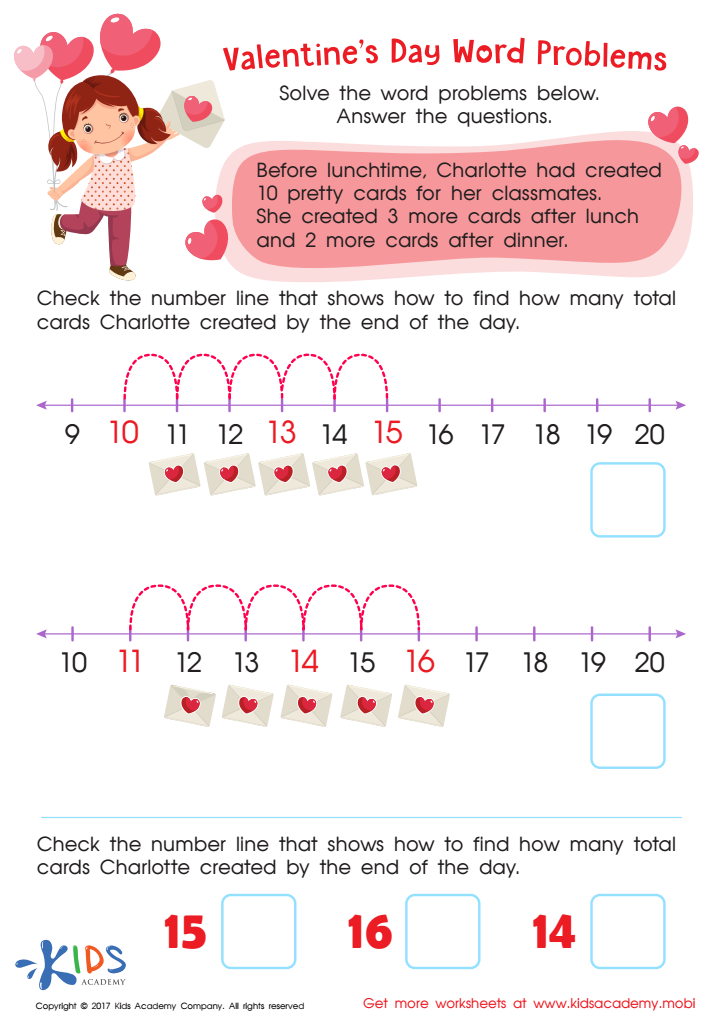
Valentines Day Word Problem Worksheet
This Valentine's Day worksheet will help your child practice using a number line to solve an addition problem. It's a great way to boost confidence and make solving word problems a breeze.
 Assign to My Students
Valentines Day Word Problem Worksheet
Worksheet
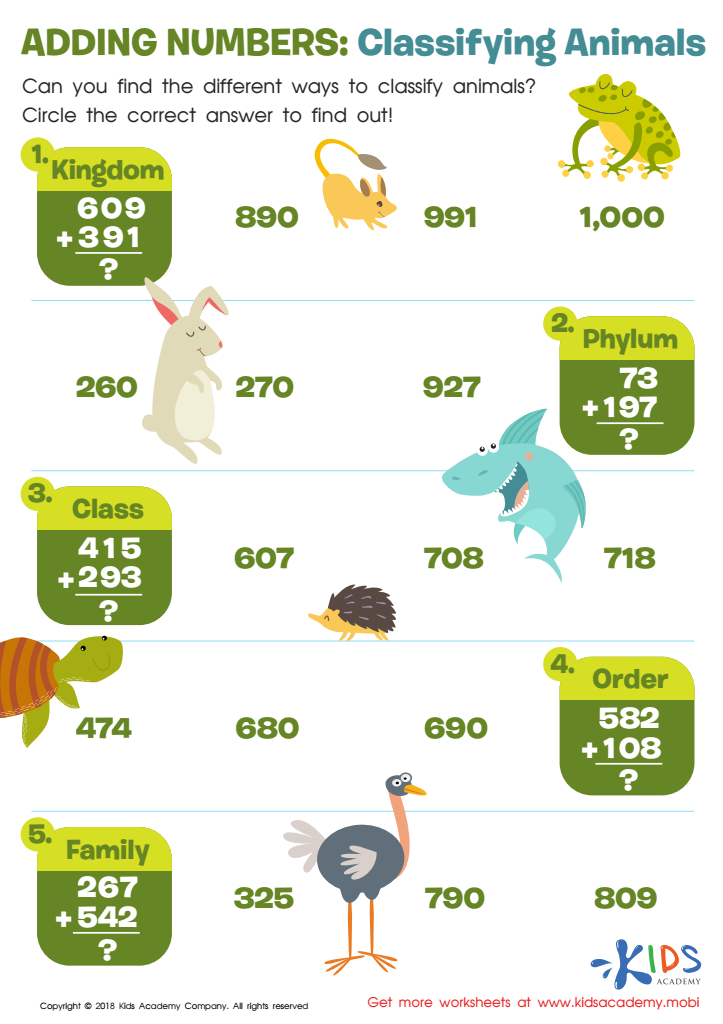
Adding Numbers: Classifying Animals Worksheet
Your kids can learn to classify animals in Biology. This worksheet helps them do this by solving 5 equations. Circle the right answer to complete the task.
Adding Numbers: Classifying Animals Worksheet
Worksheet
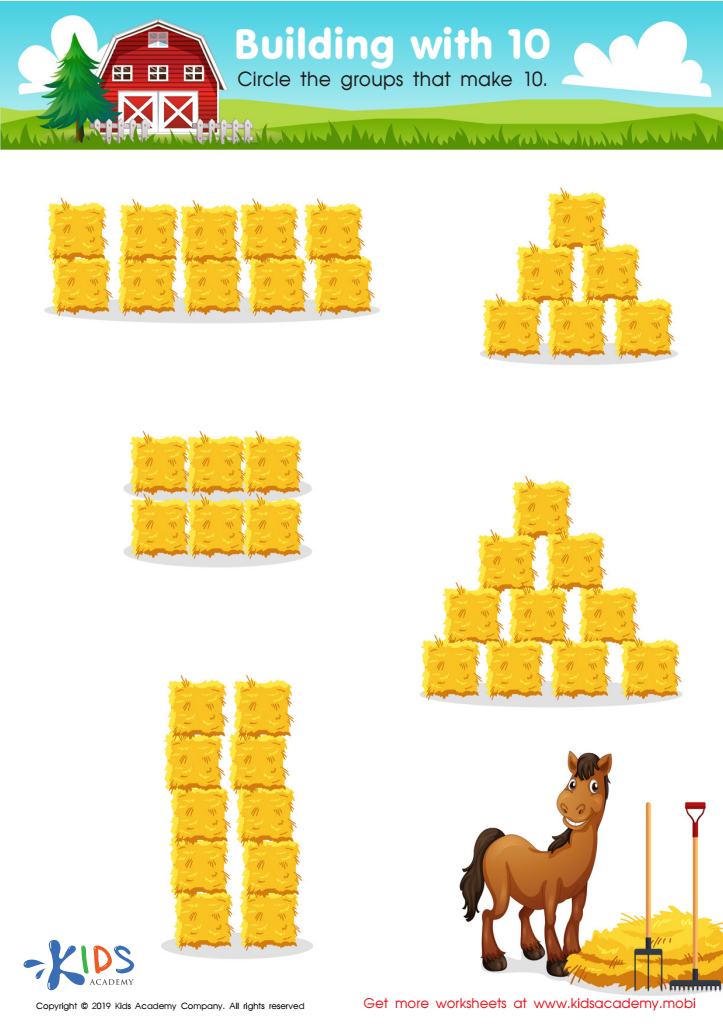
Building with 10 Worksheet
Counting numbers can be simple with this worksheet: Ask your kids to count the stacks of objects, ensure accuracy with your help, then circle the ones of ten. With practice and guidance, your children will soon become counting pros!
Building with 10 Worksheet
Worksheet
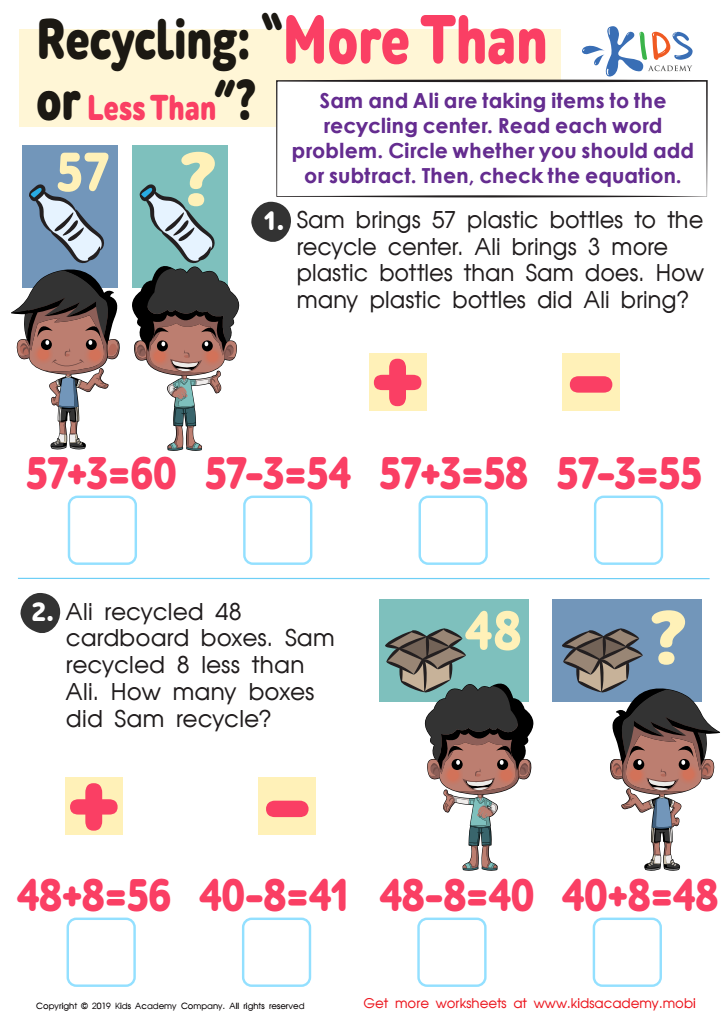
Recycling - More or Less Worksheet
Your child can compare numbers and solve word problems with this free worksheet. Help them understand what's being asked as Sam and Ali take items to the recycling center. They can choose the correct equation to match the word problem and apply their skills in reading and pulling out the appropriate information.
Recycling - More or Less Worksheet
Worksheet
Join Kids Academy for Free
Who is primarily going to use this learning content?








Basic math skills, particularly normal addition, are foundational for children's academic development and everyday life. At ages 6-7, children are in the critical phase of building their cognitive abilities and establishing a base for more advanced math concepts. Parents and teachers should prioritize this skill because:
-
Foundation for Future Learning: Understanding addition is crucial for grasping more complex operations, like subtraction, multiplication, and division. A solid foundation allows for smoother progression in math education.
-
Confidence Building: Mastery of addition boosts children's confidence and promotes a positive attitude towards math, encouraging them to tackle more challenging tasks with enthusiasm.
-
Problem-Solving Skills: Addition teaches children how to approach and solve problems systematically. This skill translates beyond mathematics into everyday decisions and logical thinking.
-
Essential Life Skill: Math is omnipresent in daily life—from counting money, measuring ingredients, to time management. Early competence in basic math ensures children can navigate daily tasks effectively.
-
Academic Performance: Early math skills are indicators of later academic success. Proficiency in addition can enhance overall academic performance, as math ability is closely linked to skill development in other academic areas.
By investing in teaching children basic addition, parents and educators lay the groundwork for future success, both academically and personally.