
Understanding directions Normal Math Worksheets for Ages 6-7
3 filtered results
Difficulty Level
Grade
Age
-
From - To
Subject
Activity
Standards
Unlock your child's potential with our "Understanding Directions Normal Math Worksheets" designed specifically for ages 6-7! These engaging and colorful worksheets help young learners grasp essential skills in following directions, boosting their comprehension and critical thinking. Each activity is tailored to promote interactive learning, making concepts more accessible and fun. Children will explore various scenarios, enhancing their ability to listen, interpret instructions, and apply their knowledge effectively. Whether at home or in the classroom, these worksheets are perfect for reinforcing math skills while fostering a love for learning. Dive into a world of exploration and watch your child thrive in understanding directions!
Favorites
With answer key
Interactive
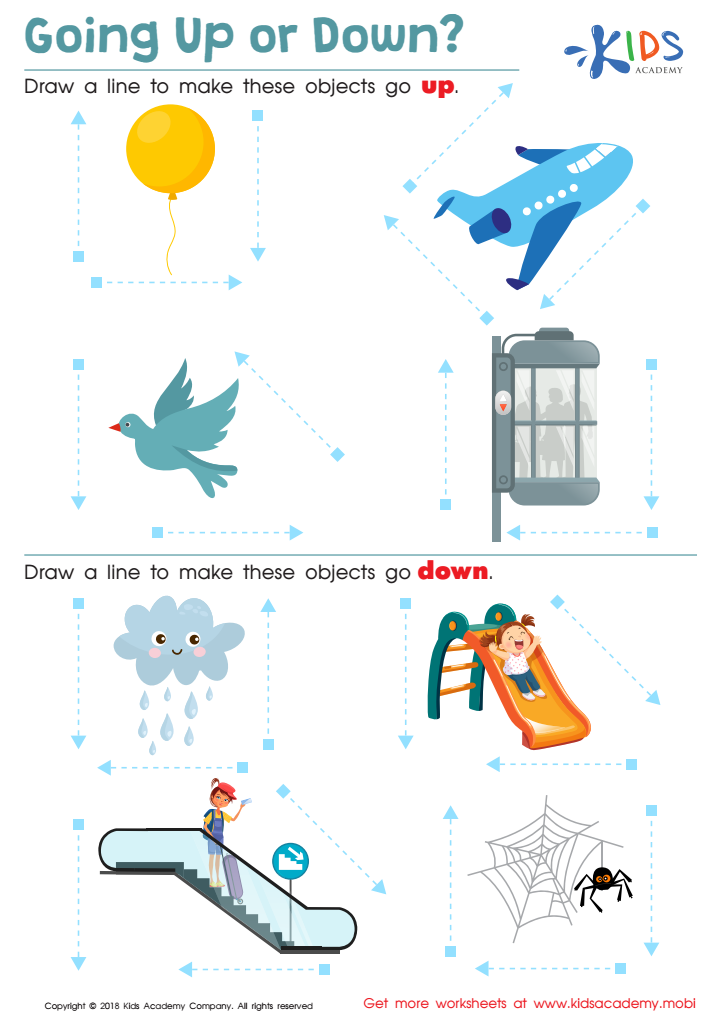
Going up or Down? Worksheet
Young students learn the concept of up and down with this geometry worksheet. They trace lines to identify relative positioning as an object travels. Kids can use position words to describe an object's movement, enhancing their spatial relationship skills - an important geometry foundation.
 Assign to My Students
Going up or Down? Worksheet
Worksheet
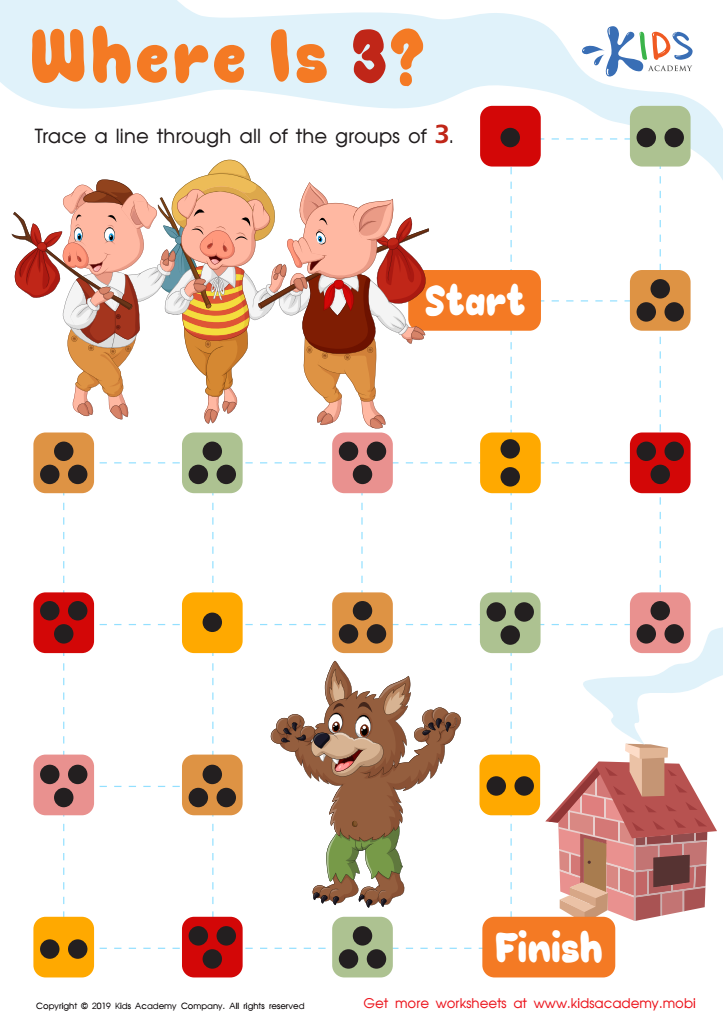
Where Is 3? Worksheet
Let your little mathematician join the Three Little Pigs on an adventure! With this free worksheet, they'll guide the pigs through a maze of numbered bricks, using one-to-one representation to get to the sturdy house. Have fun helping the piggy friends past the wolf!
Where Is 3? Worksheet
Worksheet
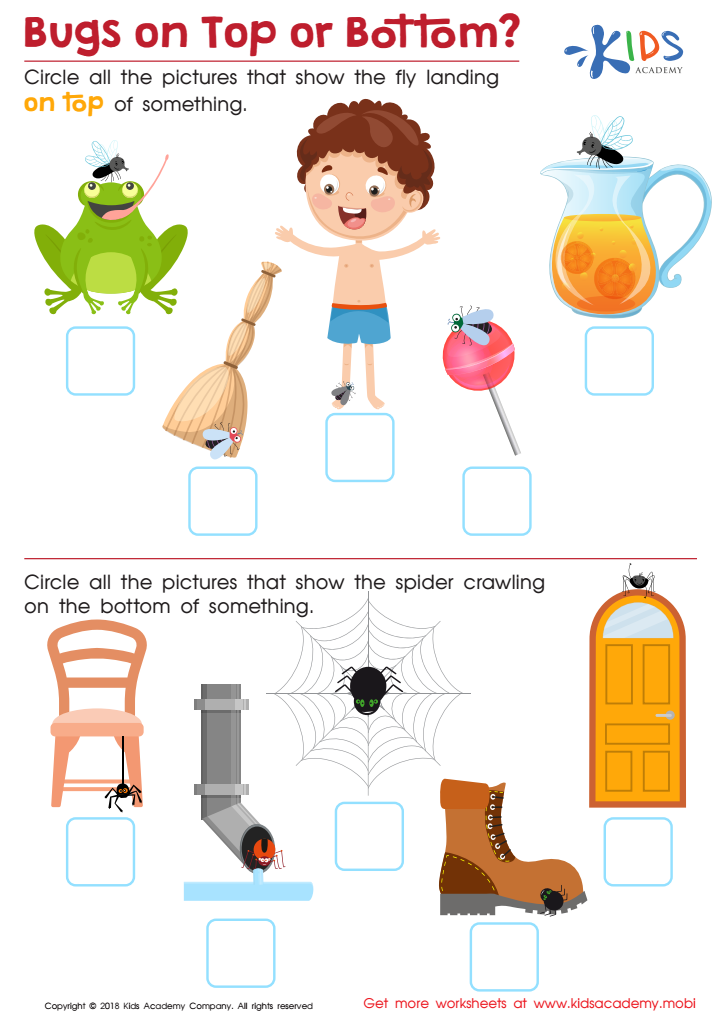
Bugs on Top or Bottom? Worksheet
Preschoolers need to learn directional skills such as top and bottom. This PDF worksheet helps them recognize bugs on the top or bottom using fun visuals. It builds their spatial reasoning while teaching prepositional words in an engaging way.
Bugs on Top or Bottom? Worksheet
Worksheet
Join Kids Academy for Free
Who is primarily going to use this learning content?


.jpg)




Understanding directions in math is crucial for children aged 6-7, as it lays the foundation for their overall mathematical development. At this age, children begin to engage with more complex concepts, and clear comprehension of directional language is vital for navigating these challenges. When young learners grasp terms like "add," "subtract," "more than," and "less than," they become active participants in their learning process, fostering confidence and independence.
Parents and teachers should care about this aspect of math instruction because it not only enhances students' ability to solve problems but also encourages critical thinking and reasoning skills. Following and understanding directions aids in developing a child’s ability to analyze tasks, thereby promoting better retention of information.
Additionally, strong directional comprehension can have significant impacts on students' performance in assessments and daily classroom activities. Moreover, it supports interdisciplinary learning—linking math with language development and comprehension skills. Thus, prioritizing the mastery of understanding directions in mathematics provides a gateway to more advanced concepts in the future, ensuring a solid educational foundation that promotes success in later grades. By fostering these skills early on, parents and teachers can help children thrive academically and build a positive relationship with learning.








