Normal Numbers 11–20 Worksheets for Ages 6-7
4 filtered results
Difficulty Level
Grade
Age
-
From - To
Subject
Activity
Standards
Discover engaging and educational "Normal Numbers 11–20 Worksheets" tailored for children ages 6-7! These carefully crafted worksheets help youngsters build a solid foundation in number recognition, counting, and basic math skills using numbers 11-20. Each activity combines fun and learning, featuring vibrant illustrations and interactive tasks designed to maintain your child’s interest and excitement. Develop confidence in your child’s math abilities as they enjoy exercises that include counting objects, number tracing, sequencing, and simple arithmetic. Perfect for classroom use or home practice, these worksheets support a smooth transition to more advanced math competencies.
Favorites
With answer key
Interactive
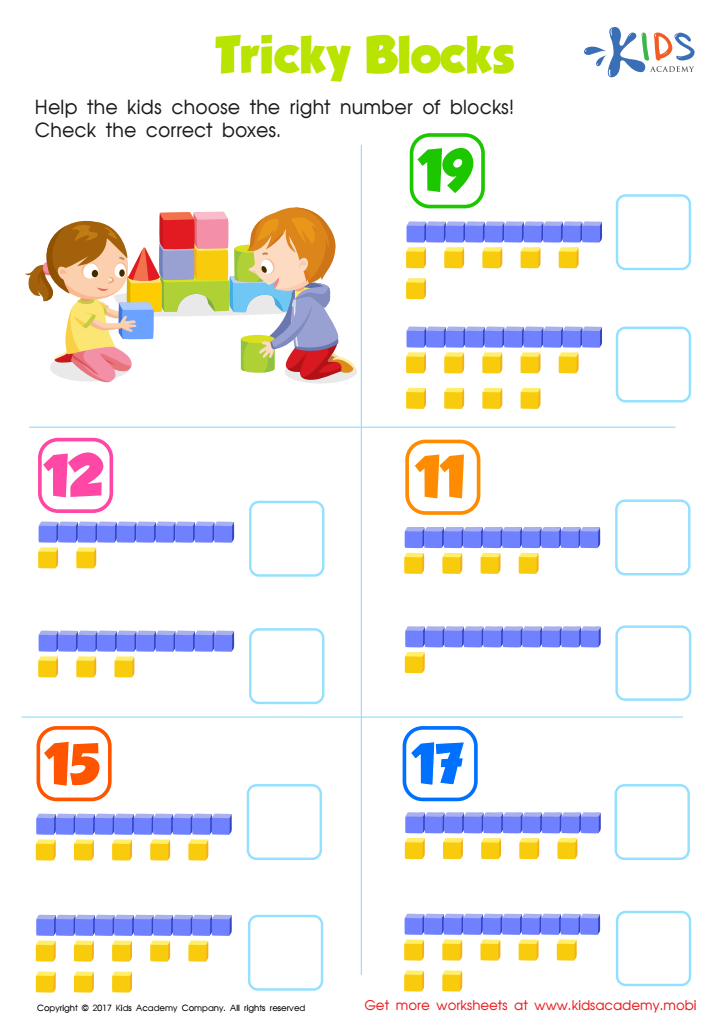
Tricky Blocks Worksheet
Help your child count with this printable worksheet. You'll be able to explain the technicalities of each answer as you work together to count the boxes and choose the correct number in the spaces provided. This will help your child better understand the concept and will go faster than if they do it alone.
 Assign to My Students
Tricky Blocks Worksheet
Worksheet
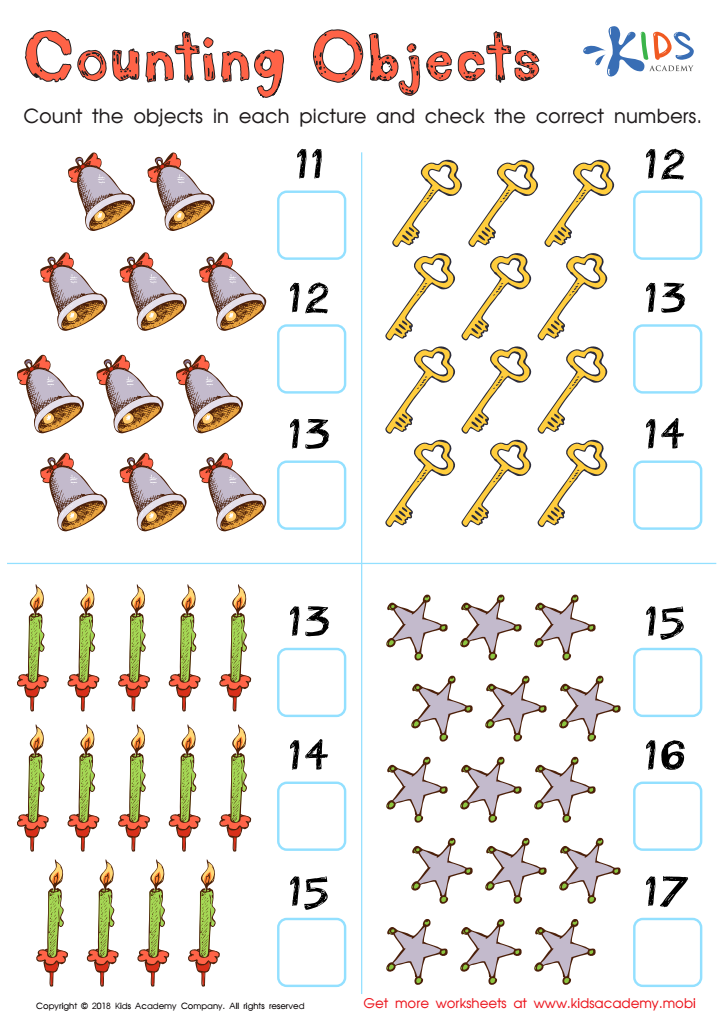
Counting Numbers Worksheet For Kindergarten
This worksheet is a great way to get your child practicing foundational math skills. With bright pictures to count, counting numbers just got a lot more fun! Get them ready for future math success and help them hone their early math skills.
Counting Numbers Worksheet For Kindergarten
Worksheet
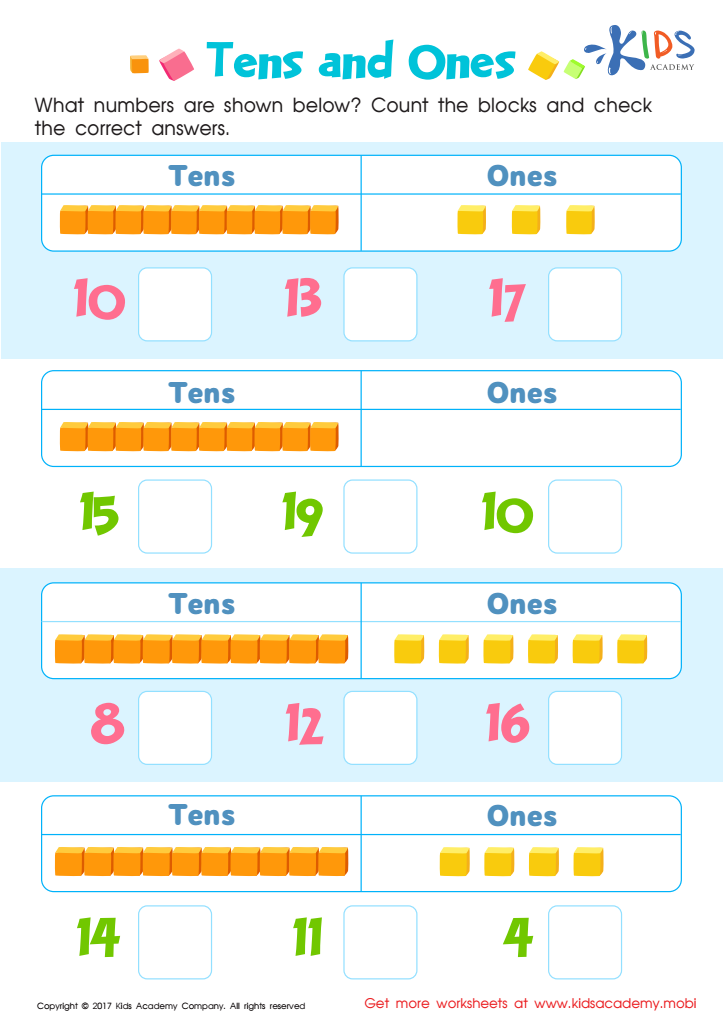
Tens and Ones Worksheet
Help your child make math fun with this worksheet! Count the blocks on both sides and enter the total in the box below the figures. This will help them overcome any math-related anxieties they might have and let them enjoy the learning process.
Tens and Ones Worksheet
Worksheet
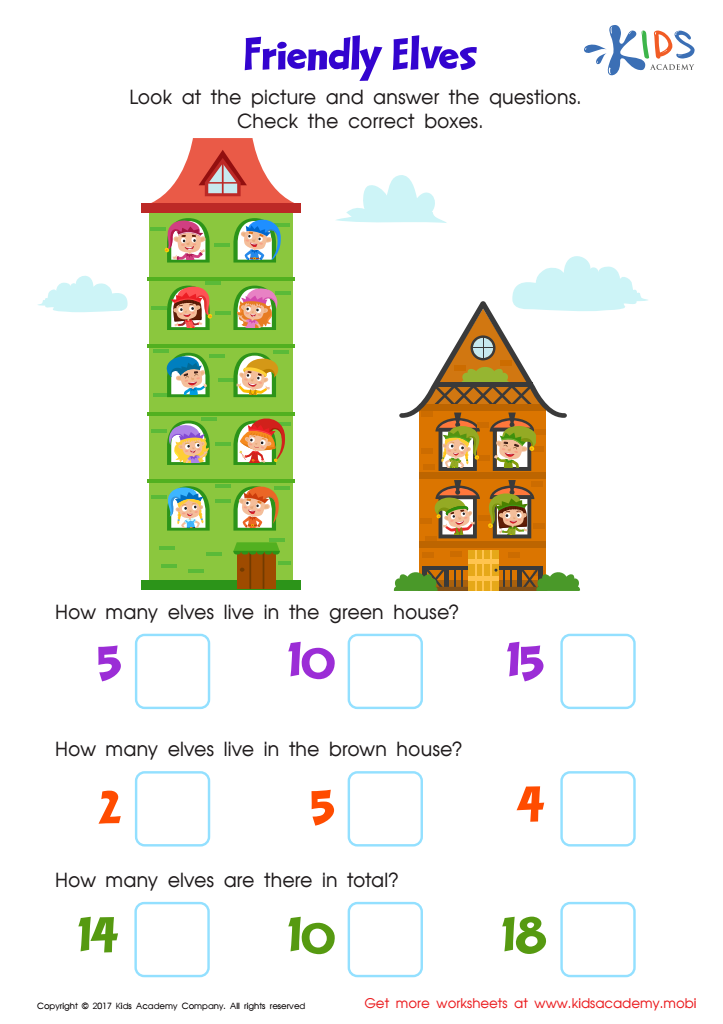
Place Value: Friendly Elves Worksheet
This fun worksheet teaches kids to count elves, answer questions about houses, and practice math! Look at the picture and count the elves in each house. How many are in the green and brown house? Tick the correct answer boxes. Perfect for young learners!
Place Value: Friendly Elves Worksheet
Worksheet
Join Kids Academy for Free
Who is primarily going to use this learning content?



Parents and teachers should place significant emphasis on familiarizing children aged 6-7 with normal numbers 11-20 due to their pivotal role in foundational mathematics. This phase marks a crucial developmental stage where children transition from recognizing single-digit numbers to understanding and working with double-digit numbers. Grasping the concepts of numbers 11-20 builds a cornerstone for skills in addition, subtraction, place value knowledge, and numeral sequencing.
Teaching these numbers ensures children can confidently bridge the gap between simplicity and complexity in math. They learn to recognize patterns, understand ordinal positions, and comprehend that the teens are constructed from a base of ten plus additional units. This knowledge is indispensable for future mathematical learning, such as reaching higher two-digit numbers and exploring basic arithmetic operations.
Moreover, early proficiency with numbers 11-20 fosters mathematical confidence. Students who master these numbers early on tend to experience less anxiety and more enjoyment in tackling mathematical tasks. This builds a solid foundation not only for school-based numeric learning but also for real-world applications. Thus, investing time and effort in teaching children numbers 11-20 in engaging and relatable ways can facilitate a smoother transition to more advanced mathematical concepts, laying the groundwork for academic success.