Logical Reasoning Normal Two-step Word Problems Worksheets for Ages 6-7
3 filtered results
-
From - To
Discover our engaging Logical Reasoning Normal Two-Step Word Problems Worksheets designed for children aged 6-7! These worksheets aim to enhance critical thinking and problem-solving skills through fun and interactive math challenges. Each worksheet presents relatable scenarios that encourage children to apply their logical reasoning abilities while solving two-step word problems. With a variety of topics and difficulties, our resources cater to different learning paces. Perfect for classroom use or at-home practice, these worksheets help young learners build a strong foundation in math while boosting confidence. Unlock the joy of learning and watch your child thrive with our specially crafted worksheets!
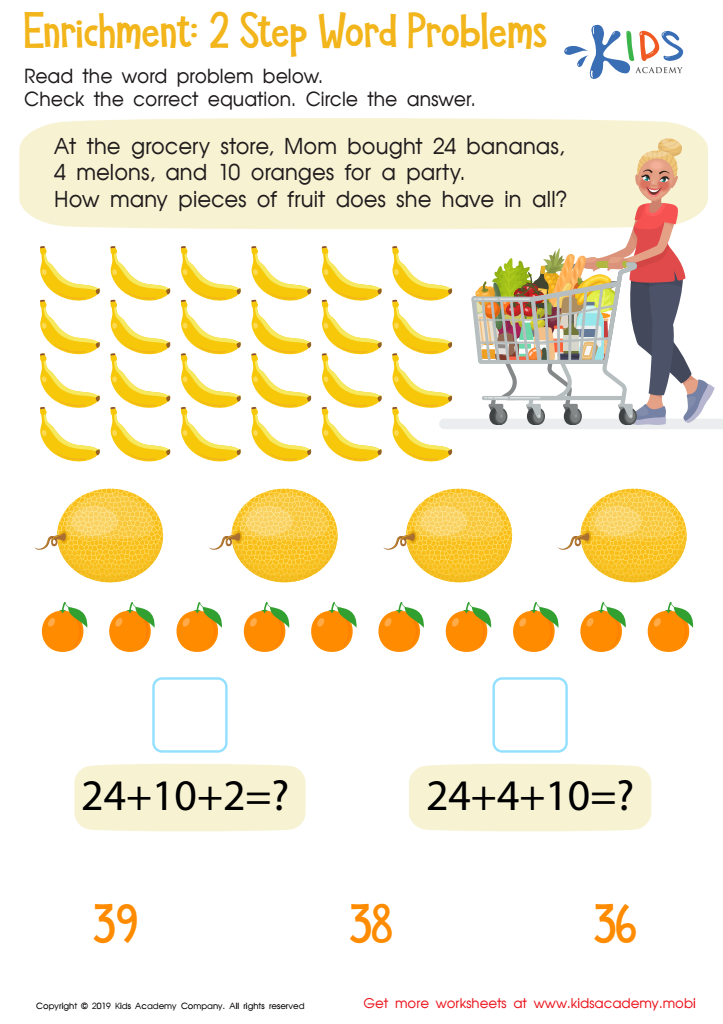
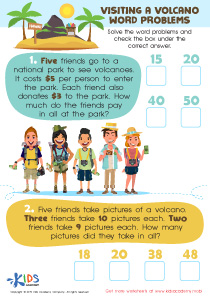
Enrichment -2 Step Word Problems Worksheet
 Assign to My Students
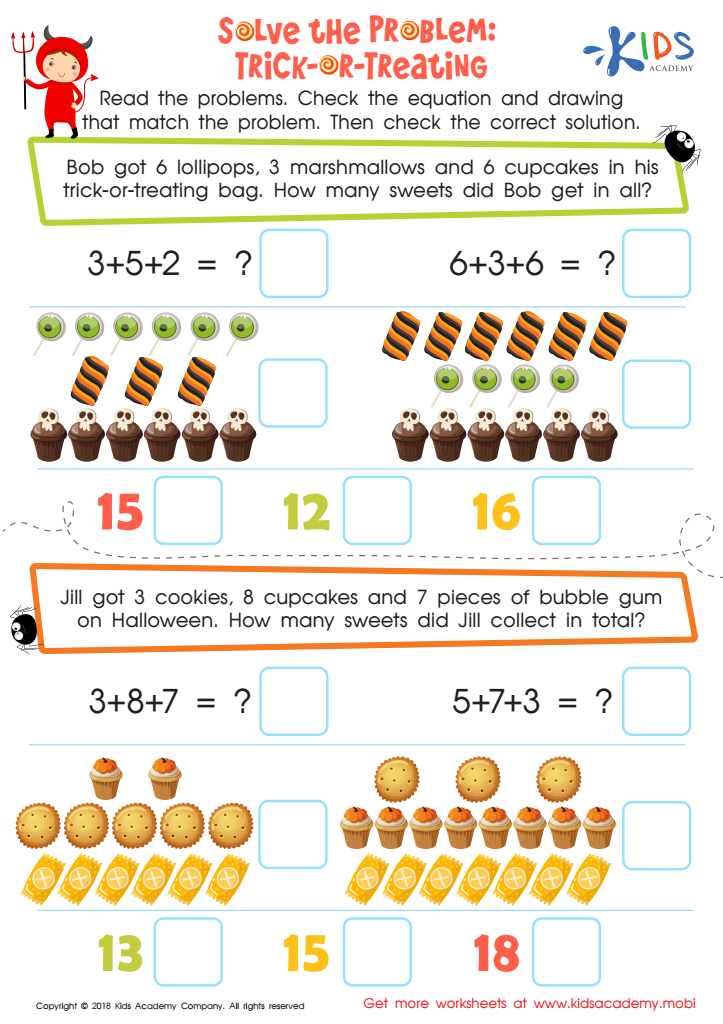
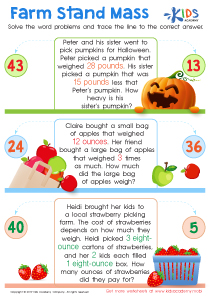
Solve the Problem: Trick–or–treating Worksheet
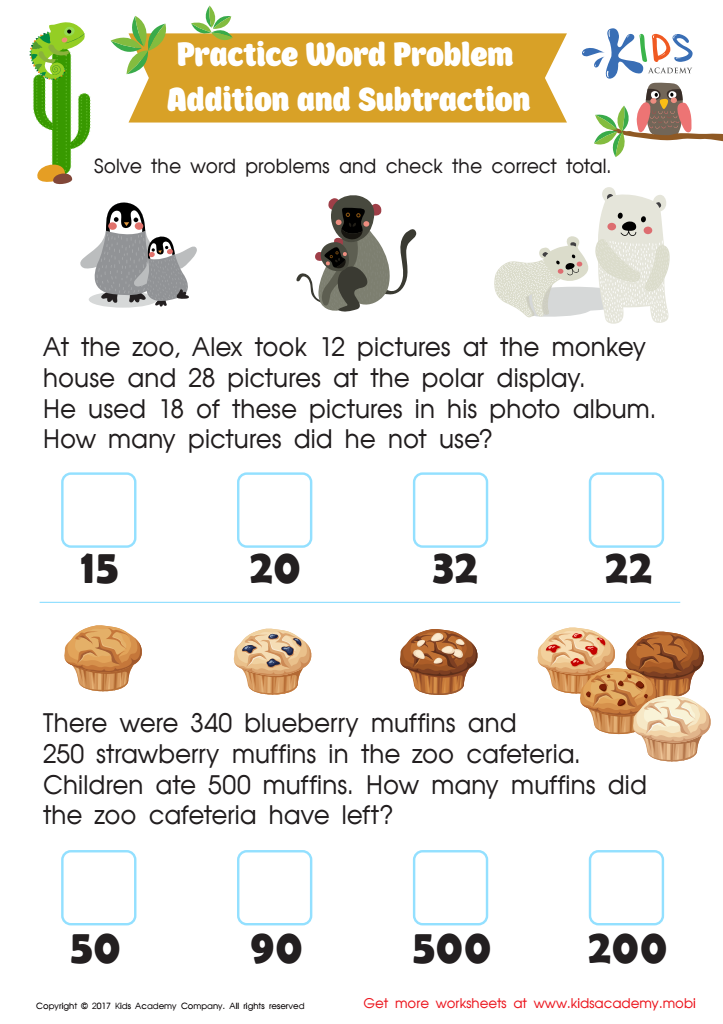
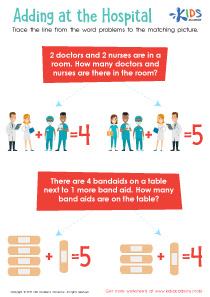
Addition and Subtraction: Word Problems Worksheet



Logical reasoning normal two-step word problems are essential for children aged 6-7 as they serve as a foundational skill for future math success. At this age, children are just beginning to think critically about information and learn to solve problems systematically. Engaging with these problems helps develop essential cognitive skills, enabling students to identify key information, break down tasks, and develop strategies to find solutions.
Parents and teachers should care about these skills for several reasons. Firstly, they encourage logical thinking and resilience when faced with challenges, fostering a growth mindset that can be applied across various subjects. Moreover, two-step problems enhance reading comprehension, as children must be able to decipher the language and mechanics of the question to perform operations correctly.
Additionally, these problems promote collaboration and discussion, providing opportunities for students to communicate their thought processes. As children articulate their reasoning, they strengthen their understanding of math concepts and learn to approach problems from multiple angles.
Ultimately, mastering logical reasoning prepares children for more complex concepts in mathematics and critical thinking in real-life situations, making it vital for educators and caregivers to prioritize this skill at an early age.