Vocabulary Enrichment Normal Reading Worksheets for Ages 6-7
3 filtered results
-
From - To
Enhance your child's vocabulary with our engaging "Vocabulary Enrichment Normal Reading Worksheets" designed specifically for ages 6-7. These printable worksheets focus on expanding word knowledge through fun activities tailored to young learners. Children will explore new vocabulary in context, connect words with images, and engage in comprehension exercises, fostering a love for language. Every worksheet is created to promote critical thinking and creativity, while aligning with early literacy objectives. Perfect for use at home or in the classroom, these worksheets provide an excellent resource for parents and teachers aiming to enrich children's reading experiences. Start nurturing great readers today!
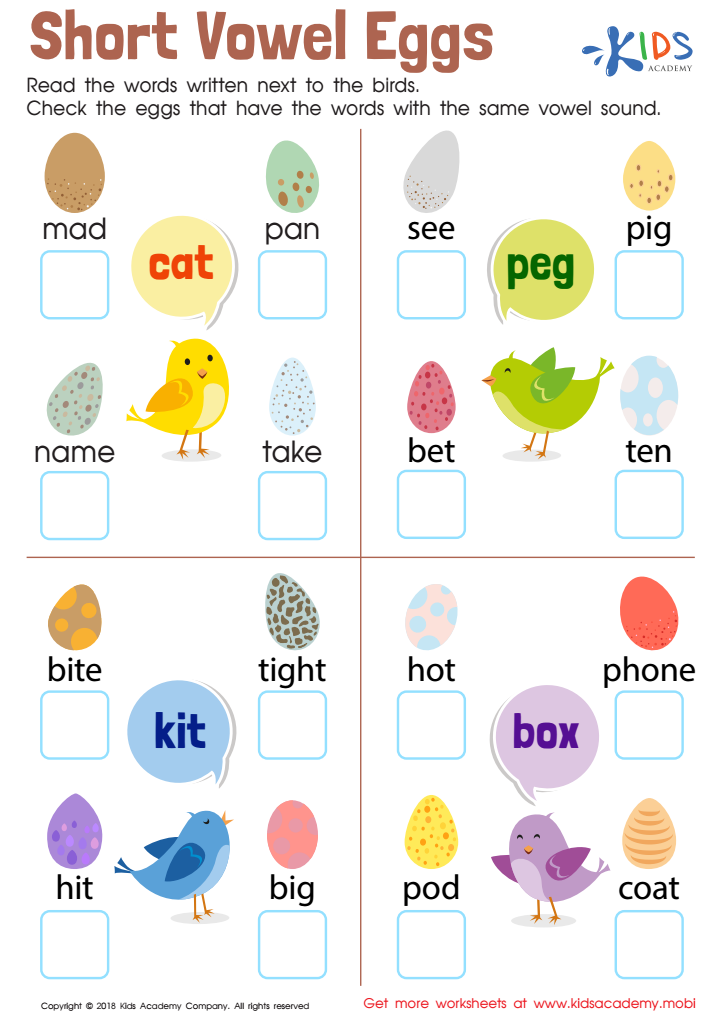
Short Vowel Eggs Worksheet
 Assign to My Students
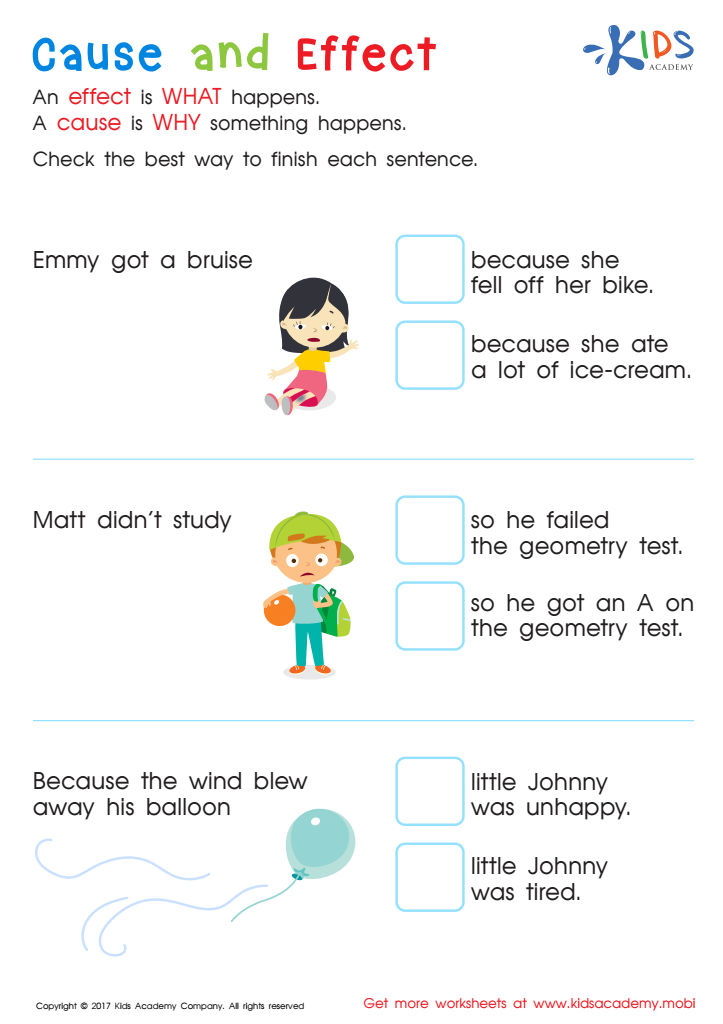
Cause and Effect Worksheet
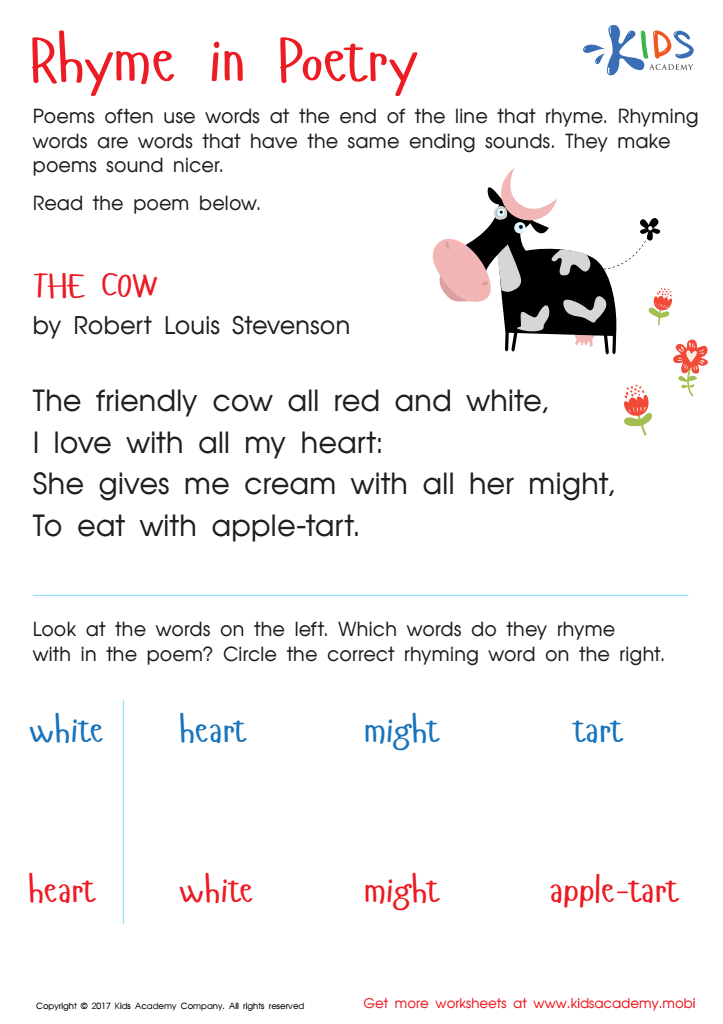
Rhyme In Poetry Worksheet







Vocabulary enrichment during the normal reading stages for ages 6-7 is crucial for children's overall literacy development. At this age, children are transitioning from learning to read to reading to learn, meaning a robust vocabulary is essential for comprehension and expression. A well-developed vocabulary not only enhances their understanding of texts but also empowers them to communicate effectively in both spoken and written forms.
Parents and teachers should care about vocabulary enrichment because it fosters academic success. Children with a rich vocabulary are better equipped to decode complex texts, engage in discussions, and respond thoughtfully in a variety of contexts. Improved vocabulary also enhances reading fluency, contributing to greater confidence and a love for reading.
Moreover, engaging in vocabulary enrichment activities cultivates critical thinking and creativity. By exploring new words through fun and interactive experiences, such as storytelling, word games, and discussions, children learn to think more deeply about language.
Investing in vocabulary development can also bridge the gap in literacy achievement among children from diverse backgrounds, ensuring equitable access to educational resources. Ultimately, enhancing vocabulary provides children with the tools they need to thrive academically, socially, and emotionally. It lays the foundation for lifelong learning and communication skills that are vital in today’s world.








