Critical Thinking Normal Reading Comprehension Worksheets for Ages 6-7 - Page 2
27 filtered results
-
From - To
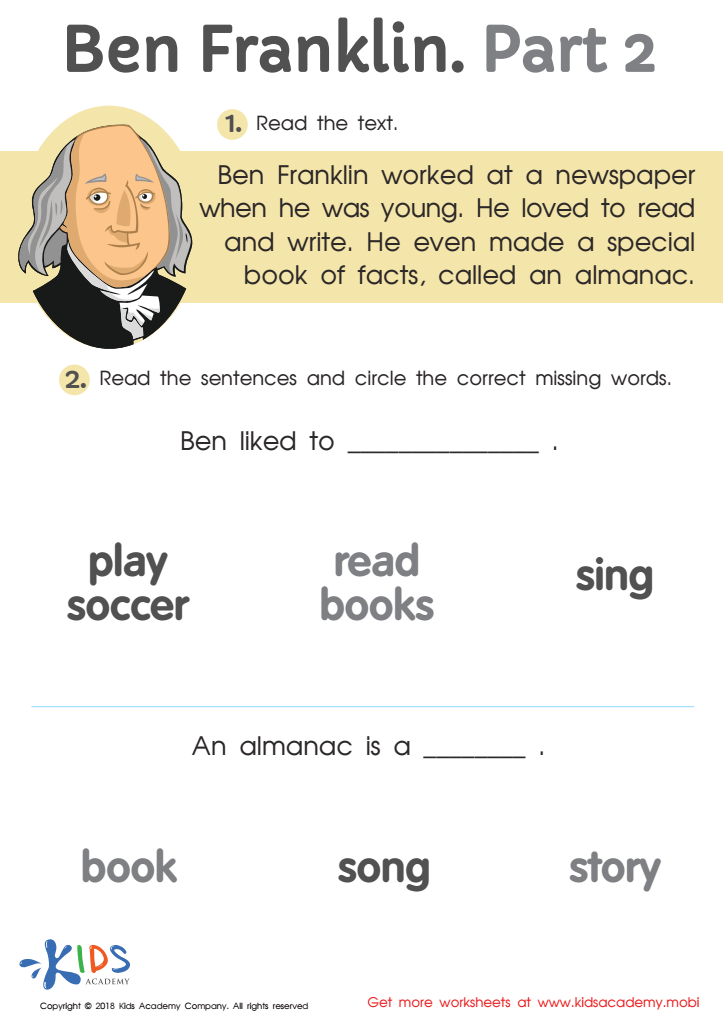
Ben Franklin Part 2 Worksheet
 Assign to My Students
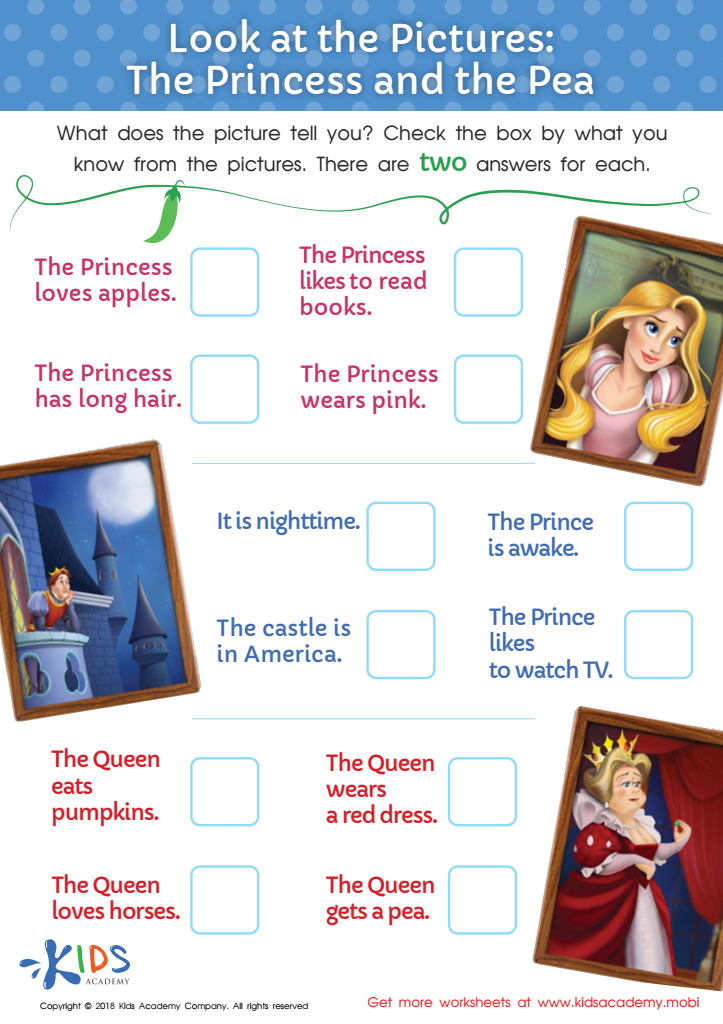
Look at the Pictures: The Princess and the Pea Worksheet
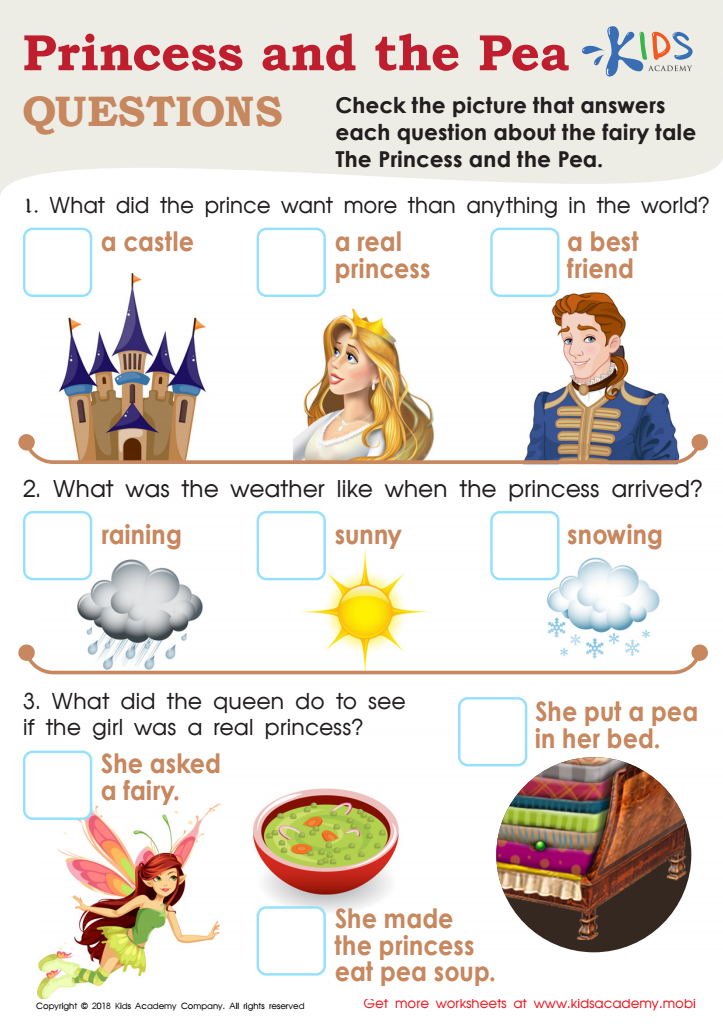
Princess and the Pea Questions Worksheet








Critical thinking and reading comprehension are fundamental skills that form the cornerstone of a child’s academic and personal development, especially for ages 6-7. During this vital stage, children begin to make meaningful interpretations of texts while developing the ability to analyze, evaluate, and synthesize information. When parents and teachers promote these skills, they empower children to engage actively with the materials they encounter, rather than passively consuming information.
Critical thinking encourages children to ask questions, recognize biases, and understand different perspectives, forming a basis for responsible citizenship and lifelong learning. Additionally, strong reading comprehension paves the way for enhanced vocabulary, fluency, and the ability to make connections across different subjects. In a rapidly changing world filled with information overload, equipping children with the capability to discern what’s credible and relevant is essential.
By fostering these skills early on, parents and teachers can instill a love for learning, encourage inquisitiveness, and build confidence in children as they navigate both academic challenges and everyday situations. This foundation will not only serve them in school but also in their interactions and decisions throughout life. Prioritizing critical thinking and reading comprehension will prepare children for success in a complex, information-driven society.








