
Logical Reasoning Normal Reading Comprehension Worksheets for Ages 6-7
4 filtered results
Difficulty Level
Grade
Age
-
From - To
Subject
Activity
Standards
Enhance your child's critical thinking and reading abilities with our "Logical Reasoning Normal Reading Comprehension Worksheets" for ages 6-7. Designed to boost logical reasoning skills while enjoying engaging reading passages, these worksheets help children analyze, evaluate, and synthesize information. Each activity is age-appropriate and promotes an enjoyable learning experience, making it easier for kids to grasp essential reading concepts. With a variety of fun, interactive exercises, your child will develop essential literacy skills and improve their ability to answer questions based on comprehension and reasoning. Explore our collection now and support your young learner's journey to becoming a confident reader!
Favorites
With answer key
Interactive
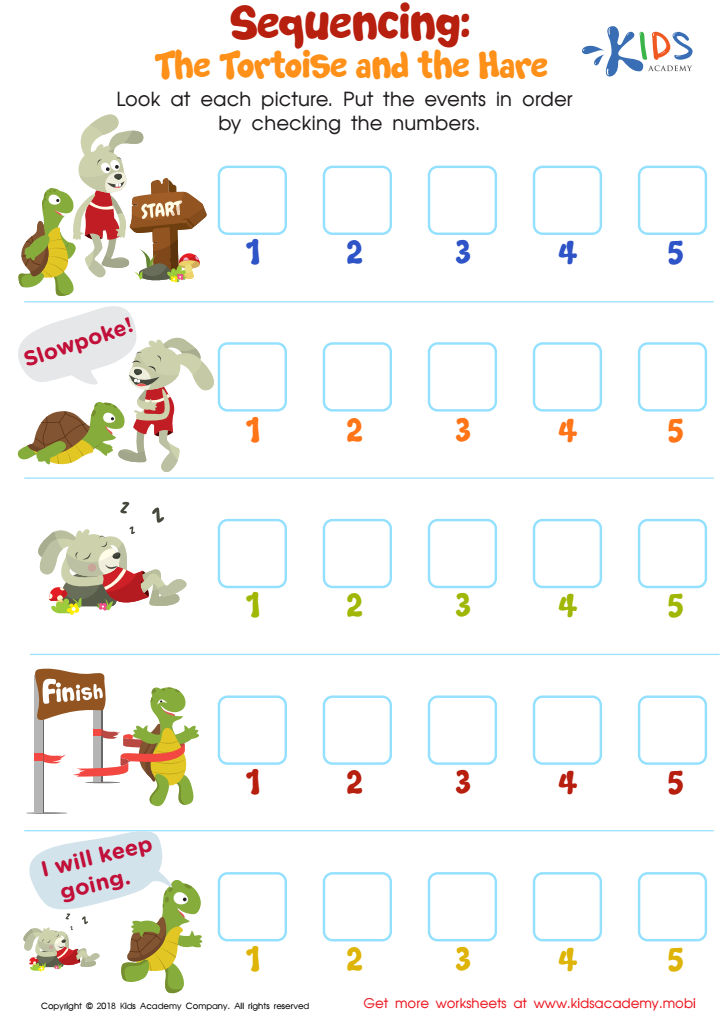
Sequencing: The Tortoise and the Hare Worksheet
Help your child become an independent reader and critical thinker with a sequencing worksheet from Kids Academy! Have them read the classic tale of the tortoise and the hare and use the accompanying worksheet to check their understanding of the story's sequence of events. Have kids identify the correct order of events by selecting the box next to the correct number for each image!
 Assign to My Students
Sequencing: The Tortoise and the Hare Worksheet
Worksheet
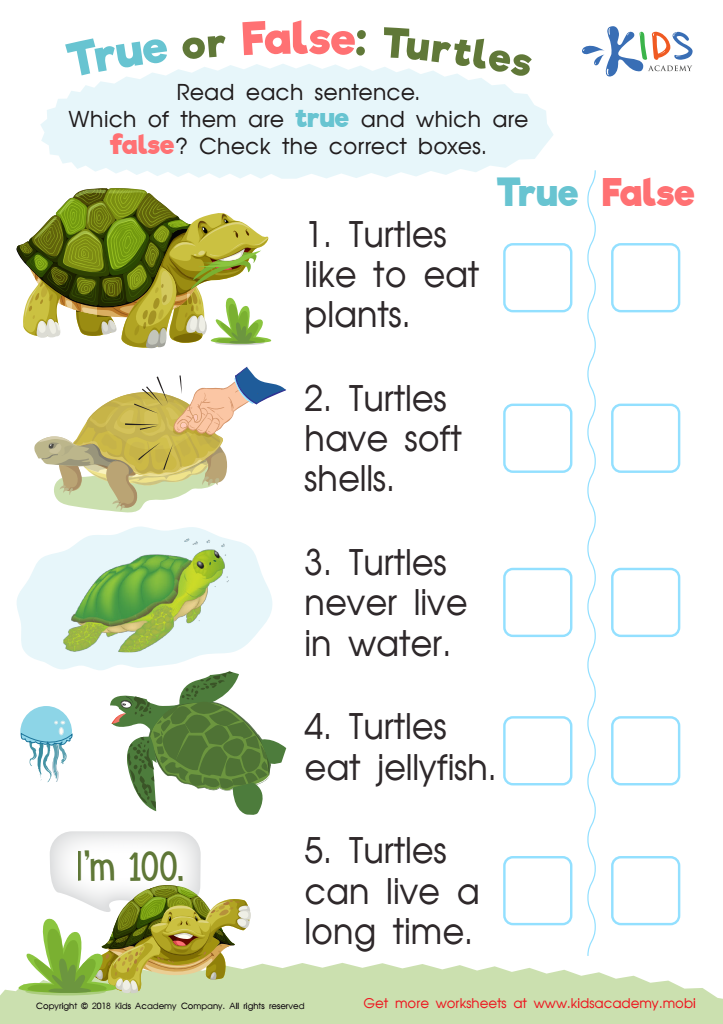
True or False: Turtles Worksheet
Print this free downloadable worksheet to strengthen your child's reading comprehension. Assist them to read each sentence and recall facts about turtles. Check true or false for each statement to verify their knowledge. Perfect for early learners!
True or False: Turtles Worksheet
Worksheet
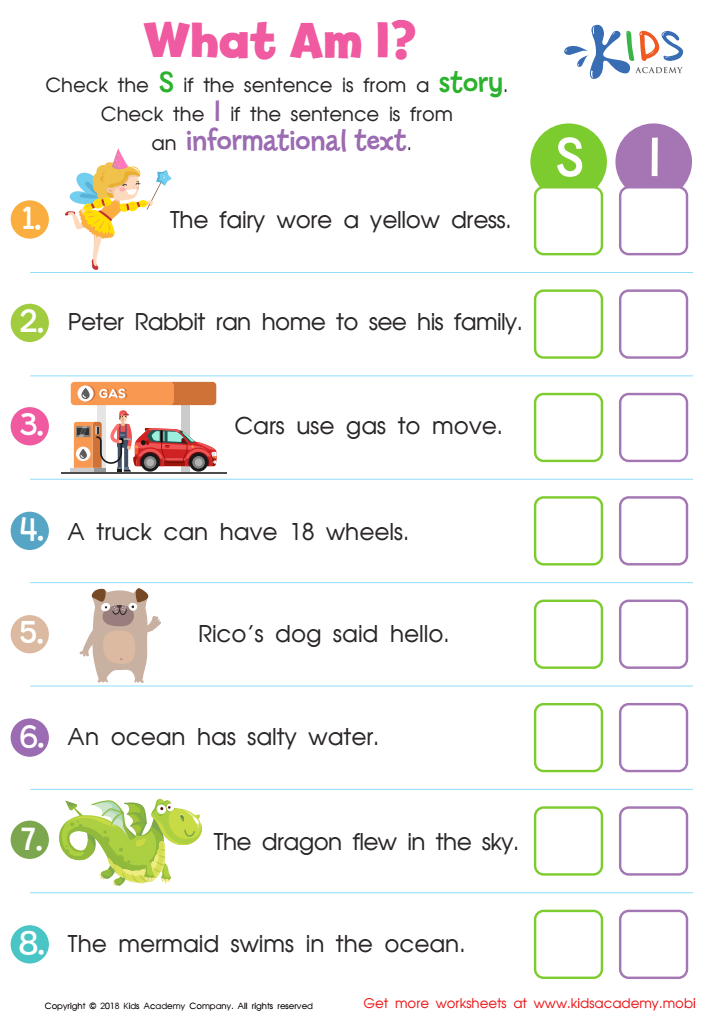
What Am I? Worksheet
This worksheet assesses students' ability to differentiate between stories and texts they read for facts. Students learn to distinguish between reading for pleasure and reading for information. It includes statements from both a story and an informational text, and students must decide what type of text it is.
What Am I? Worksheet
Worksheet
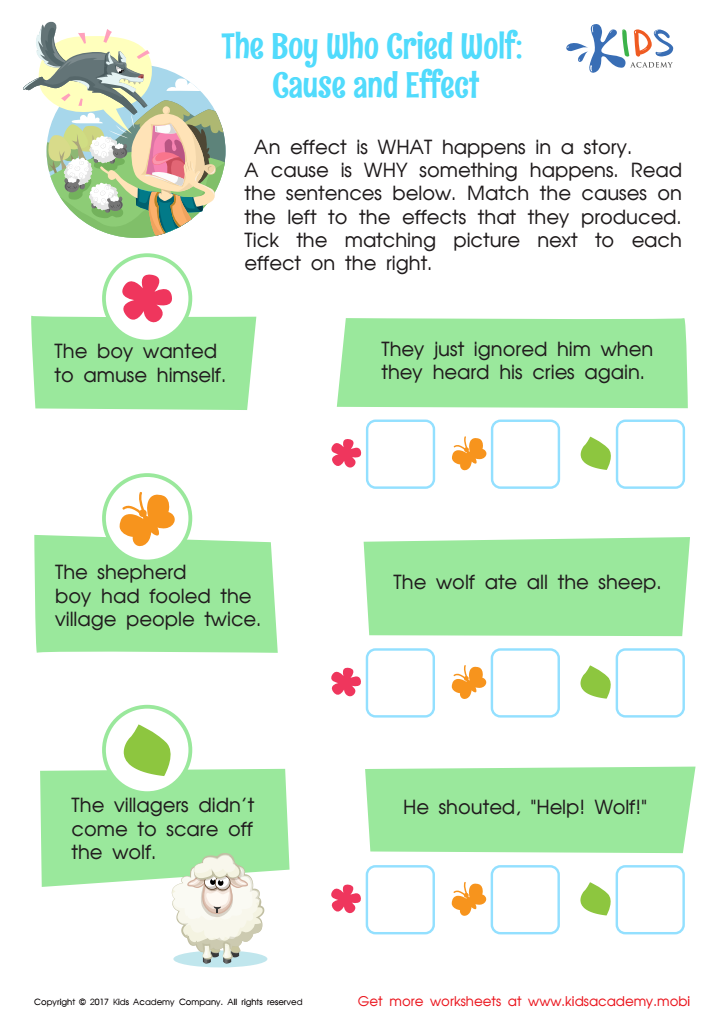
The Boy Who Cried Wolf: Cause and Effect Worksheet
With classic stories and fables, learning reading comprehension is easy - and fun!
The Boy Who Cried Wolf: Cause and Effect Worksheet
Worksheet
Join Kids Academy for Free
Who is primarily going to use this learning content?





.jpg)


Parents and teachers should care about logical reasoning and reading comprehension for children aged 6-7 because these skills are foundational for lifelong learning. At this age, children are developing critical thinking abilities that enable them to make sense of information, draw conclusions, and solve problems. Logical reasoning helps children to connect ideas and understand cause-and-effect relationships, which are crucial for both academic success and everyday decision-making.
Simultaneously, reading comprehension is essential for interpreting texts and engaging with the world around them. Enhancing comprehension skills cultivates students’ ability to understand not just the words on a page, but the deeper meaning and intent behind texts. This skill fosters a love for reading, encourages curiosity, and supports success across various subjects, especially as they advance in their education.
Additionally, empowering children in these areas builds their confidence, enabling them to tackle new challenges with a sense of mastery. As they become adept readers and thinkers, they are better equipped to navigate social situations and articulate their thoughts, leading to improved communication skills. Therefore, focusing on logical reasoning and reading comprehension at this formative stage lays the groundwork for future academic achievement and personal development.








