Moral understanding Normal Reading Comprehension Worksheets for Ages 6-7
4 filtered results
-
From - To
Discover our engaging Moral Understanding Reading Comprehension Worksheets designed for ages 6-7. These worksheets foster essential reading skills while imparting valuable moral lessons. Featuring age-appropriate stories and exercises, each worksheet focuses on building comprehension and critical thinking. Children will navigate key concepts such as kindness, honesty, and respect. Our resources ensure a deeper understanding of both literary material and core values. Engaging and educational, these worksheets offer a perfect blend of learning and moral development, making reading not only informative but also character-building. Ideal for early learners to grasp profound lessons easily and enjoyably. Explore now for enriched learning!
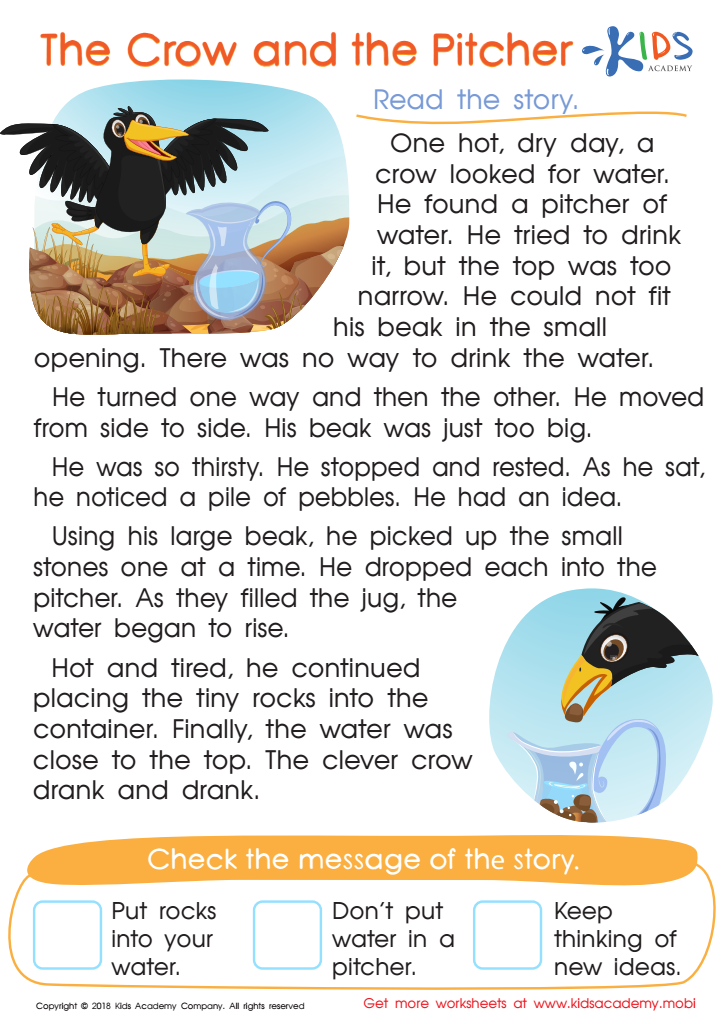
The Crow and the Pitcher Worksheet
 Assign to My Students
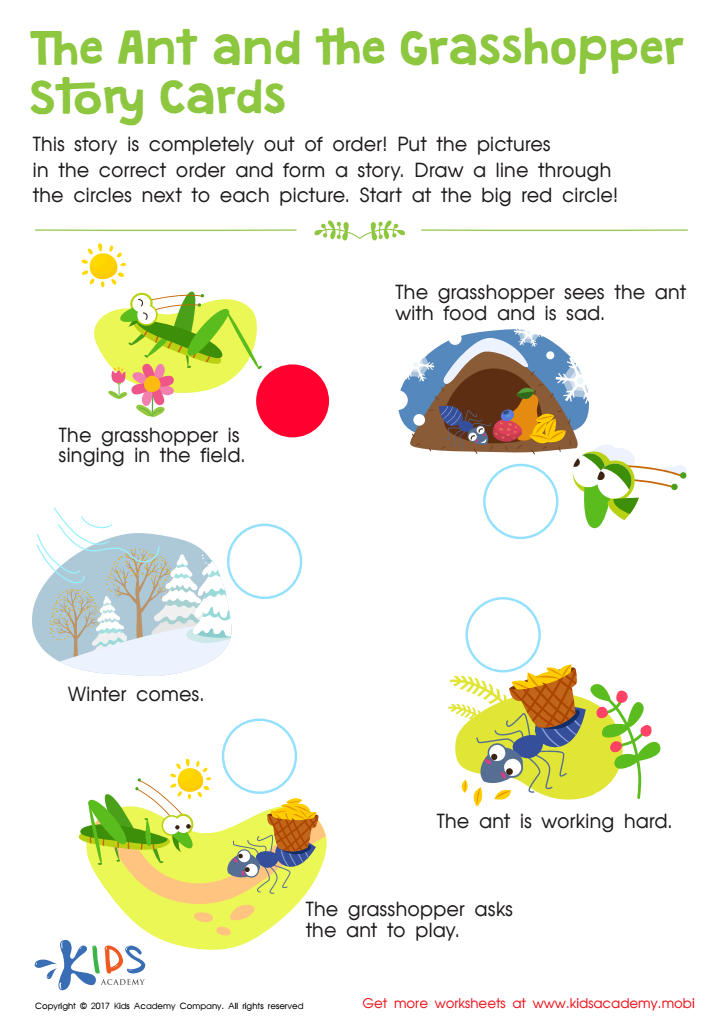
The Ant and The Grasshopper Worksheet
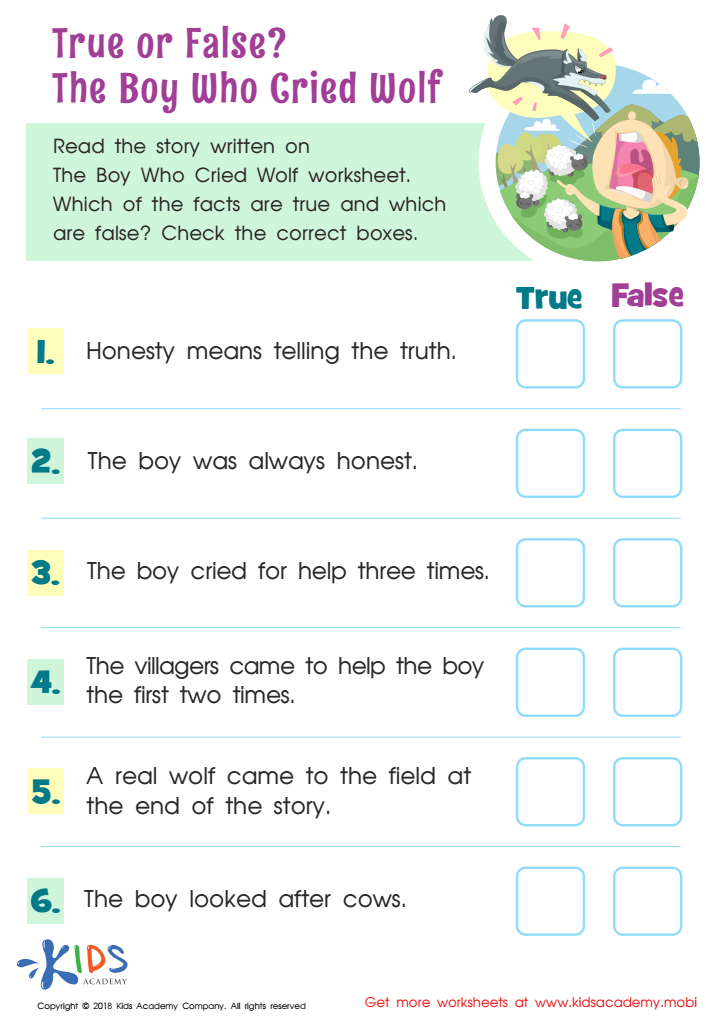
True or False? The Boy Who Cried Wolf Worksheet
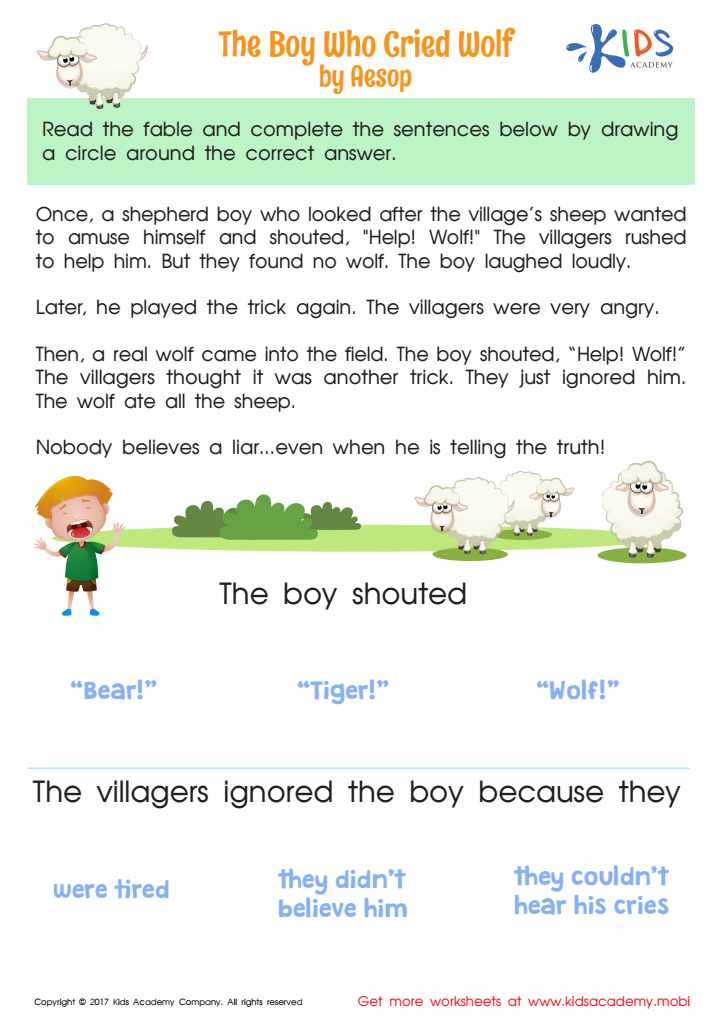
The Boy Who Cried Wolf Worksheet







Parents and teachers play a crucial role in fostering moral understanding and reading comprehension in children aged 6-7. At this developmental stage, kids are not only developing their academic skills but also forming their moral framework and understanding of right and wrong. Moral understanding helps children develop empathy, self-discipline, and social skills, which are essential for building positive relationships and becoming responsible individuals. By incorporating moral lessons into daily activities and reading materials, parents and teachers can nurture a child's ability to distinguish between acceptable and unacceptable behavior and think critically about ethical dilemmas.
Reading comprehension, on the other hand, is a foundational skill that underpins academic success across all subjects. Children who develop strong reading comprehension skills can understand and engage with more complex texts, which enhances their learning and retention in subjects like science, history, and mathematics. By focusing on reading comprehension at this age, educators and parents can support children's cognitive development and foster a lifelong love of reading.
Combining moral understanding with reading strategies when reading stories or discussing real-life scenarios allows children to practice empathy and problem-solving in a controlled environment. As a result, they develop a well-rounded character and improved academic skills, setting the stage for a successful and fulfilling life.








