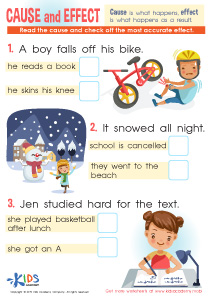
Historical Knowledge Normal Reading Non-Fiction Worksheets for Ages 6-7
5 filtered results
-
From - To
Explore our engaging Historical Knowledge Non-Fiction Worksheets designed specifically for children aged 6-7! These worksheets foster young learners' understanding of history through age-appropriate texts and activities. Each worksheet encourages critical thinking and comprehension skills as students delve into fascinating historical events and figures. Perfect for enhancing reading abilities, our resources also promote creativity and exploration, making history accessible and enjoyable. Ideal for classroom settings or at-home learning, these worksheets are a valuable tool for teachers and parents alike. Empower your child’s learning journey and ignite their curiosity about the past with our thoughtfully crafted materials! Download yours today!
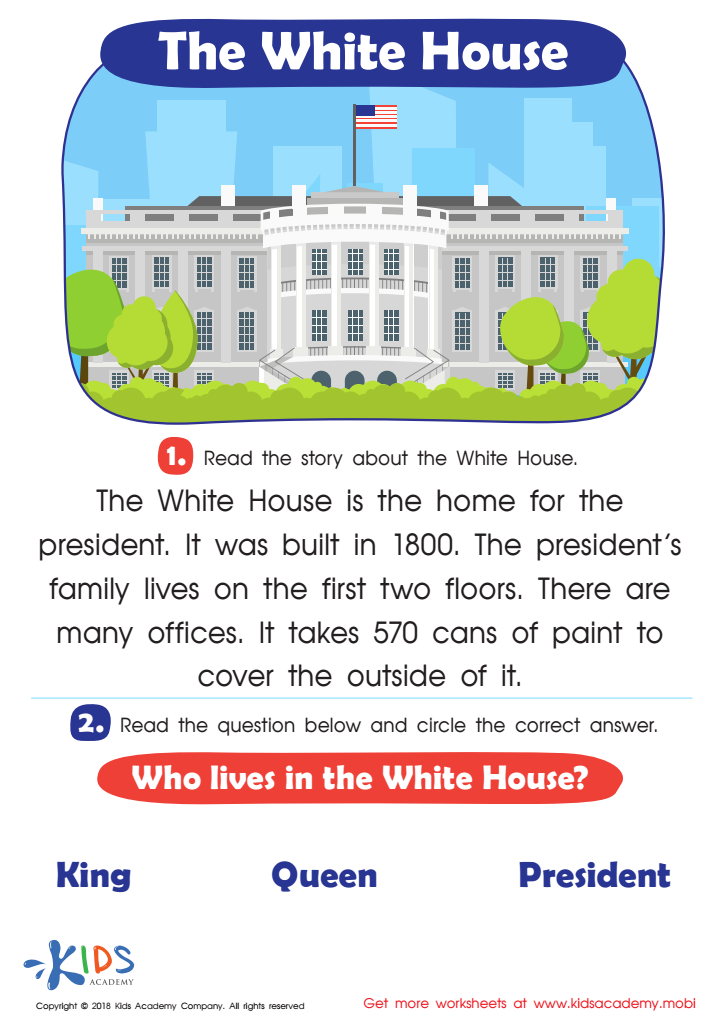
White House Worksheet
 Assign to My Students
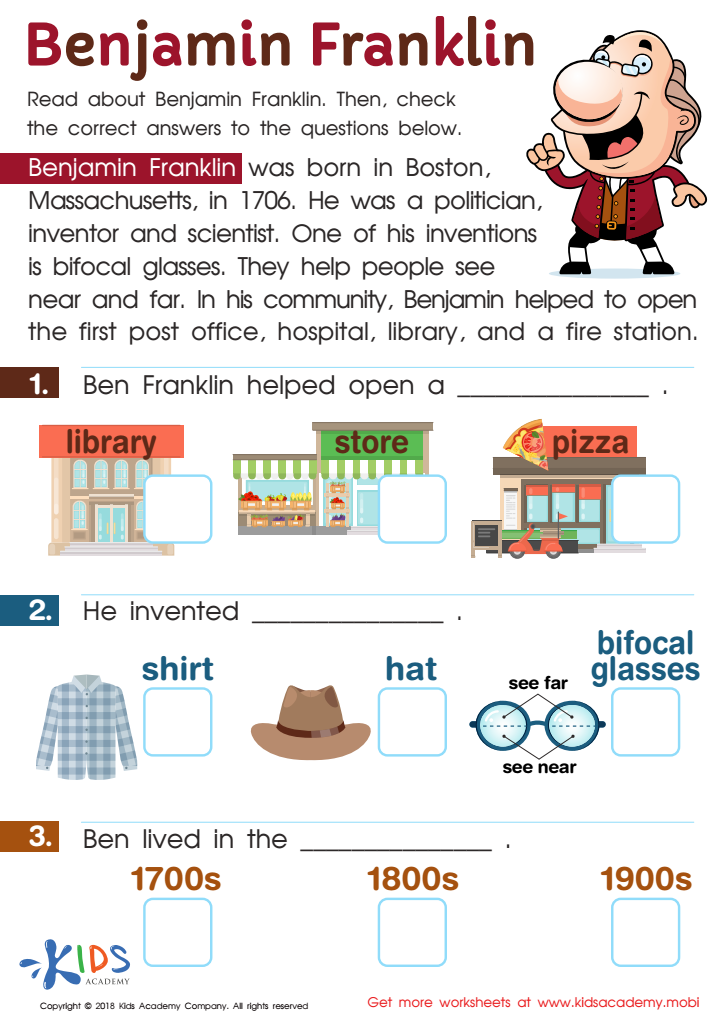
Benjamin Franklin Worksheet
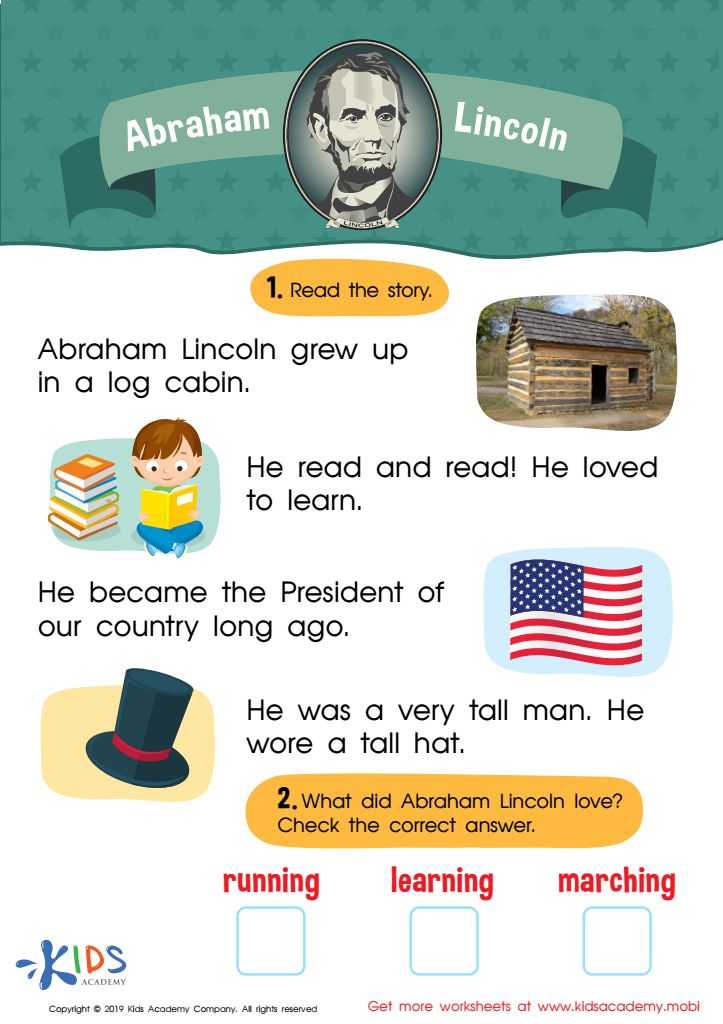
Abraham Lincoln Worksheet
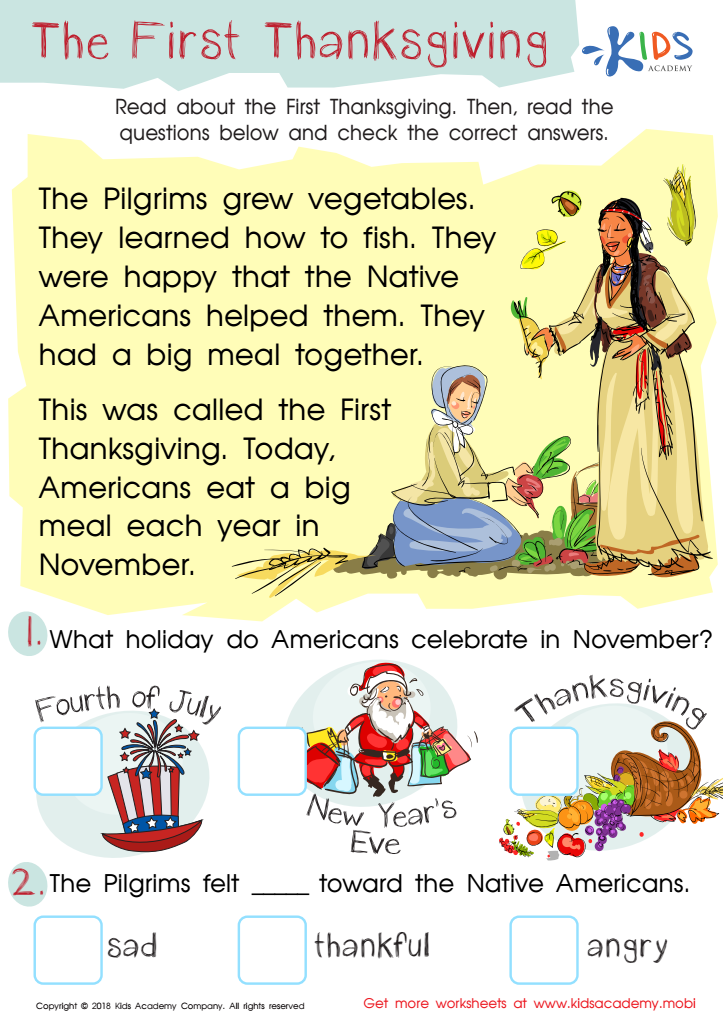
Assessment: First Thanksgiving Worksheet
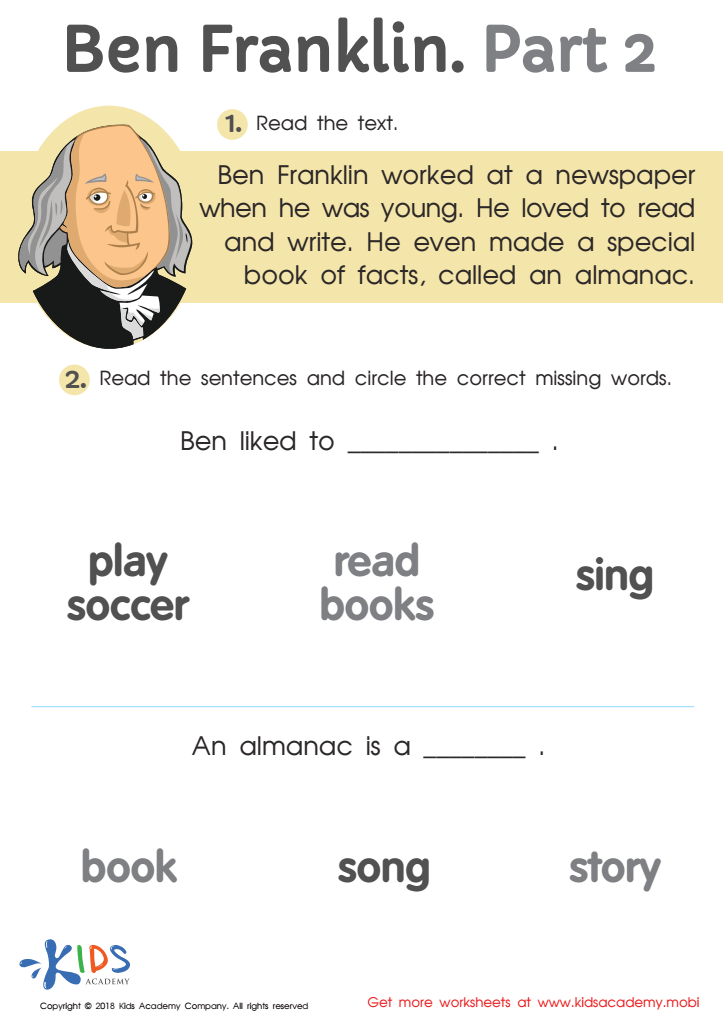
Ben Franklin Part 2 Worksheet








Parents and teachers should prioritize historical knowledge in non-fiction reading for children aged 6-7 for several compelling reasons. First, early exposure to history cultivates curiosity and encourages children to ask questions about the world around them. Understanding where we come from helps children build a sense of identity and belonging, enhancing their social awareness and empathy. It allows them to appreciate diverse cultures and experiences, which fosters respect and inclusiveness.
Furthermore, non-fiction reading develops critical thinking skills. For young learners, engaging with real historical events and figures challenges them to distinguish fact from fiction, honing their analytical abilities. This kind of reading can also enhance vocabulary and comprehension skills by introducing children to new terms and contexts, enriching their language development.
Additionally, historical narratives can spark imagination and creativity, encouraging children to connect emotionally with the past and understand its relevance to their present lives. Establishing a strong foundation in historical knowledge not only informs but also empowers students, as they begin to recognize their potential to impact the future. Ultimately, integrating historical concepts into early literacy can have lasting benefits for children’s intellectual growth and social consciousness.