Reading comprehension Normal Reading Non-Fiction Worksheets for Ages 6-7 - Page 2
25 filtered results
-
From - To
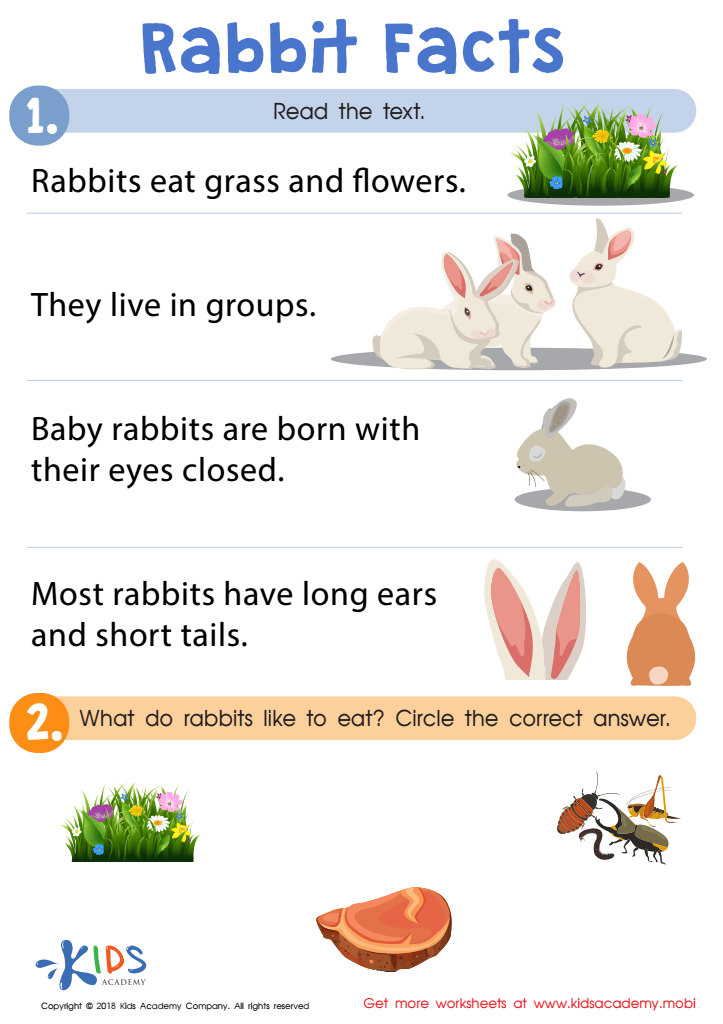
Rabbit Facts Worksheet
 Assign to My Students








Reading comprehension is crucial for young children, particularly ages 6-7, because it lays the foundation for future academic success and life skills. At this developmental stage, children transition from knowing how to read, to being able to understand and interpret what they read. Focusing on non-fiction texts is especially important as it broadens children's knowledge about the world around them. Non-fiction helps children learn facts, develop critical thinking skills, and understand complex subjects in a simplified manner.
When parents and teachers emphasize reading comprehension, they support children in developing a robust vocabulary, enhancing their ability to grasp more complex texts in the future. This early exposure helps children become proficient readers who can navigate and extract pertinent information efficiently. Additionally, reading comprehension fosters curiosity and a love for learning that goes beyond the classroom.
In terms of classroom behavior and participation, effective reading comprehension contributes to greater confidence, allowing children to actively engage in discussions, ask questions, and share insights. When children develop strong reading skills early, they perform better academically across all subjects, including math and science, where reading and understanding word problems can be critical.
Cultivating these skills from a young age sets up children for long-term success, determined problem-solving, and a sustained enthusiasm for learning, benefiting them academically, professionally, and personally throughout their lives.