Vocabulary expansion Normal Sight Words Worksheets for Ages 6-7
5 filtered results
-
From - To
Boost your child's literacy skills with our engaging Vocabulary Expansion Normal Sight Words Worksheets for ages 6-7. Perfect for early grade readers, these printable resources help children master essential sight words, enhancing spelling and reading proficiency. Each worksheet is thoughtfully designed to make learning fun and effective, incorporating activities like tracing, matching, and writing. With clear instructions and attractive visuals, kids stay motivated and confident as they expand their vocabulary. Ideal for use at home or in the classroom, our worksheets support young learners in building a solid foundation for future reading success. Start your child's journey to literacy today!
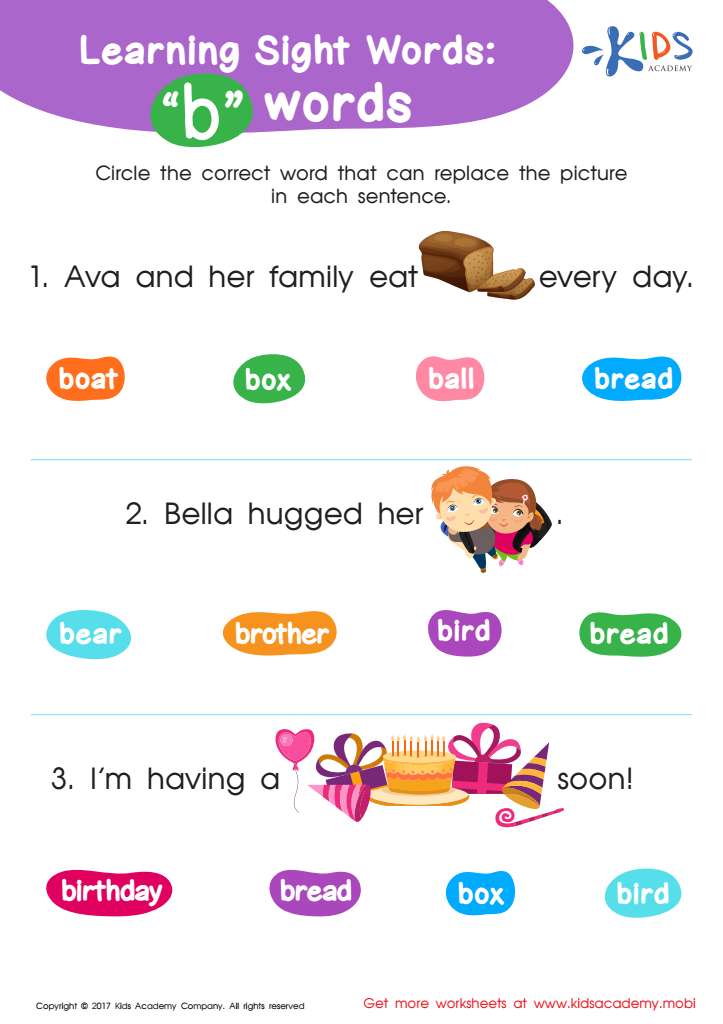
Sight Words Free Worksheet – B Words
 Assign to My Students



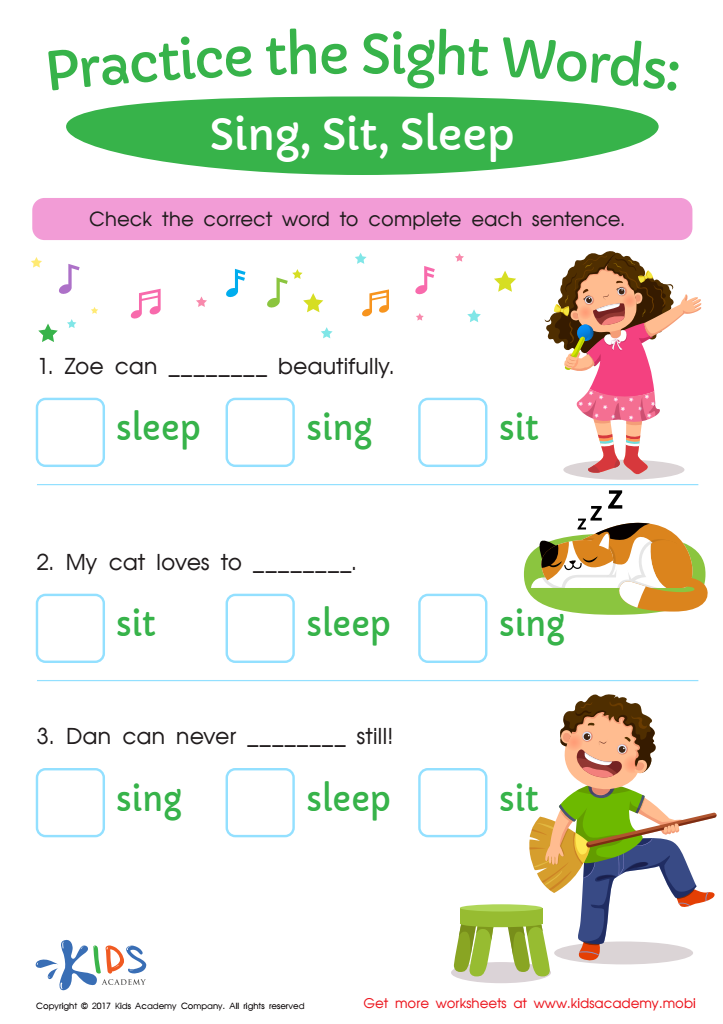
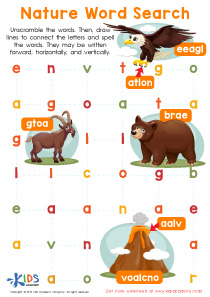
Sing, Sit, Sleep Sight Words Worksheet
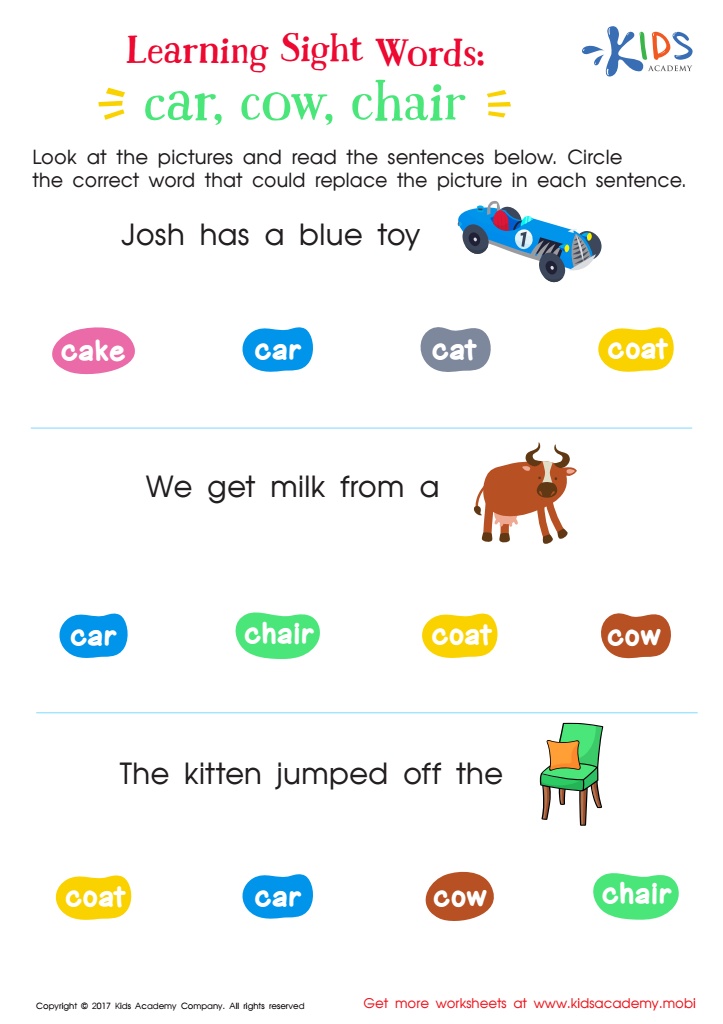
Car, Cow, Chair Worksheet Sight Words Worksheet
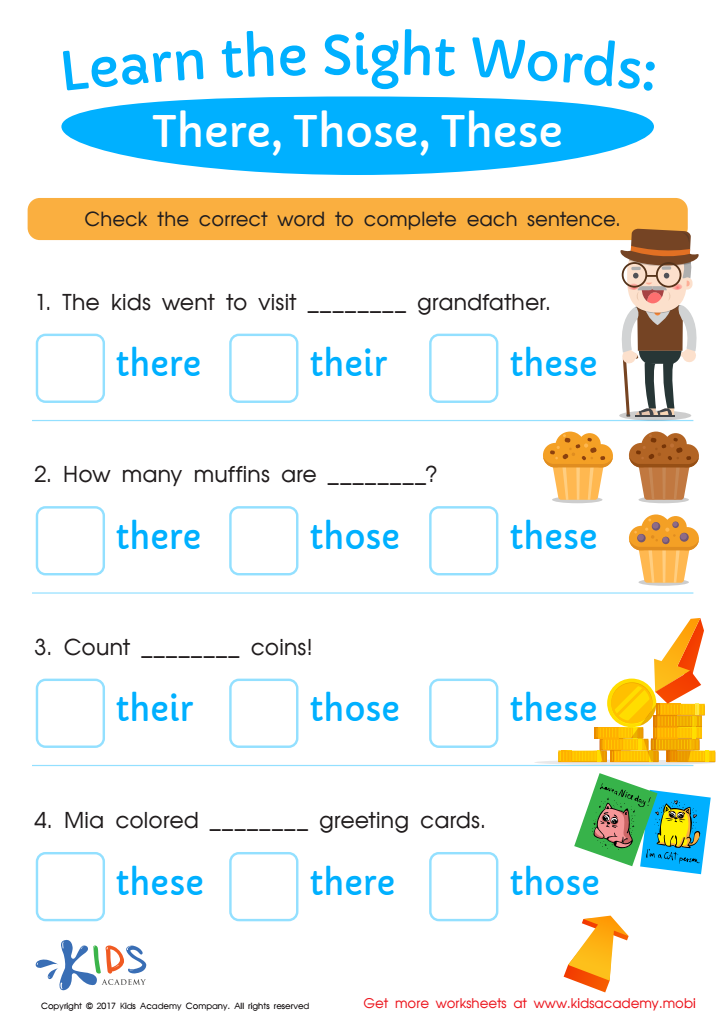
There, Those and These Sight Words Worksheet
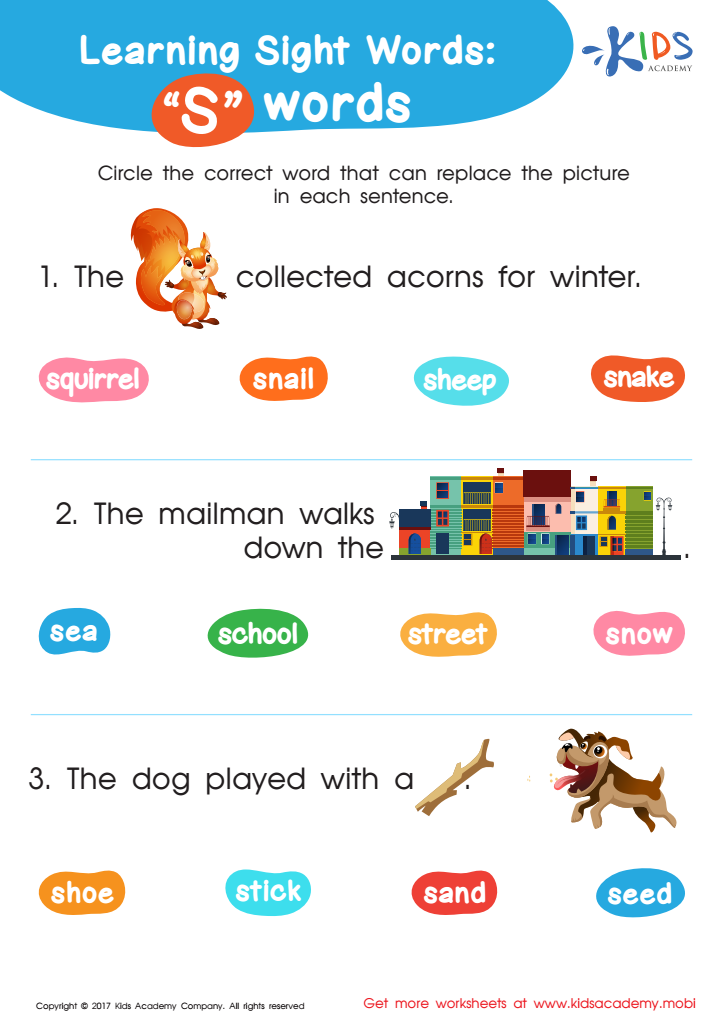
S Words Sight Words Worksheet


.jpg)





Exploring vocabulary and normal sight words for ages 6-7 is crucial in laying a solid foundation for a child's literacy and overall cognitive development. At this stage, children are at a prime age for absorbing new information. Familiarity with common sight words helps children recognize frequently used words instantly, promoting smoother, more fluent reading. This fluency reduces reading frustration and builds confidence, encouraging a lifelong love of reading.
Expanding vocabulary enables better comprehension. As children encounter varied words, their ability to understand and contextualize text improves, allowing for richer, more complex thinking. This stronger linguistic base enhances not just reading skills but also speaking, listening, and writing abilities. Vocabulary impacts academic success across subjects; for example, math problems often require comprehending specific terms, and science lessons introduce new concepts through language.
For teachers and parents, fostering vocabulary growth involves interactive activities like reading together, playing word games, and encouraging curiosity about new words. These interactions are not only educational but also deepen the emotional bond between the child and the adult. Investment in a child’s vocabulary at this age translates into long-term educational benefits, life skills, and the ability to communicate effectively and confidently.