Basic astronomy knowledge Normal Science Worksheets for Ages 6-7
3 filtered results
-
From - To
Introduce young learners to the wonders of space with our Basic Astronomy Knowledge Normal Science Worksheets for Ages 6-7. These engaging printables are designed to make learning about the solar system, stars, and planets fun and accessible. Through interactive activities and colorful illustrations, children will develop foundational science skills and ignite a lifelong love for astronomy. Perfect for classrooms or at-home learning, these worksheets are a valuable tool for building scientific curiosity and understanding in young minds. Visit us today to explore our collection and watch your 6-7 year old reach for the stars!
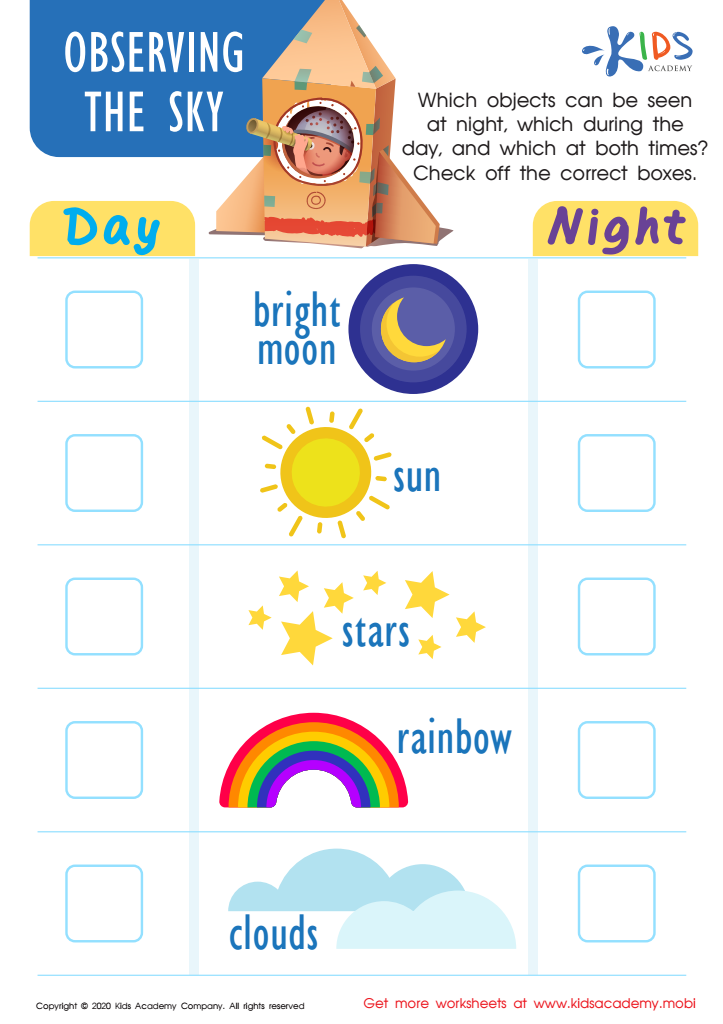
Observing the Sky Worksheet
 Assign to My Students
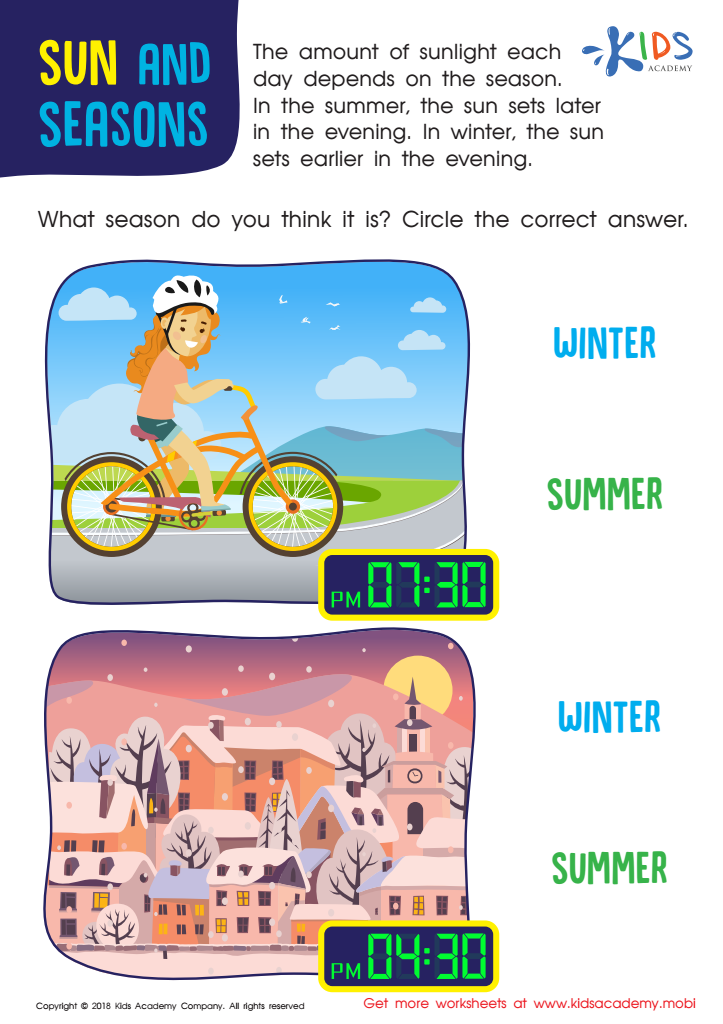
Sun and Seasons Worksheet
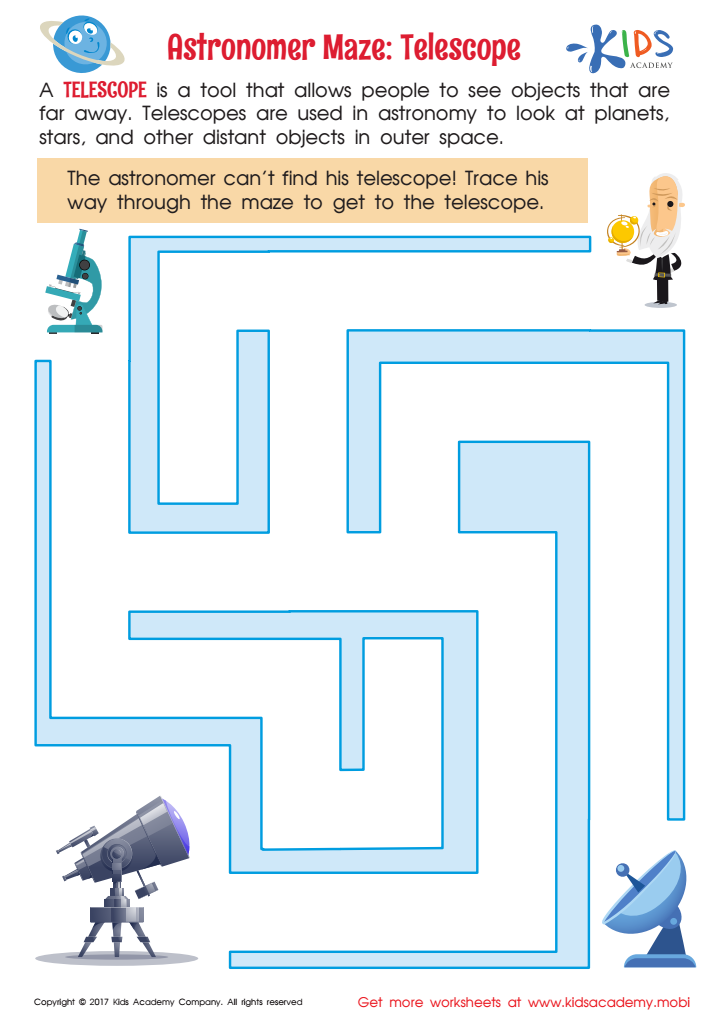
Astronomer Maze: Telescope Worksheet





Introducing basic astronomy to children aged 6-7 is a rewarding endeavor that sparks curiosity and lays a strong foundation for scientific learning. At this age, children are naturally inquisitive and eager to understand the world around them, and astronomy provides an excellent platform for engaging their imaginations and critical thinking skills.
Astronomy encourages kids to look up at the sky and marvel at the universe, nurturing a sense of wonder and exploration. It helps them ask important questions, stimulating their curiosity and promoting a lifelong love of learning. Simple concepts like identifying the sun, moon, and stars can introduce children to larger scientific principles and foster an understanding of our planet's place in the universe.
Basic astronomy lessons also enrich children's vocabulary and expand their knowledge in a fun, visual, and meaningful way. Observations of the moon's phases, for instance, can integrate math through pattern recognition and sequencing, as well as link to concepts in natural science.
Additionally, teaching astronomy can open discussions about broader topics such as the environment, time, and geography. Children learn to appreciate the natural world and develop a sense of connectivity to it, fostering responsible attitudes towards earthly resources and conservation. In this way, basic astronomy knowledge is not just about stars and planets but cultivating critical thinking and environmental stewardship from a young age.







