Developing critical thinking Normal Science Worksheets for Ages 6-7
3 filtered results
-
From - To
Unlock your child's potential with our "Developing Critical Thinking Normal Science Worksheets" designed specifically for ages 6-7. These engaging and interactive worksheets help young learners hone their analytical skills by exploring fundamental scientific concepts. With fun activities that encourage observation, comparison, and reasoning, children will cultivate a curious mindset and deepen their understanding of the world around them. Perfect for classroom or home use, our worksheets support foundational science education while fostering critical thinking development. Watch your little ones thrive as they engage in hands-on problem-solving and creative exploration, laying the groundwork for a bright academic future.

Seeds on the Move Worksheet
 Assign to My Students
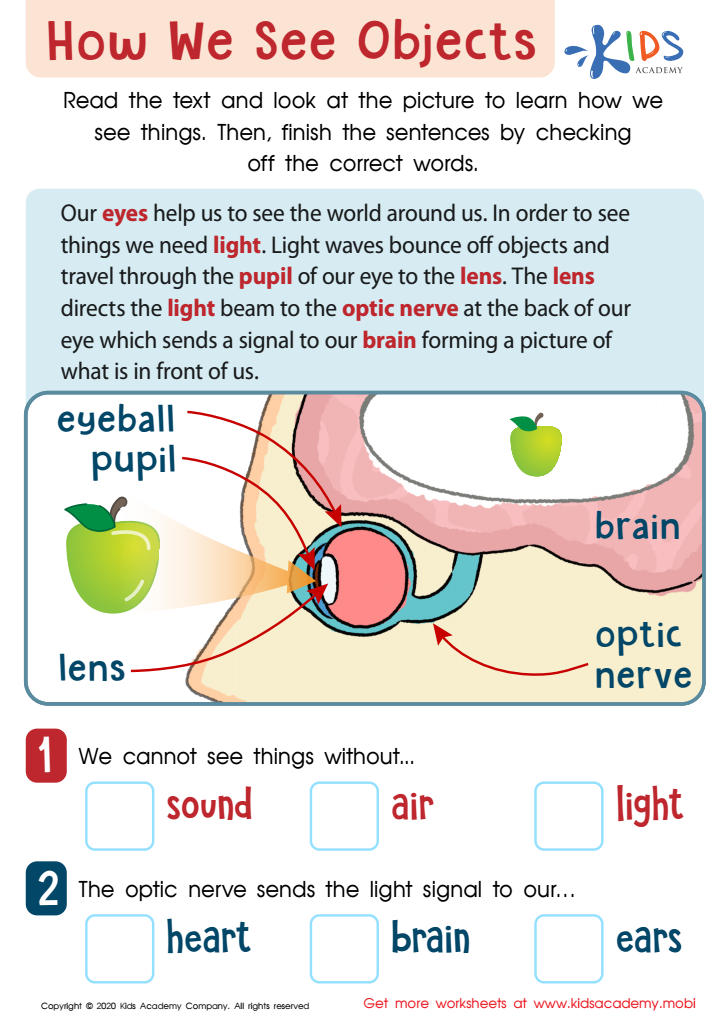
How We See Objects Worksheet
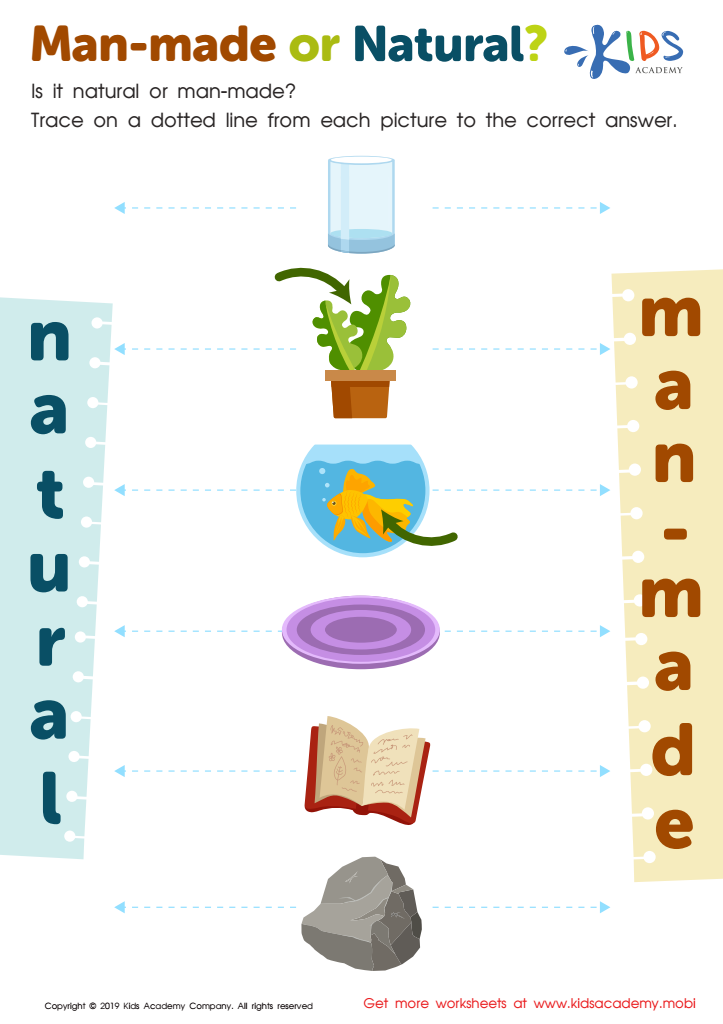
Man-Made or Natural? Worksheet








Developing critical thinking skills in children ages 6-7 is vital for their academic success and everyday life. This age group, often referred to as early elementary years, is a formative period where cognitive abilities begin to flourish. By encouraging critical thinking, parents and teachers equip children with the ability to analyze information, solve problems, and make informed decisions.
In the context of Normal Science, a discipline focused on understanding the world through inquiry and exploration, developing critical thinking helps children engage analytically with scientific concepts. Learning to ask questions, distinguish between facts and opinions, and evaluate evidence lays the groundwork for scientific reasoning. As children learn to hypothesize and experiment, they gain essential skills that transcend science and apply to multiple subjects, including math and social studies.
Moreover, fostering critical thinking promotes creativity and resilience, as children learn to approach challenges with curiosity rather than fear. In today’s rapidly changing world, equipping young learners with these essential skills prepares them not just for academic challenges, but for future encounters with complex societal issues. Thus, parents and teachers play a crucial role in nurturing these skills, ensuring that children become insightful, engaged, and proactive learners.







