Recognizing Patterns Normal Science Worksheets for Ages 6-7
3 filtered results
-
From - To
Unlock your child's potential with our "Recognizing Patterns Normal Science Worksheets for Ages 6-7". Designed to captivate young minds, these engaging worksheets help children develop essential early learning skills through interactive pattern recognition exercises. By identifying, predicting, and creating patterns, kids enhance their observational abilities, boost critical thinking, and lay a strong foundation for future scientific learning. Ideal for classrooms and home practice, our worksheets use vibrant illustrations and thoughtful questioning to maintain your child's interest and foster a love for science. Start exploring today and watch your child’s curiosity and confidence soar.
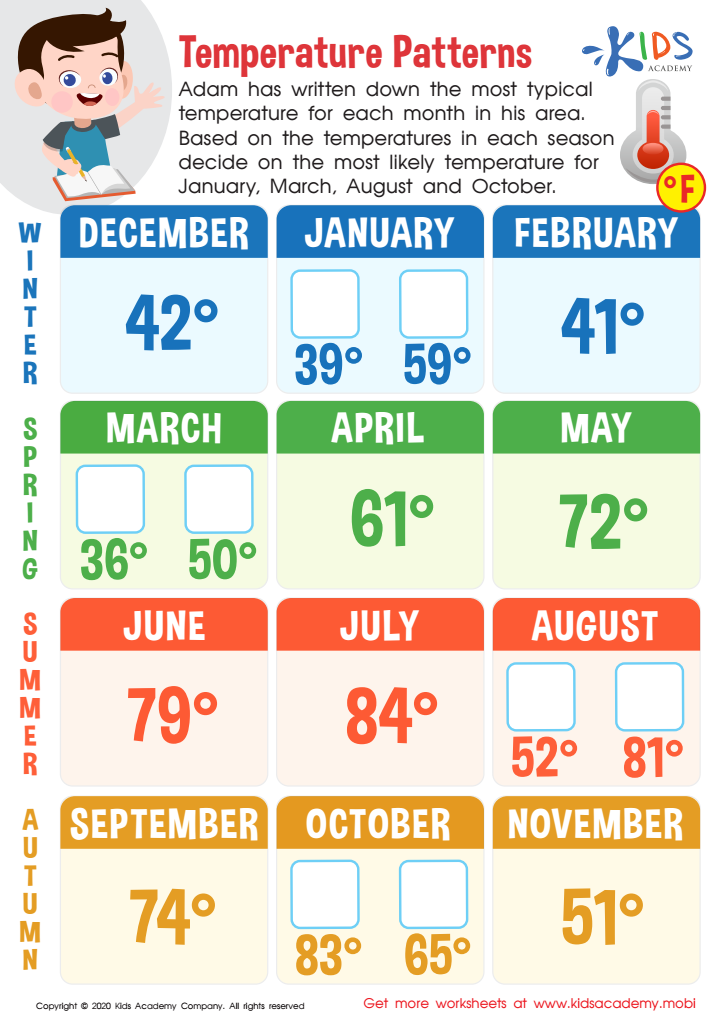
Temperature Patterns Worksheet
 Assign to My Students
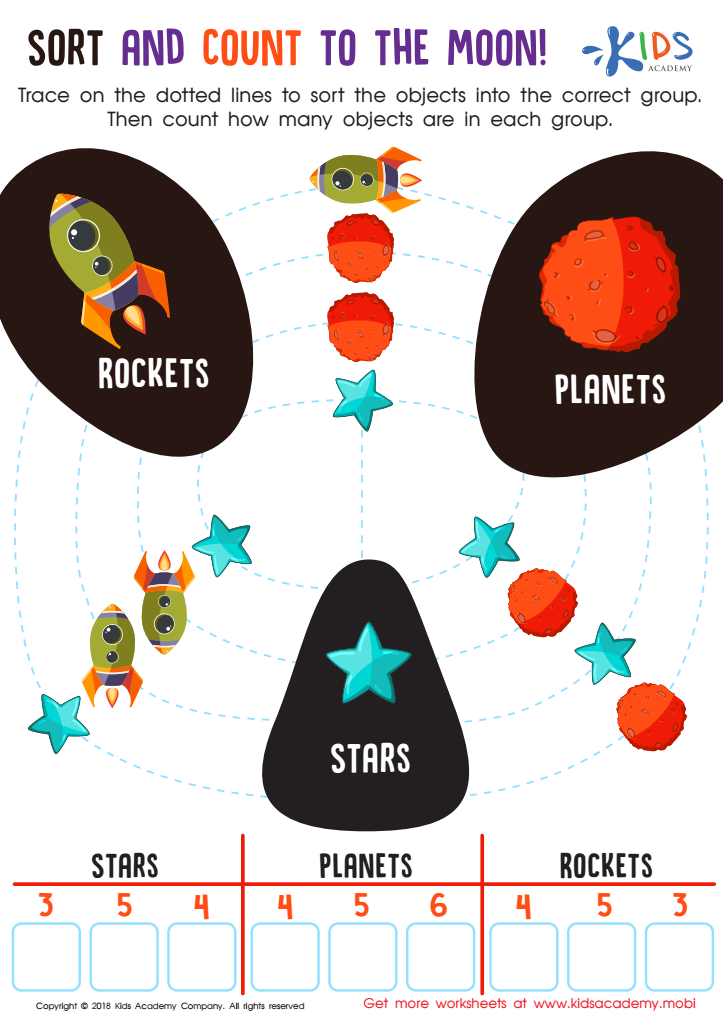
Sort and Count to the Moon Worksheet
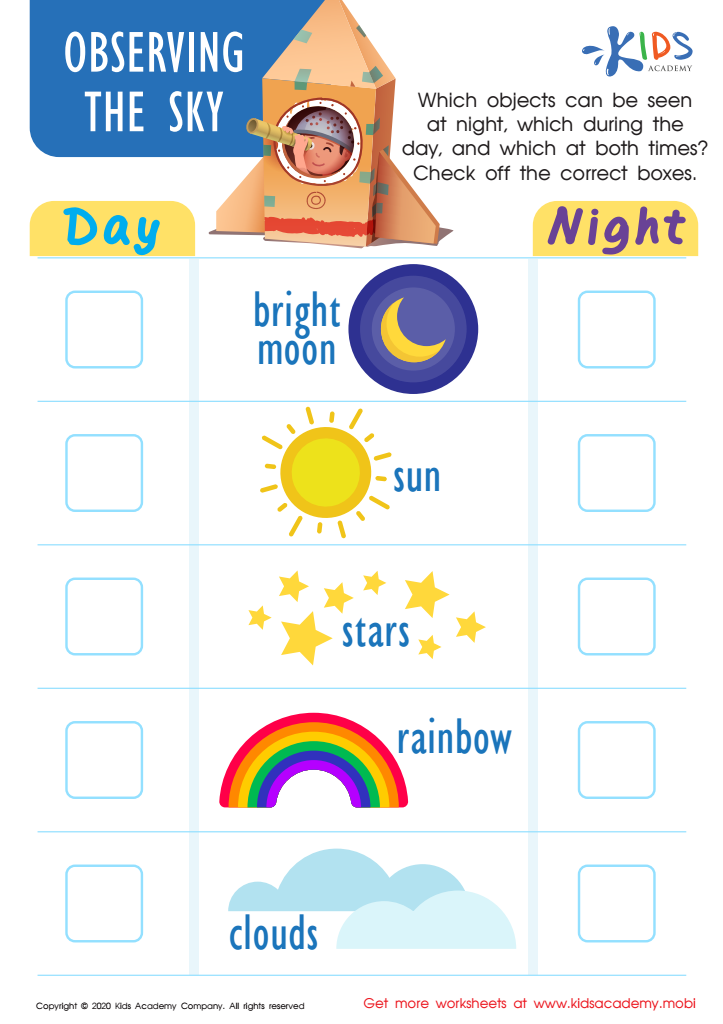
Observing the Sky Worksheet







Recognizing patterns is a fundamental skill crucial for cognitive development in children ages 6-7. By focusing on patterns in normal science, both parents and teachers can foster critical thinking and problem-solving abilities in young minds. When children learn to identify patterns, they begin to understand relationships and sequences, laying a strong foundation for more complex mathematical and logical concepts. For instance, recognizing repeated shapes or sequences in nature helps them grasp the basics of geometry and arithmetic, key components of STEM education.
Patterns also enhance observational skills, allowing children to make predictions and notice inconsistencies, which is valuable for scientific inquiry and everyday reasoning. This skill transcends academic boundaries, assisting children in reading, language development (through recognizing letter and word patterns), and daily routines (understanding schedules and cause-effect relationships).
Furthermore, engaging children in pattern recognition activities nurtures their curiosity and creativity. Whether it's through nature walks, puzzles, or interactive games, children get to explore and discover the world around them, reinforcing their learning in a playful yet structured manner. Thus, paying attention to recognizing patterns in early science education supports holistic growth, setting up young learners for future academic success and equipping them with essential life skills.







