
Understanding forces Normal Physical Science Worksheets for Ages 6-7
3 filtered results
Difficulty Level
Grade
Age
-
From - To
Subject
Activity
Standards
Discover the world of forces with our "Understanding Forces: Normal Physical Science Worksheets" designed for ages 6-7. These enriching worksheets make science fun and accessible by introducing young learners to fundamental concepts such as push and pull, gravity, and friction. Engaging activities and vibrant illustrations help kids comprehend how different forces interact with objects in their everyday environment. By blending education with creativity, our resources support critical thinking and foundational science skills that pave the way for future exploration. Perfect for classrooms or at-home learning, these worksheets foster curiosity and a love for science. Start exploring forces today!
Favorites
With answer key
Interactive
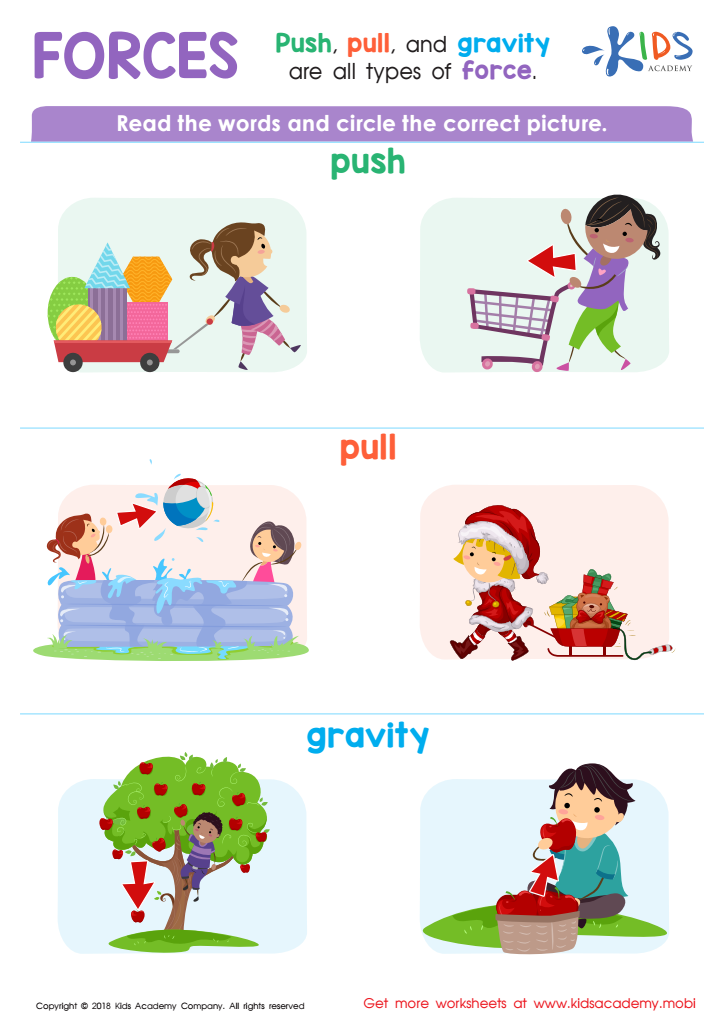
Forces Worksheet
Teach your child about forces! Ask them to identify which of six pictures shows push, pull or gravity. Read the words beside each picture and have them circle the correct one. It's a great way to learn about forces; push, pull and gravity!
 Assign to My Students
Forces Worksheet
Worksheet
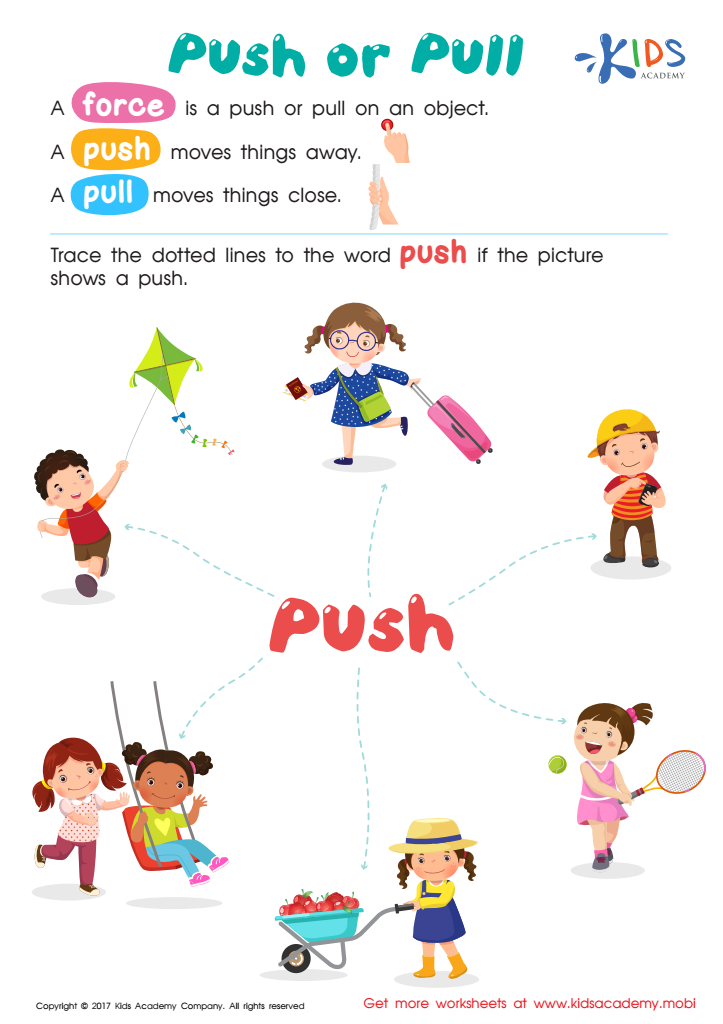
Push or Pull Worksheet
and which involve pulling! With this fun worksheet, your child will learn about force and its simple application in everyday activities. Get them started with Push or Pull! (80 words)
Push or Pull Worksheet
Worksheet
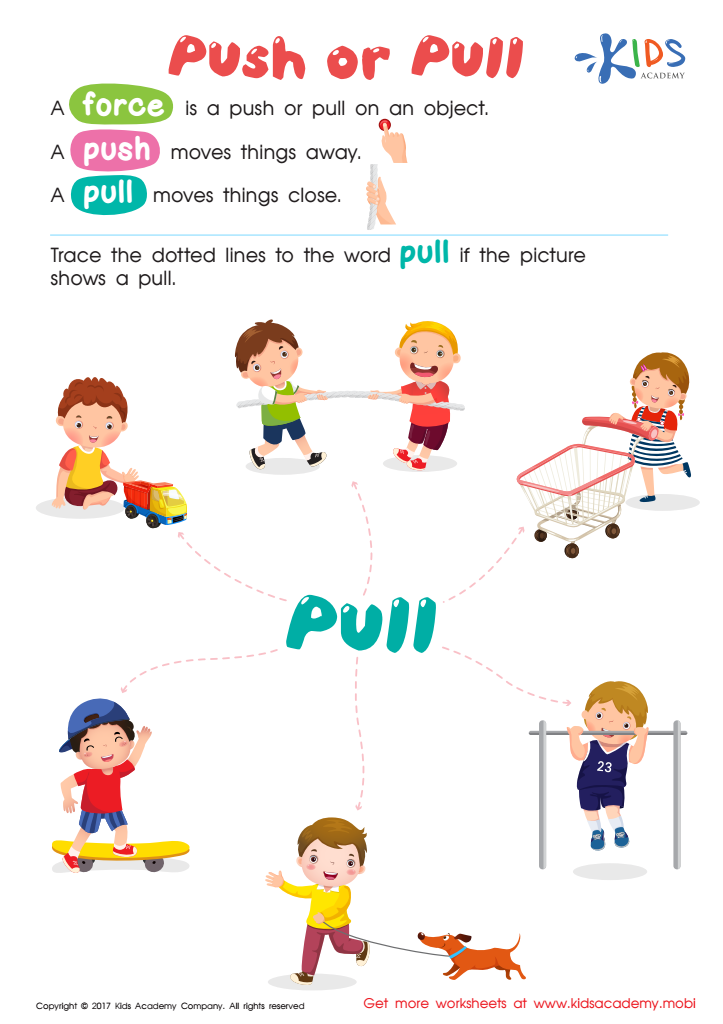
Pull or Push Worksheet
With this fun worksheet, they'll explore physics by sorting objects into categories according to their mode of motion. It's a great way to get them interested in science.
Pull or Push Worksheet
Worksheet
Join Kids Academy for Free
Who is primarily going to use this learning content?




.jpg)

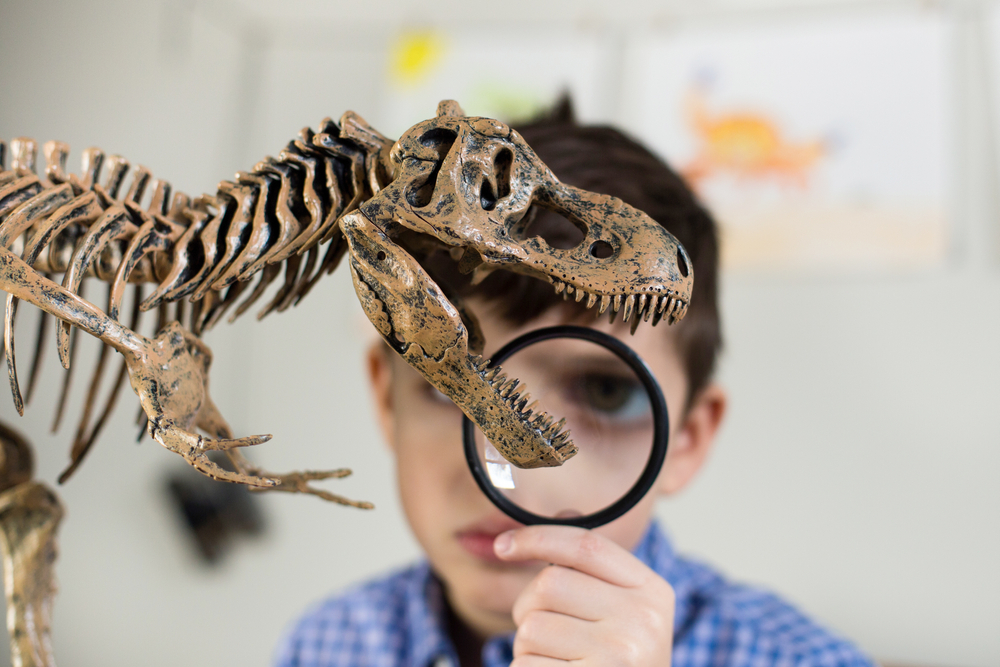
Understanding forces in the realm of physical science is fundamental for children ages 6-7 as it lays the groundwork for a lifelong curiosity and grasp of the natural world. At this young age, children are naturally inquisitive, and introducing basic concepts such as forces helps them make sense of everyday experiences. When parents and teachers focus on helping children recognize forces like pushing, pulling, gravity, and friction, they empower youngsters to observe and predict outcomes during play and learning activities.
Teaching about forces nurtures critical thinking and problem-solving skills. For instance, when a child understands that pushing a toy car harder makes it move faster, they are engaging in simple yet powerful scientific reasoning. Furthermore, these concepts help in the development of fine and gross motor skills as children explore different intensities of force and movement.
Parents and teachers caring about this subject also promote safety and practical knowledge. Children who comprehend that applying more force can propel an object farther or faster may intuitively understand the risks of certain actions, protecting them from accidents.
In essence, understanding forces not only makes children better at physical interactions and science but also enhances their cognitive, motor, and social skills, ultimately giving them a head start in education and everyday life.







