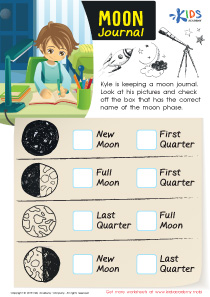
Weather identification Normal Weather Worksheets for Ages 6-7
3 filtered results
Difficulty Level
Grade
Age
-
From - To
Subject
Activity
Standards
Enhance your child's weather knowledge with our 'Weather Identification Normal Weather Worksheets' designed specifically for ages 6-7! Through engaging activities and vivid illustrations, these printable worksheets help young learners recognize and understand various weather conditions. Children will practice identifying sunny, rainy, cloudy, and snowy days while developing critical thinking and observational skills. Perfect for at-home or classroom use, our weather worksheets make learning fun and interactive. Visit Kids Academy today to empower your child with valuable, lifelong weather identification skills. Start this educational adventure to make science both exciting and accessible!
Favorites
With answer key
Interactive
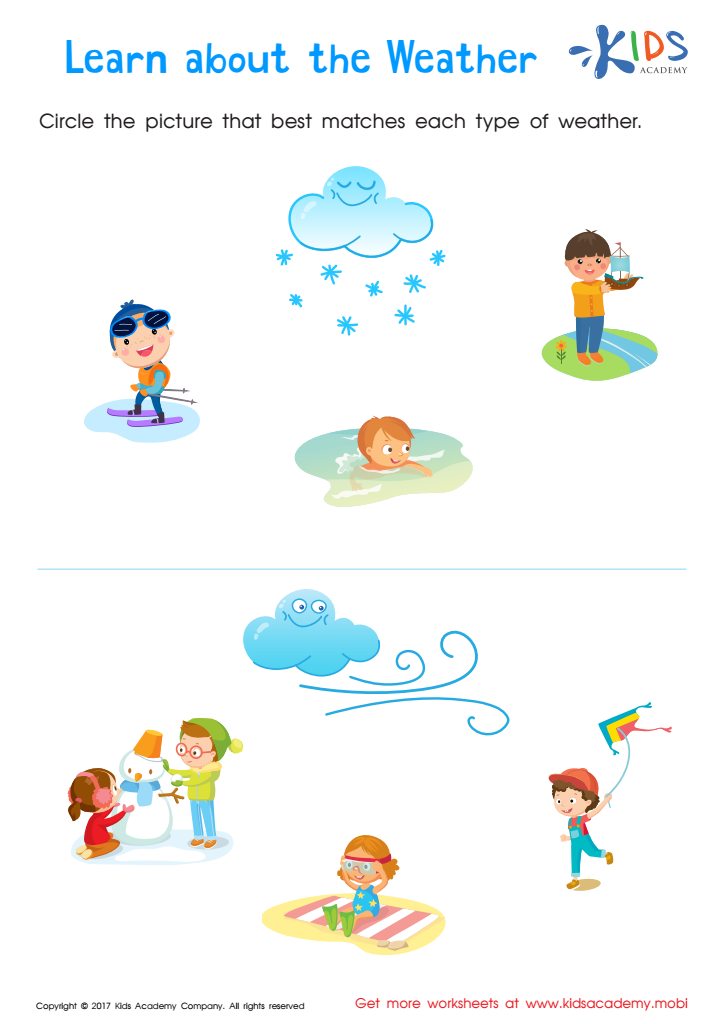
About the Weather Printable
This worksheet is perfect for reinforcing knowledge about changing weather and activities that suit each season. Help your child use their life experiences to observe the weather and complete the worksheet. Fun and colorful, it's a great way to learn about weather and seasons. Let's get started!
 Assign to My Students
About the Weather Printable
Worksheet
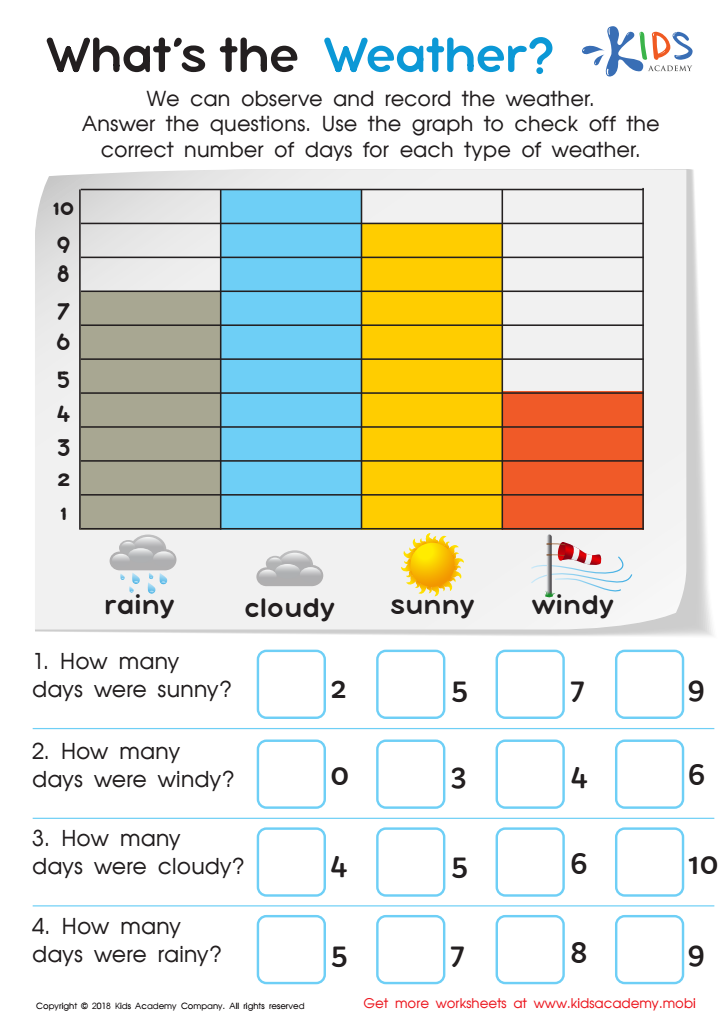
What's the Weather? Worksheet
Check the weather outside. Help kids learn and practice science and math by tracking different types of days using this printable worksheet. Have them count bars next to weather types like cloudy, sunny, windy, and rainy. Answer the questions and take the lesson further by creating a bar graph to show the monthly weather.
What's the Weather? Worksheet
Worksheet
Join Kids Academy for Free
Who is primarily going to use this learning content?








Teaching young children about weather identification, particularly normal weather patterns, is crucial for several reasons. Firstly, it fosters an early appreciation for the environment. By recognizing and understanding different weather conditions, children become more aware of the natural world around them, cultivating a respect and curiosity for nature. Secondly, weather education enhances safety. Knowing how to identify normal weather patterns versus hazardous ones enables children to better prepare for and react appropriately to various atmospheric conditions, contributing to their personal safety.
Moreover, weather identification supports the development of critical thinking and observational skills. Children learn to notice changes in the environment, ask questions, and seek answers, thereby strengthening their analytical abilities. It also ties into basic science education, helping children grasp fundamental concepts about the Earth's atmosphere and ecosystems in an accessible and engaging way.
Additionally, discussions about weather can be interwoven with daily activities, making learning a continuous process. For example, conversations about what to wear based on the weather or how weather affects playtime enhance practical understanding. Overall, teaching young kids about weather is not merely about the facts but also about nurturing a holistic, informed, and responsive approach to the world they inhabit.