Cognitive Development Normal Community Worksheets for Ages 6-7
3 filtered results
-
From - To
Welcome to our Cognitive Development Worksheets for Ages 6-7, designed to enhance young learners' understanding of their community! These engaging, printable worksheets focus on critical cognitive skills such as problem-solving, decision-making, and analytical thinking. Aimed at developing awareness about local resources, family roles, and social interactions, these activities encourage curiosity and creativity. Students will enjoy hands-on tasks that promote cooperation and communication, while fostering independence as they explore their environment. Perfect for classroom or home use, these worksheets will equip children with the essential tools they need for successful cognitive growth and a deeper connection to their community.

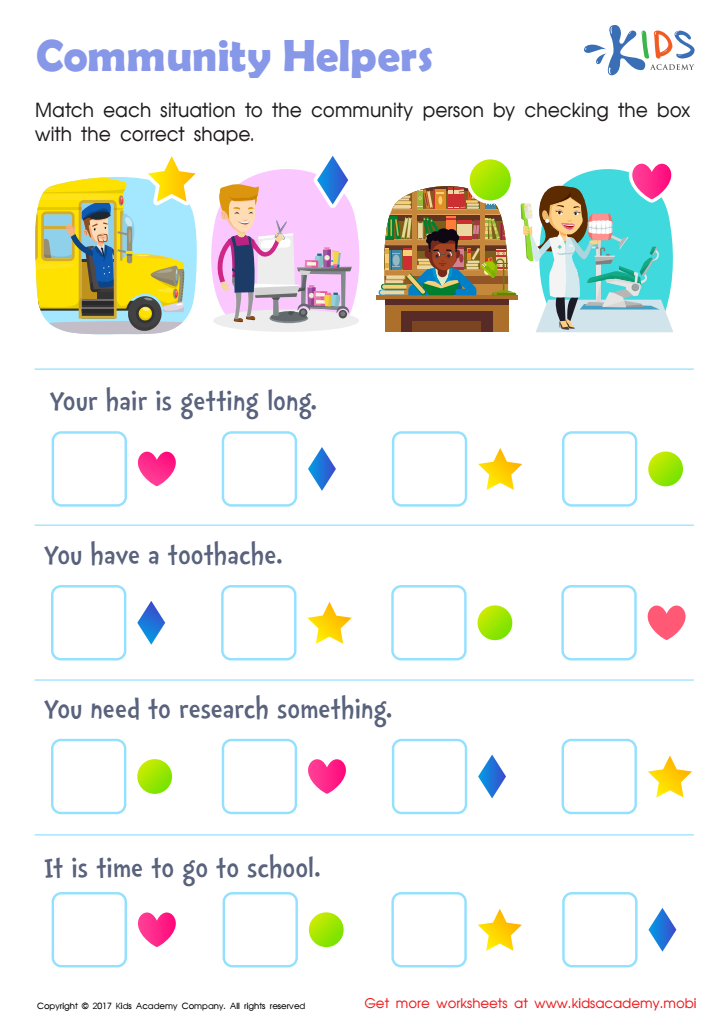
City Workers Community Helpers Worksheet
 Assign to My Students
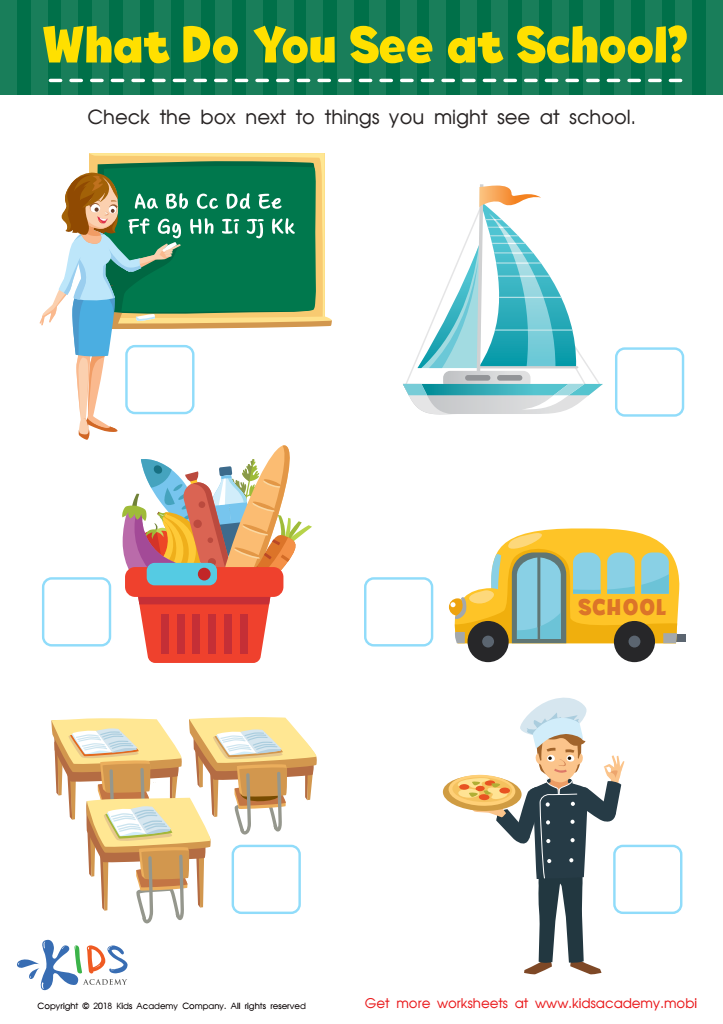
What Do you See at School? Worksheet








Cognitive development during ages 6-7 is critical as children refine their thinking skills and gain a deeper understanding of the world. At this stage, children transition from concrete operational thinking to more complex cognitive processes. Parents and teachers should be aware of community norms for cognitive development because these benchmarks help identify how children compare to their peers, ensuring they receive appropriate support when needed.
Understanding cognitive development supports cognitive milestones, like improved memory, problem-solving abilities, language skills, and logical reasoning. When educators and caregivers are attentive to these aspects, they can create a more enriching learning environment adapted to each child's needs, fostering both growth and self-esteem.
Additionally, awareness of cognitive community norms enables parents to engage with their children effectively. By participating in activities that enhance cognitive skills—such as puzzles, reading, or imaginative play—they can contribute positively to their child's development.
Moreover, fostering a supportive community that values cognitive growth ensures that all children have access to effective learning opportunities. This creates a foundation for future academic success and social interactions, benefiting not just the child, but the broader community as well. Thus, knowing and caring about cognitive development norms is essential for nurturing well-rounded individuals.