Vocabulary Building Normal Community Worksheets for Ages 6-7
4 filtered results
Difficulty Level
Grade
Age
-
From - To
Subject
Activity
Standards
Enhance your child's vocabulary with our "Vocabulary Building Normal Community Worksheets" designed specifically for ages 6-7! These engaging worksheets introduce young learners to essential community-related terms, helping them develop a robust vocabulary in a fun and interactive way. Through colorful illustrations and relatable scenarios, children will grasp the meaning of words while connecting them to their everyday experiences. Perfect for home or classroom use, these worksheets promote language skills, comprehension, and critical thinking. Empower your child to communicate effectively and explore their community through our carefully crafted resources! Discover the joy of learning vocabulary and watch your child's confidence soar!
Favorites
With answer key
Interactive
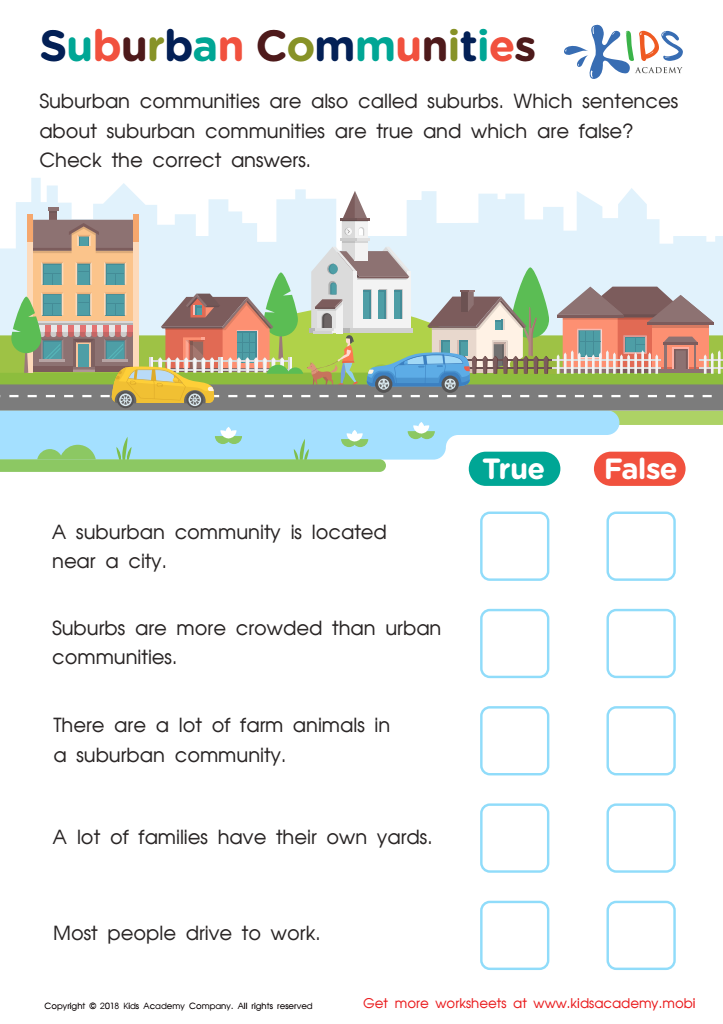
Suburban Communities Worksheet
This worksheet helps your students/children understand suburban communities. Have them read the sentences and check the true or false box for each. They will gain a better knowledge of the suburbs after this exercise.
 Assign to My Students
Suburban Communities Worksheet
Worksheet
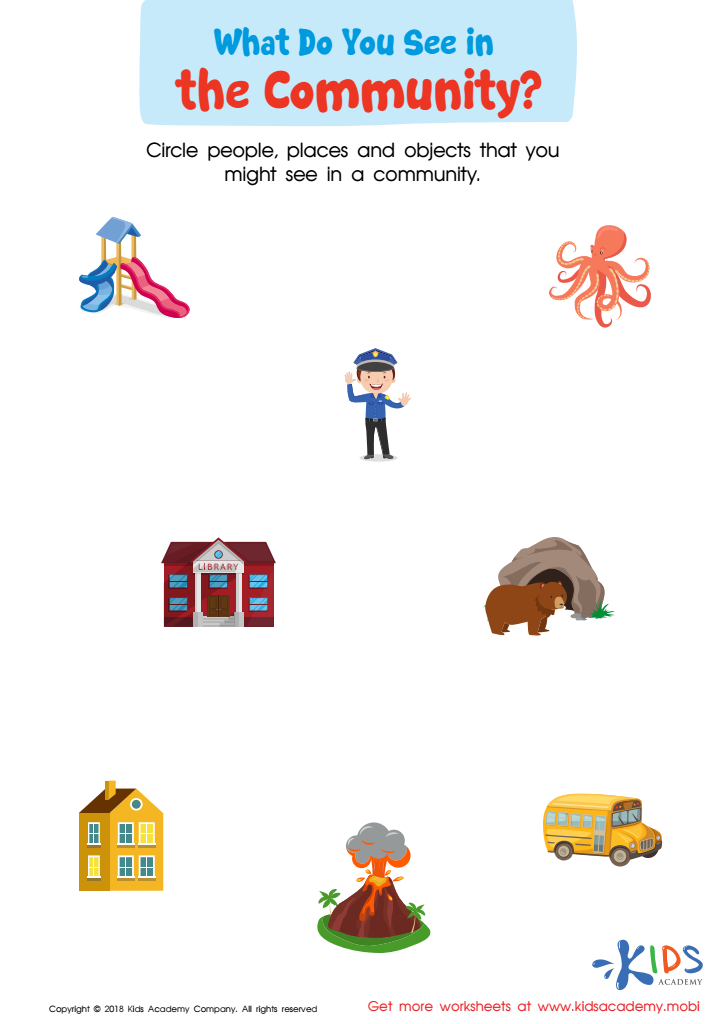
What Do You See in the Community Worksheet
This free social studies PDF can help your children learn about their local community. They'll identify its members, places and objects using engaging and recognizable pictures. As they trace circles around them, they'll also practice fine motor skills. It's a great way to introduce social science concepts and help them understand the importance of community.
What Do You See in the Community Worksheet
Worksheet
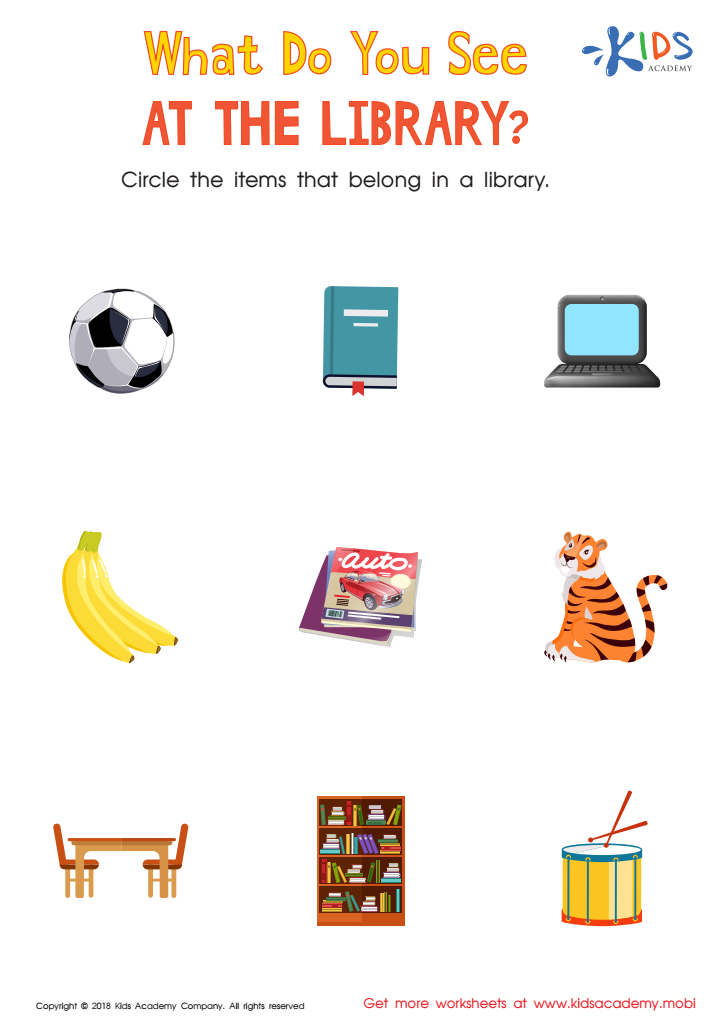
What Do you See at the Library? Worksheet
Let your kids look at the worksheet with pictures of objects found in libraries and those that don't. Ask them to list some, then circle the ones that belong in a library. Can they identify them? See if you can spot any they miss!
What Do you See at the Library? Worksheet
Worksheet
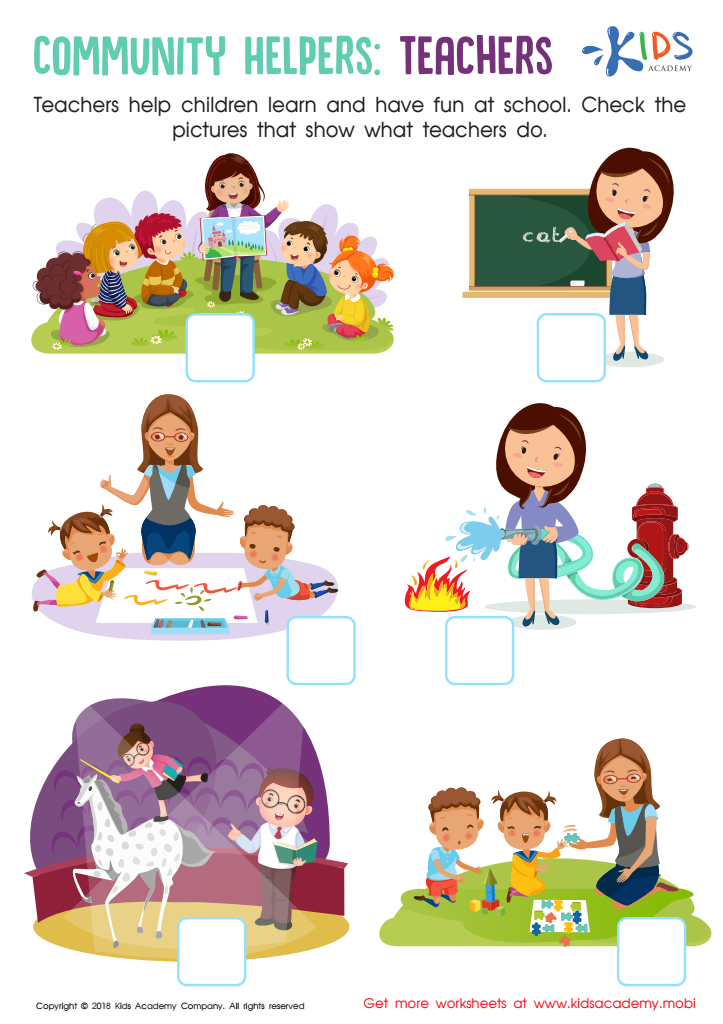
Teachers Community Helpers Worksheet
Ask your students to name some of the ways a teacher helps. Then, use this worksheet to show the right ways teachers can help. Have them check the boxes of the pictures that accurately depict what a teacher does. This is a great exercise to show your students how you help them learn and contribute to their community.
Teachers Community Helpers Worksheet
Worksheet
Join Kids Academy for Free
Who is primarily going to use this learning content?








Vocabulary building in normal communities for children aged 6-7 is crucial for several reasons. At this developmental stage, children's brains are incredibly receptive to language, laying the foundation for effective communication and literacy skills. A rich vocabulary enhances their ability to express thoughts and feelings, which is vital for social interactions and academic success.
Parents and teachers should care because vocabulary growth directly impacts reading comprehension and writing ability. Children with a strong vocabulary can better understand texts, interpret meaning, and engage with learning materials critically. Moreover, early vocabulary exposure is linked to higher performance in standardized tests later in life.
Additionally, in a diverse normal community, nurturing vocabulary includes exposure to different cultures and ideas, fostering acceptance and empathy. This engagement prepares children for collaborative learning experiences, promoting greater understanding of their environment.
By prioritizing vocabulary development through conversations, storytelling, and interactive activities, both parents and educators can create a rich linguistic environment. This not only supports the child's immediate educational needs but also equips them with the essential skills for future success. In essence, investing in vocabulary building is investing in a child's overall learning journey and social development.