Spatial awareness Normal Social Studies Worksheets for Ages 6-7
4 filtered results
Difficulty Level
Grade
Age
-
From - To
Subject
Activity
Standards
Discover our Spatial Awareness Normal Social Studies Worksheets designed for children aged 6-7. These engaging and educational worksheets help young learners develop essential spatial reasoning skills, crucial for understanding their environment and concepts in geography, mathematics, and everyday life. Each activity is crafted to be age-appropriate, fostering curiosity and enhancing problem-solving abilities. With vibrant illustrations and intuitive exercises, kids will learn to recognize shapes, patterns, and positions, making learning both fun and impactful. Perfect for classroom or home use, these worksheets are an excellent resource for building foundational spatial skills in early learners. Visit Kids Academy now to get started!
Favorites
With answer key
Interactive
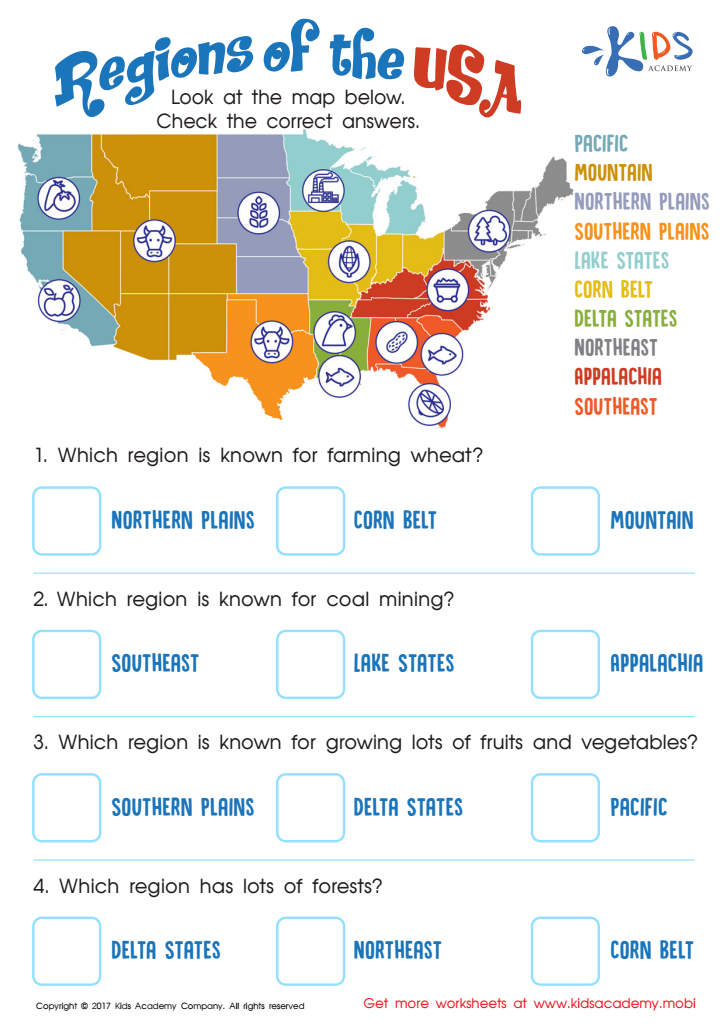
Regions of the USA Worksheet
Help your child explore the US with this regions of the United States worksheet! They'll learn about the diverse cultures, climates and purposes of each region. Make geography and US history fun with this educational exercise!
 Assign to My Students
Regions of the USA Worksheet
Worksheet
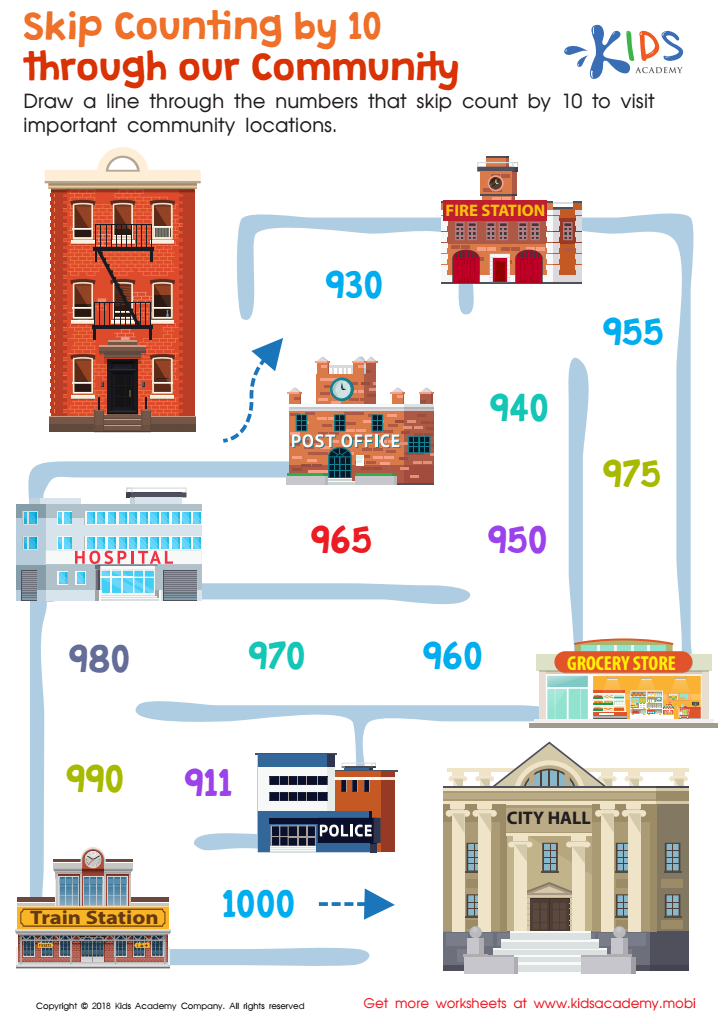
Skip Counting by 10 Through Our Community Worksheet
Our kids need to 'make a ten' and skip count by tens to boost their speed and accuracy in math. This cool, free worksheet takes them on a journey through their local community to practice counting by tens. They'll work on social studies and fine motor skills while having fun with the maze they get to count by tens in!
Skip Counting by 10 Through Our Community Worksheet
Worksheet
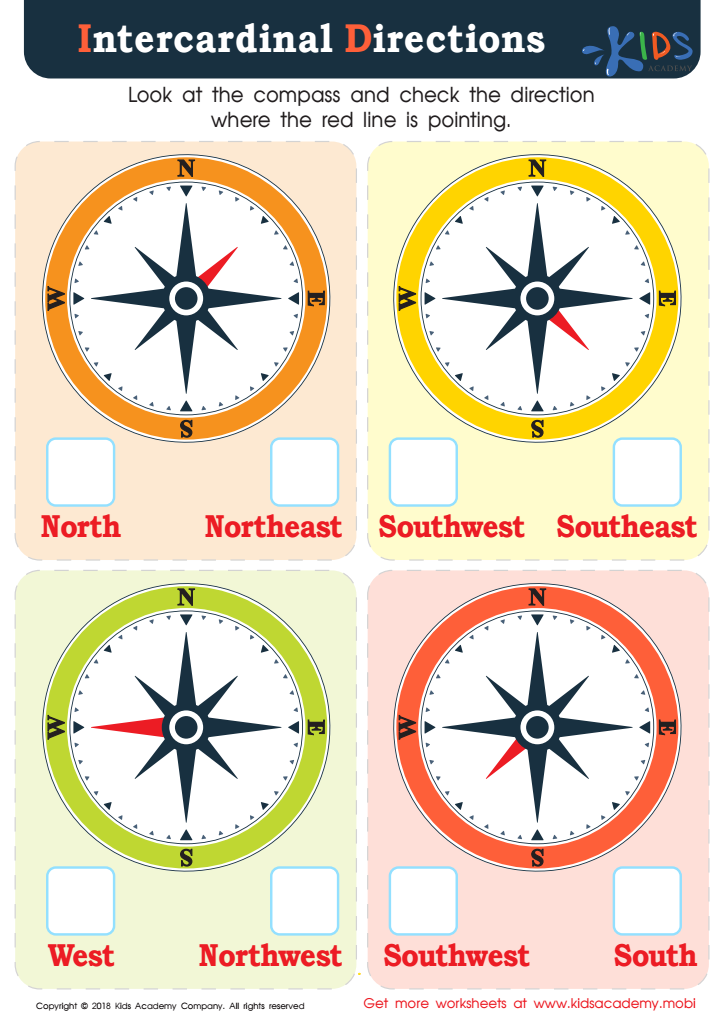
Intercardinal Directions Worksheet
Young students often don't get to practice cardinal and intercardinal directions in the digital age, but it's an important social studies and geography concept to learn. This PDF provides colorful compasses for them to practice with, giving them a real-world skill for common curriculum and independent living.
Intercardinal Directions Worksheet
Worksheet
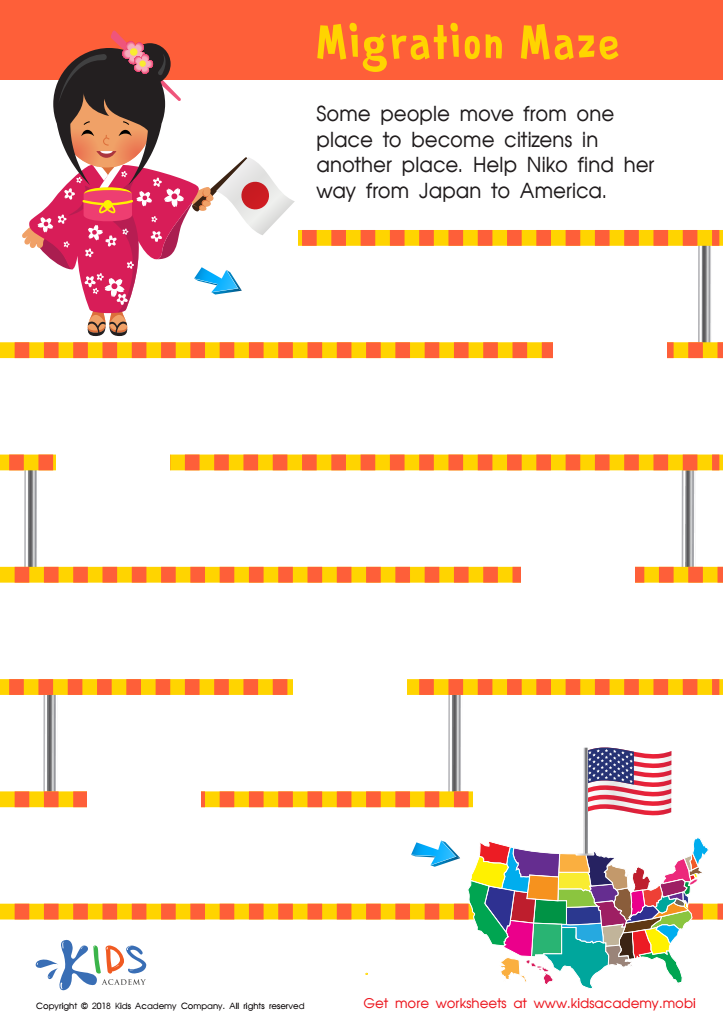
Migration Maze Worksheet
You are a citizen of your school, city and country. Many people migrate to become citizens of another place, like Niko in this worksheet. Ask your students to help her find her way from Japan to America.
Migration Maze Worksheet
Worksheet
Join Kids Academy for Free
Who is primarily going to use this learning content?







Spatial awareness is a crucial aspect of early childhood development that parents and teachers should prioritize, particularly in normal social studies for children aged 6-7. Spatial awareness helps children understand the relationships between objects and their surroundings, improving their ability to navigate and interact with the world.
In social studies, teaching spatial awareness aids in comprehending geographic concepts. For instance, children start learning about maps, globes, and cardinal directions which are foundational for more complex geographical understanding later on. This grasp of spatial relations also bolsters their capacities in other subjects, such as math and science, where recognizing patterns, shapes, and spatial reasoning forms the basis of problem-solving and scientific exploration.
Moreover, spatial awareness enhances fine motor skills and physical coordination, which are essential for daily activities and academic success. For example, activities like reading a map require eye-hand coordination and the ability to interpret symbols and scales, skills that translate to better overall academic performance.
Beyond academics, spatial awareness contributes to personal safety and independence, teaching kids how to navigate their environments securely. Furthermore, it supports social skills and collaboration, as young children often engage in activities that require them to take the perspective of others, share space, and work in groups.
By fostering spatial awareness through social studies, parents and teachers can provide a balanced, multidimensional education that equips children with vital cognitive and practical skills for their future development.