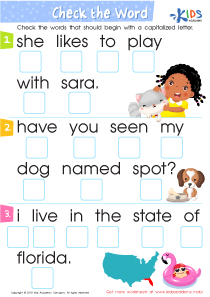
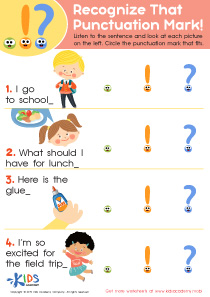
Grammar practice Normal Grammar Worksheets for Ages 6-7
6 filtered results
-
From - To
Discover engaging grammar practice worksheets designed for children aged 6-7! Our collection of normal grammar worksheets promotes language development through fun and interactive activities. Tailored to young learners, these resources focus on essential skills such as sentence structure, punctuation, and parts of speech. Each worksheet encourages creativity and comprehension, helping students build a strong foundation in grammar. Perfect for classroom use or at-home learning, these worksheets make grammar enjoyable and accessible. Whether you're a teacher or a parent, enhance your child's learning experience with our thoughtfully crafted grammar practice materials. Unlock their potential and watch them thrive in their writing skills!
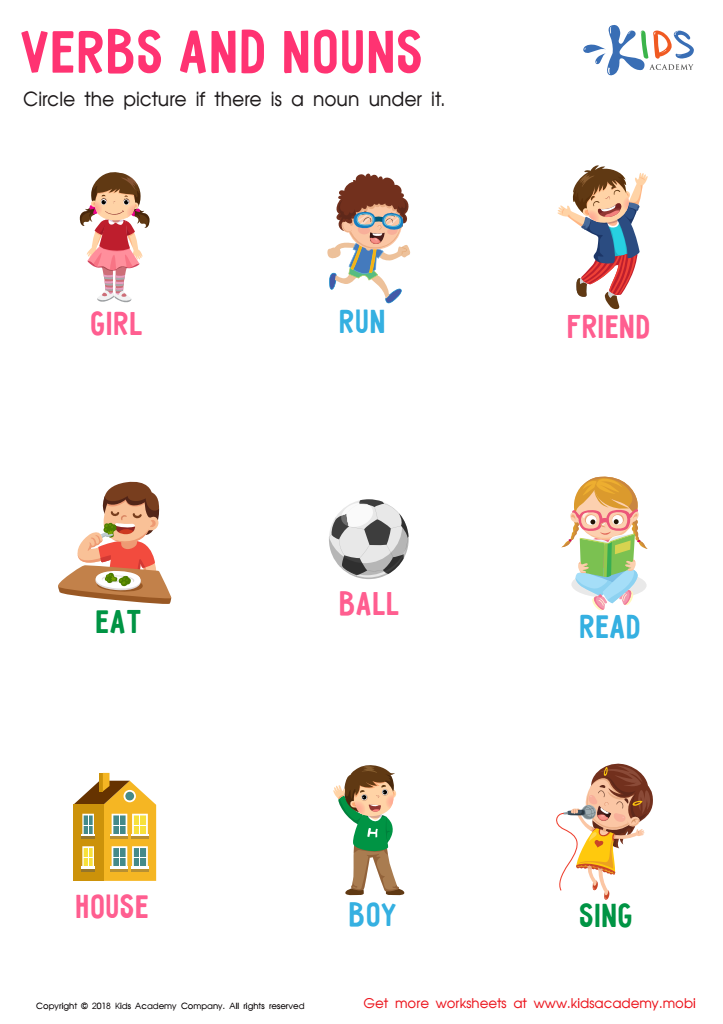
Verbs and Nouns Worksheet
 Assign to My Students
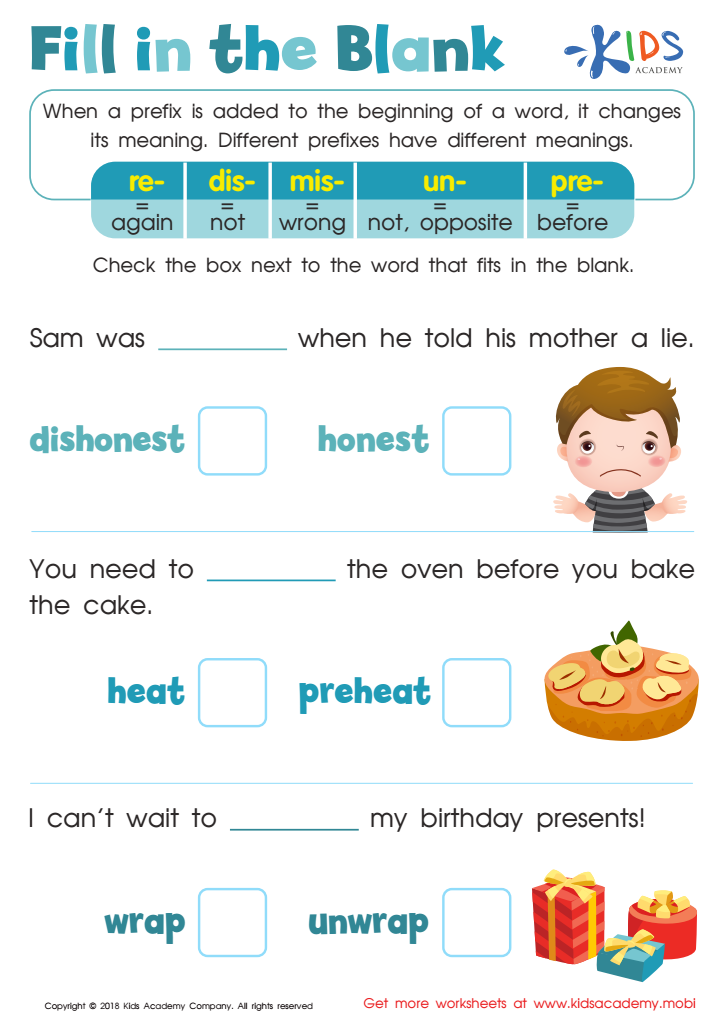
Reading: Fill in the Blank Worksheet
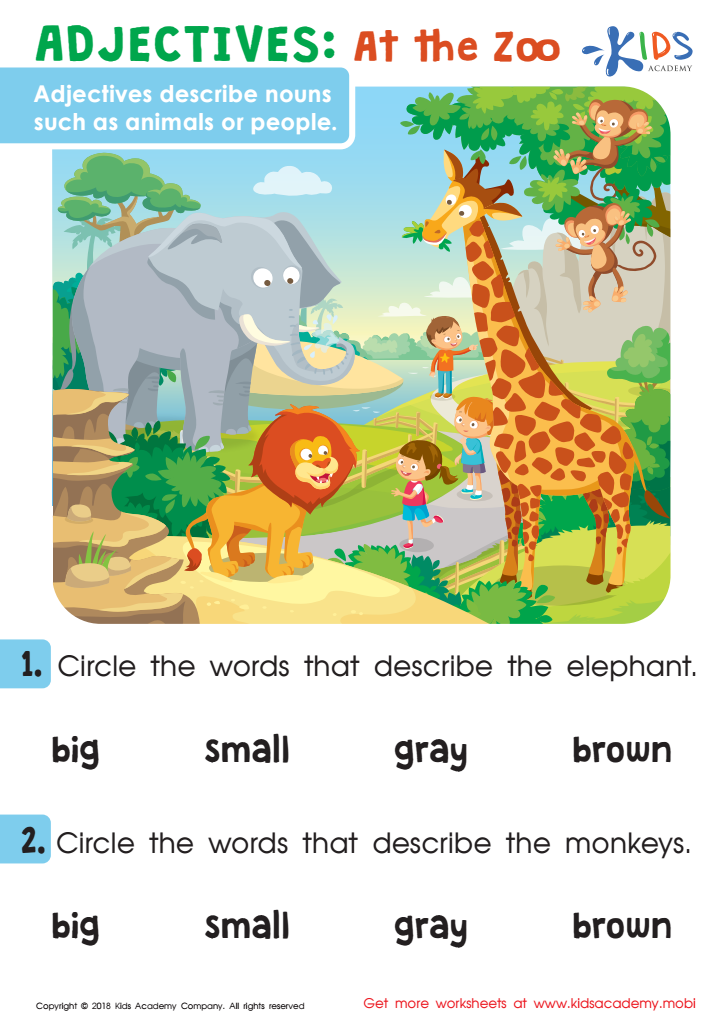
Adjectives: At The Zoo Worksheet
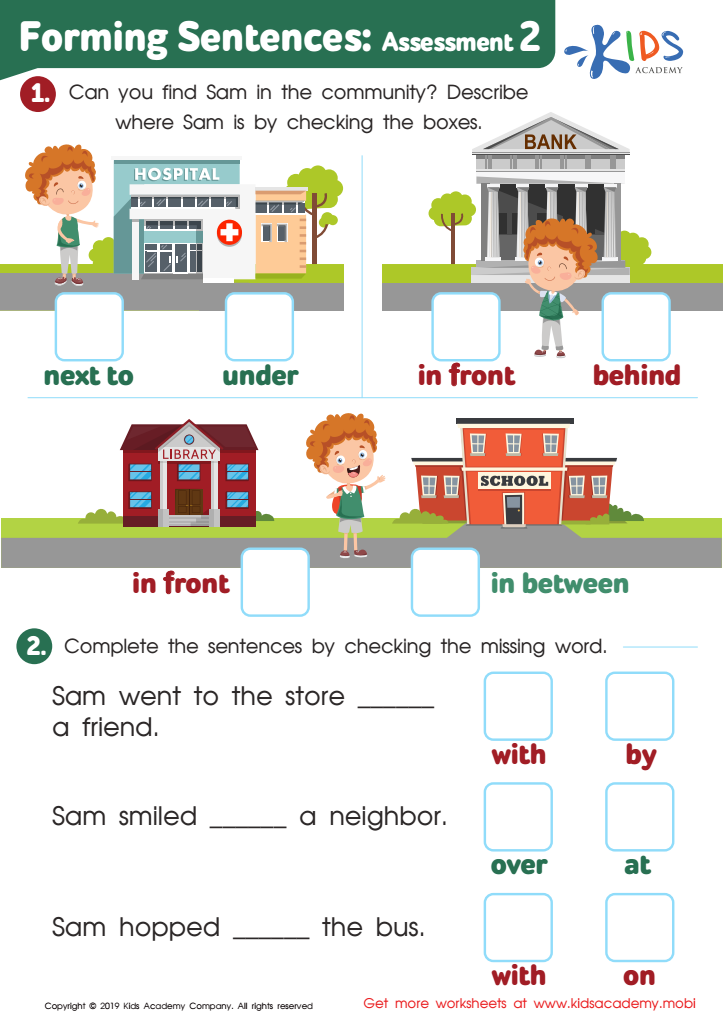
Forming Sentences: Assessment 2 Worksheet
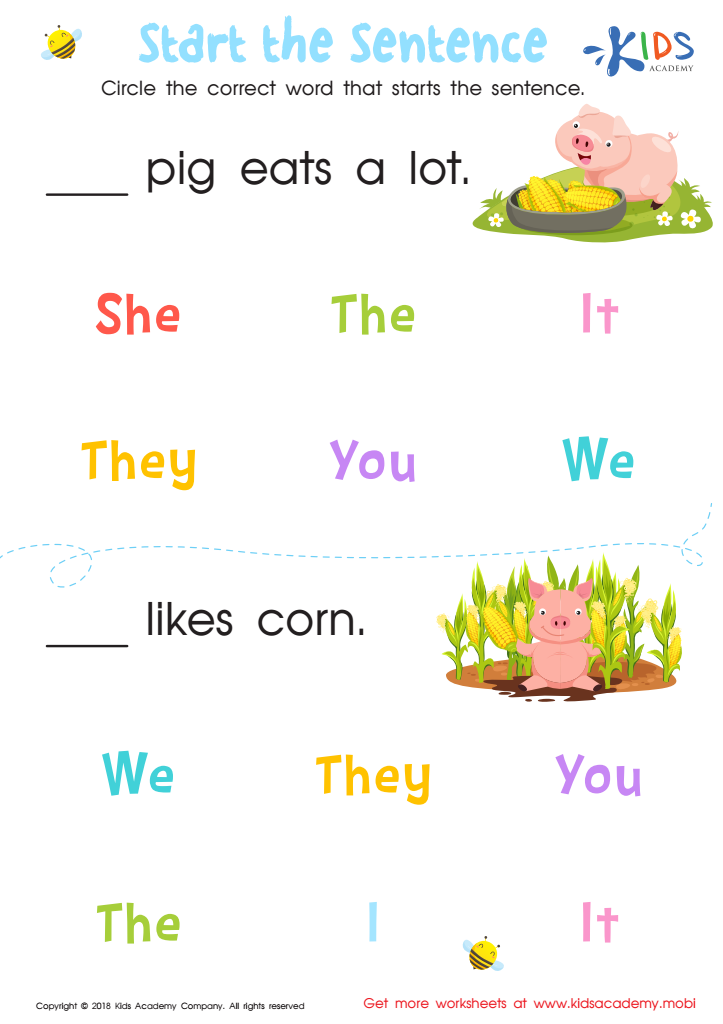
Start the Sentence Worksheet
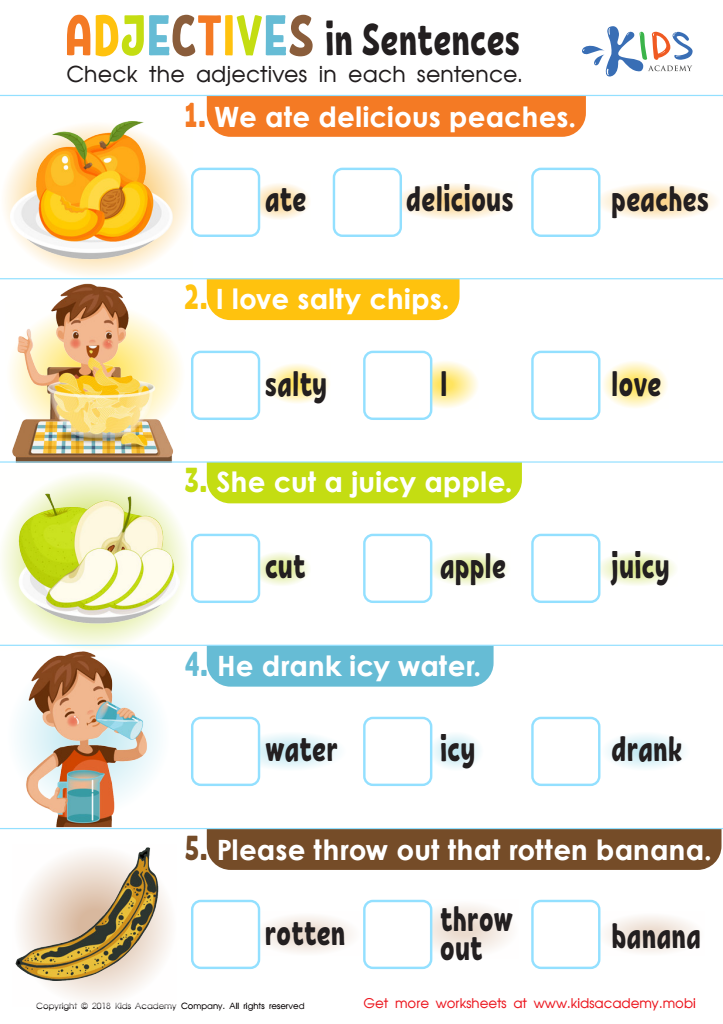
Adjectives in Sentences Worksheet








Parents and teachers should prioritize grammar practice for children aged 6-7, as it lays a crucial foundation for effective communication and literacy. At this age, children are beginning to understand the rules of language and how to express their thoughts clearly. Early grammar skills enhance writing abilities, listening comprehension, and speaking fluency, all of which are essential for academic success.
Practicing grammar helps children learn the structure of sentences, including subject-verb agreement, proper punctuation, and the use of nouns and verbs. These skills not only enrich their expressive capabilities but also boost their confidence in language use. In a world where communication is increasingly important, clear grammar signifies competence and helps children convey their ideas more persuasively.
Moreover, a strong grasp of grammar can support broader literacy development, making it easier for children to understand and interpret texts as they progress in their education. When parents and teachers emphasize grammar during this formative stage, they foster a lifelong appreciation for language and enhance learners' overall academic performance. By nurturing these skills early on, adults can empower children to communicate effectively and engage meaningfully with the world around them.