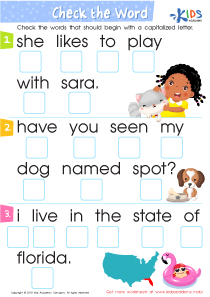
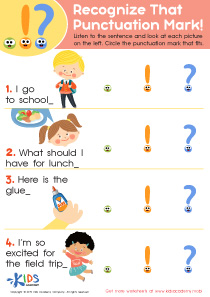
Understanding suffixes Normal Writing Worksheets for Ages 6-7
3 filtered results
-
From - To
Enhance your child’s writing skills with our "Understanding Suffixes Normal Writing Worksheets" designed for ages 6-7. These engaging worksheets introduce the concept of suffixes, helping young learners grasp how adding letter groups alters word meanings and creates new forms. Through fun activities and exercises, students will confidently identify common suffixes and practice using them in sentences. Perfect for reinforcing classroom lessons or for use at home, these resources encourage creativity and phonetic awareness. Get ready to unlock your child's potential and deepen their understanding of language while having fun with writing! Download your worksheets today and watch their skills soar!
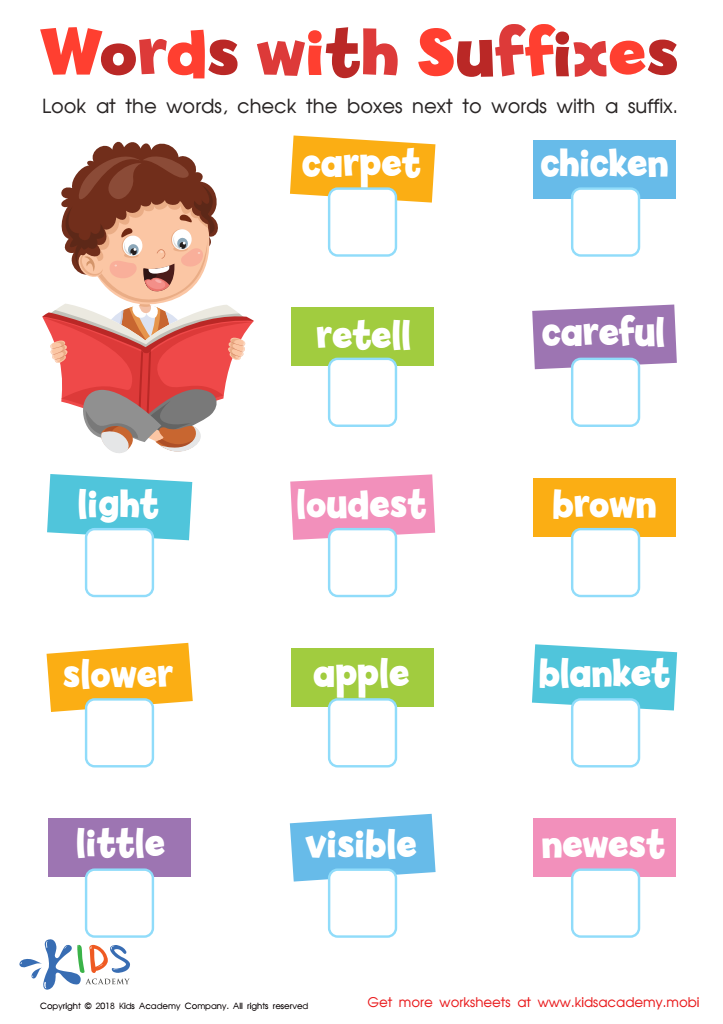
Reading: Words With Suffixes Worksheet
 Assign to My Students
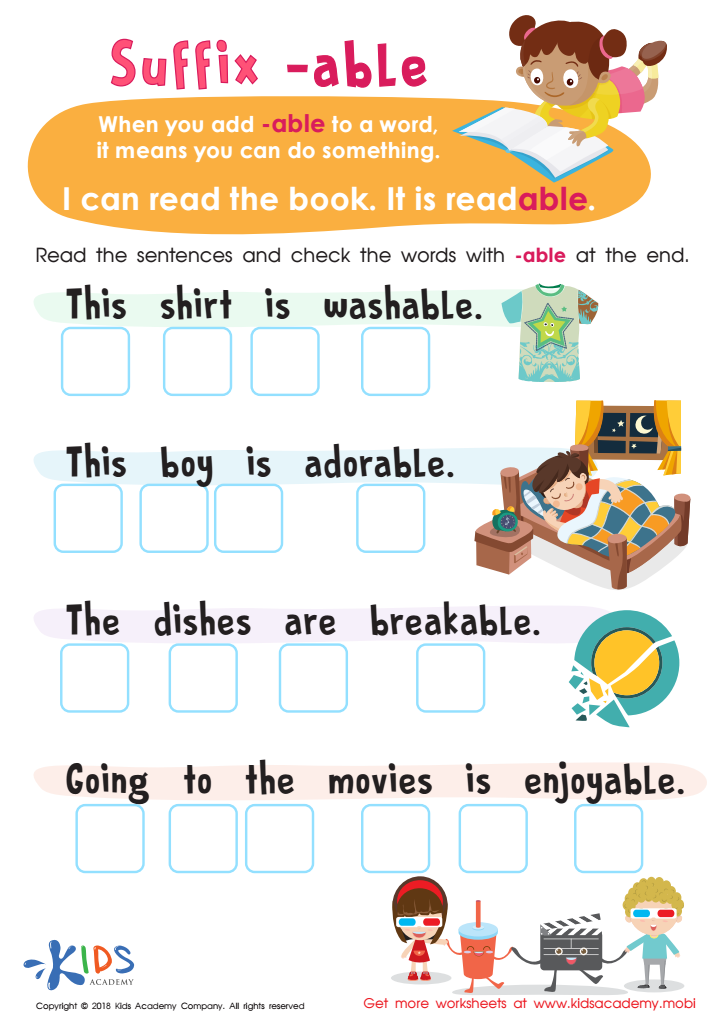
Suffix -Able Worksheet
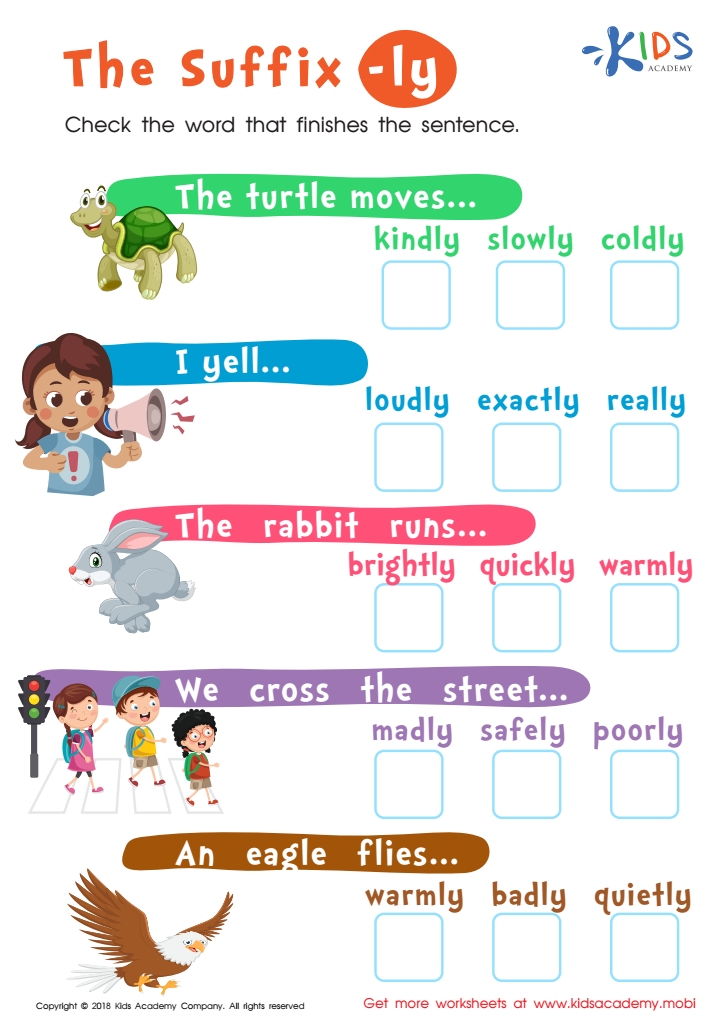
The Suffix -Ly Worksheet







Understanding suffixes is crucial for children aged 6-7 as it significantly enhances their reading and writing skills. Suffixes are word endings like "-ing," "-ed," and "-less" that change the meaning or function of a base word. By recognizing and using suffixes, children can decode unfamiliar words, which builds their vocabulary and comprehension. For instance, knowing that "play" can become "playing," or "help" can become "helper" helps them understand how to communicate more effectively.
Moreover, teaching suffixes fosters creativity in writing. As children manipulate suffixes, they discover new ways to express thoughts and ideas. This exploration encourages them to play with language, making writing more enjoyable.
For parents and teachers, it's vital to incorporate suffixes into early lessons. Engaging activities—such as games or songs that highlight suffixes—can make learning interactive and fun. Supporting young learners in mastering suffixes not only strengthens their literacy foundation but also boosts their confidence in language skills. This knowledge is not just about grammar; it empowers children to become thoughtful readers and expressive writers, setting the stage for lifelong learning.