Alphabet familiarity Normal Alphabet Worksheets for Ages 6-8
7 filtered results
-
From - To
Boost your child's alphabet familiarity with our engaging normal alphabet worksheets for ages 6-8! Designed to enhance letter recognition and understanding, these worksheets offer a fun and interactive learning experience. Each worksheet features colorful activities, aligning with your child’s developmental level, to help them identify and differentiate between letters. With a mix of tracing, matching, and referencing exercises, children will build confidence and strengthen their reading skills. Perfect for classroom settings or at-home practice, our worksheets cater to various learning styles, ensuring every child can enjoy and benefit from mastering the alphabet. Start your child's literacy journey today!
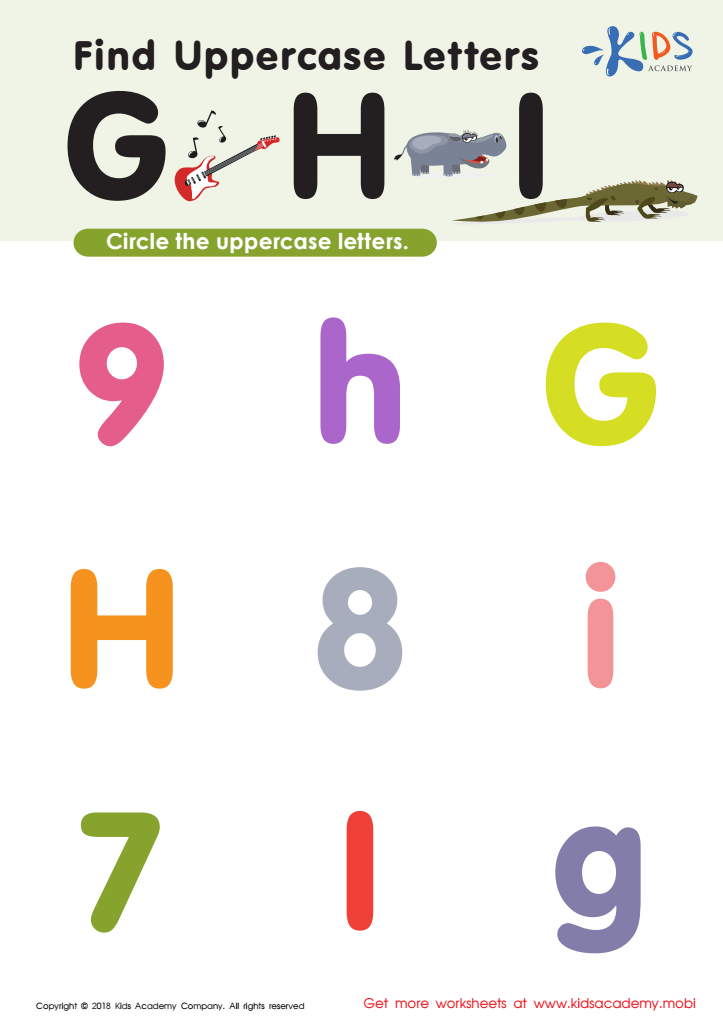
Find Uppercase Letters G, H, and I Worksheet
 Assign to My Students
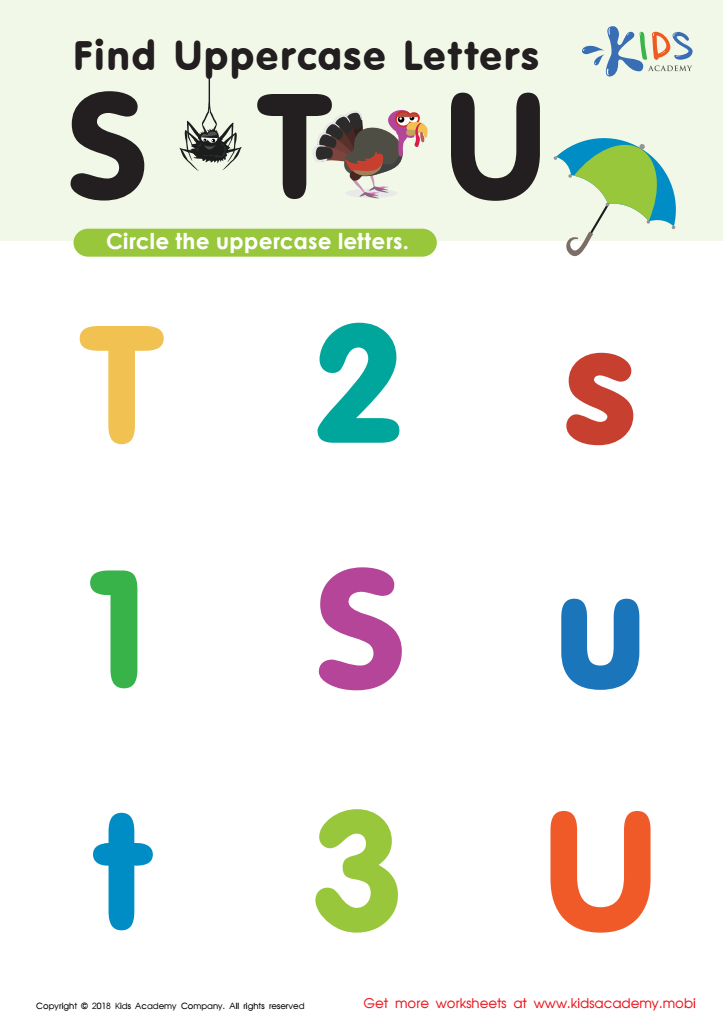
Find Uppercase Letters Worksheet
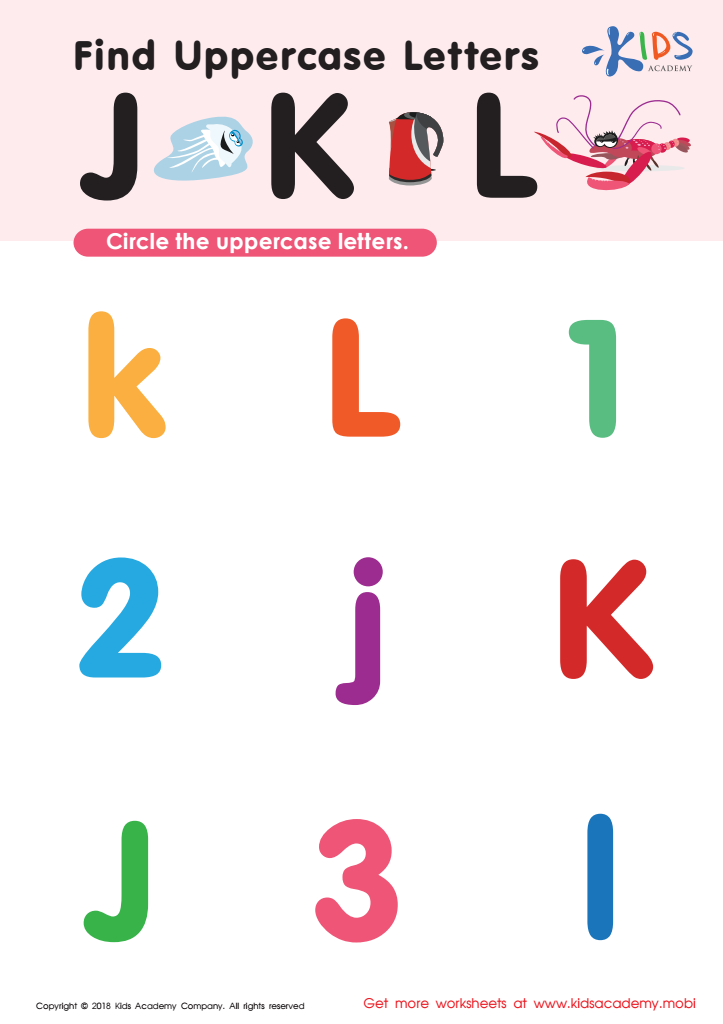
Find Uppercase Letters J, K, and L Worksheet
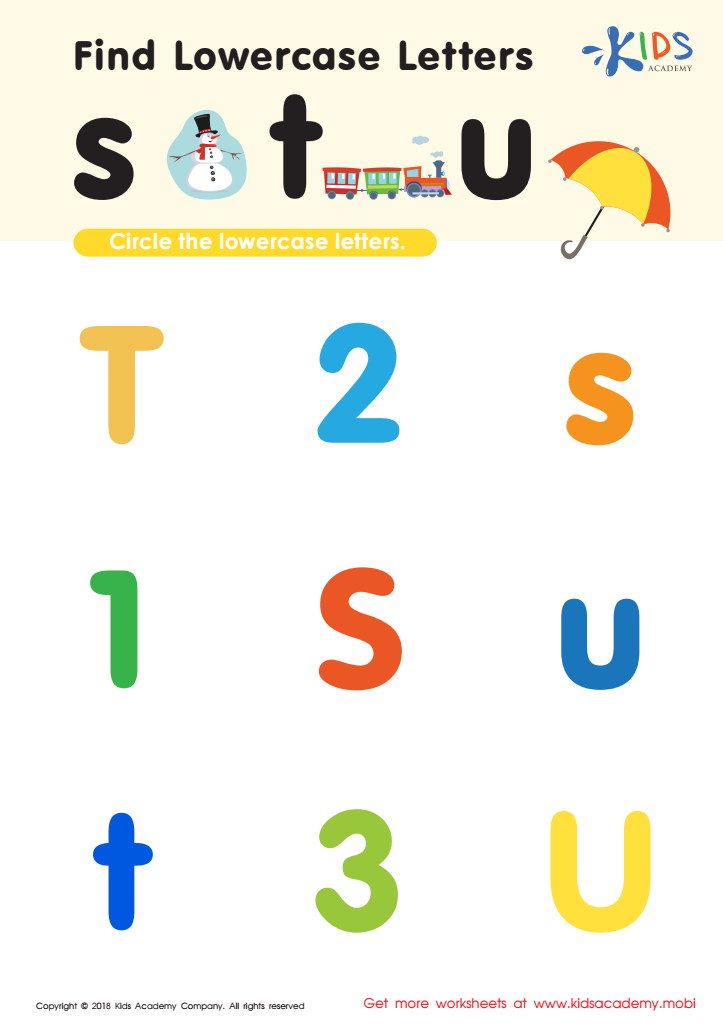
Find lowercase Letters s t u Worksheet
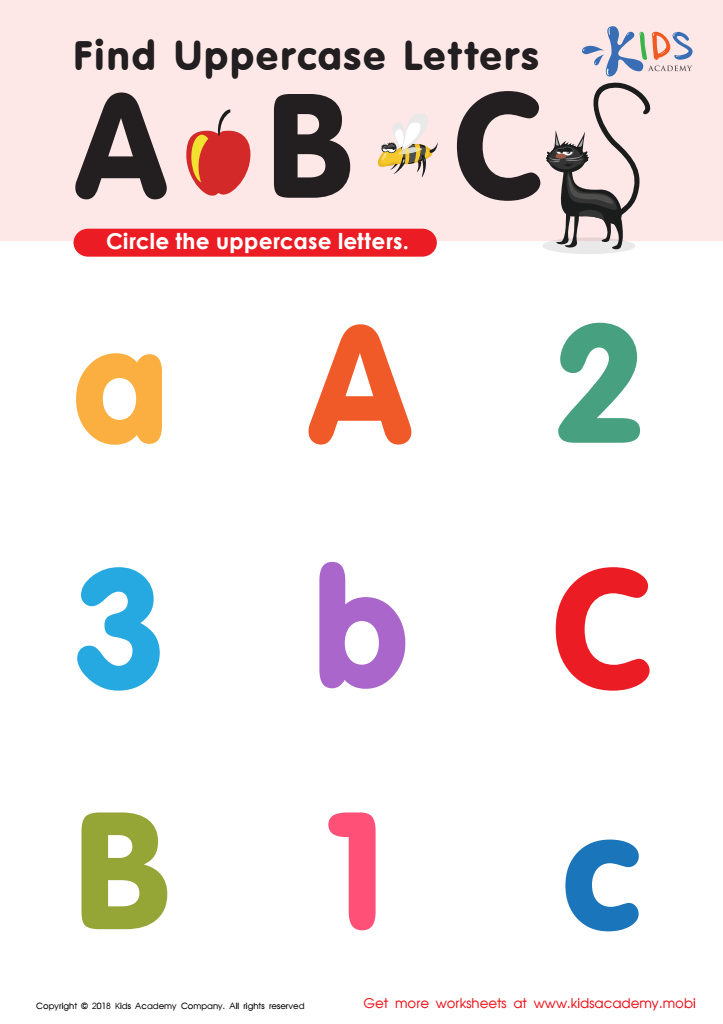
Find Uppercase Letters A, B, and C Worksheet
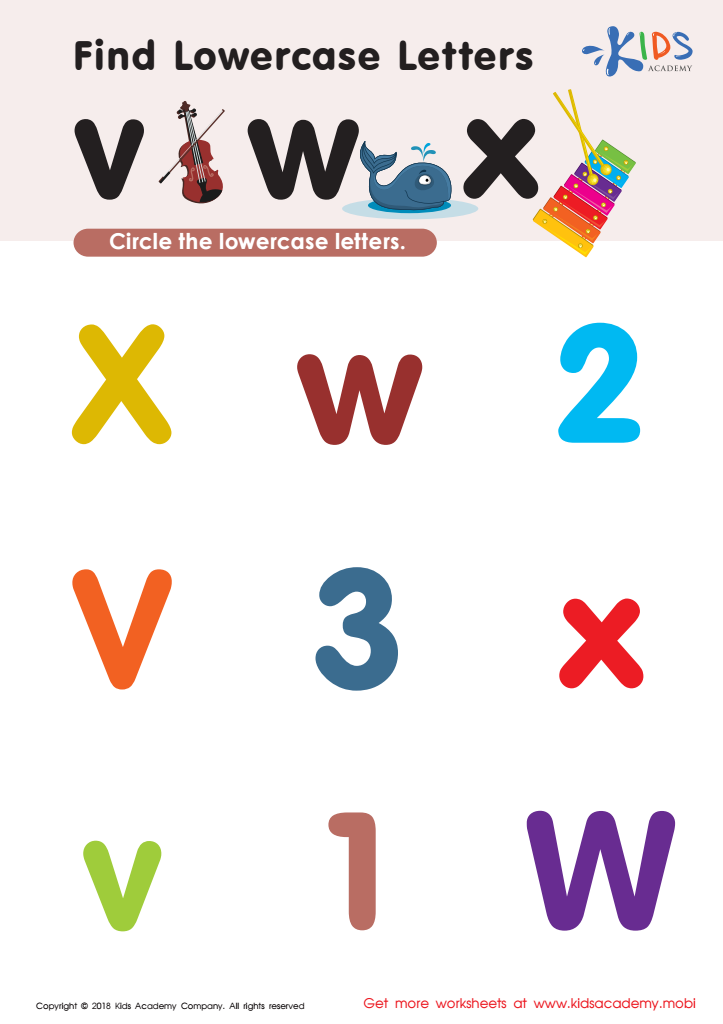
Find Lowercase Letters v w x Worksheet
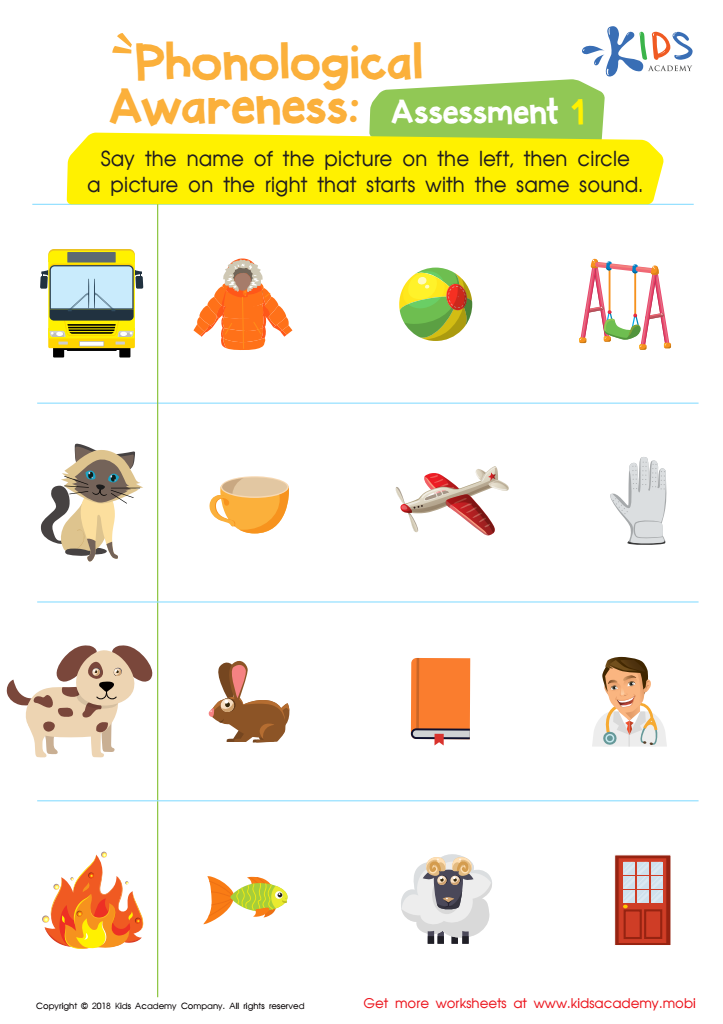
Phonological Awareness: Assessment 1 Worksheet







Alphabet familiarity is crucial for children aged 6-8 as it lays the foundation for their literacy development and overall academic success. At this age, children transition from learning individual letter sounds to mastering reading, writing, and comprehension skills. An understanding of the alphabet not only aids in phonemic awareness but also enhances spelling and vocabulary development, allowing children to express themselves effectively.
For parents and teachers, fostering alphabet familiarity ensures children can decode written words confidently. This competence is essential as it empowers them to engage with different texts, enhancing their ability to learn across various subjects. Additionally, familiarity with the alphabet supports these young learners in participating more actively in classroom discussions and activities, helping to build their self-esteem and encouraging a love for reading.
Further, this skill influences broader developmental milestones, including cognitive, social, and emotional aspects. Thus, both educators and parents should prioritize activities that promote alphabet recognition, such as interactive games, storytelling, and phonics exercises. Ultimately, ensuring that children are well-acquainted with the alphabet gives them the tools they need to thrive academically and cultivates a lifelong appreciation for literature.







