Sound-letter association Normal Alphabet Worksheets for Ages 6-8
3 filtered results
-
From - To
Introduce your child to the fundamentals of reading with our engaging Sound-Letter Association Worksheets for ages 6-8. Designed to enhance phonemic awareness, these worksheets help children connect sounds with their corresponding letters, fostering essential early literacy skills. Through fun and interactive activities, young learners will practice identifying letter sounds, matching them with words, and improving their reading fluency. Our worksheets are carefully crafted to stimulate curiosity and reinforce learning in a playful manner. Whether used at home or in the classroom, these resources are perfect for building a strong foundation in reading, setting your child up for future academic success.
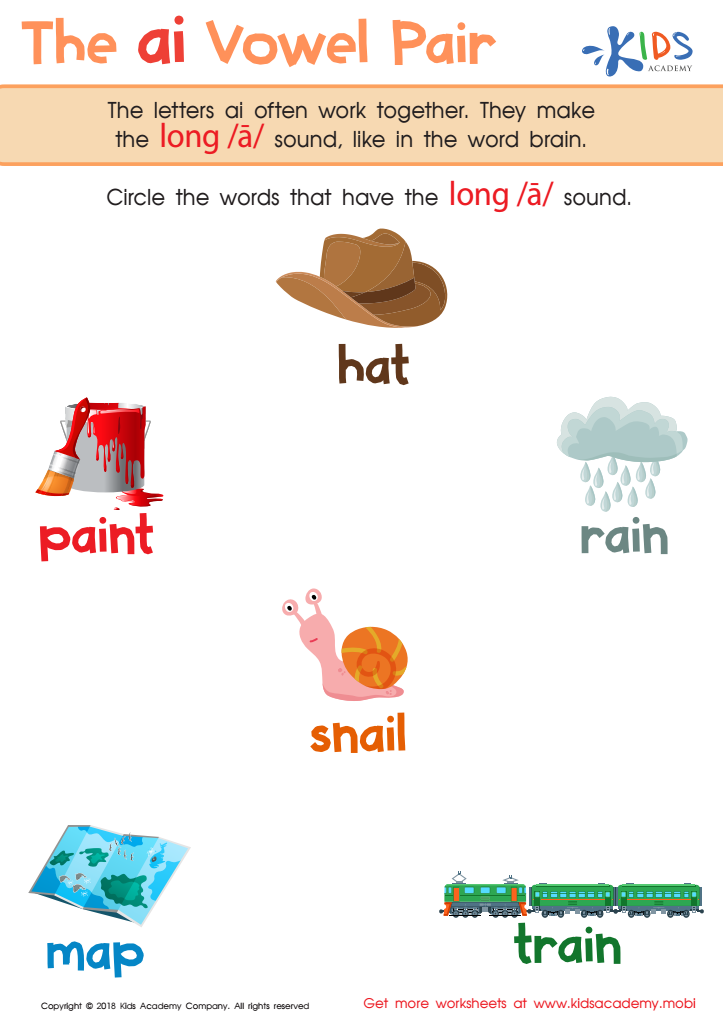
The AI Vowel Pair Worksheet
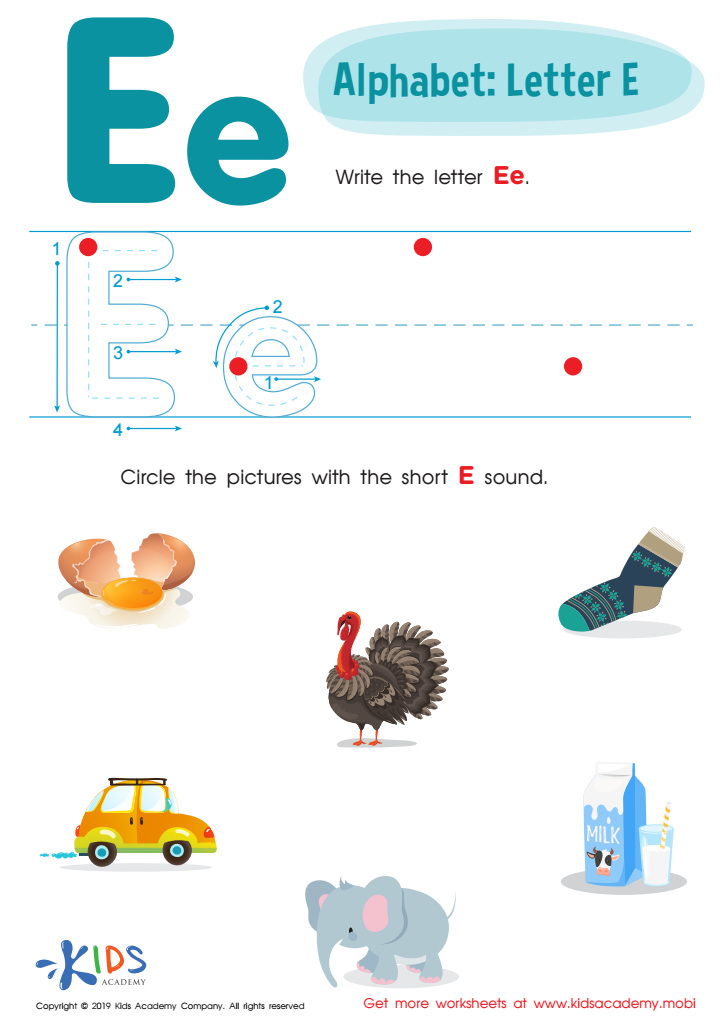
Letter E Tracing Worksheet
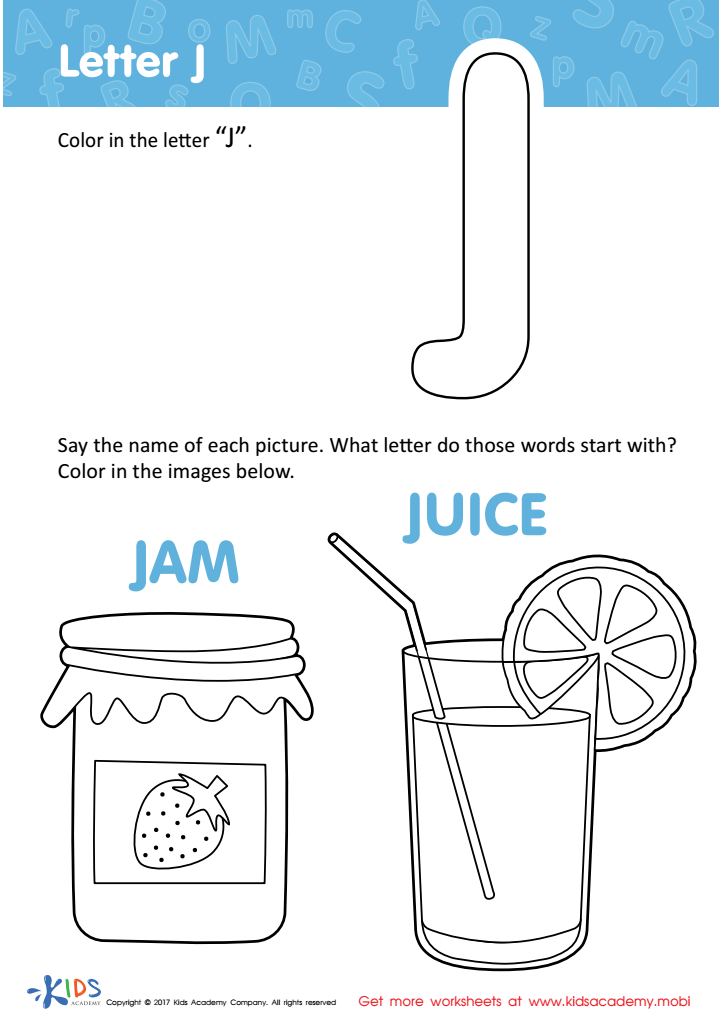
Letter J Coloring Sheet
 Assign to My Students








Sound-letter association, or phonics, is crucial for children aged 6-8 as it lays the foundation for successful reading and writing skills. During this stage, children are developing their ability to connect spoken sounds with their corresponding letters, which enhances their literacy development.
Firstly, strong sound-letter associations enable children to decode words independently, boosting their confidence as readers. When young learners grasp that letters represent specific sounds, they can begin to blend these sounds to read unfamiliar words, increasing their vocabulary and comprehension.
Secondly, phonics instruction aids in spelling. A firm understanding of how letters and sounds interplay helps children spell words more accurately and understand language structure. This foundation also supports writing skills, enabling them to express their thoughts more clearly.
Moreover, cognitive development is stimulated through phonics activities. Engaging with sound-letter associations fosters critical thinking and problem-solving as children learn to discern between similar sounds and letters.
Finally, teachers and parents play a vital role in reinforcing these concepts through fun activities and consistent practice. By caring about sound-letter association, they help cultivate lifelong readers, confident writers, and enthusiastic learners—an investment that profoundly influences a child’s academic journey and overall confidence.







