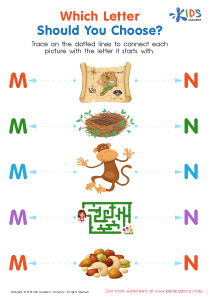
Lowercase identification Normal Lowercase/Small Letters Worksheets for Ages 6-8
4 filtered results
-
From - To
Discover our engaging and educational Lowercase Identification Worksheets, designed specifically for children aged 6-8. These worksheets help young learners sharpen their recognition of normal lowercase letters, promoting essential literacy skills. Featuring vibrant illustrations and fun activities, these resources cultivate an enjoyable learning experience. Whether practicing at home or in the classroom, children will develop confidence as they identify and differentiate lowercase letters through interactive exercises. Perfect for early-grade teachers and parents, our worksheets are easy to print and incorporate into any learning routine. Start your child's journey to reading success today with our comprehensive lowercase small letters resources!
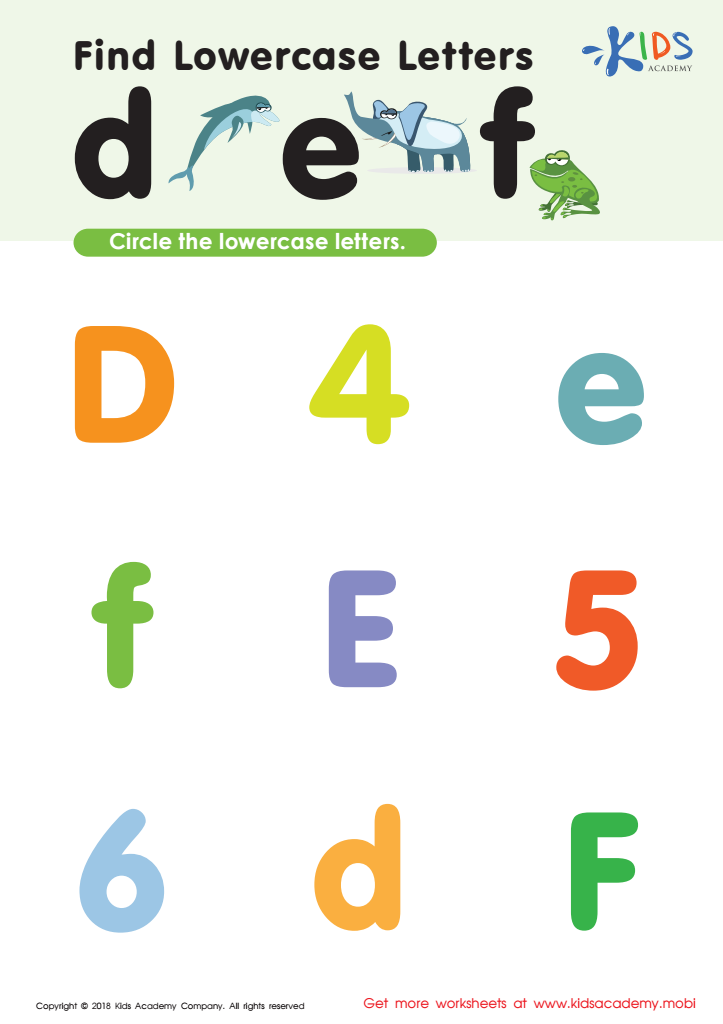
Find Lowercase Letters d e f Worksheet
 Assign to My Students
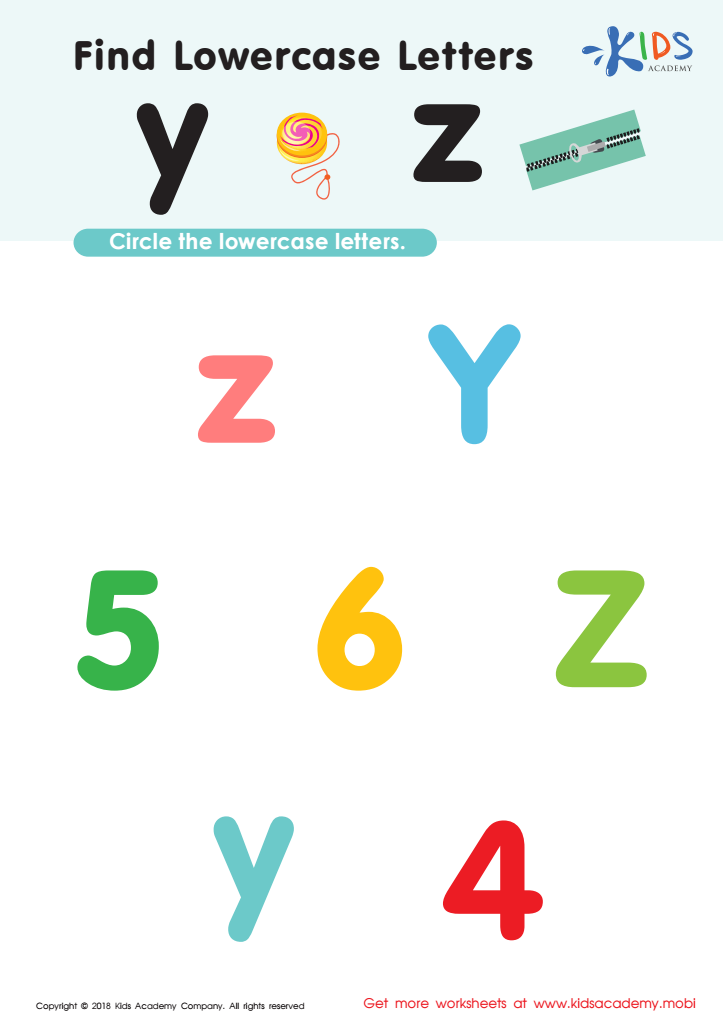
Find Lowercase Letters y z Worksheet
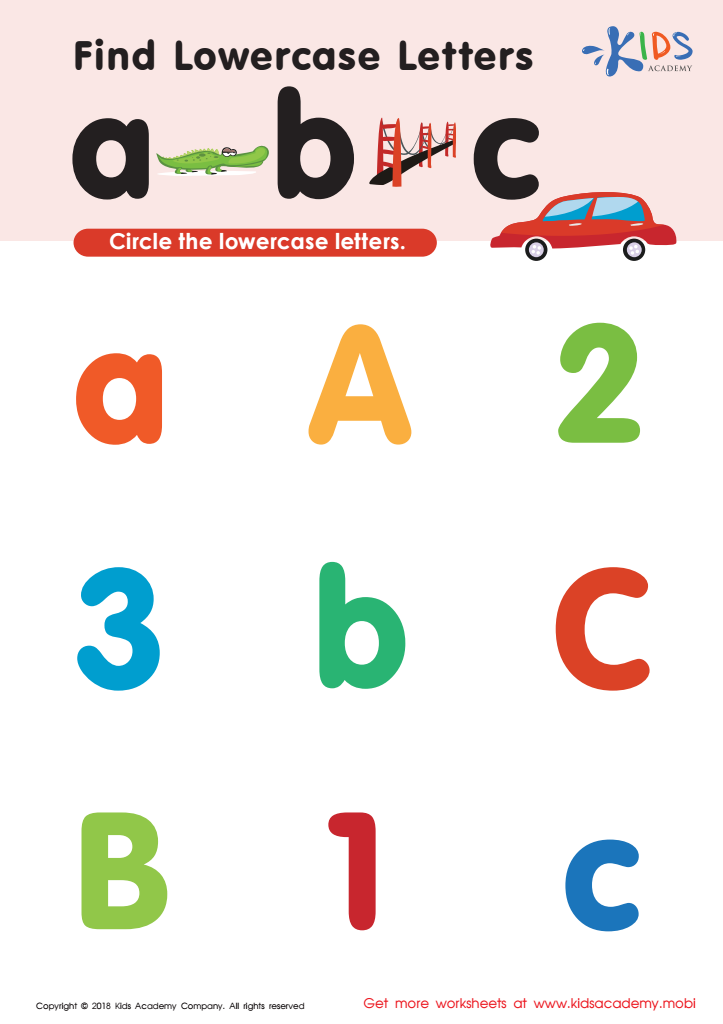
Find lowercase letters a b c Worksheet
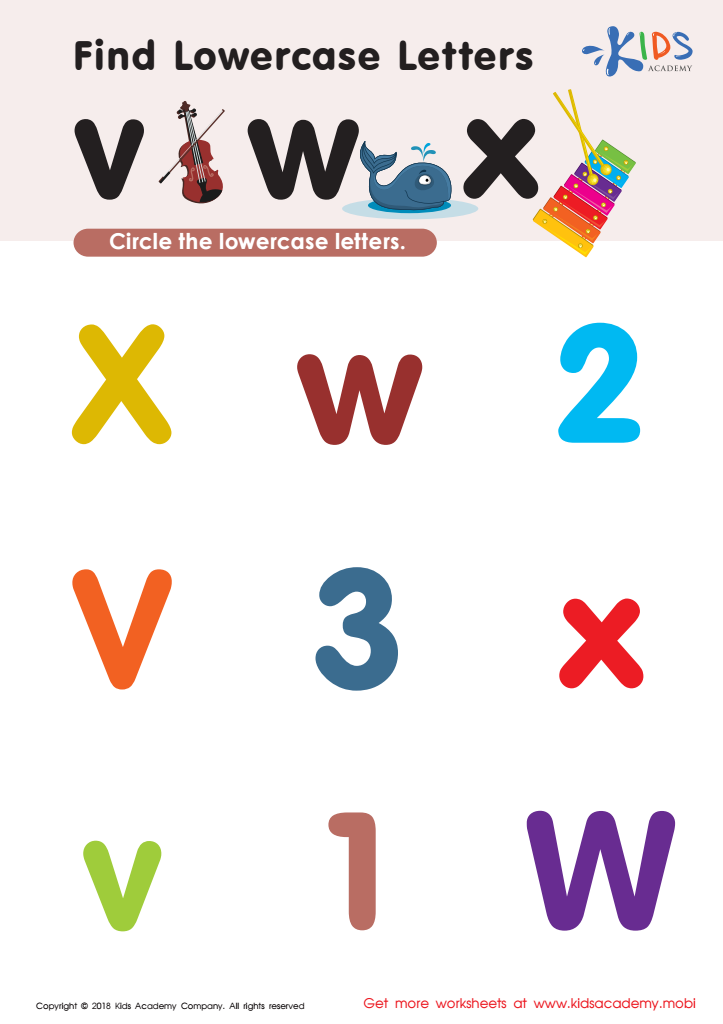
Find Lowercase Letters v w x Worksheet


Identifying lowercase letters is a foundational skill for young learners aged 6-8, crucial for their literacy development. During this stage, children transition from recognizing letters as isolated symbols to understanding their functional roles in words and sentences. This recognition is vital for reading fluency, coherent writing, and overall language proficiency.
Teaching lowercase letters is essential for several reasons. First, most English text prominently features lowercase letters, making them indispensable for reading. If students only recognize uppercase letters, they may struggle to decode words in everyday reading, leading to frustration and decreased motivation.
Secondly, a strong grasp of lowercase letters aids in the early writing process. Children learn to shape letters properly, fostering fine motor skills and helping them develop their unique writing styles. Moreover, understanding lowercase letters prepares students for punctuation, capitalization rules, and other vital grammar concepts, promoting a more robust understanding of language.
Lastly, early interventions in lowercase identification can help address potential learning difficulties. Parents and teachers who prioritize this fundamental skill lay the groundwork for their children to become confident and competent readers and writers, thus fostering a lifelong love of learning. Each child’s success hinges on comprehension, self-expression, and the ability to communicate effectively.