Phonics Skills Normal Vowel Blends Worksheets for Ages 6-8
5 filtered results
-
From - To
Enhance your child's reading abilities with our "Phonics Skills Normal Vowel Blends Worksheets" designed for ages 6-8. These engaging worksheets focus on building essential phonics skills, specifically targeting normal vowel blends. Through interactive activities, children will practice identifying and using vowel combinations, improving their decoding skills and boosting their reading confidence. Our worksheets are colorful and user-friendly, making learning fun and effective. Perfect for home or classroom use, these resources are ideal for supporting early literacy development. Help your child master vowel blends and advance their phonics skills with our comprehensive and enjoyable worksheets today!
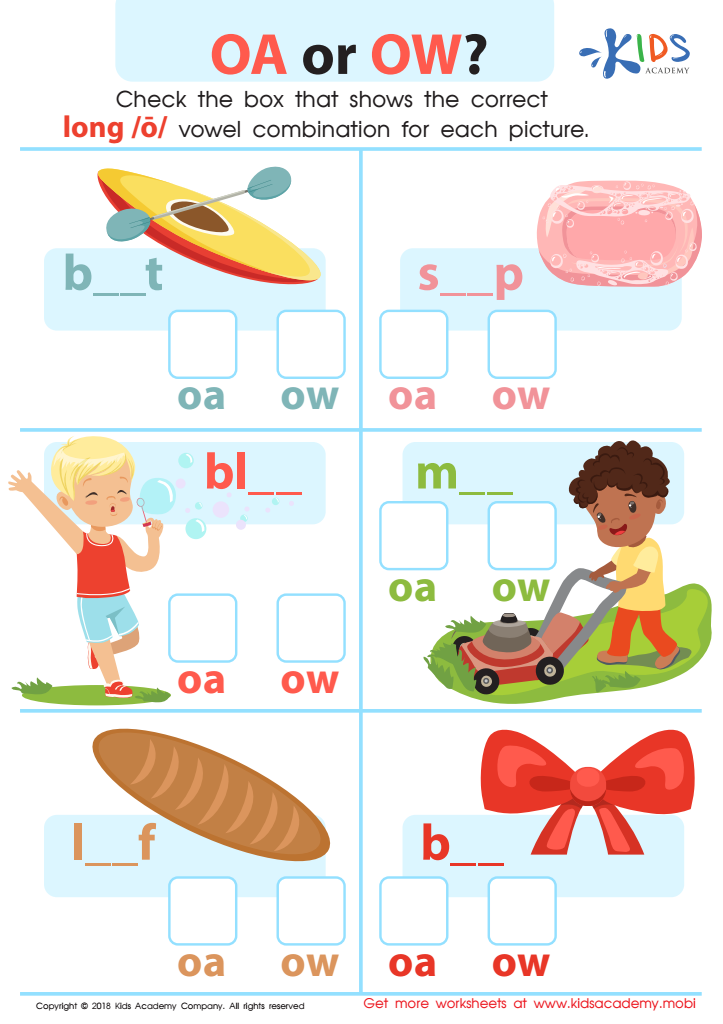
Reading: OA or OW Worksheet
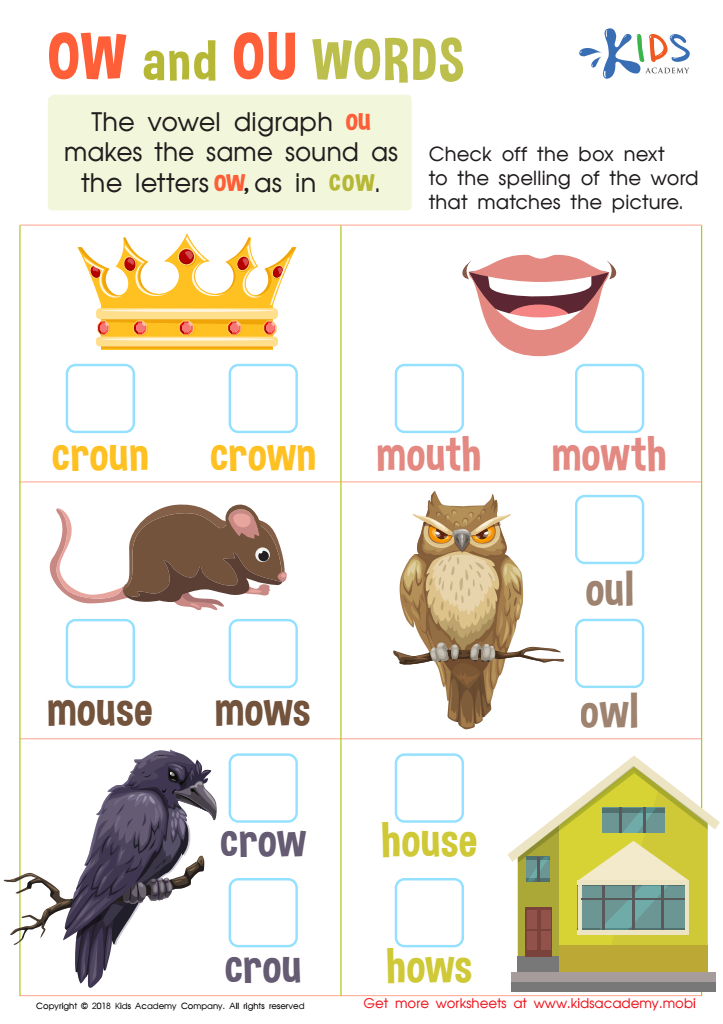
Reading: OW and OU Words Worksheet
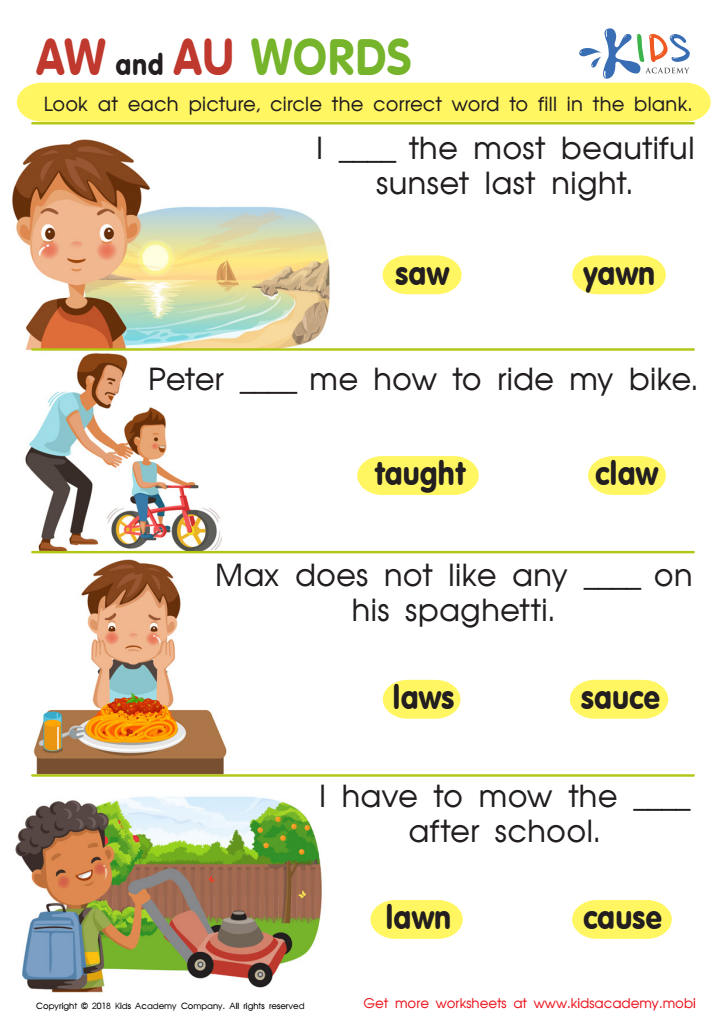
Reading: AW and AU Words Worksheet
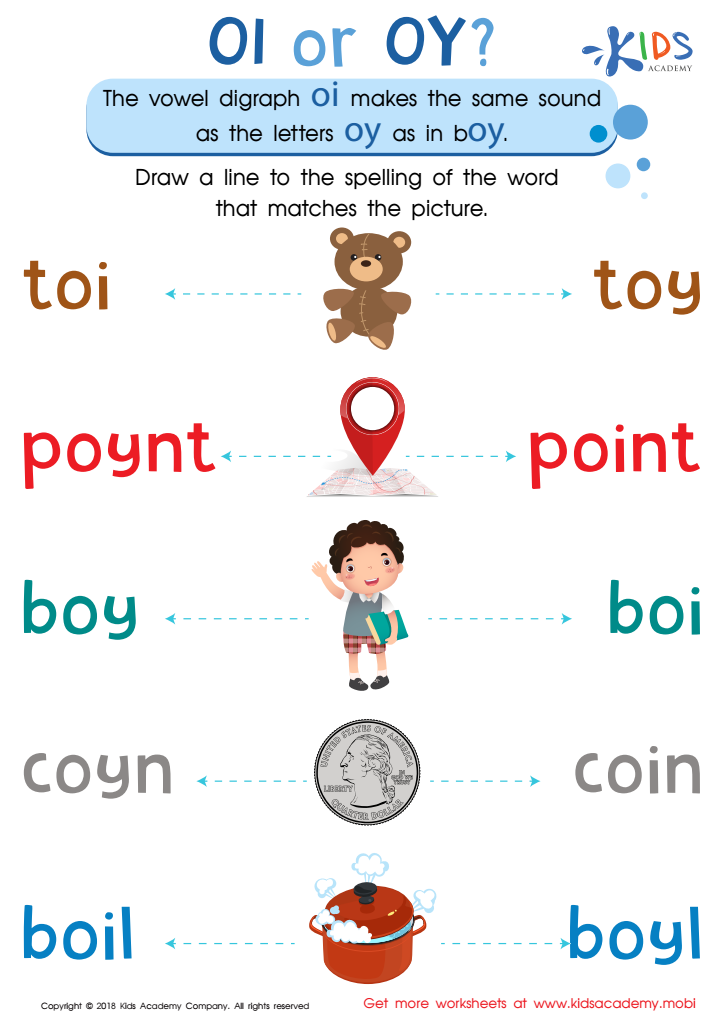
Reading: OI and OY Worksheet

Long and Short E Worksheet
 Assign to My Students





Phonics skills, particularly normal vowel blends, are crucial for children aged 6-8 as they lay the foundation for reading fluency and comprehension. During this developmental stage, kids transition from learning to read to reading to learn. Proficiently mastering vowel blends—combinations like “ai,” “ea,” and “oi”—enables them to decode larger and more complex words, making reading less daunting and more enjoyable.
Understanding vowel blends also enhances spelling skills, as children begin to identify patterns within words. This skill not only improves their writing but also boosts their overall language proficiency. When children can effortlessly decode words, their confidence increases, leading to a more enthusiastic approach to reading and learning.
Moreover, phonics knowledge is essential for building vocabulary and improving communication skills, which are critical in academic success and social interactions. By fostering a strong foundation in vowel blends through engaging activities and practice, parents and teachers can help children develop literacy skills that are pivotal for their ongoing educational journey.
In summary, prioritizing phonics skills, specifically normal vowel blends, is vital for nurturing proficient readers who are prepared to tackle various subjects with competence and confidence.








