Word Recognition Normal Vowels Worksheets for Ages 6-8
6 filtered results
-
From - To
Discover our engaging Word Recognition Normal Vowels Worksheets designed specifically for children aged 6-8. These worksheets help young learners identify and understand vowel sounds through fun and interactive activities. Aligned with educational standards, each worksheet features captivating exercises that bolster word recognition and reinforce phonetic skills. Students will enhance their reading abilities while enjoying colorful illustrations and varied tasks, ensuring an exciting learning experience. Perfect for both classroom and home use, our materials foster a love for reading and strengthen foundational literacy. Explore our collection today and watch your child's confidence soar as they master vowel recognition!
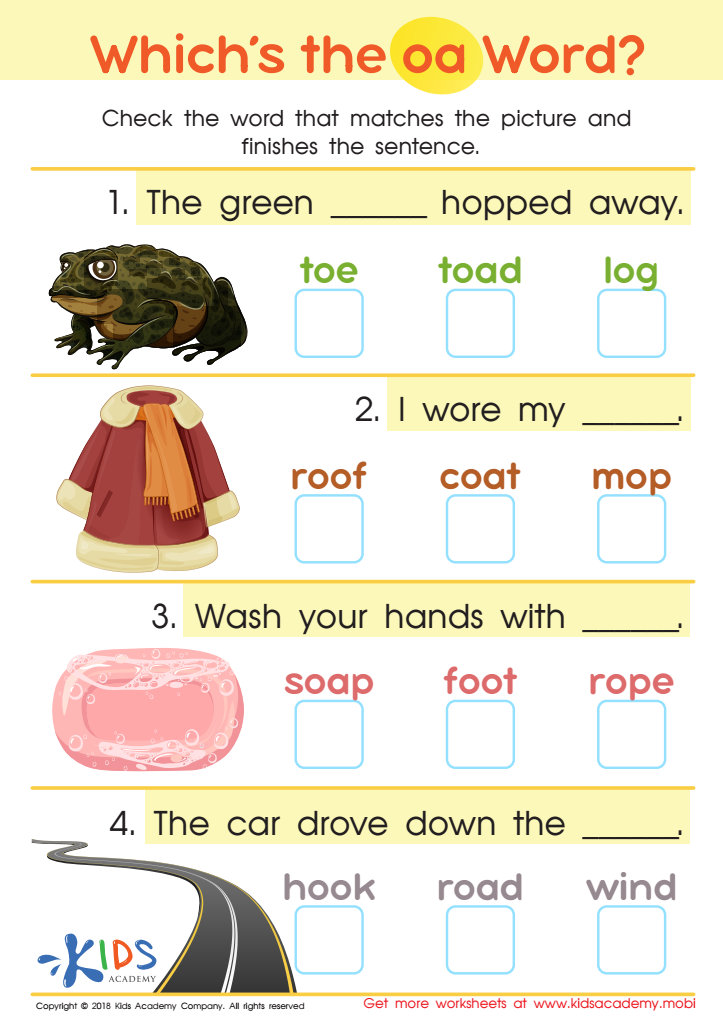
Which's the OA Word? Worksheet
 Assign to My Students
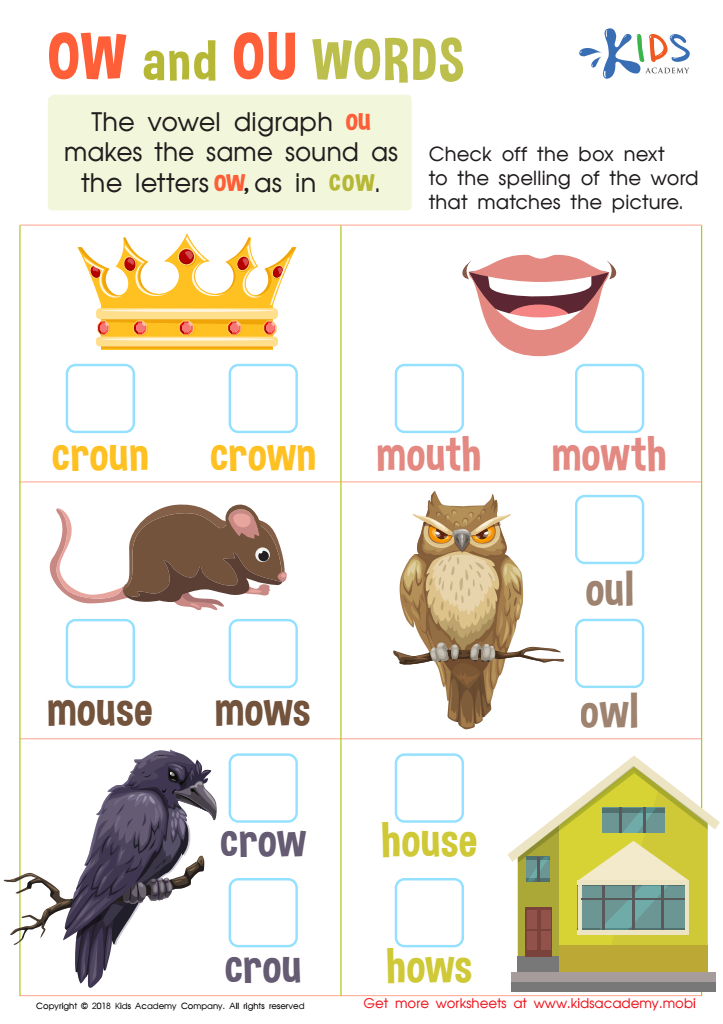
Reading: OW and OU Words Worksheet
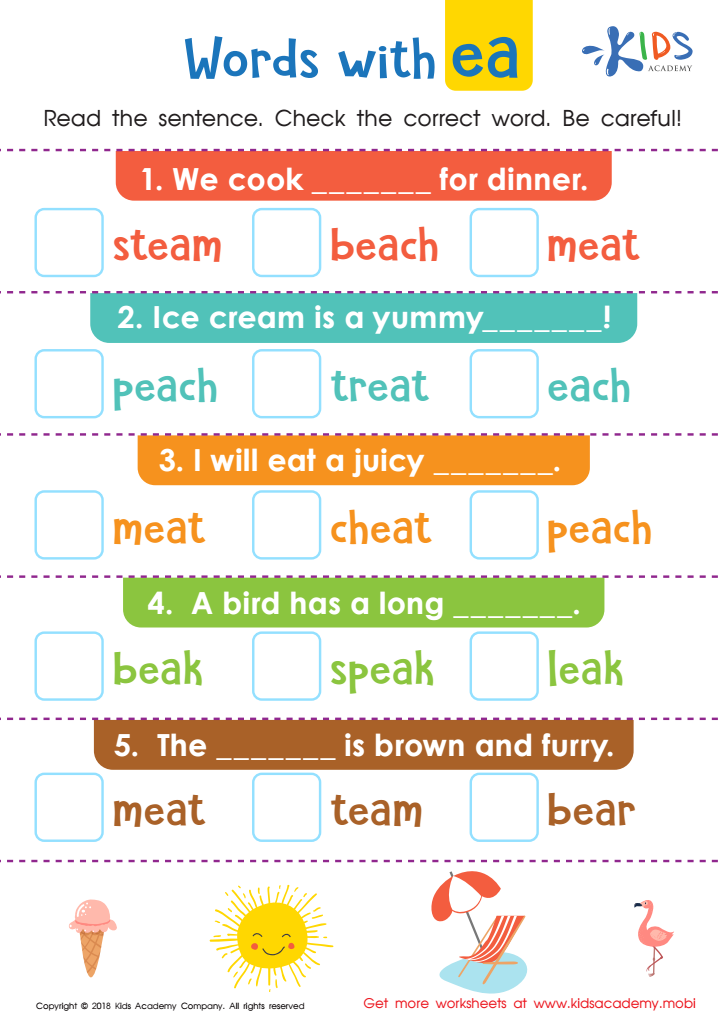
Words with ea Worksheet
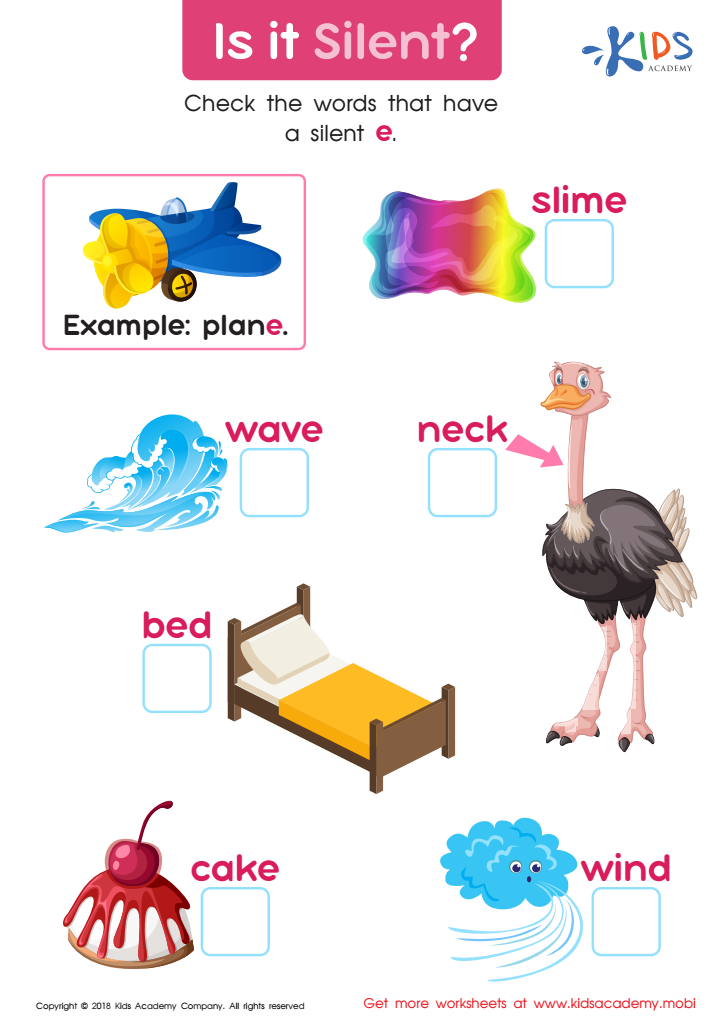
Is It Silent? Worksheet
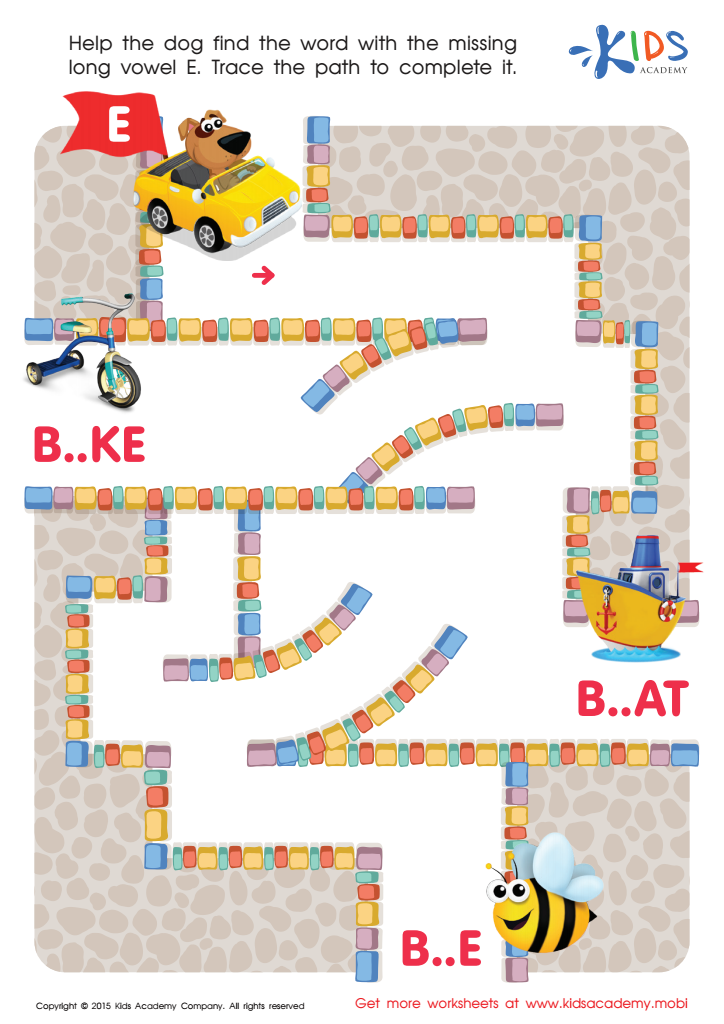
Long Vowel Sound E Worksheet
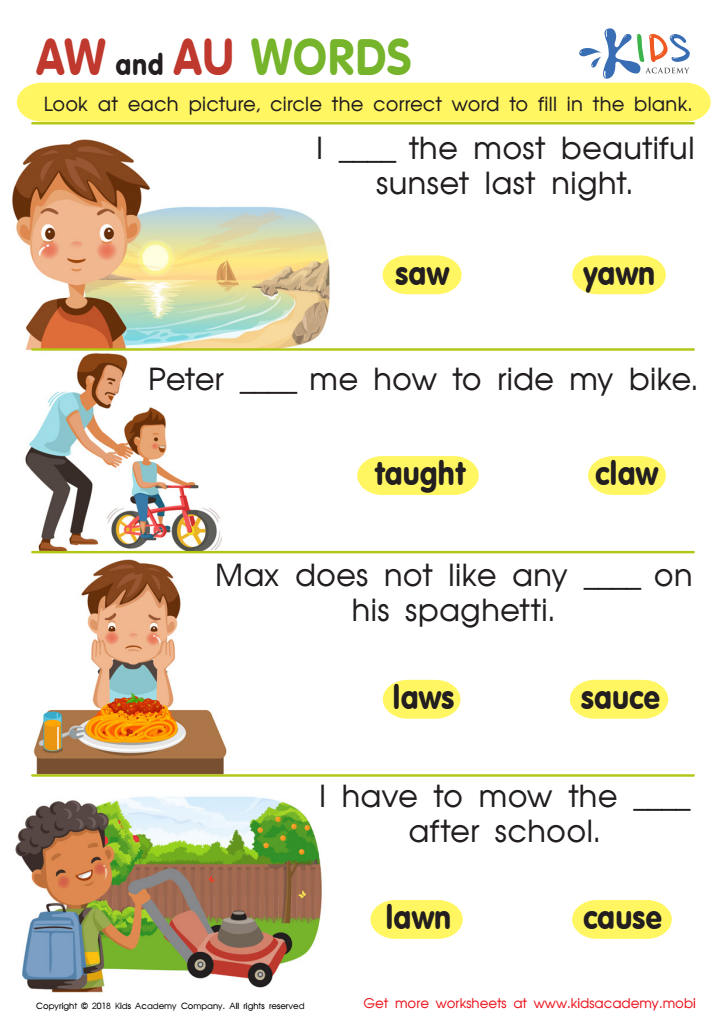
Reading: AW and AU Words Worksheet





Word recognition normal vowels play a critical role in literacy development for children aged 6-8. During these formative years, students are transitioning from learning to read to reading to learn, making it essential for them to efficiently recognize and decode words. Understanding normal vowels helps children distinguish between short and long vowel sounds, which are foundational in phonics instruction. This enables them to read more fluently and with greater comprehension.
For parents and teachers, fostering strong word recognition skills can lead to improved reading confidence and motivation. When children can quickly and accurately identify words, they can focus on understanding the content rather than struggling with pronunciation, leading to a more positive reading experience. Furthermore, consistent practice with normal vowels can support vocabulary growth, as children begin to recognize patterns in word formations.
Moreover, by creating a literacy-rich environment—whether it be at home or in the classroom—adults can model phonetic awareness, promote engaging reading activities, and encourage discussions around vocabulary. This not only builds foundational skills but also nurtures a lifelong love for reading, which is crucial for academic success and personal growth. Ultimately, investing time in word recognition normal vowels is key to laying the groundwork for effective communication and learning.






